Duct Fans: A Complete Guide to Efficient Ventilation Systems
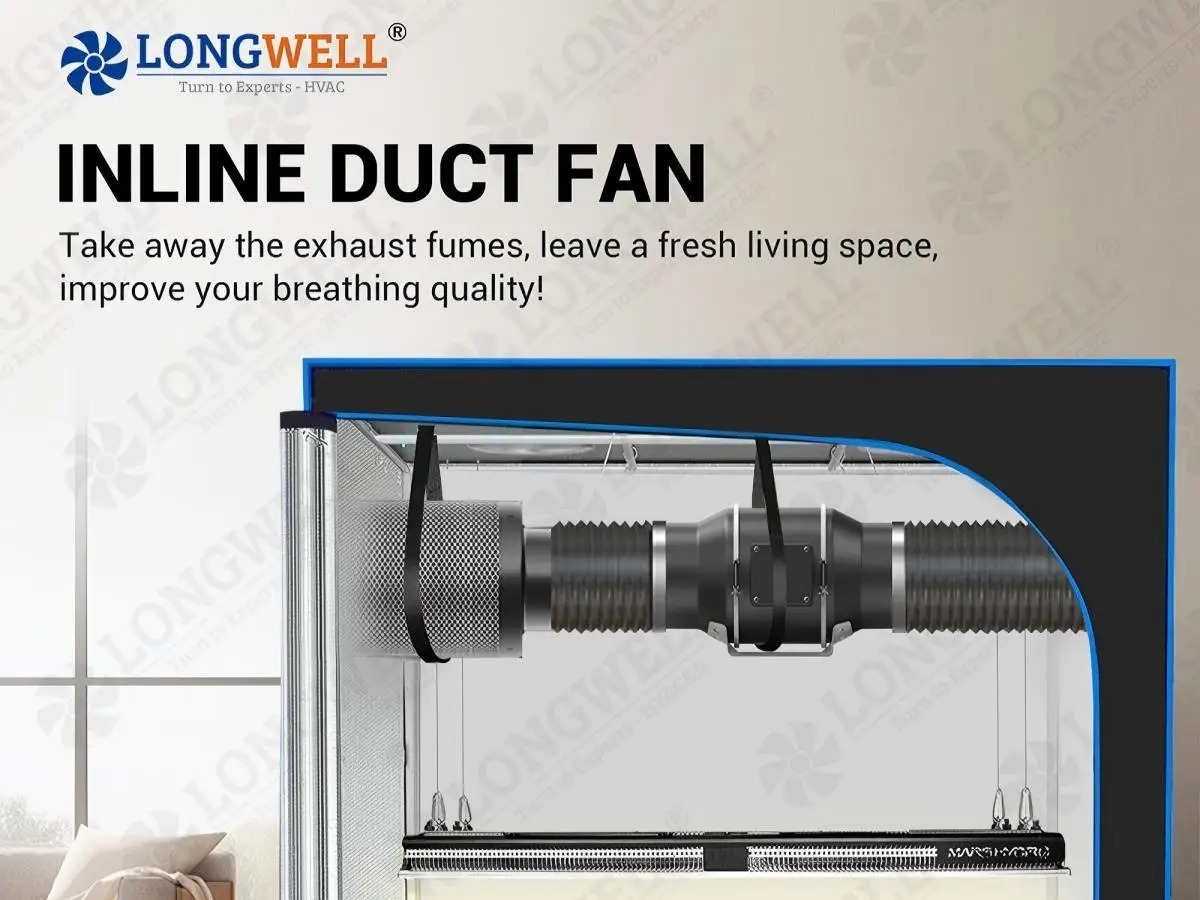
Whether you are designing a commercial HVAC system for an office complex or optimizing a high-yield hydroponic setup, airflow is the invisible variable that determines success. At the heart of this airflow lies the duct fan—a critical component often hidden above ceilings or behind walls, yet responsible for the comfort and health of the entire environment.
Choosing the right duct fan for a ventilation system isn’t just about picking the biggest size; it’s about balancing static pressure, noise levels, and energy efficiency. In this guide, we will break down everything you need to know about inline duct fans, from motor technology to sizing calculations, helping you make an informed decision for your next project.
Understanding Duct Fans: The Backbone of Air Movement
What is a Duct Fan?
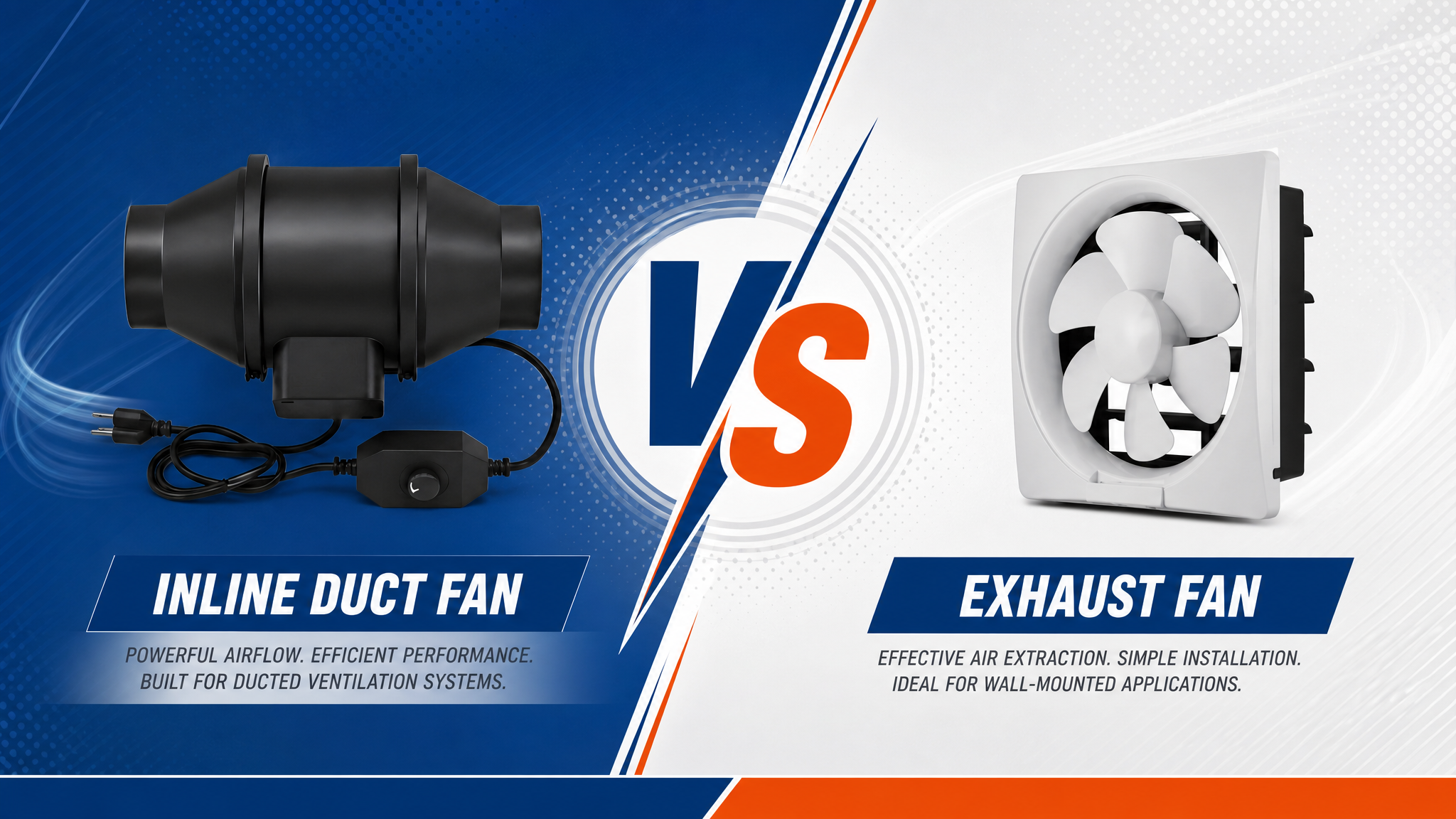
A duct fan (often referred to as an inline fan) is a ventilation device designed to be installed directly inside or connected to ductwork. Unlike improved exhaust fans that sit on a wall or window, duct fans move air through long runs of piping. They are the “boosters” or primary movers that overcome the resistance caused by filters, bends, and long duct lengths.
How Do Inline Duct Fans Work?
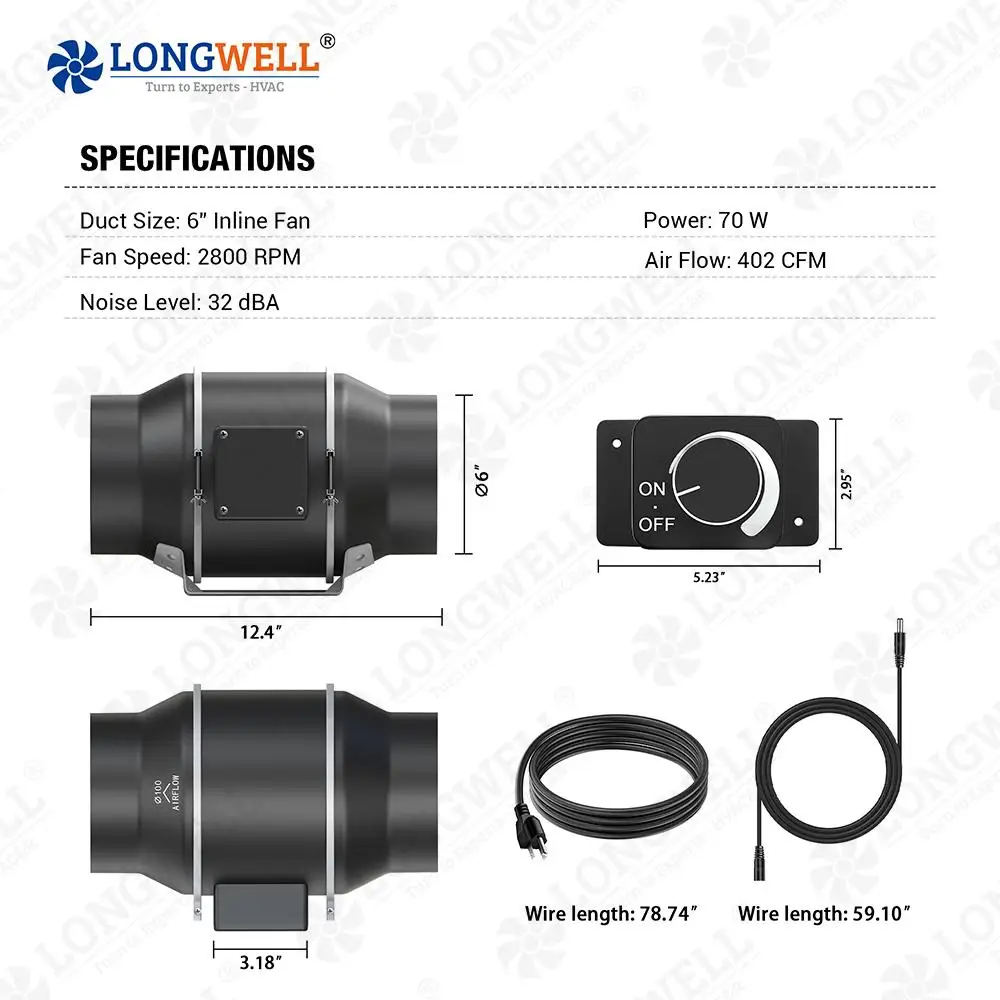
Most modern inline fans utilize a mixed-flow design. This is an engineering “sweet spot” between axial fans (which move a lot of air but struggle with pressure) and centrifugal fans (which handle pressure well but can be bulky).
The Impeller: The blades pull air in effectively and push it out with enough force to push through carbon filters or extensive ducting.
The Housing: Typically aerodynamic to reduce turbulence and noise.
The Motor: The driving force, which we will discuss in depth later (AC vs. EC).
Why Static Pressure Matters
When you select a high airflow duct fan, you cannot just look at the CFM (Cubic Feet per Minute) rating on the box. You must consider static pressure.
Think of static pressure as “resistance.” Every foot of ducting, every elbow bend, and every filter adds resistance. If your fan has high CFM but low static pressure capabilities, the actual airflow will drop drastically once installed. This is why standard axial fans often fail in complex ducting systems, while specialized LONGWELL inline duct fans are engineered to maintain performance even under load.
Types of Duct Fans and Their Core Applications
Not all fans are created equal. Depending on your environment, the requirements for noise and power will vary significantly.
1. Mixed Flow Inline Fans
These are the industry standard for both residential and commercial applications. They offer the best balance of size, noise, and performance.
Best for: General HVAC, bathroom exhaust boosting, and fresh air intake systems.
2. Centrifugal Duct Fans
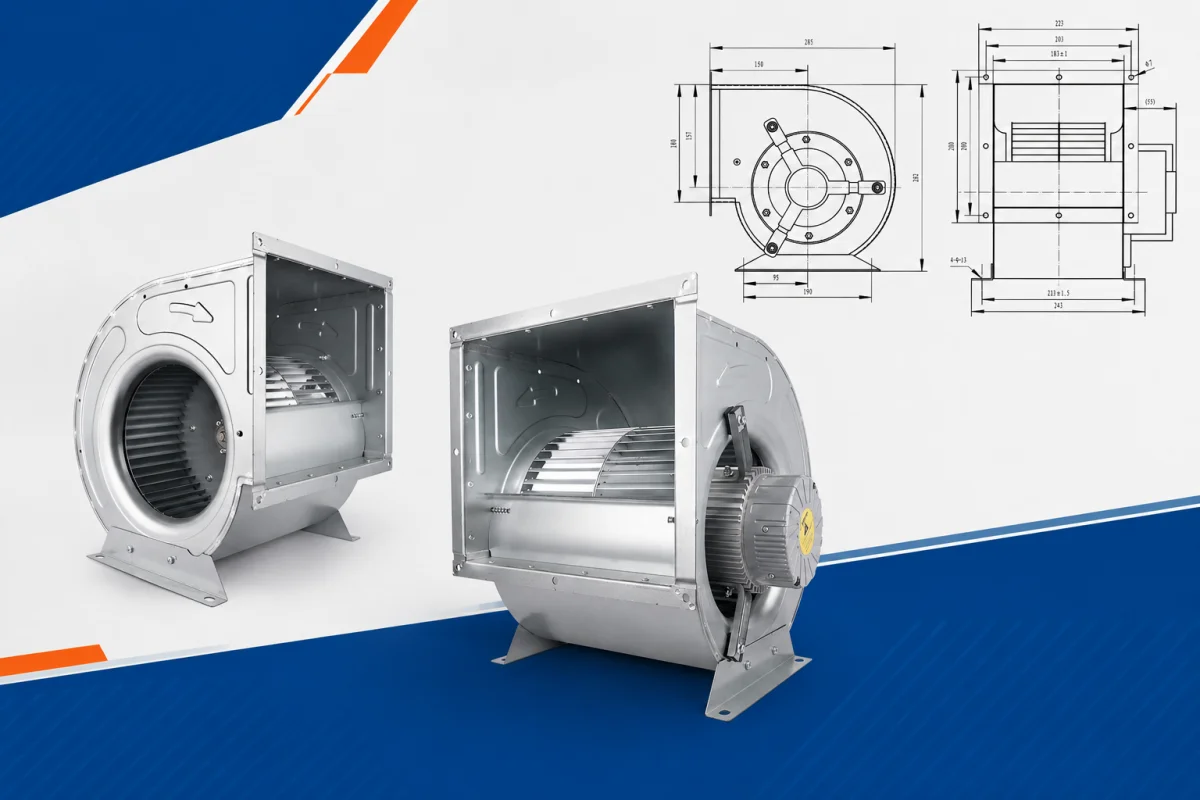
These fans use a blower-style wheel to create high pressure. They are powerful but can be noisier and consume more power.
Best for: Industrial filtration systems and very long duct runs where pressure drop is significant.
3. The “Grow Room” Specialist
A duct fan for grow room ventilation faces a tougher life than a standard HVAC fan. It must run 24/7, handle high humidity, and often push air through dense carbon filters to manage odors. Reliability here is non-negotiable. If a fan fails in a grow room, heat spikes can destroy a crop in hours.
Pro Tip: For grow rooms, always size up. It is better to run a larger fan at 60% speed (reducing noise and extending motor life) than to run a small fan at 100%.
AC vs. EC Motors: The Quest for Efficiency and Silence
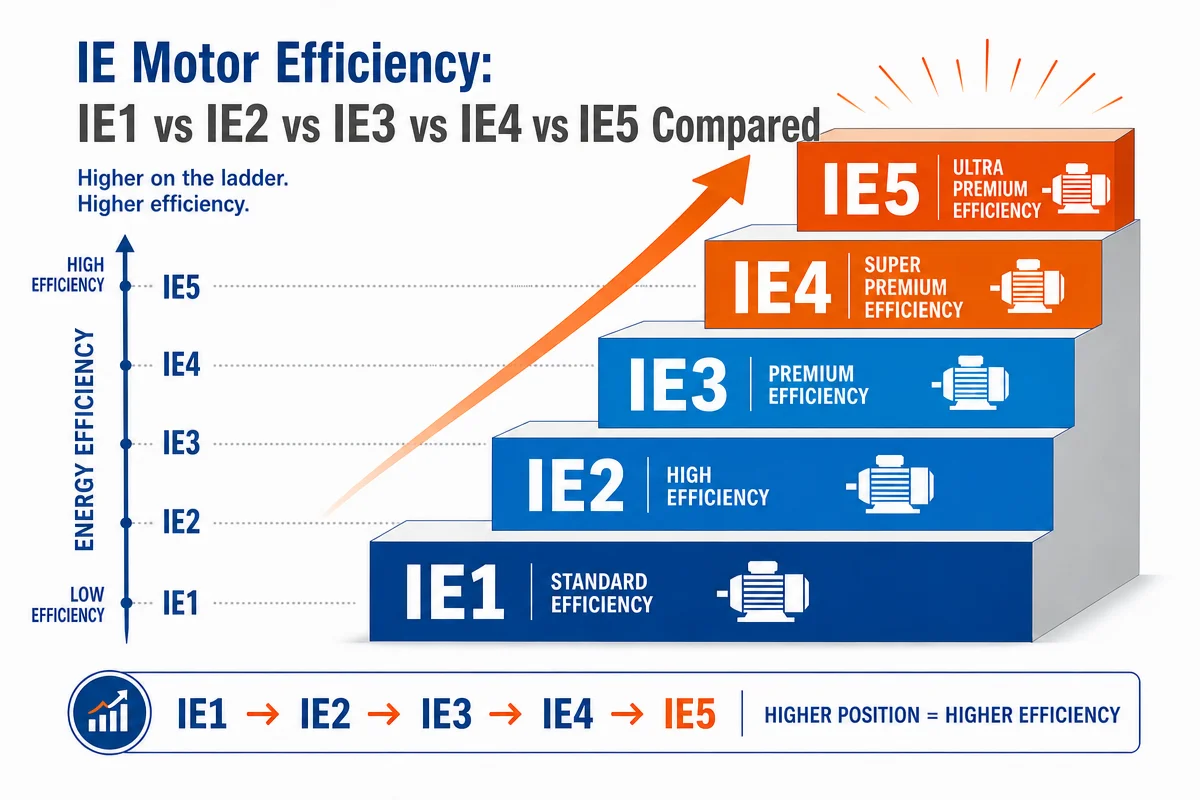
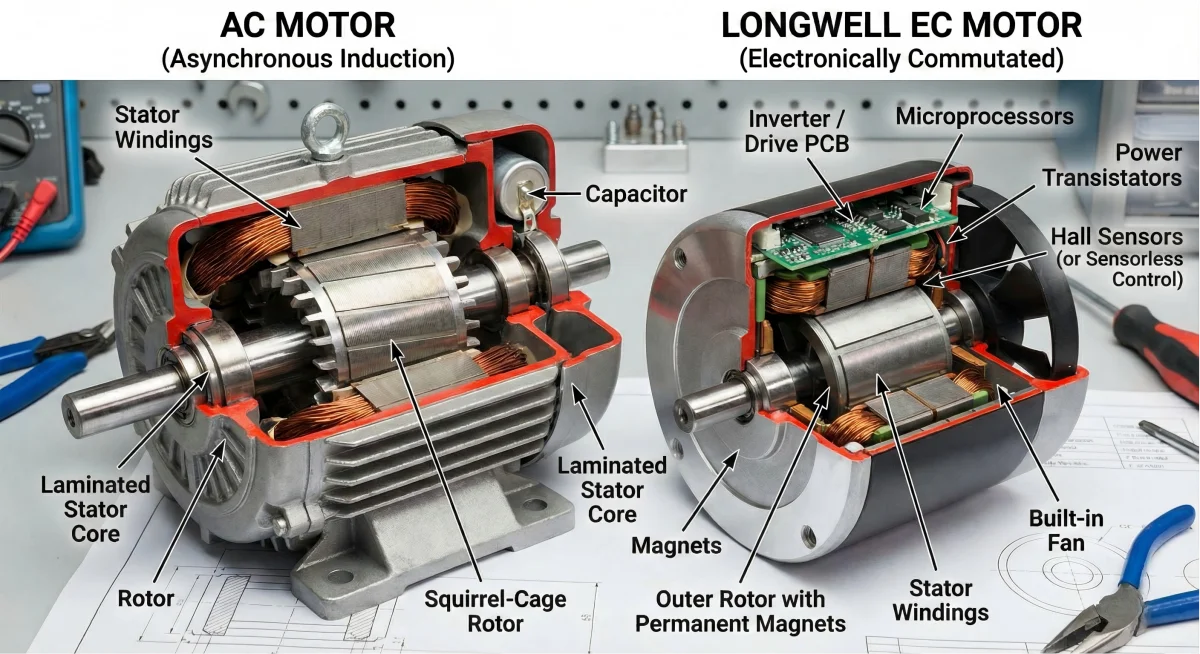
When browsing LONGWELL’s duct fan catalog, you will notice a distinction between AC (Alternating Current) and EC (Electronically Commutated) motors. This is the single most important technical choice you will make.
The Standard AC Motor
AC motors have been the standard for decades. They are reliable and cost-effective upfront. However, speed control is often clunky (creating a humming noise when dimmed), and they use more electricity.
The EC Advantage: High Airflow, Low Energy
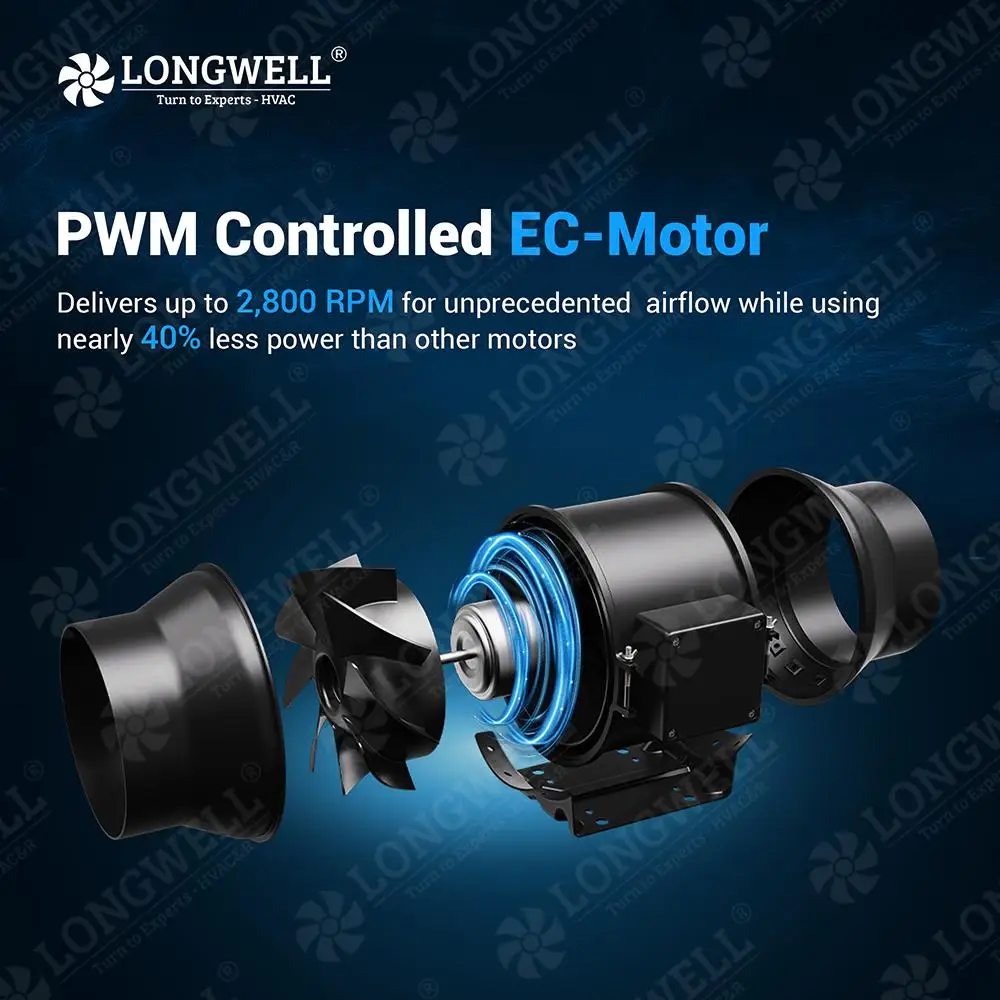
EC motors combine AC and DC voltages, bringing the best of both worlds. They are essentially brushless DC motors that run on mains power.
Efficiency: EC fans can be up to 30-60% more efficient than AC equivalents.
Control: They support 0-10V or PWM speed control, allowing for precise RPM adjustments without the “hum.”
Performance: They typically deliver higher static pressure, making them the ideal high airflow duct fan for restrictive systems.
Silence is Golden: The Low Noise Duct Fan
Noise is a primary complaint in both office settings and home grow tents. A low noise duct fan usually achieves its quiet operation through two factors:
1. Aerodynamic Housing: Reducing wind shear against the casing.
2. EC Motor smoothness: No electromagnetic hum at lower speeds.
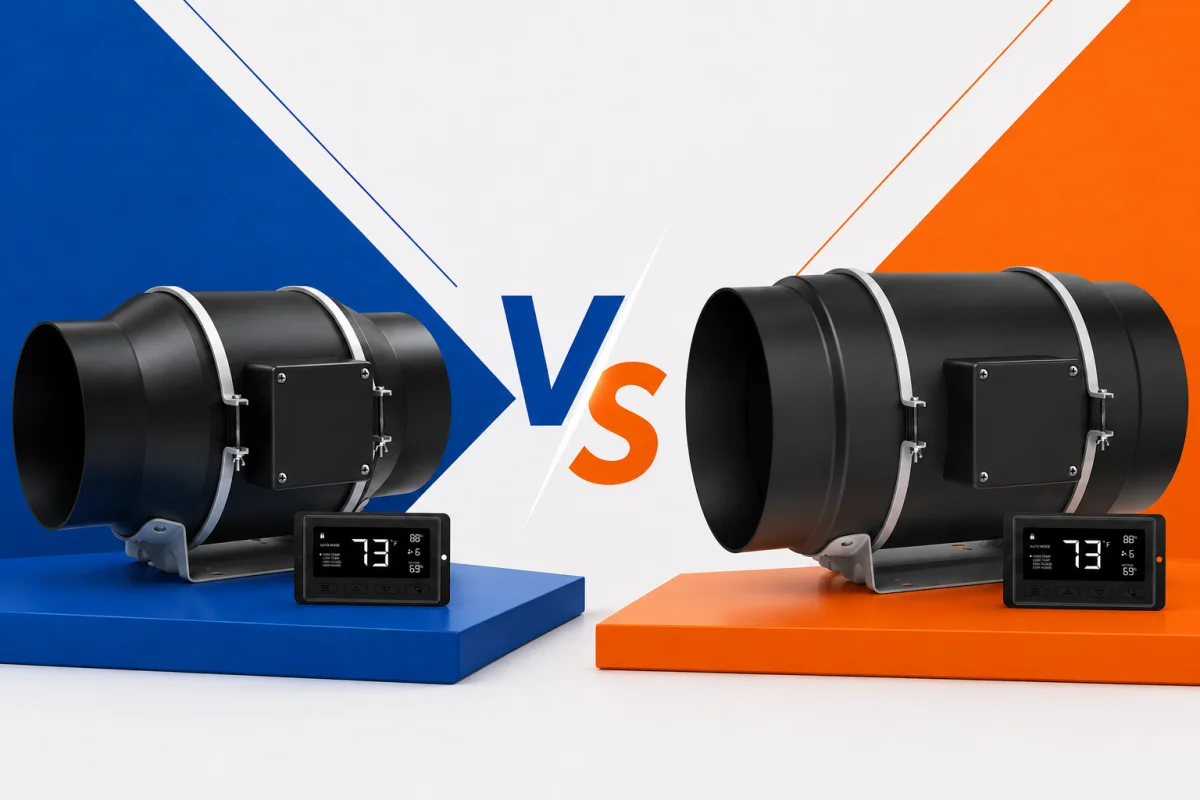
| Feature | AC Inline Fan | LONGWELL EC Inline Fan |
|---|---|---|
| Energy Efficiency | Standard | High (Save ~40% energy) |
| Speed Control | Limited (often hums) | Precise (0-100%, silent) |
| Heat Generation | Higher | Very Low |
| Lifespan | ~20,000 – 30,000 Hours | ~50,000+ Hours |
| Cost | Lower Initial Cost | Higher Initial, Lower Operating |
Sizing Your Fan: How to Calculate the Right CFM
Installing an undersized fan leads to poor air quality and overheating; installing a massively oversized one leads to unnecessary noise and drafts. Here is how to get it right.
Step 1: Calculate Base Room Volume
$$\text{Volume} = \text{Length} \times \text{Width} \times \text{Height}$$
Step 2: Determine Required Air Changes Per Hour (ACH)
Different rooms need air replaced at different rates:
· General Ventilation: Air exchange every 5–10 minutes.
· Grow Rooms (Lights On): Air exchange every 1–3 minutes.
· Server Rooms/Equipment: Air exchange every 1–2 minutes.
Step 3: The Calculation
If you have a grow room that is 10ft x 10ft x 8ft, the volume is 800 cubic feet.
If you want to exchange the air every 2 minutes:
=800/2 = 400 CFM
Step 4: Add the “Efficiency Factor”
This is where most people fail. You must add a buffer for the ducting and filters.
· Carbon Filter: Add 20-25%
· Ducting: Add ~10-20% depending on length and bends.
· Total Buffer: Aim for roughly 1.5x your base CFM.
For our example: 400 CFM x 1.5 = 600 CFM.
You should look for a LONGWELL Inline Duct Fan rated around 600 CFM.
Case Study: Optimizing Ventilation for “Greenxxxx” Commercial Hydroponics
To illustrate the impact of choosing the right duct fan for ventilation systems, let’s look at a recent project application.
The Challenge
Greenxxxx Hxxxxxcs, a mid-sized commercial grower in California, was facing heat management issues. Their existing AC-based ventilation system was running at 100% capacity but failing to clear the heat generated by new LED arrays. Additionally, the noise level was exceeding OSHA workplace standards in the aisles.
The Solution
We replaced their 12 standard AC inline fans with LONGWELL 8-inch EC Duct Fans.
· Intelligent Control: The EC fans were connected to a central climate controller via 0-10V signal, allowing the fans to ramp up only when temperatures rose, rather than running full blast all day.
· Pressure Handling: The mixed-flow impeller design handled the high-resistance carbon filters better than the previous fans.
The Results
· Temperature Drop: Average room temperature dropped by 4°F due to consistent airflow.
· Energy Savings: Energy consumption for ventilation dropped by 35%.
· Noise Reduction: Because the fans mostly ran at 70% speed (which was sufficient due to the high efficiency), noise levels dropped by 12 decibels.
Customer Feedback
“We were skeptical that changing fans would make a huge difference in yield, but the stability of our environment has improved dramatically. The LONGWELL EC fans are whisper quiet compared to our old jet engines, and the ability to control speed precisely means we aren’t wasting power.”
— Mark D., Facility Manager at Greenxxxx Hxxxxxxxs

About LONGWELL
Ningbo Longwell Electric Technology Co., Ltd. (Website: www.longwellfans.com) is a professional manufacturer of HVAC fans and motors. We provide a full range of aerodynamic products including centrifugal fans, axial fans, cross-flow fans, and EC/DC/AC motors. Our products are widely used in HVAC, refrigeration and cold chain, electronic cooling, and industrial purification fields.
Whether you need a robust EC duct fan for a smart building project or a customized solution for agricultural ventilation, our engineering team ensures every unit meets global standards for efficiency and durability.
Installation and Maintenance Best Practices
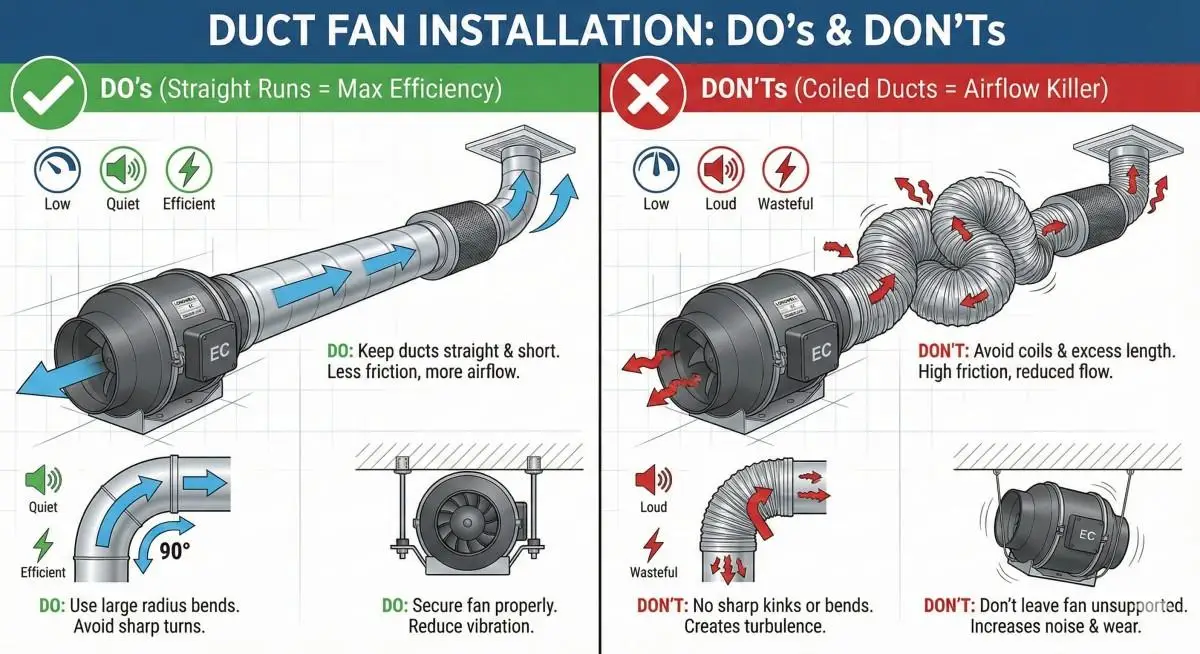
Even the best low noise duct fan will be loud and inefficient if installed poorly.
1. Vibration Isolation
Never mount a duct fan directly to a joist or ceiling grid without dampening. Use:
· Bungee Cords: For lightweight grow tent setups, hanging the fan suspends vibration.
· Rubber Mounting Brackets: LONGWELL fans often come with mounting feet; ensure rubber washers are used between the fan and the mounting surface.
2. Keep Ducting Straight
Every bend in your ducting reduces airflow by 15% to 20%. Keep runs as straight as possible. If you must turn, use a gradual radius rather than a sharp 90-degree elbow.
3. Sealed Connections
Use high-quality aluminum foil tape or heavy-duty worm drive clamps to seal the connection between the fan and the duct. Small air leaks can cause whistling noises and reduce system pressure.
4. Regular Cleaning
Dust accumulation on the impeller blades unbalances the fan, leading to noise and bearing wear. Check your fans every 6 months. If you are using a duct fan for grow room ventilation, check every cycle (3 months) as humidity can cause dust to cake onto the blades.
FAQ: Frequently Asked Questions
Q1: Can I use a duct fan as a booster for my home AC/Furnace?
Yes. If you have a room that is always too hot or too cold, installing a duct fan in that specific run can boost airflow. However, we recommend using an EC fan with a speed controller so you can balance the airflow to match the system, rather than over-pressurizing that single room.
Q2: What is the difference between an inline duct fan and a booster fan?
A “booster fan” typically refers to a cheap, axial-blade fan that fits inside a duct. They have very low power and cannot push air through filters or long ducts. An “inline duct fan” (like LONGWELL’s mixed flow models) is much more powerful, features a dedicated housing, and is designed for high static pressure applications.
Q3: How do I control the speed of an EC duct fan?
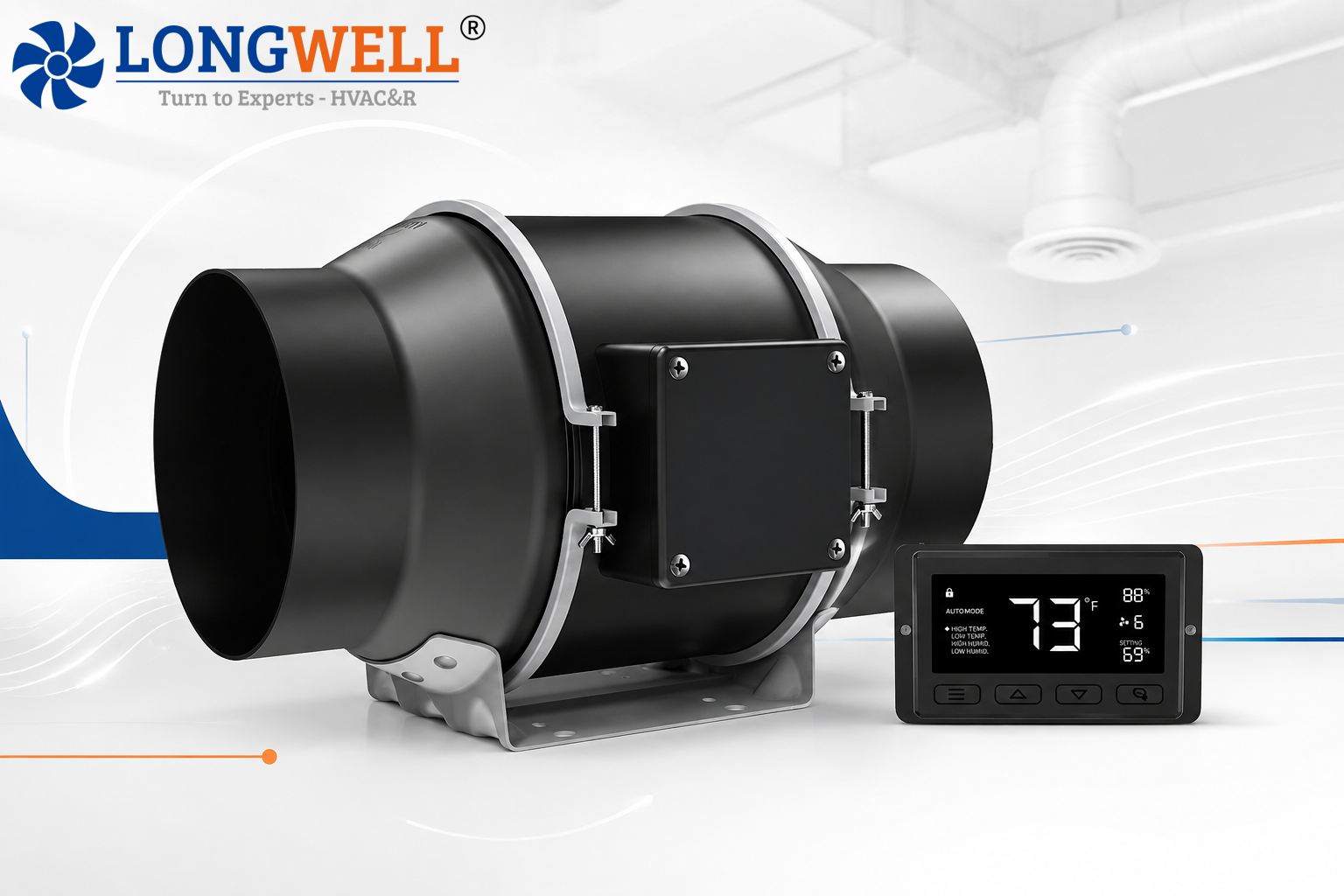
EC fans are controlled via a 0-10V signal, PWM (Pulse Width Modulation), or a potentiometer. Most LONGWELL EC fans come with or are compatible with smart controllers that can adjust speed based on temperature or humidity sensors automatically.
Q4: Is a plastic or metal housing better for a duct fan?
It depends on the application. High-quality ABS plastic is excellent for corrosion resistance (great for humid grow rooms) and is often quieter due to sound dampening properties. Metal housings are preferred for industrial environments where physical durability and fire ratings are the top priority.
Q5: How long can I expect a LONGWELL duct fan to last?
Our EC motor fans are rated for continuous duty. With proper installation and maintenance, they typically offer a service life exceeding 50,000 hours, which translates to over 5 years of continuous 24/7 operation.
Q6: Can I use a duct fan for intake and exhaust simultaneously?
You need separate fans for intake and exhaust. For a balanced ventilation system (especially in sealed rooms), you usually want the exhaust fan to be slightly larger or run faster than the intake fan to create “negative pressure,” which prevents odors from escaping into other parts of the building.