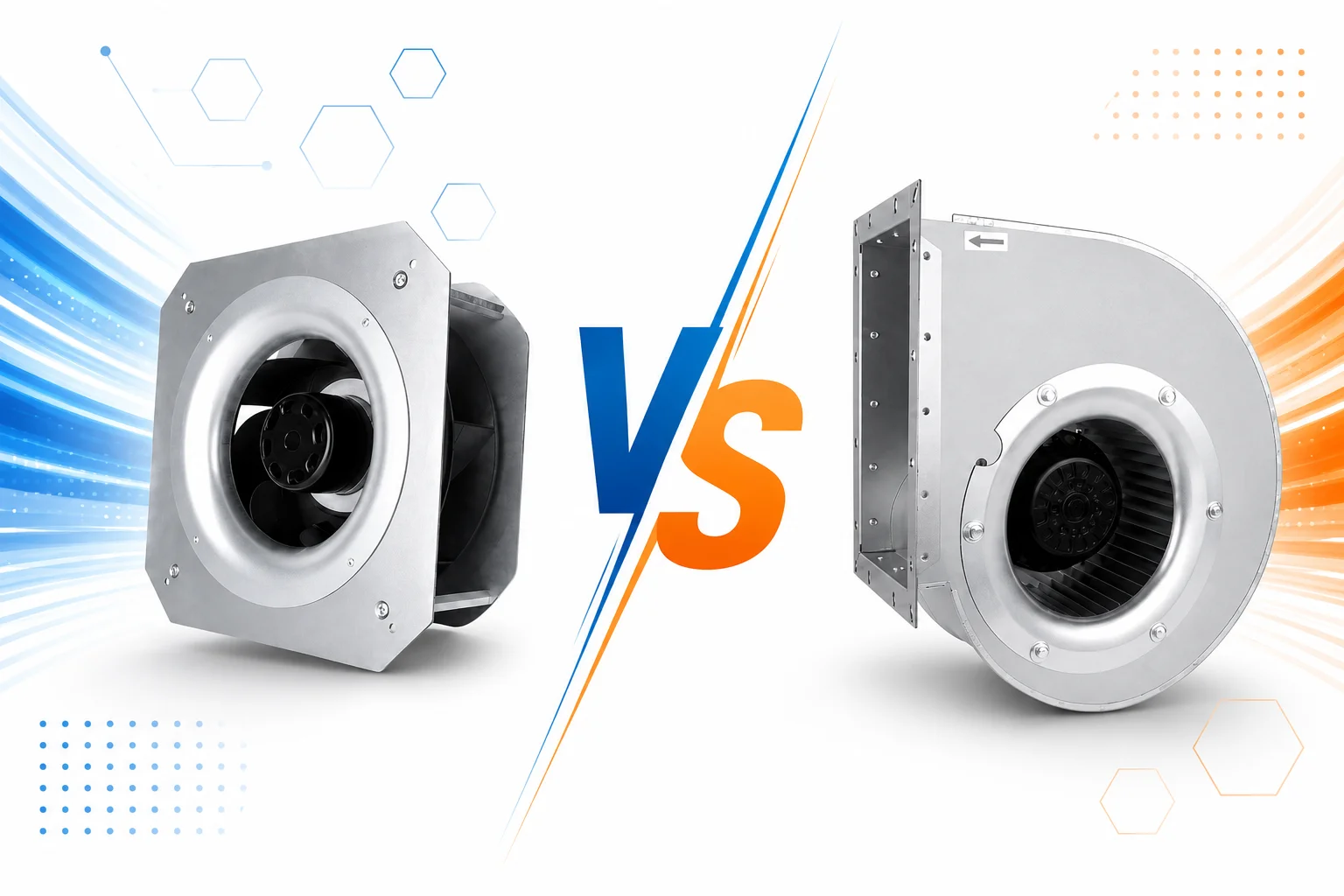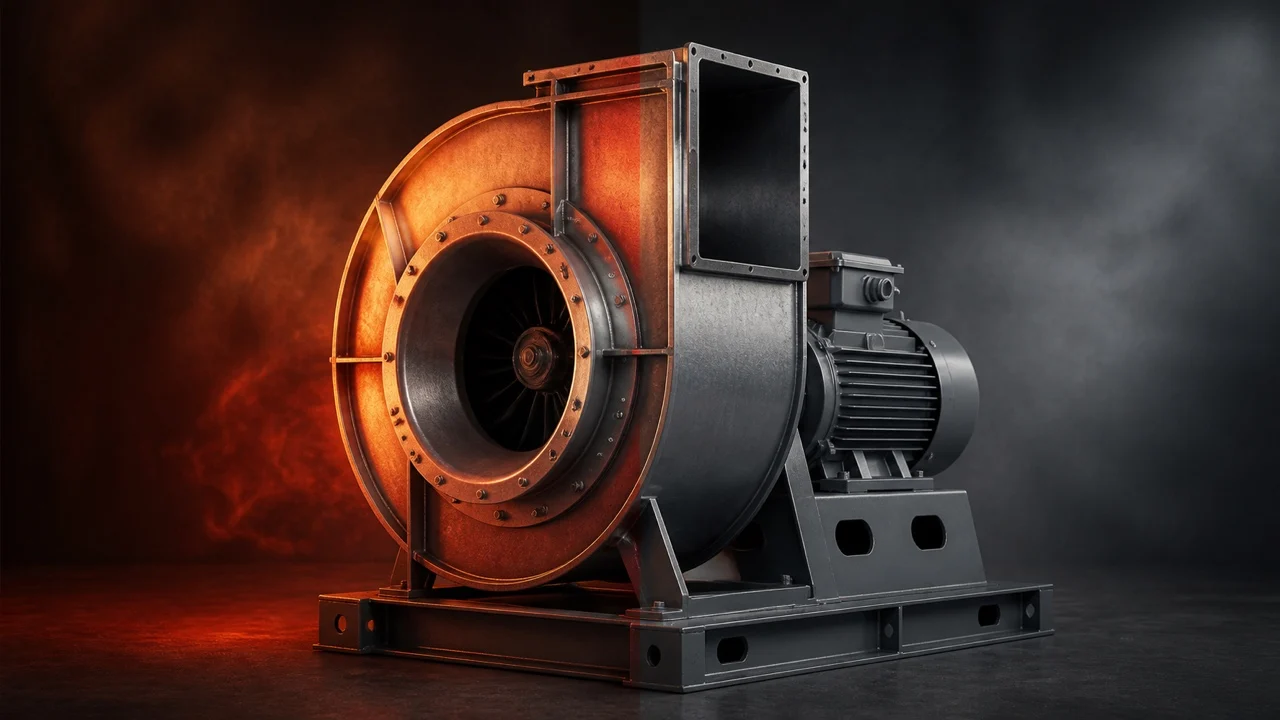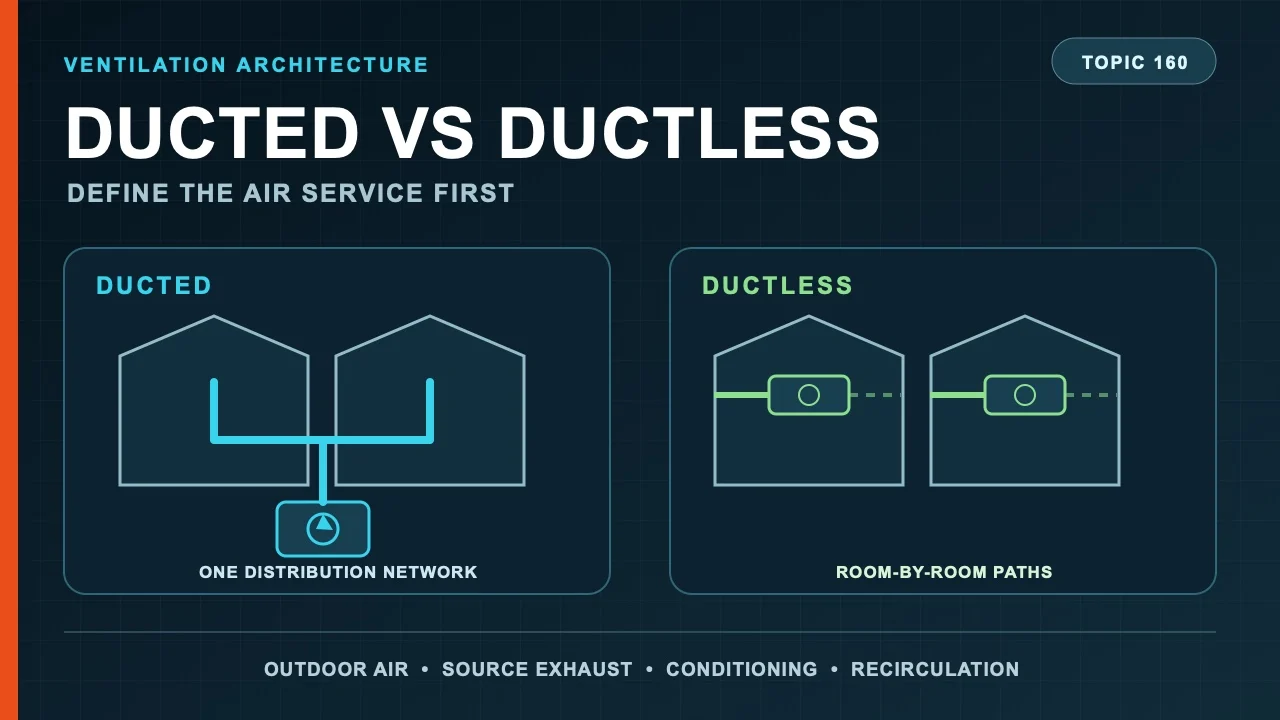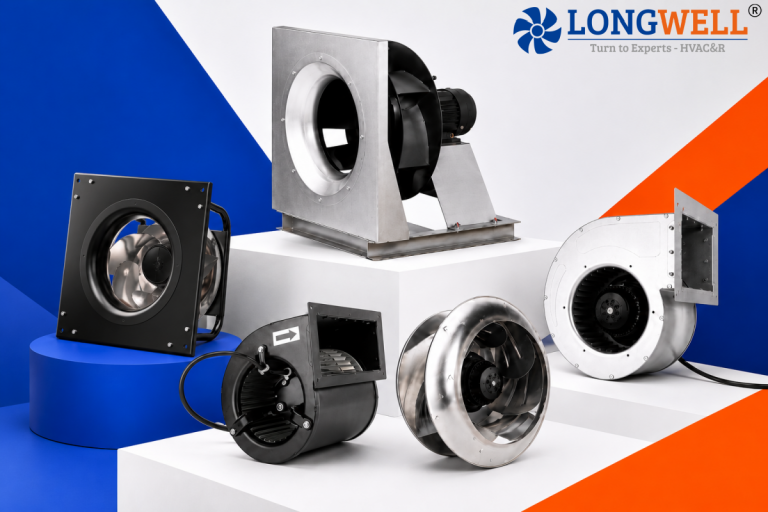
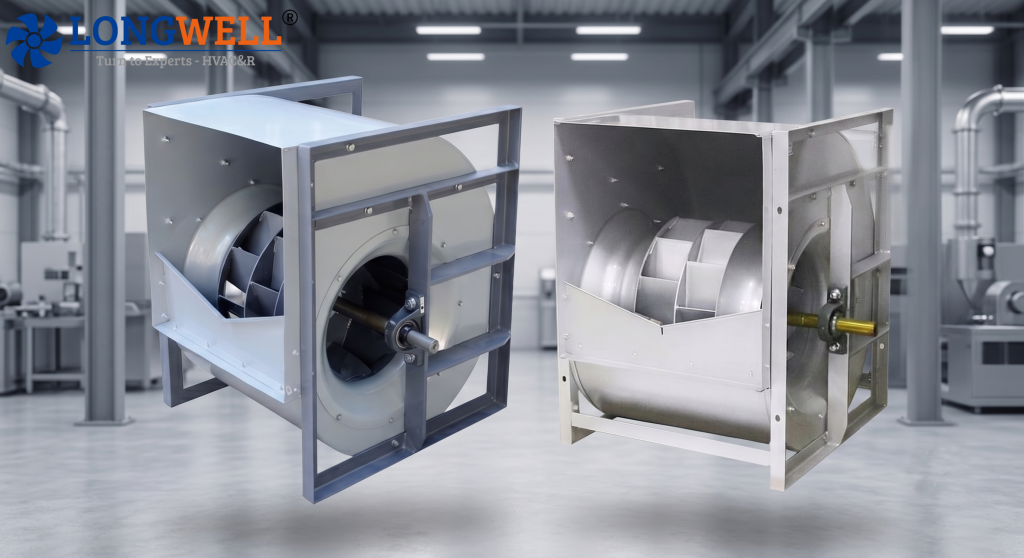
In industrial ventilation and HVAC systems, centrifugal fans serve as the core component for moving air and controlling pressure. Among them, single inlet centrifugal fans are widely used for compact and performance-critical ventilation systems. These two types are slightly different based on the same centrifugal working principle. They differ in the ways of drawing air and airflow distribution inside. These influences airflow volume, energy efficiency, and static pressure of centrifugal fans. Engineers and system designers often face challenges when balancing space constraints and energy targets.
This guide compares single inlet and double inlet centrifugal fans and identifies the optimal use scenarios of each type. It also offers guidance on how to select the right fan for specific applications.
What is a Single Inlet Centrifugal Fan?
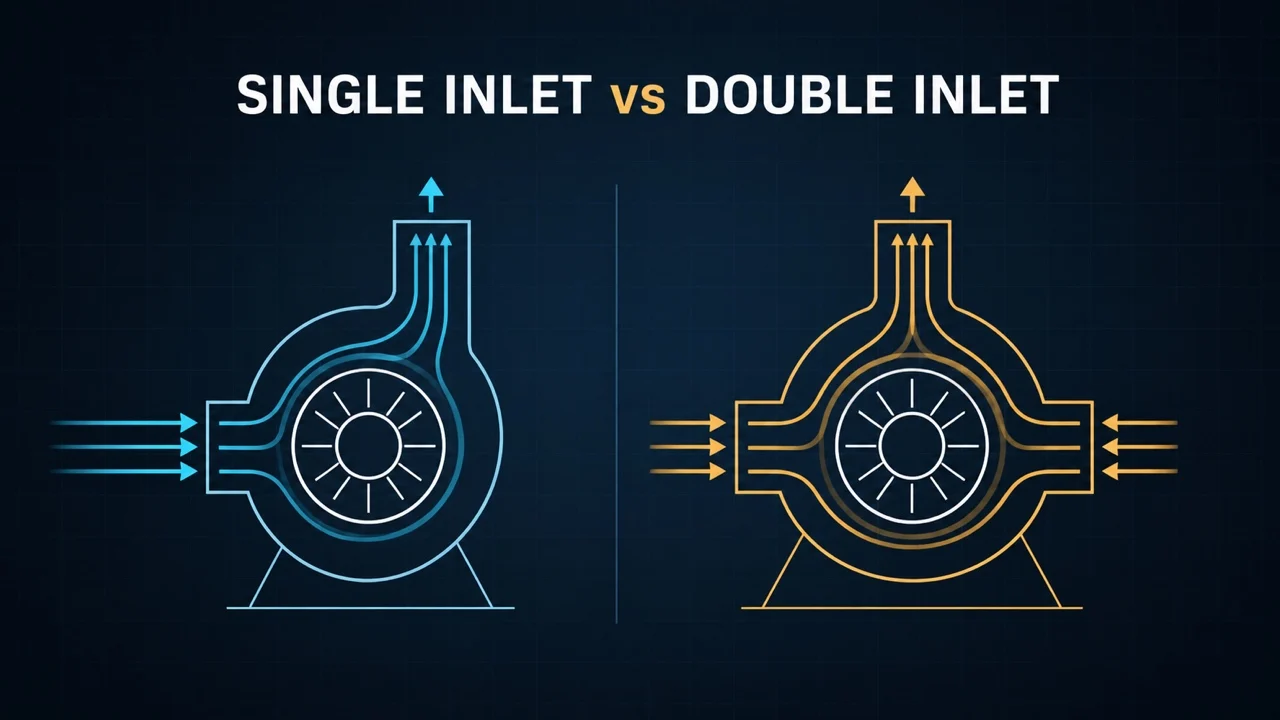
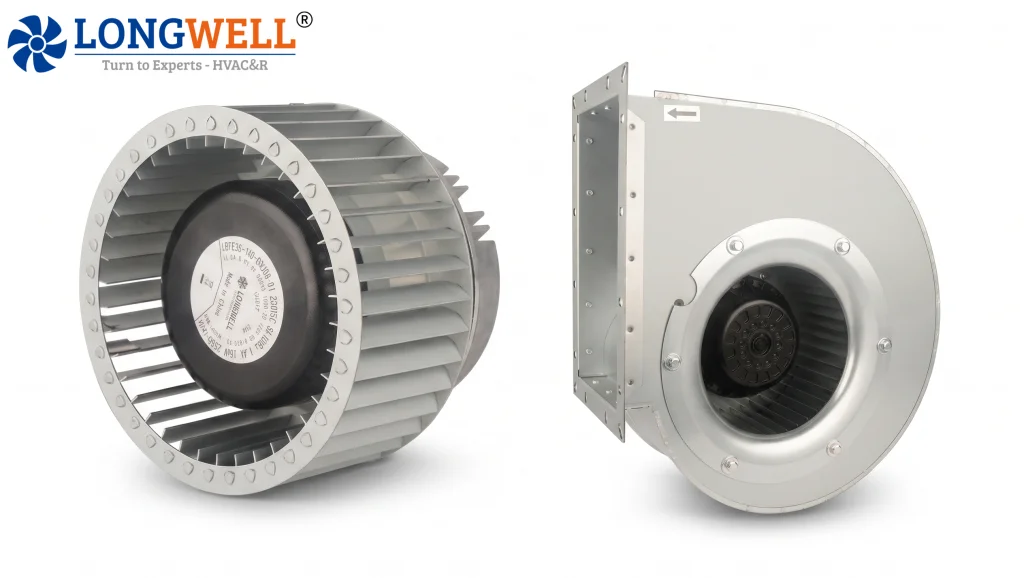
The single inlet centrifugal fan only allows air to enter from one side of the impeller. The air is discharged at an angle perpendicular to the direction of intake. As the impeller rotates, centrifugal force is generated, which accelerates the air being discharged from the fan and generates static pressure.
Key Characteristics
- Air intake from one side of the impeller.
- With a compact and lightweight design, they are easier to install in space-limited environments.
What is a Double Inlet Centrifugal Fan?
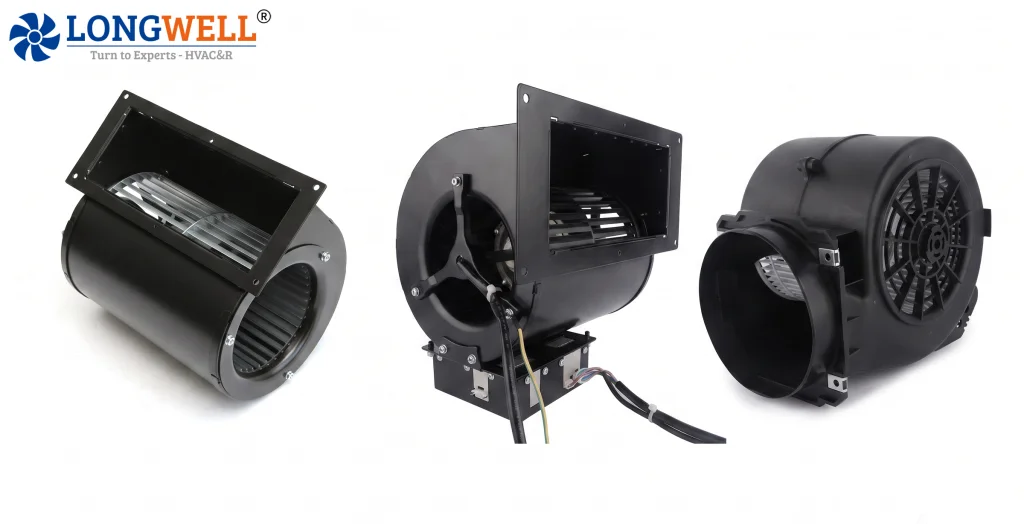
The air enters the centrifugal fan from both side of the impeller, effectively increasing the intake airflow volume on the same rotating diameter.
Key Characteristics
- Air intake from both sides simultaneously balances the load on the shaft and bearings
- Higher airflow capacity.
Single Inlet vs. Double Inlet Centrifugal Fan: Key Differences
The single inlet and double inlet centrifugal fans both utilize centrifugal force to drive the air and are widely used in ventilation systems. Understanding these nuances is crucial for selecting the appropriate equipment for specific applications.
Static Pressure Capability
Double inlet centrifugal fans have larger intake capacity and are typically used for larger HVAC applications. The double inlet centrifugal fans prioritize volume flow rather than pressure intensity. In comparison, single inlet centrifugal fans generally deliver higher static pressure relative to their size. Both single inlet and double inlet centrifugal fans can operate under a wide range of static pressure conditions.
Noise Levels
Noise is a key consideration in applications. For instance, the HVAC systems in commercial buildings, hospitals, schools and residential areas all need to take into account the issue of acoustic comfort.
Single inlet centrifugal fan typically produce a higher noise level due to its one-side inlet. The airflow entering the impeller through one side, which causes uneven aerodynamic loads on the impeller. Especially at high operation speeds, this may lead to increased vibration and radiated.
Double inlet fans reduces the aerodynamic imbalance on the impeller. They have balanced airflow entering from both sides. This symmetrical load leads to a more stable operation, lower vibration levels and quieter overall performance, making it the preferred choice for noise-sensitive environments.
Besides, the noise level of centrifugal fans rely on the design of impeller blades. The backward curved centrifugal fans often generate a lower noise level compared to the forward curved centrifugal fans.
Energy Efficiency
Double inlet centrifugal fans offer better energy efficiency and lower long-term operating costs. They are preferred in high-volume applications. Under the same conditions, the impeller of a double inlet centrifugal fan can generate higher airflow volume per rotation, enhancing the efficiency.
Size & Installation Space
Single inlet centrifugal fans have a more compact, lightweight design due to their narrower impeller and simpler volute structure. They are easier to install in limited space. Double inlet centrifugal fans require more space because both sides of the fan must remain accessible for airflow intake.
Cost Comparison
Single inlet centrifugal fans are smaller in size and have lower initial investment costs. This makes them more suitable for small projects. Double inlet centrifugal fans have larger volumes and are more complex in design, which results in higher initial investment costs. However, when considering long-term usage costs, double inlet centrifugal fans are the ideal choice for large projects.
| Key Differences | Single Inlet Centrifugal Fan | Double Inlet Centrifugal Fan |
| Static Pressure Capability | Lower | Higher |
| Noise Level | Higher | Lower |
| Energy Efficiency | Lower | Higher |
| Size & Installation Space | Smaller and Easier | Bigger |
| Cost Comparison | Lower | Higher |
Using the Right Fan for Your Application
Selecting the centrifugal fan involves matching the fan’s mechanical characteristics to the demands of your environment. The wrong choice leads to undersized airflow, excessive energy consumption, or unnecessary capital expense. Use the guide below to determine which kind of centrifugal fan is the right fan for your project.
Central HVAC and AHU
In larger HVAC systems, the main objective of centrifugal fans is to convey a stable and controllable air volume. Double inlet centrifugal fans can achieve higher air volume output while maintaining a relatively low rotational speed. The low-speed operation of the impeller leads to lower acoustic noise and higher efficiency of the fan. This not only meets the strict acoustic management requirements of large buildings but also complies with energy efficiency standards. For small AHUs or compact HVAC systems, the single inlet centrifugal fan might be chosen due to its relatively smaller size.
Industrial Ventilation
Industrial ventilation covers a very wide range. This can involve a single smoke exhaust point, all the way to a system covering the entire facilities. This means there is no single solution. The selection of fans must be determined based on the actual size and operational requirements of the system.
For local exhaust ventilation, such as dust removal for equipment in a single workstation. The key point here is to generate the required static pressure that can be conveyed through the filter medium and duct, rather than the air volume. At this time, a single inlet centrifugal fan would be more suitable. However, for continuous operation and handling of the entire factory ventilation under heavy industrial conditions, more attention is paid to the airflow volume capacity and long-term reliability. A double inlet centrifugal fan is more appropriate.
Residential & Light Commercial Ventilation
Residential and light commercial applications include such as: bathroom exhaust, kitchen ventilation, small fan coil units, and independent office or retail spaces. These have fundamentally different priority requirements compared to industrial or large commercial systems.
In these environments, the installation space is commonly limited and is sensitive to noise. They are prone to budget constraint. Single inlet centrifugal fan is the ideal choice for this scenario. Its compact design, low cost, and excellent performance precisely meet the weak air flow requirements of these environments. For larger commercial ventilation like gyms and hotels, they might select double inlet centrifugal fans. They need higher airflow volume in multi-zone ventilation systems.
Data Centers Cooling
Cooling space in data centers often involves high-density server cabinets and narrow cooling plenums where space is at a premium. It requires precise, high-pressure cooling air to maintain optimal temperatures for server racks. Single inlet centrifugal fans are more targeted for the cooling of small server cabinets and equipment racks. Their smaller size becomes an advantage for edge and rack cooling. For large data centers that operate continuously with CRAC systems, double inlet centrifugal fans can meet the required air volume and energy efficiency for operation. At this point, the selection of the centrifugal fan depends on the size of the data center.
Choose LONGWELL Professional Centrifugal Fans
In the industrial dust control system, customers usually encounter the following problems:
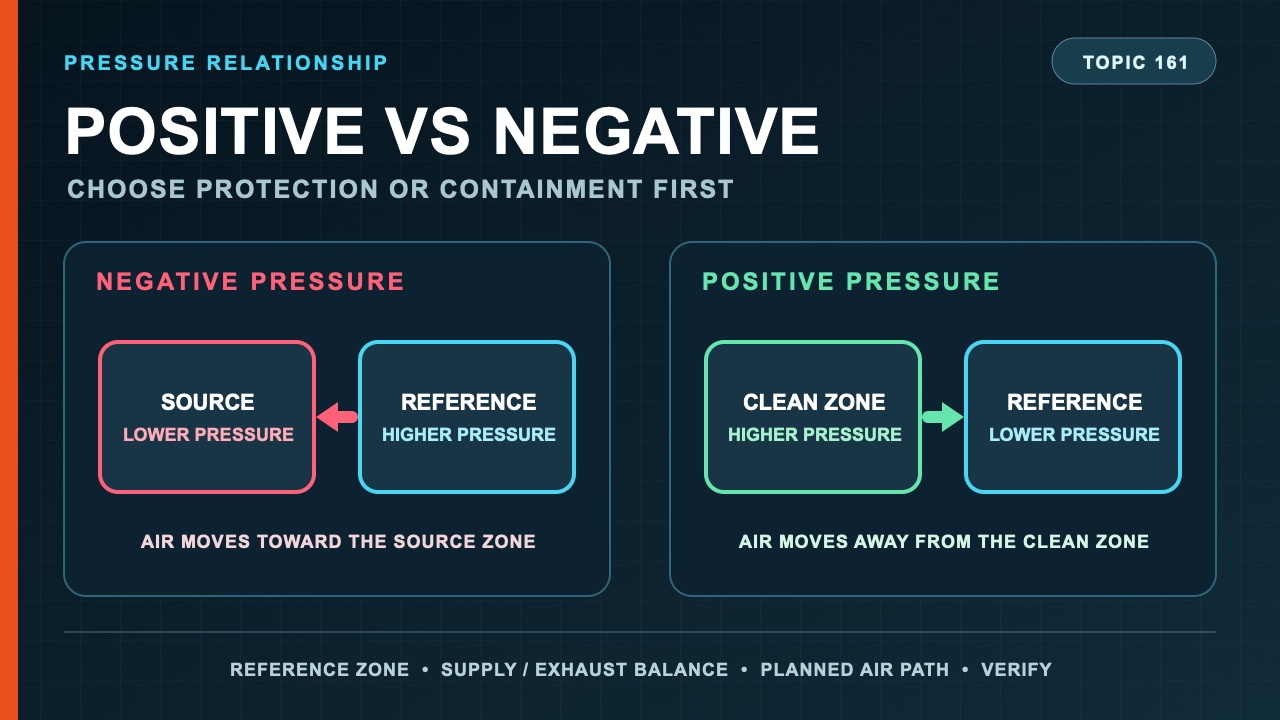
- The system needs to simultaneously cover high negative pressure main exhaust, clean pressurization, and large space air dilution.
- The requirements for fans vary greatly depending on different working conditions. Using only one type of fan or simply combining different types of fans is not enough.
- The dust environment is prone to combustion.
LONGWELL’s solution proposes the establishment of an industrial dust air dynamics system. Among them, the double inlet centrifugal fans of the RDH series and the ADH series are responsible for the main negative pressure and the dilution of large spaces. Choosing the right centrifugal fan is critical to the performance of your entire system. At LONGWELL, we provide tailored solutions designed for the required environments.
FAQs
What performance differences should I expect between single and double inlet centrifugal fans?
The main differences are pressure and volume. The single inlet centrifugal fans are engineered to generate higher static pressure. This makes them suitable for systems with high resistance. However, the double inlet centrifugal fans focus on moving higher air volume.
How does capacity (CFM) compare for single inlet vs double inlet fans?
Under the same condition and parameter, the double inlet centrifugal generally provide significantly higher CFM. Because they draw air from two sides, they utilize the impeller’s surface area more effectively.
Do double inlet centrifugal fans use less energy than single inlet ones?
It depends on the operating environment. The energy efficiency levels of these two centrifugal fans are roughly the same when the airflow is low to medium. The single inlet centrifugal fan may be more energy-efficient. Under high air volume conditions, the double inlet centrifugal fan has significant energy-saving advantages.
What installation requirements differ between single and double inlet fans?
Centrifugal fans of the same specification with double inlets are usually thicker than those with single inlets. The single inlet centrifugal fan is particularly suitable for compact or wall-mounted spaces. The double-inlet fan is wider and requires clear and enough space on both sides of the fan housing to ensure operation.
Single-inlet or double-inlet centrifugal fan which is quieter?
Double inlet centrifugal fans are generally quieter under equivalent operating conditions because of aerodynamic balance. Their air volume on both sides of the air inlet is relatively balanced.