Garage Exhaust Fans: The Ideal Choice for Enhanced Ventilation
Introduction: Why Do You Need Garage Exhaust Fans?
Garage exhaust fans are essential equipment for ensuring a safe, healthy, and comfortable garage environment. Whether storing vehicles, chemicals, or using the garage as a workshop, garages can accumulate harmful gases such as vehicle exhaust, paint fumes, or solvent vapors, as well as mold problems caused by moisture. Garage exhaust fans significantly improve air quality and protect your family’s health by effectively removing these pollutants and excess heat. Let’s explore the benefits of garage exhaust fans and learn how to scientifically select the right model.
Benefits of Garage Exhaust Fans
Installing garage exhaust fans provides multiple advantages, making them the ideal choice for garage ventilation:
· Improved Air Quality
Effectively removes vehicle exhaust, chemical odors, and other harmful gases, preventing toxic substance accumulation and protecting respiratory health.
· Moisture Control
By expelling excess moisture, prevents mold and mildew, protecting items and structures within the garage.
· Temperature Regulation
During hot summers, exhaust fans expel hot air, keeping the garage cool and enhancing comfort.
· Enhanced Safety
Reduces the accumulation of combustible vapors, lowering fire and explosion risks to ensure safety.
According to ASHRAE (American Society of Heating, Refrigerating and Air-Conditioning Engineers) standards, a proper ventilation system not only improves the environment but also extends the lifespan of items stored in the garage.

How to Scientifically Select Garage Exhaust Fans
1. Calculate Required Airflow
Selecting the appropriate exhaust fan requires calculating airflow based on garage size and pollution level. Follow these steps:
Measure Garage Volume Length (feet) × Width (feet) × Height (feet) = Volume (cubic feet). Example: 20 feet × 20 feet × 8 feet = 3,200 cubic feet.
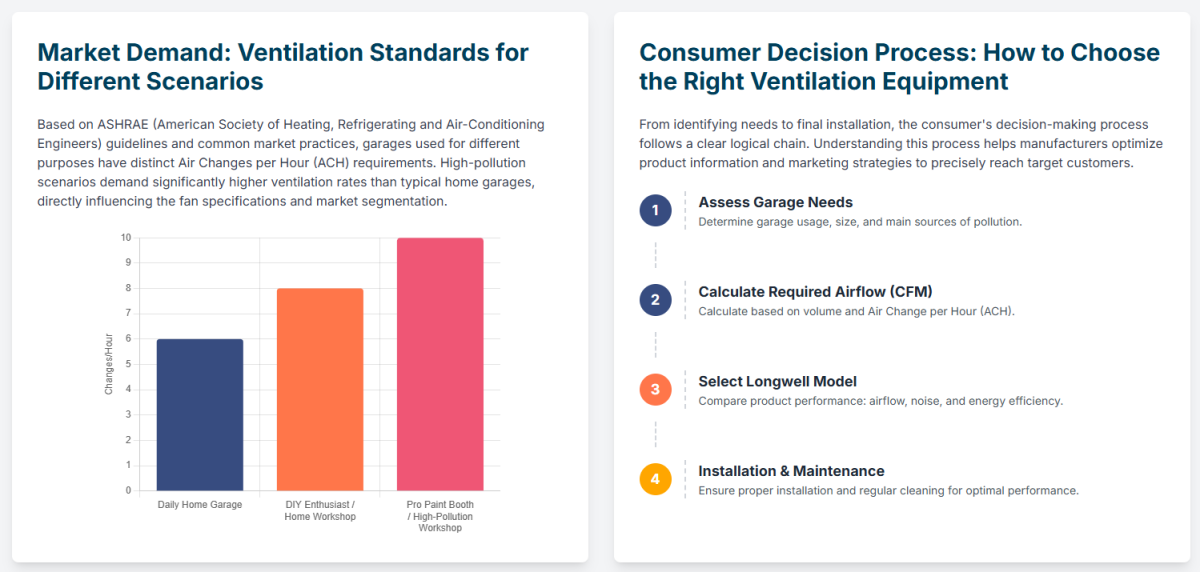
Determine Air Exchange Rate
Residential Garages: Recommended 4-6 times/hour (light pollution, such as daily parking).
Commercial/High Pollution Scenarios: Recommended 8-10 times/hour (such as paint booths, chemical storage).
According to ASHRAE 62.1 standards, ordinary residential garages recommend an air change rate of 0.35 ACH (Air Changes per Hour), meaning 0.35 complete air replacements per hour, but high pollution scenarios require higher frequencies.
Calculate Airflow (CFM) Formula: CFM = (Volume × Air Exchange Rate) / 60. Example: 3,200 cubic feet × 6 times/hour ÷ 60 = 320 CFM.
Convert to m³/h 1 CFM ≈ 1.699 m³/h, therefore 320 CFM ≈ 544 m³/h.
2. Other Key Selection Factors
- · Noise Level: Recommend selecting 30-50 dB low-noise models (such as Longwell LWWEXD-300E4-02 with 58dB noise, within reasonable industry range).
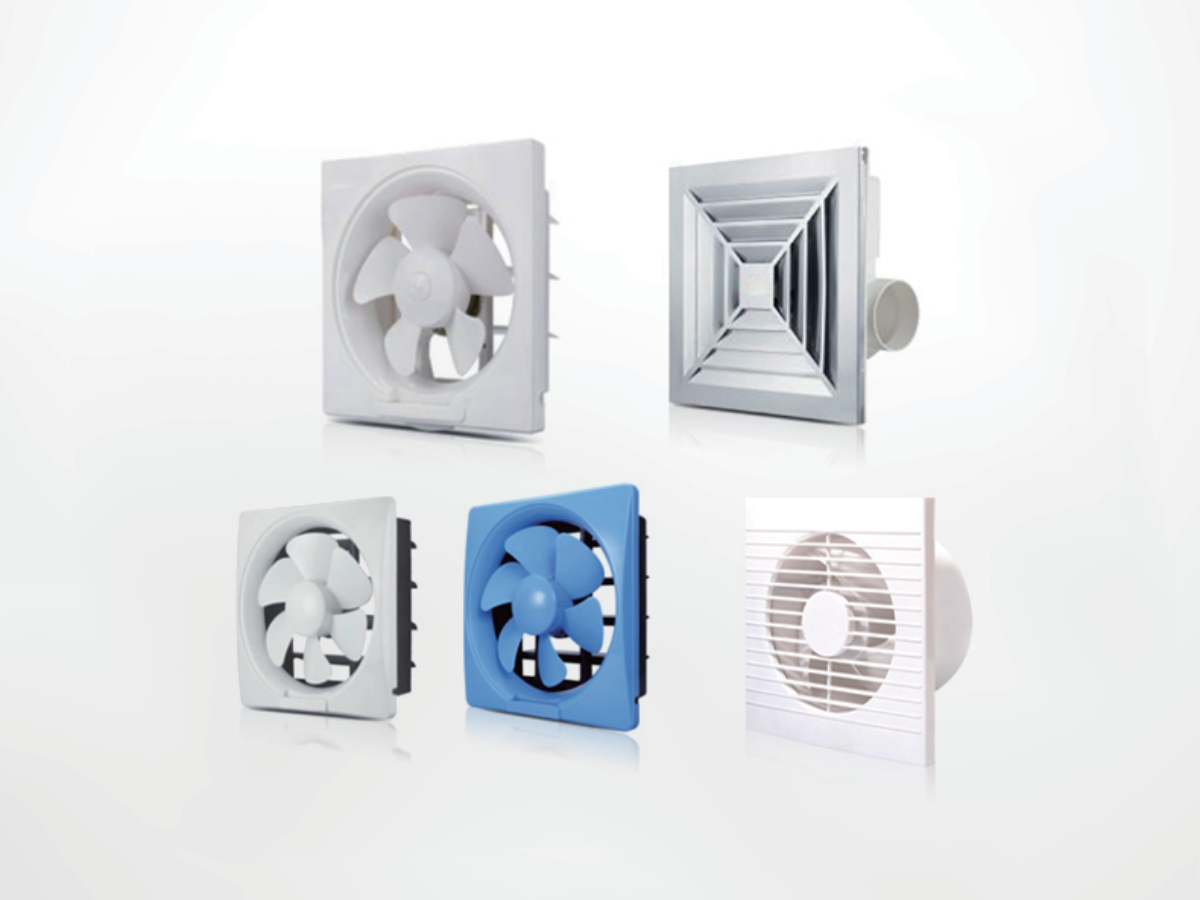
- · Installation Type: Wall-mounted exhaust fans are suitable for garages as they are easy to install and effectively expel air.
- · Energy Efficiency: Choose energy-efficient models to reduce long-term operating costs.
- · Fresh Air System Integration:
- If converting the garage to living space or requiring high air quality standards, recommend combining with fresh air systems (such as total heat exchangers), which actively introduce fresh air and filter pollutants for more efficient air circulation.
- Compared to simple exhaust fans, fresh air systems can avoid backflow problems caused by excessive negative pressure.

Longwell’s Garage Exhaust Fan Solutions
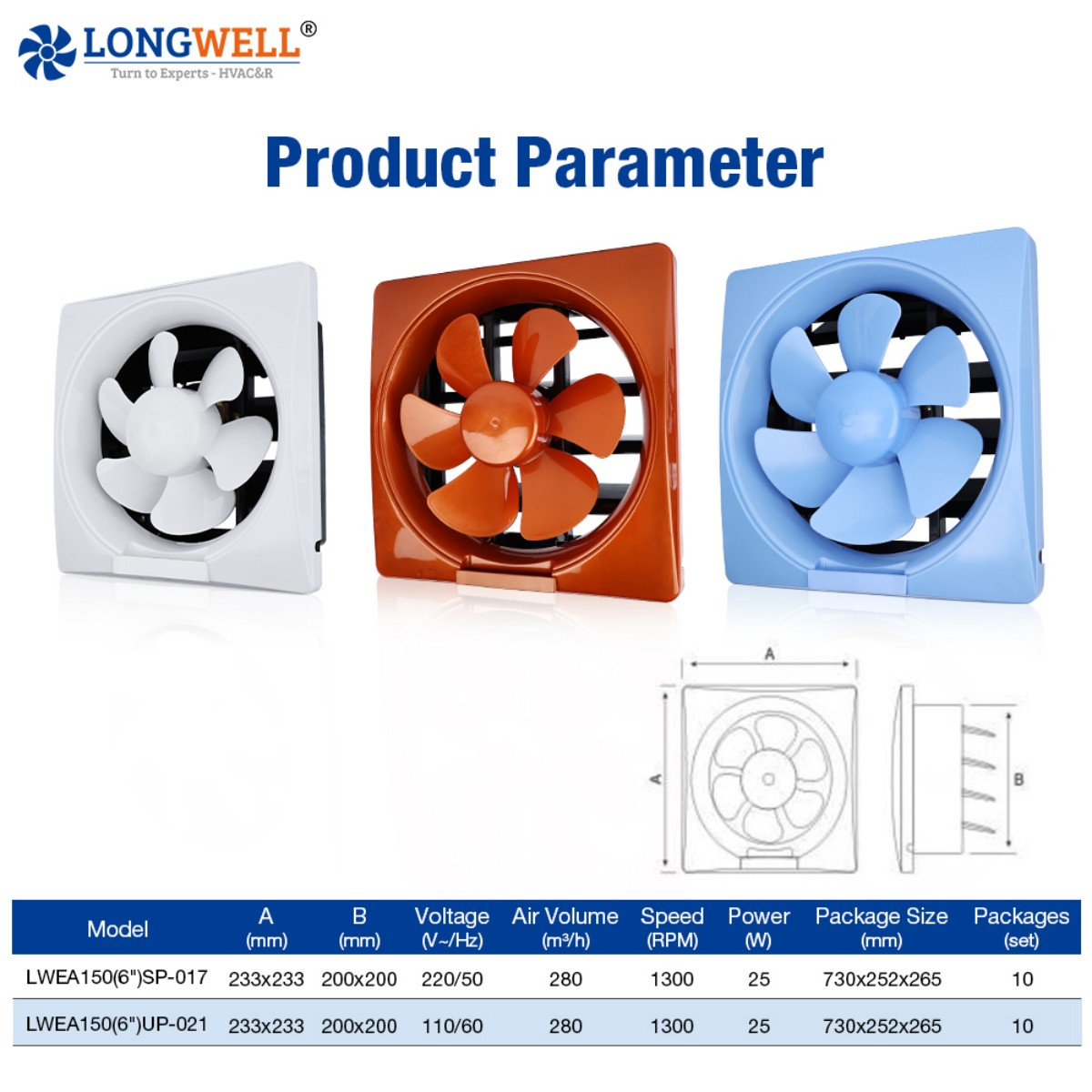
Since its establishment in 1998, Longwell has specialized in efficient, durable, and low-noise ventilation equipment. Products are certified by CE, UL and other international standards, widely used in residential and industrial scenarios globally. Here are two recommended models:
1. LWEA250(10″)SP-011
· Airflow: 750 m³/h (approximately 441 CFM)
· Size: 250mm (10 inches)
· Voltage: 220V
· Power: 30W
· Noise: 35dB(A)
· Features:
-
- Suitable for small to medium garages (approximately 150-300 square feet), meeting daily ventilation needs.
- Metal construction + automatic louver design, corrosion-resistant and easy to install.
- Low power consumption design, energy-efficient.
2. LWEA300(12″)SP-012
· Airflow: 1100 m³/h (approximately 645 CFM)
· Size: 300mm (12 inches)
· Voltage: 220V
· Power: 40W
· Noise: 35dB(A)
· Features:
-
- Suitable for large garages or high pollution scenarios (such as paint booths).
- High airflow design, rapidly expels harmful gases, meets industrial-grade ventilation requirements.
- Extremely low noise (35dB), quiet operation.

Note: The above models are from the LWEA series in the product catalog with reliable parameters. If not found in the product catalog, they may be older models or naming errors. Please contact Longwell business representatives for the latest information.
Installation and Maintenance Recommendations
Installation Location
· Choose exterior wall installation, ensure fresh air enters through doors or vents to create effective airflow circulation.
· According to ASHRAE recommendations, there should be no obstacles within 2.5-3 meters opposite the outlet.
Power and Safety
·Confirm garage power supply supports 220V; if unfamiliar with electrical operations, contact professional electricians for installation.
· High pollution scenarios recommend adding explosion-proof design.
Regular Maintenance
· Clean fan blades quarterly, check louver sealing, ensure long-term efficient operation.

Conclusion
Garage exhaust fans are key equipment for improving environmental quality, especially indispensable in high pollution or humid scenarios. Longwell, with international certifications and diversified product lines, provides reliable solutions for different scenarios. For ordinary residential garages, selecting models with 4-6 air changes per hour is sufficient; for higher standards, combine with fresh air systems for comprehensive ventilation. Visit Longwell’s official website now to get customized recommendations and choose the exhaust fan that best suits your needs!