Axial Fans vs Centrifugal Fans: Choosing the Right Fan for Your Needs
In industrial and commercial ventilation systems, selecting the right fan is crucial for efficiency, performance, and cost-effectiveness. As a leading fan manufacturer, Ningbo Longwell Electric Technology Co., Ltd. (Longwell) offers a comprehensive range of axial and centrifugal fans to meet diverse needs from electronic cooling to industrial ventilation. This article provides a detailed comparison of axial and centrifugal fans, their characteristics, advantages, and applications, based on information from Longwell’s official website (www.longwellfans.com), to help you choose the most suitable ventilation solution.
What is an Axial Fan?
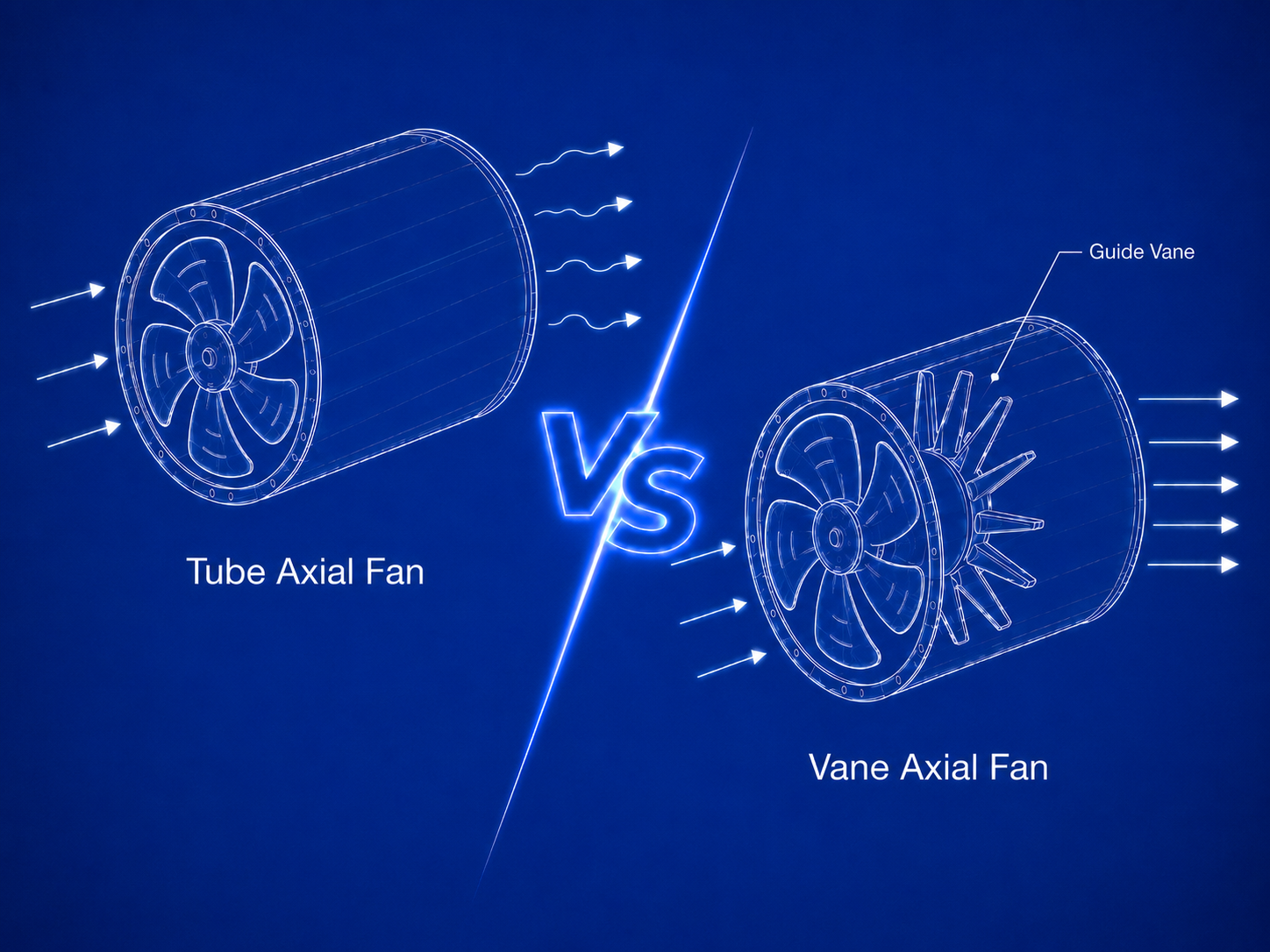
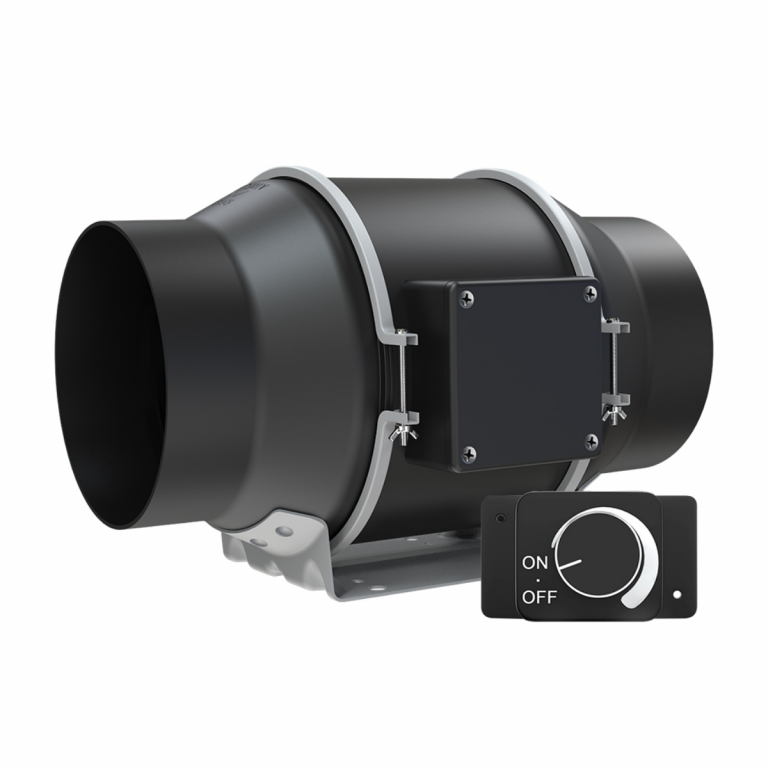
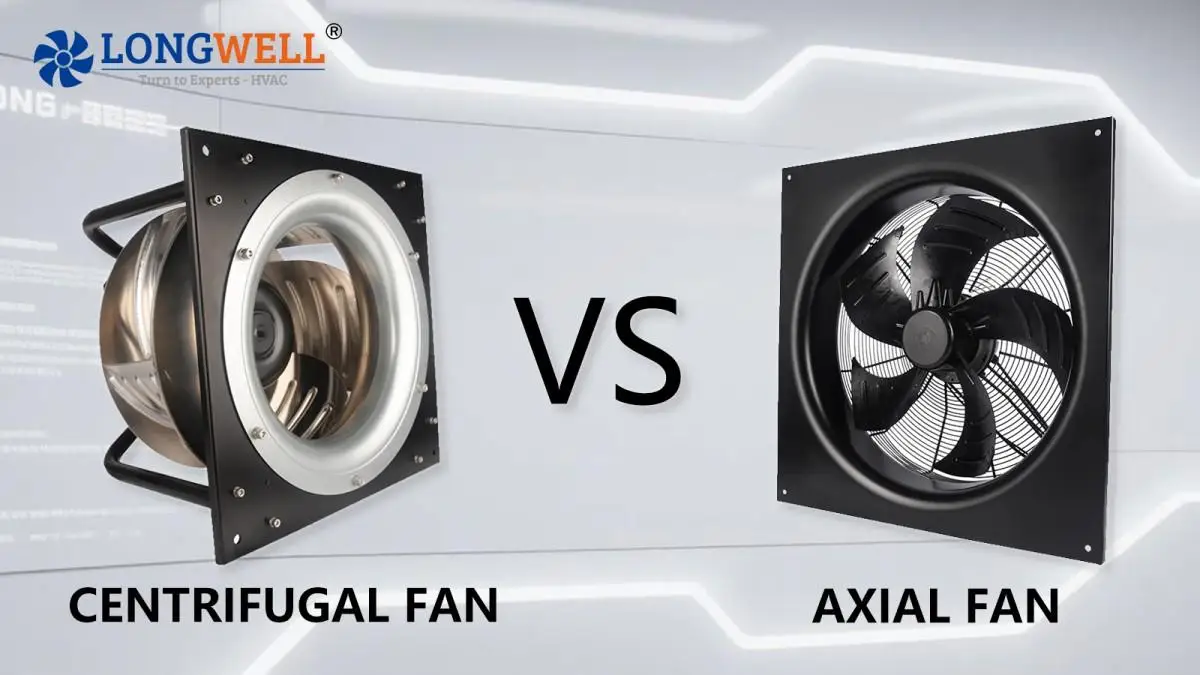
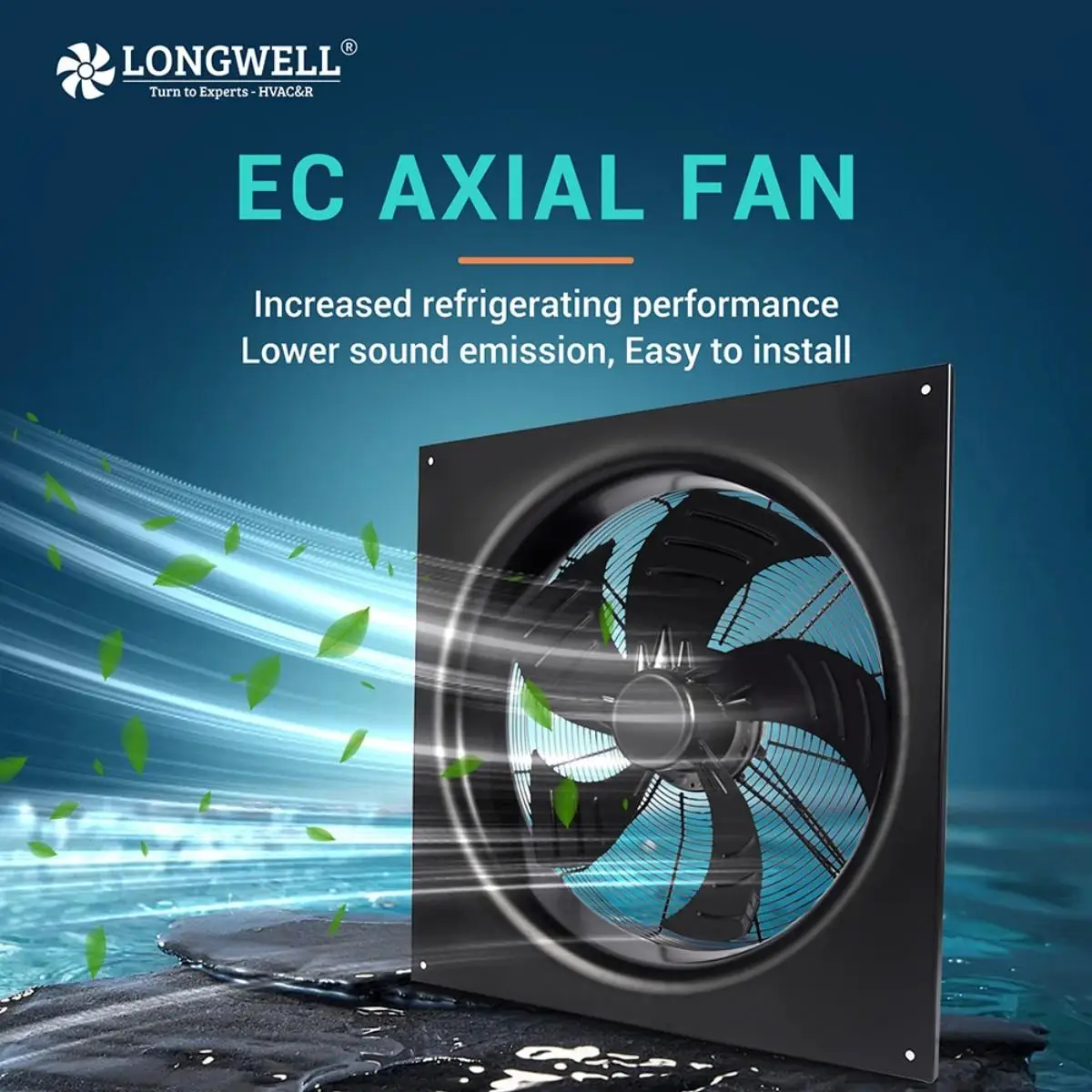
An axial fan, also known as a propeller fan, moves air parallel to the axis of rotation. Its blades rotate around a central hub, drawing air in and expelling it in the same direction. According to Longwell’s website (Axial Fans), their axial fans are specifically designed for high airflow, low-pressure applications, making them ideal for ventilation systems, cooling towers, and electronic equipment cooling.
Key Features of Longwell Axial Fans
High Airflow Capacity: Longwell axial fans (such as tube axial fans) are engineered to efficiently move large volumes of air, making them perfect for ventilating large spaces like warehouses or factories.
Compact Design: These fans are lightweight and space-efficient, facilitating easy installation in confined spaces where traditional fans might not fit.
Energy Efficiency: Equipped with high-efficiency motors, Longwell axial fans deliver consistent airflow while minimizing energy consumption, reducing operational costs.
Low Noise Operation: Optimized design ensures quiet operation, especially at lower speeds, making them suitable for noise-sensitive environments.
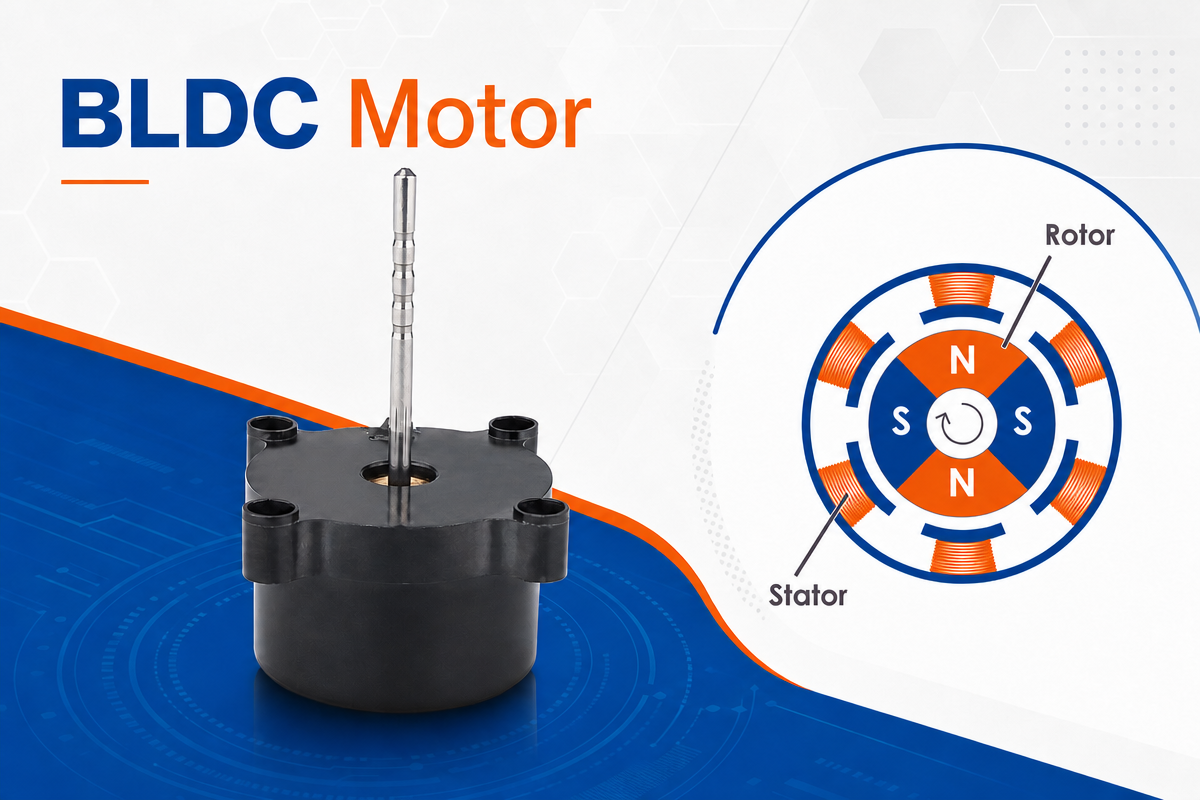
Advanced Control Systems: Longwell’s DC axial fans feature 100% speed control capability through 1-10 VDC, PWM control, or RS485 protocol for precise airflow regulation (DC Axial Fans).
Common Applications
- General ventilation in commercial buildings and industrial facilities
- Cooling electronic components in data centers and server rooms
- Exhaust systems for removing waste gases or harmful fumes
- Air circulation in HVAC systems
- Cooling towers and heat exchangers
What is a Centrifugal Fan?
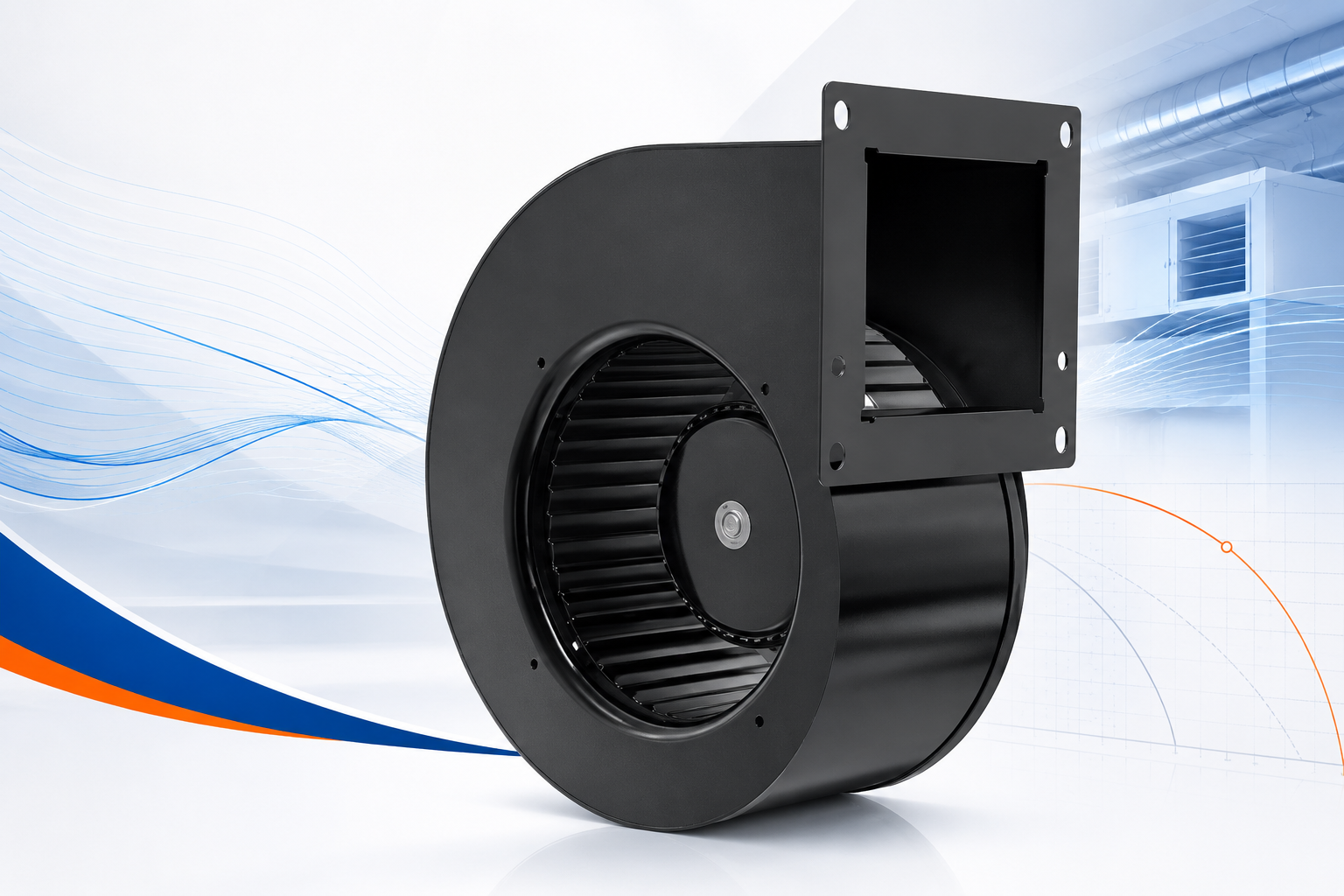
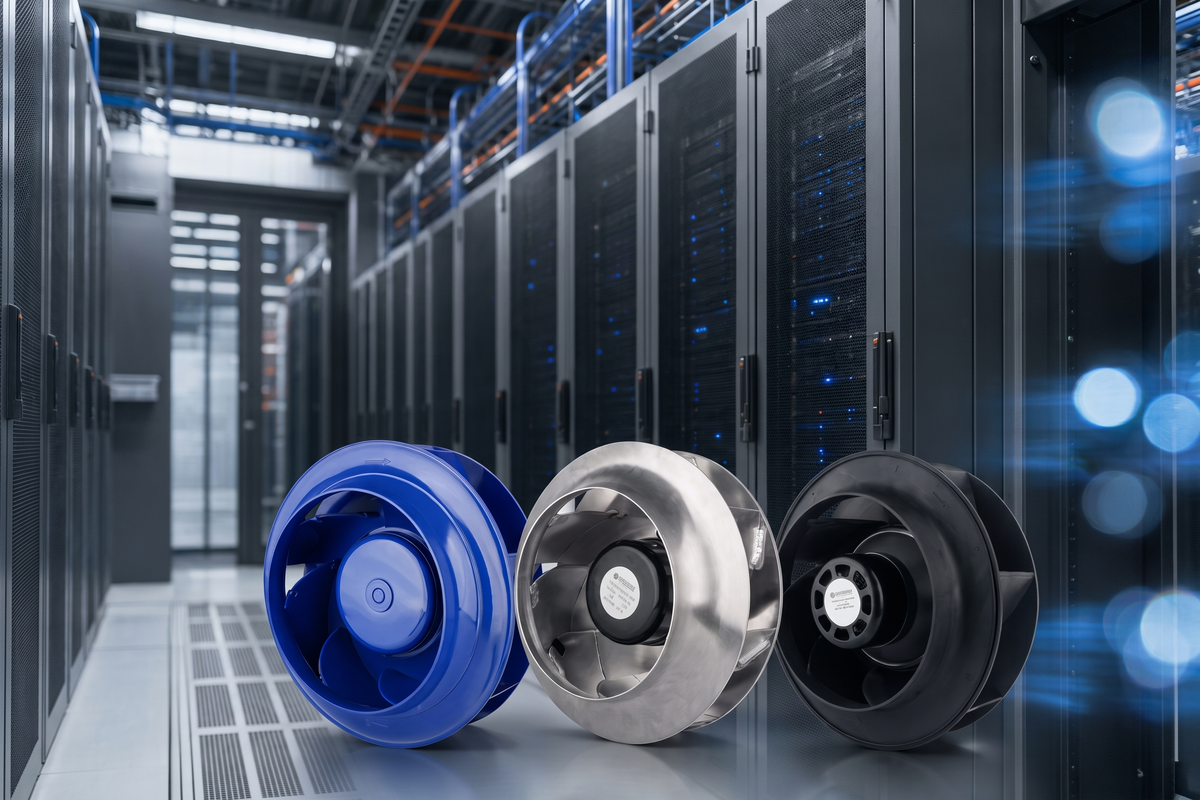
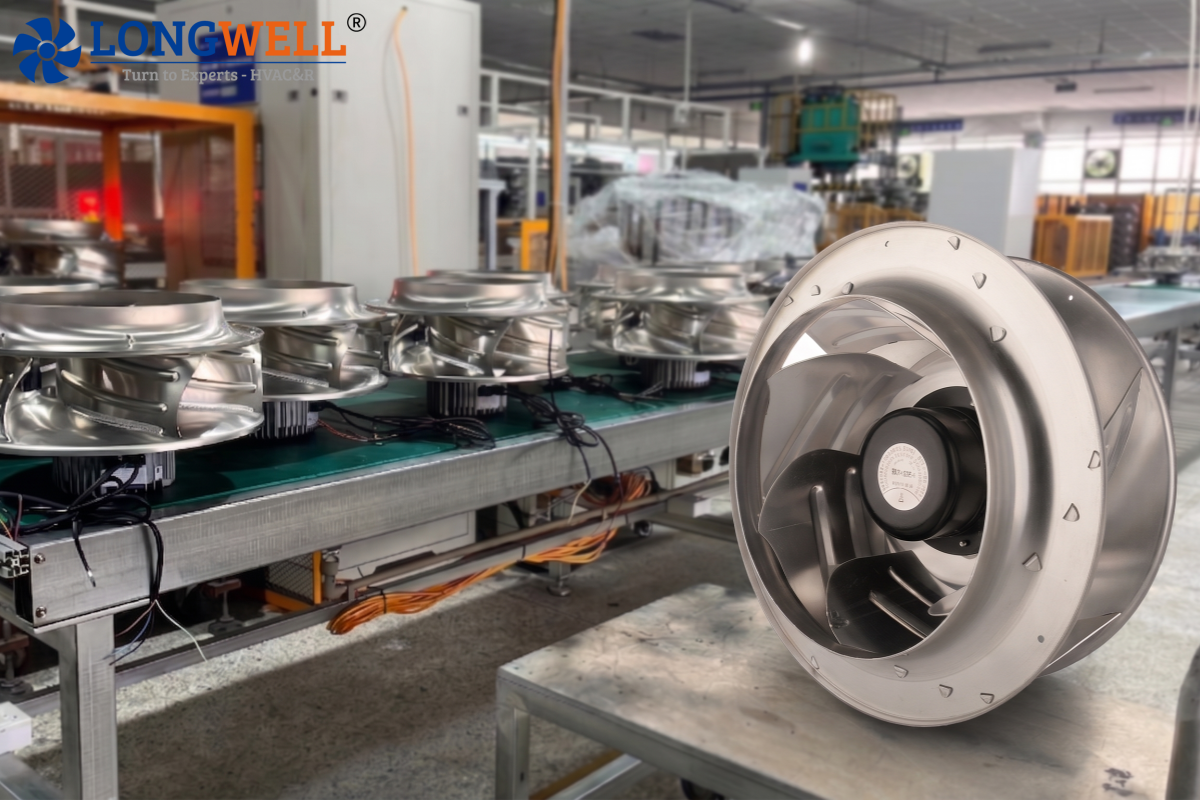
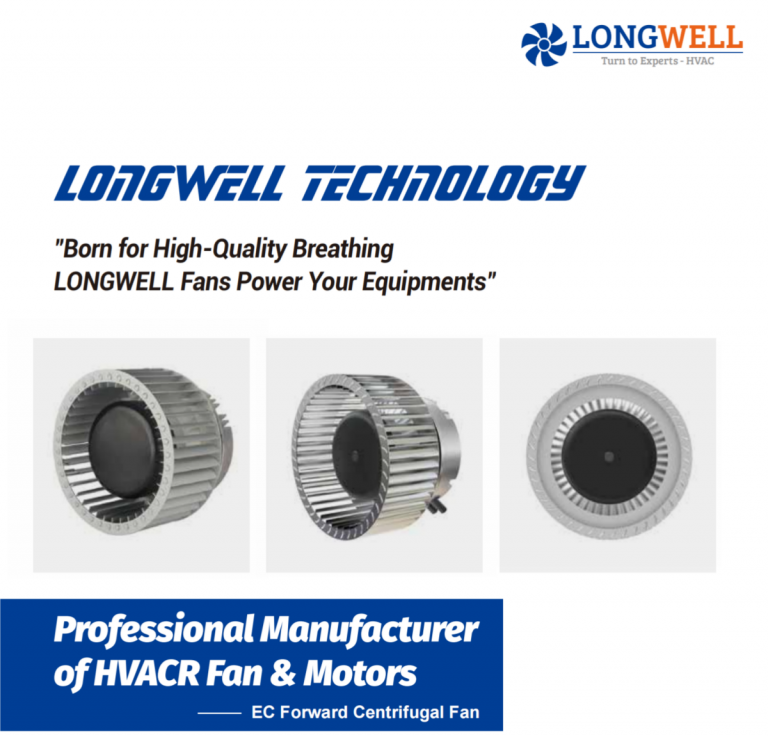
A centrifugal fan, also known as a blower, draws air into a rotating impeller and expels it at a 90-degree angle, creating radial airflow. Longwell’s centrifugal fans (such as the RLM series) are specifically designed for high static pressure applications, making them ideal for ducted systems or filtration systems with high resistance (Centrifugal Fans).
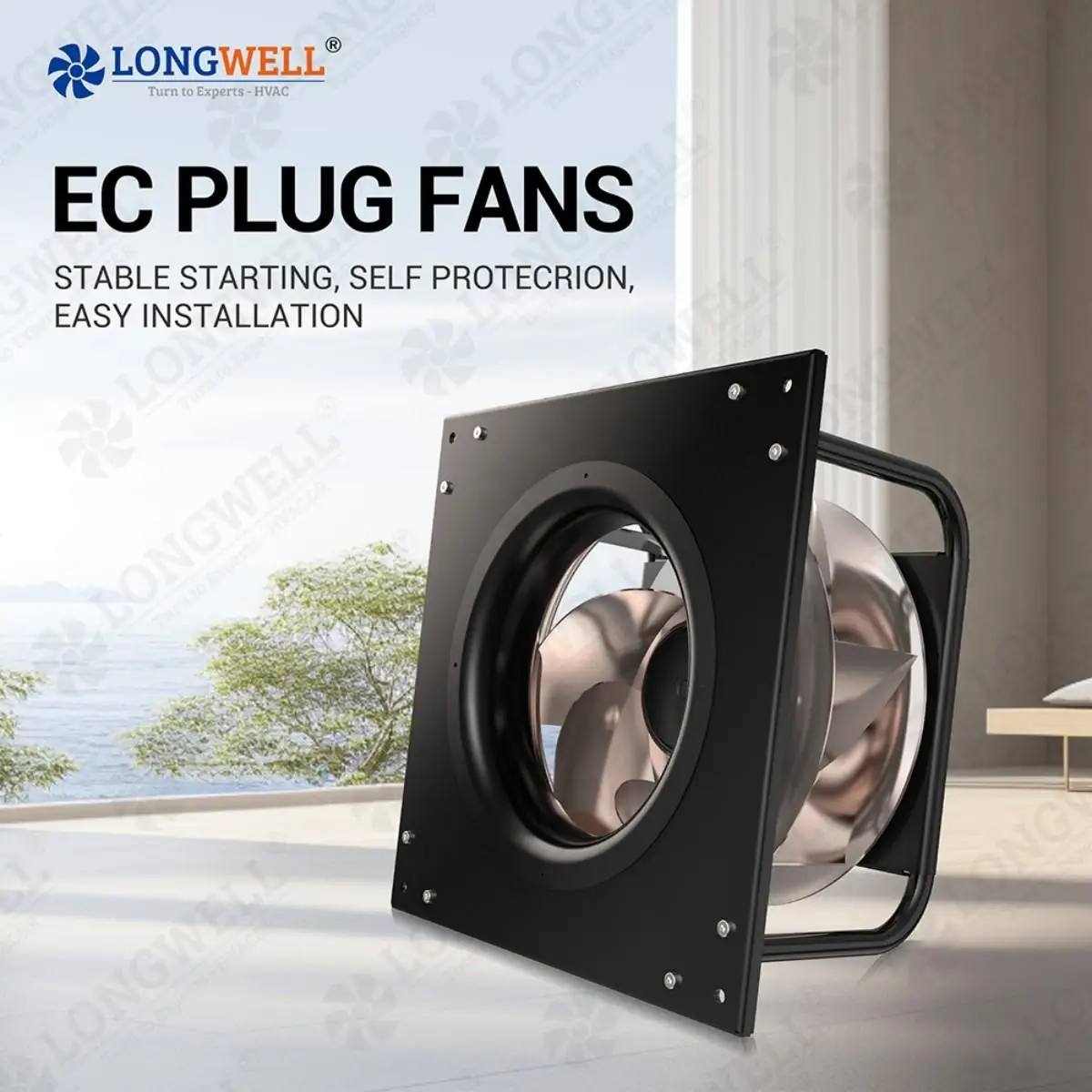
Key Features of Longwell Centrifugal Fans
High Static Pressure: Longwell centrifugal fans excel in complex duct systems or high-resistance environments where other fans might struggle.
Diverse Impeller Designs: Available with backward-curved, forward-curved, or radial impellers to meet specific airflow and pressure requirements.
Exceptional Durability: Designed to operate in high-temperature, dusty, or corrosive environments, ensuring long-term reliable operation.
Customizable Configurations: Available with direct-drive or belt-drive motor options to meet unique industrial requirements.
Energy-Saving Technology: Incorporating advanced brushless EC technology, these fans achieve up to 30% energy savings compared to traditional AC fans (Centrifugal Fans).
Common Applications
- Air conditioning and heating in HVAC systems
- Drying and material handling in industrial processes
- Dust collection and pollution control systems
- Pneumatic conveying systems
- High-pressure ventilation in underground facilities
Key Differences: Axial vs Centrifugal Fans
To help you make an informed decision, here’s a detailed comparison based on Longwell product information and industry standards:
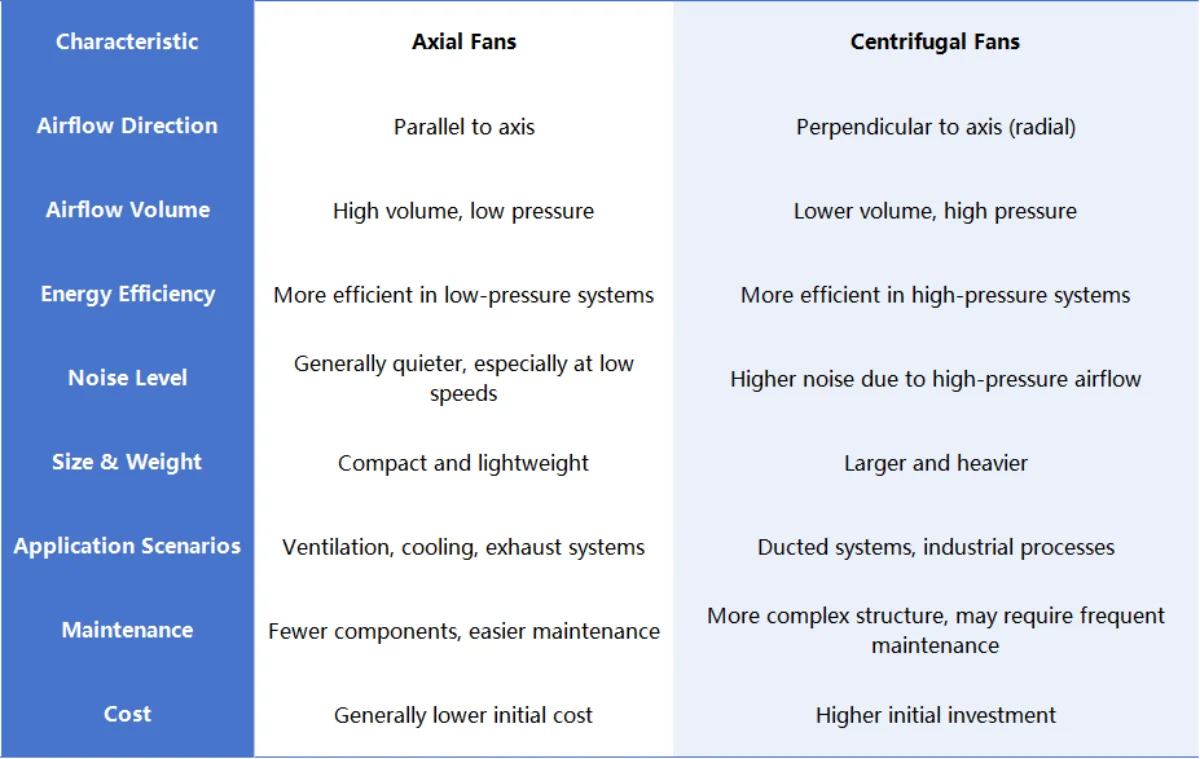
Airflow and Pressure Characteristics
Axial fans are ideal for moving large volumes of air in low-resistance environments, such as open spaces or short ductwork. Longwell’s axial fans are optimized for high airflow output, making them perfect for general cooling and ventilation applications. In contrast, centrifugal fans are designed for high-pressure applications and perform exceptionally well in long ductwork or high-resistance systems. Longwell’s centrifugal fans (such as the RLM series) are AMCA certified, ensuring efficient performance (Centrifugal Fans).
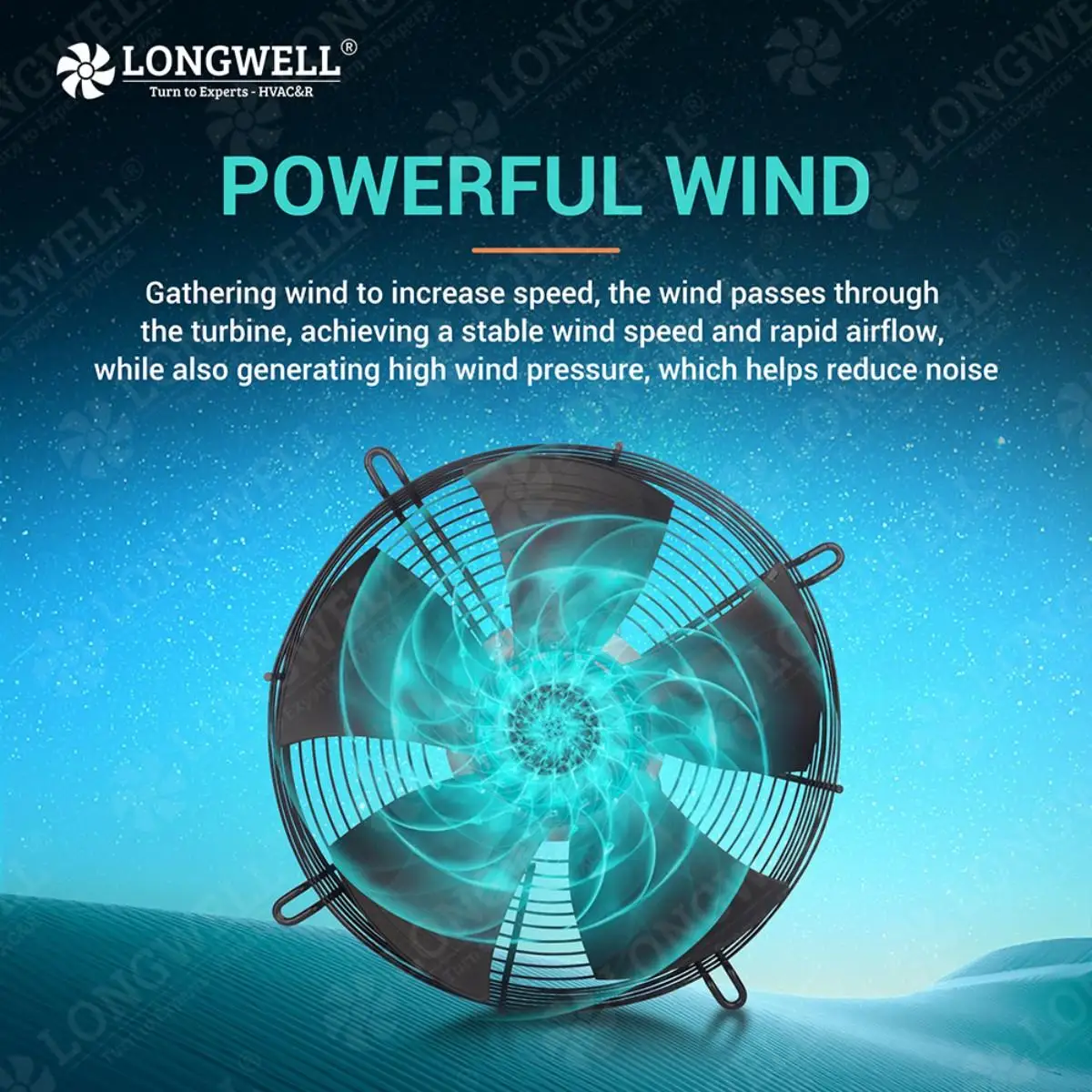
Space and Installation Considerations
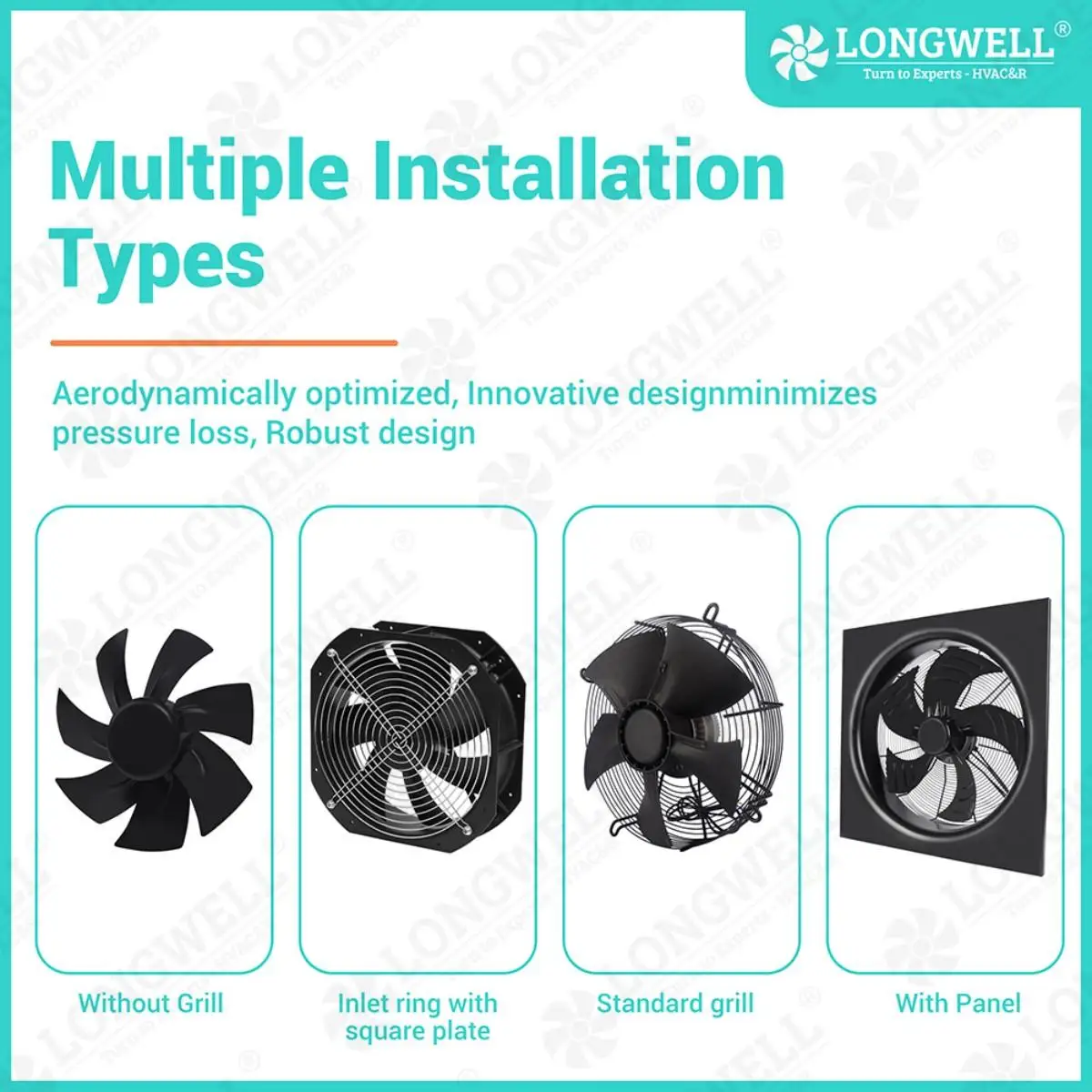
Longwell’s axial fans feature compact designs that are easy to install in space-constrained environments such as electronic cabinets or small rooms. Centrifugal fans, due to their larger housing and complex design, require more installation space and are particularly suitable for ducted systems where space is less of a concern.
Noise Considerations
Longwell’s axial fans (especially DC models) operate at lower noise levels, making them suitable for noise-sensitive locations such as offices or residential areas. Centrifugal fans typically generate more noise due to high-pressure airflow, but Longwell offers noise reduction options to meet specific requirements.
Energy Efficiency
Longwell’s axial fans consume less energy in low-pressure applications, making them ideal for continuous operation in ventilation systems. Centrifugal fans are more efficient in high-pressure systems, and their brushless EC technology reduces energy waste while improving overall efficiency.
How to Choose the Right Fan?
Selecting between axial and centrifugal fans depends on your specific requirements. Here are key considerations:
1. Airflow Requirements
For high-volume, low-pressure applications (such as warehouse ventilation), choose Longwell axial fans. For high-pressure requirements (such as HVAC systems with long ductwork), select centrifugal fans.
2. Space Constraints
Axial fans are better suited for installations with limited space, while centrifugal fans are appropriate for systems with adequate space availability.
3. Operating Environment
In high-temperature, dusty, or corrosive environments, Longwell’s centrifugal fans (such as stainless steel models) provide superior durability (Stainless Steel Centrifugal Fans).
4. Noise Sensitivity
In environments requiring quiet operation, Longwell’s axial fans are the better choice.
5. Budget and Maintenance
Axial fans typically have lower costs and simpler maintenance requirements, while centrifugal fans may require higher initial investment and maintenance costs.
Why Choose Longwell Fans?
Longwell is committed to providing high-quality, reliable, and efficient axial and centrifugal fans to meet various application needs. Our products, showcased on www.longwellfans.com, incorporate advanced technology to ensure optimal performance, energy efficiency, and durability. Whether you need compact axial fans for electronic cooling or robust centrifugal fans for industrial ventilation, Longwell provides the solution.
Our Advantages
Customization: We offer customized fan solutions with various motor types and impeller configurations to meet specific requirements.
International Standards: Our fans comply with international quality and safety standards, ensuring reliability across industries.
Professional Support: Our technical team provides expert guidance to help you select the right fan for your application.
Global Reach: With worldwide distribution, we provide local support and service wherever you are.
Conclusion
The choice between axial and centrifugal fans depends on your specific airflow, pressure, space, and noise requirements. Longwell’s comprehensive range of axial and centrifugal fans (www.longwellfans.com) provides diverse solutions for industrial, commercial, and residential applications. For high-volume, low-pressure applications, our axial fans are the ideal choice, while for high-pressure, ducted systems, our centrifugal fans excel.
Contact Longwell today to explore our fan solutions and find the perfect product for your ventilation needs.
For more information about Longwell fan products, visit www.longwellfans.com or contact our team for personalized support.
Longwell – Your Trusted Partner in Ventilation Solutions