Centrifugal Fans Explained: Working Principle, Types and Application
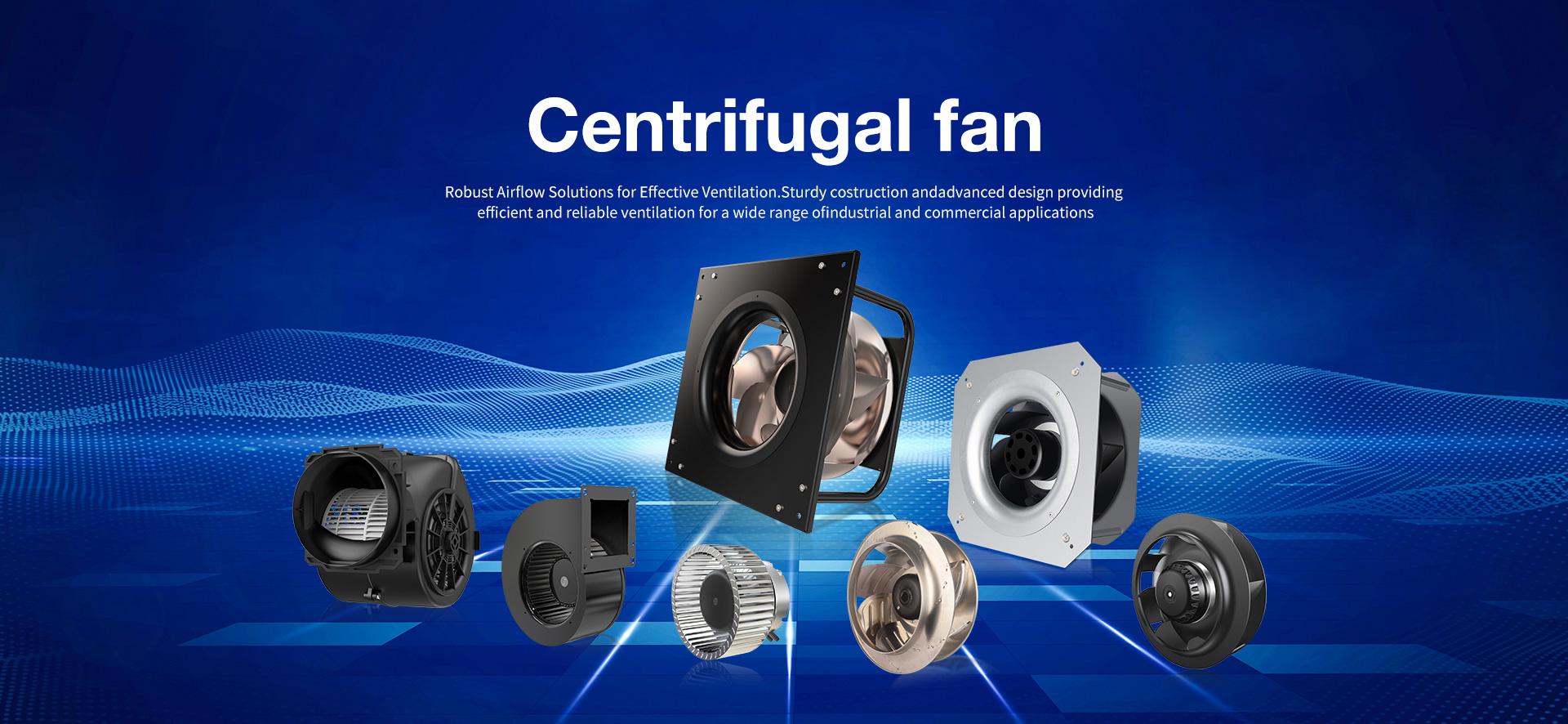
When it comes to commercial and industrial air movement, few devices are as reliable and versatile as centrifugal fans. Known for their ability to generate high pressure and maintain consistent airflow in demanding environments, these systems are the unsung heroes behind everything from large-scale HVAC units to complex manufacturing processes.
As a leading global manufacturer, LONGWELL often consults with engineers and facility managers on how to select the right air movement solutions. In this comprehensive guide, we will break down the working principles, explore the different blade configurations, and highlight the key applications of a centrifugal blower to help you make an informed decision for your next project.
How Do Centrifugal Fans Work?
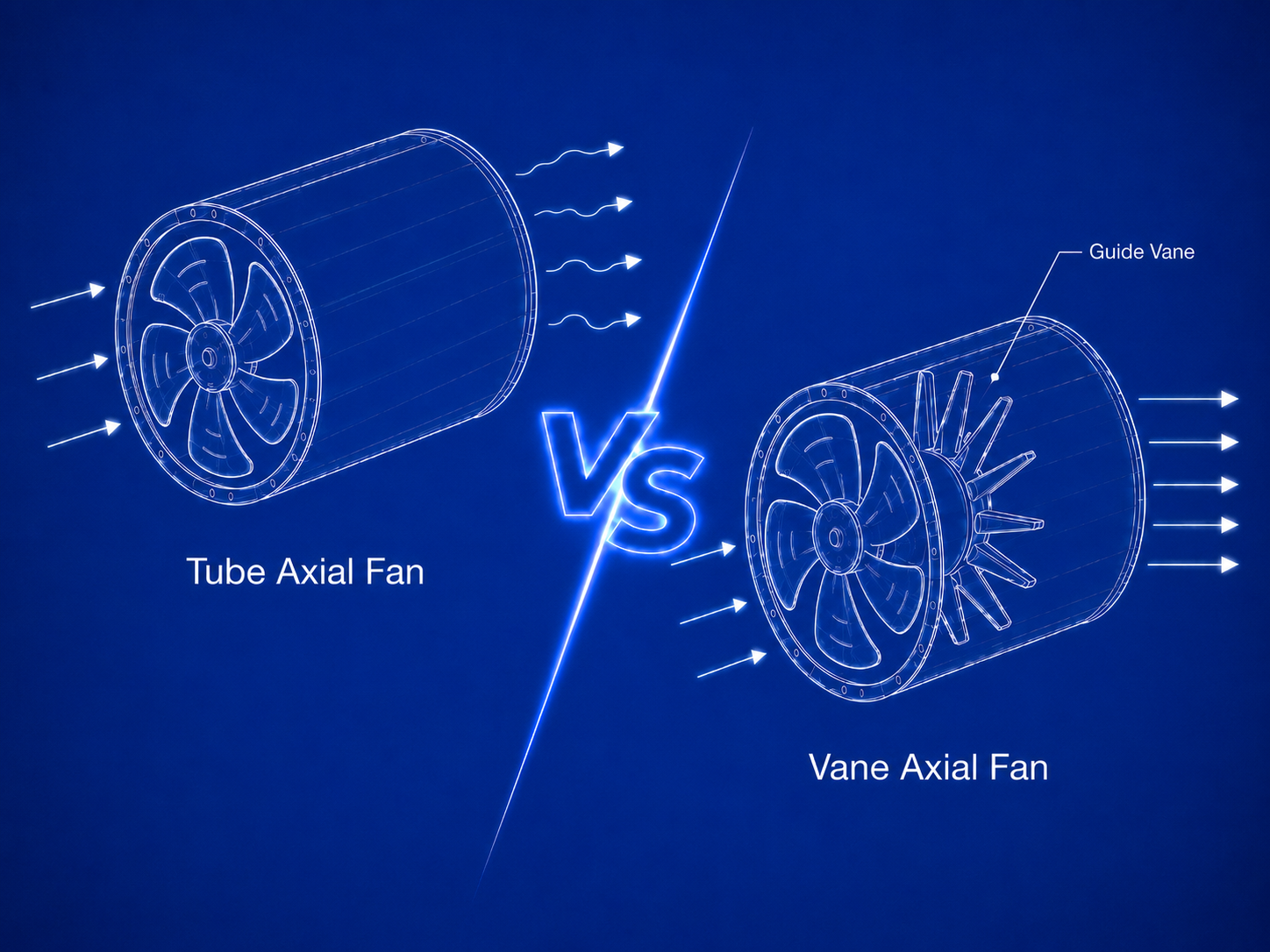
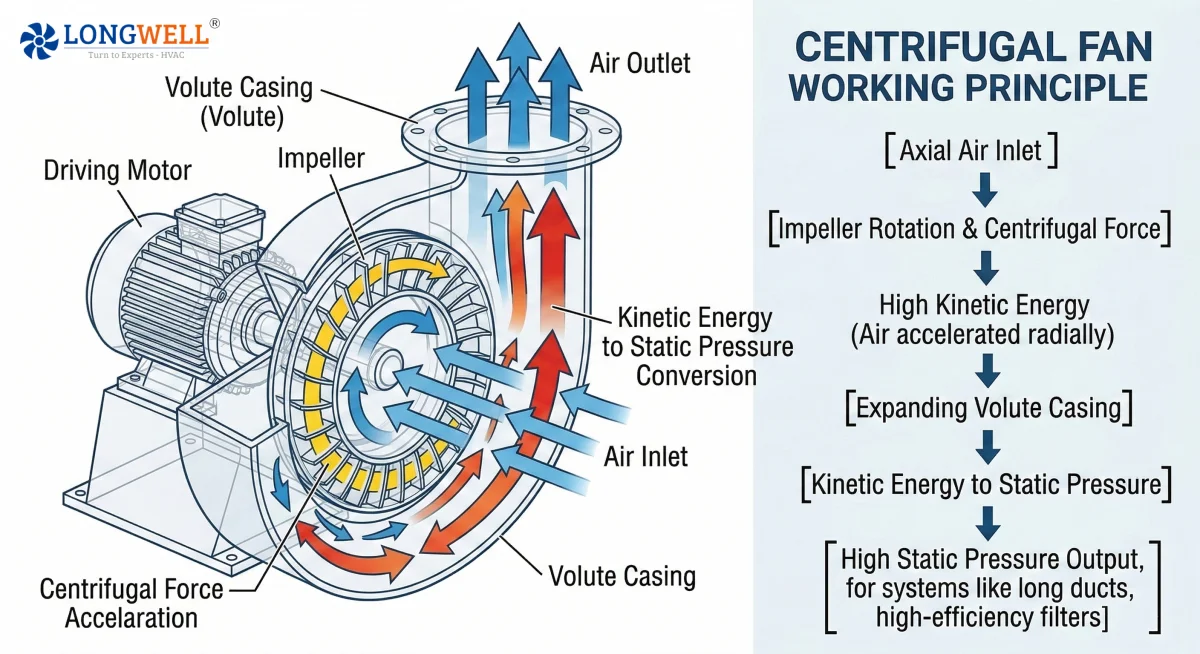
To understand why these fans are so effective, you have to look at their basic physics. Unlike axial fans that push air in a straight line parallel to the shaft, a centrifugal fan draws air into the center of a rotating impeller and then accelerates it outward at a 90-degree angle.
This process relies heavily on centrifugal force. As the impeller blades spin, they impart kinetic energy to the incoming air. The air is then thrown radially outward against the fan casing (often called a scroll or volute housing). The housing is specifically shaped to slow the air down, converting that high-speed kinetic energy into strong static pressure.
This fundamental design allows the centrifugal blower to easily overcome the high airflow resistance typically found in long ductwork, HEPA filters, and complex ventilation systems.
Main Types of Centrifugal Fans: Finding the Right Fit
The performance profile of a centrifugal fan is dictated entirely by the shape and angle of its impeller blades. Depending on your required airflow volume, static pressure, and the cleanliness of the air, you will typically choose from one of these three core designs:
1. Backward Curved Centrifugal Fan
Designed with blades that curve away from the direction of wheel rotation, the backward curved centrifugal fan is the industry’s gold standard for energy efficiency.
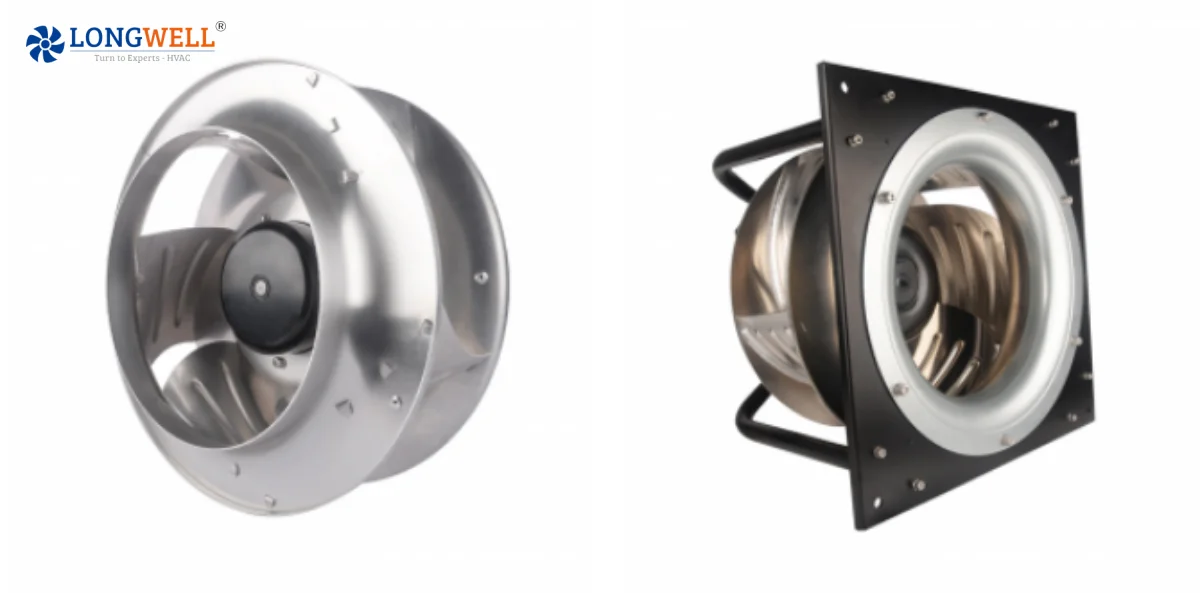
These fans are characterized by their “non-overloading” power curve, meaning the motor will not overload regardless of unpredictable changes in system resistance. They excel at generating high static pressure while maintaining minimal noise levels. Today, they are frequently paired with advanced EC (Electronically Commutated) motors, making them the premier choice for modern HVAC systems, Air Handling Units (AHUs), and critical data center cooling infrastructure.
2. Forward Curved Centrifugal Fan
The forward curved centrifugal fan features multiple shallow blades that curve directly into the direction of rotation. Commonly referred to as “squirrel cage” fans due to their appearance, these units are engineered to move a high volume of air at relatively low speeds.
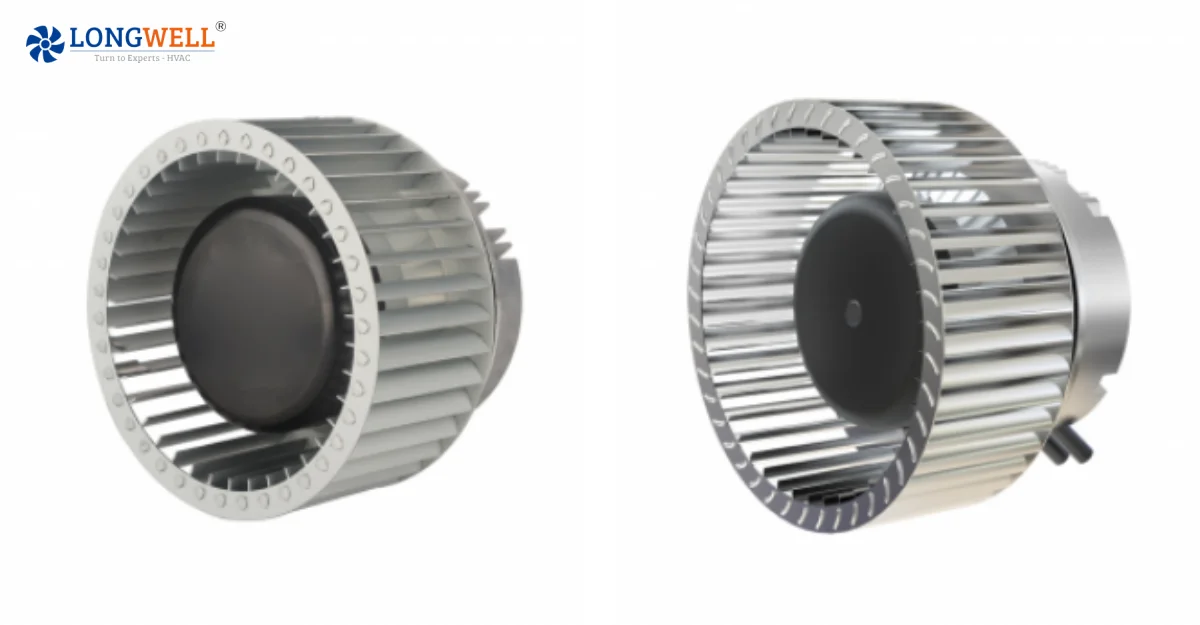
Because they operate at lower RPMs, they are exceptionally quiet. While they cannot push against the extreme high pressures that backward-curved models can handle, their compact footprint makes them incredibly popular for residential furnaces, fan coil units, and light commercial air conditioning systems where space is at a premium.
3. Industrial Centrifugal Fan
When the operating environment gets tough, the industrial centrifugal fan steps up. These heavy-duty fans utilize straight, radial blades that extend directly out from the central hub.
While they may not match the aerodynamic efficiency of a backward-curved model, radial fans are built for pure ruggedness. Their self-cleaning blade design prevents dust, debris, and sticky particulates from building up on the impeller. This makes them the perfect—and sometimes only—choice for harsh applications like material handling, heavy industrial exhaust, pneumatic conveying, and high-temperature manufacturing environments.
4. Centrifugal Blower
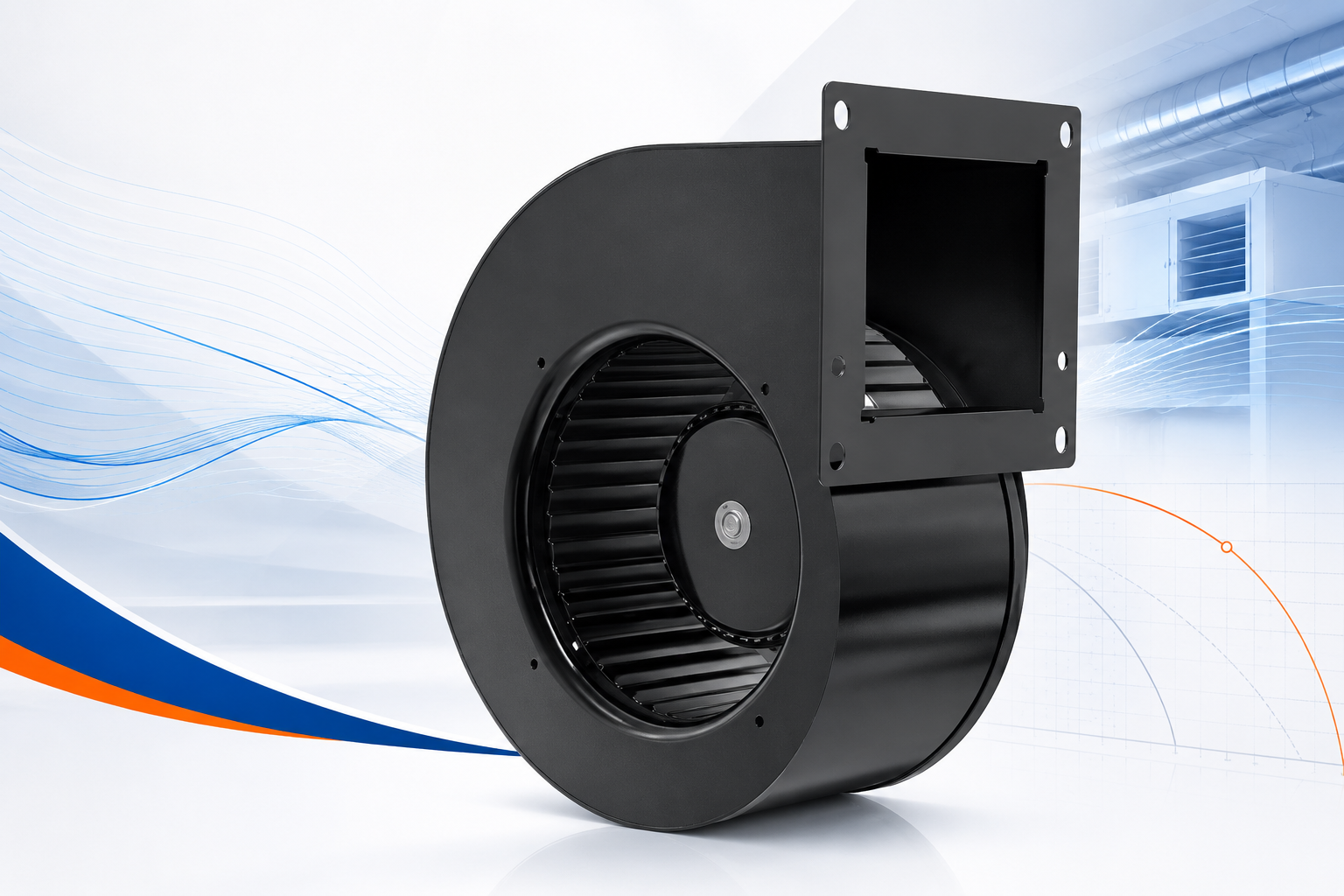
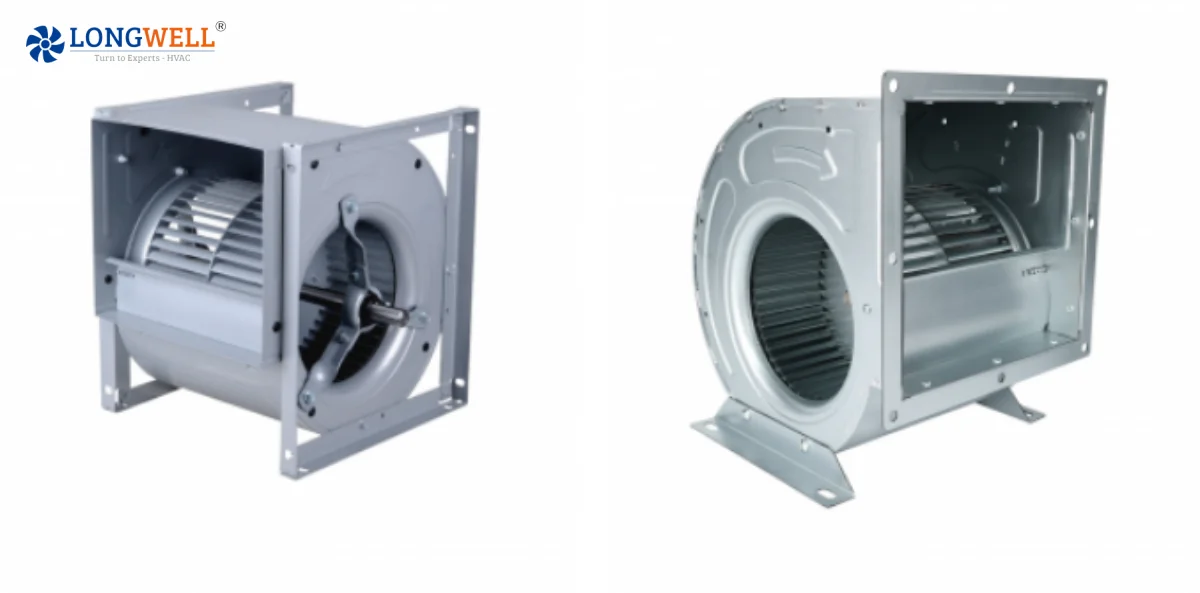
While the terms are sometimes used interchangeably, a centrifugal blower represents a distinct series in a manufacturer’s lineup. Unlike unhoused motorized impellers, a centrifugal blower specifically integrates the impeller within a directional scroll housing (volute).
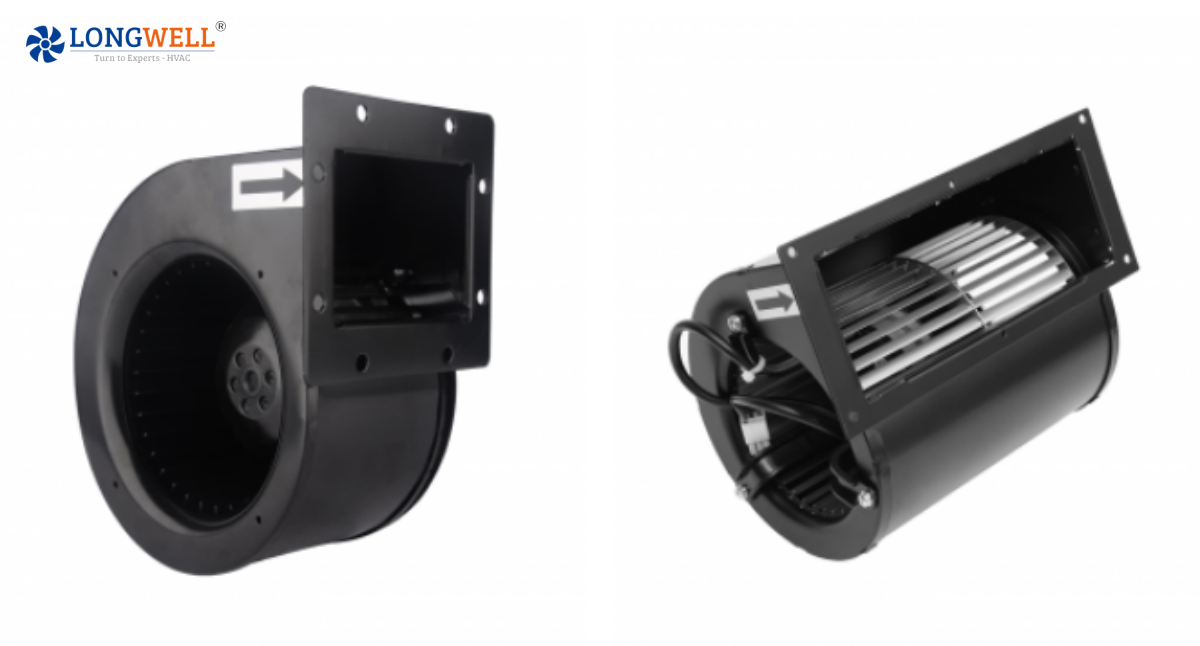
Available in single-inlet (drawing air from one side) or double-inlet (drawing air from both sides) configurations, these blowers are designed to achieve higher pressure ratios and direct a concentrated stream of air through tight ducting or into specific machine components. LONGWELL’s centrifugal blowers are widely utilized in commercial kitchen extraction, boiler forced-draft systems, and specialized industrial machinery where targeted, high-velocity airflow is mandatory.
Key Applications: Where Are They Used?
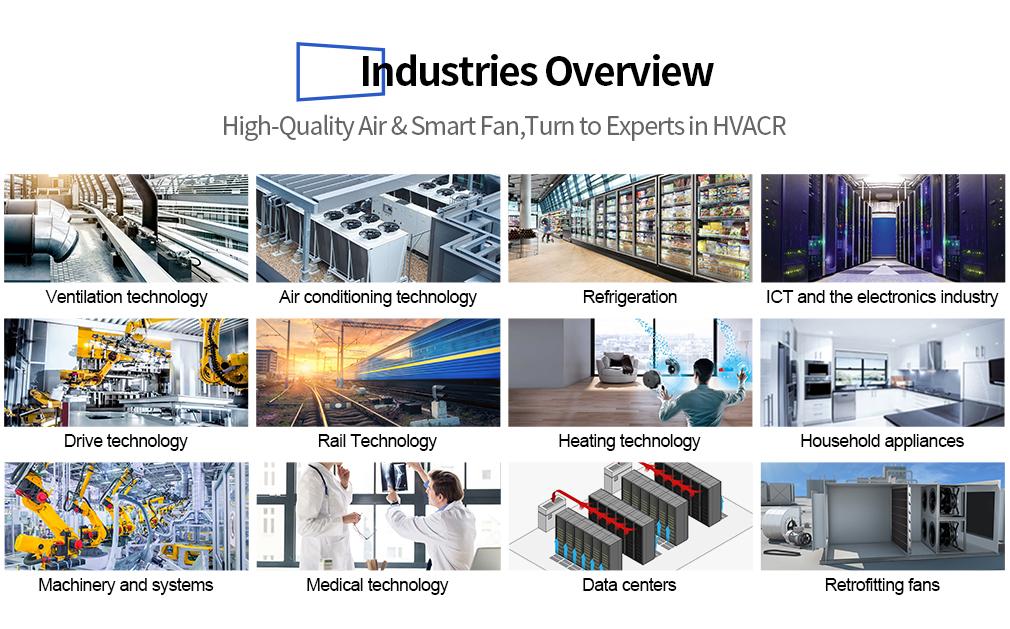
Because they can be customized to handle varying levels of pressure, moisture, and particulate matter, centrifugal blowers are deployed across dozens of vital sectors:
- HVAC and Climate Control: Pushing conditioned air through extensive commercial ductwork and dense filtration systems.
- Manufacturing and Processing: Extracting hazardous chemical fumes, welding smoke, or providing combustion air for industrial ovens.
- Electronics and IT Infrastructure: Delivering precise, high-pressure cooling to sensitive server racks in large-scale data centers.
- Commercial Appliances: Powering commercial kitchen range hoods, commercial air purifiers, and specialized drying equipment.
Why Choose LONGWELL for Your Air Movement Solutions?
Selecting the right fan is critical to the efficiency, acoustic performance, and longevity of your equipment. At LONGWELL, we specialize in engineering high-performance air movement solutions tailored to your exact specifications.
Whether you are looking for an energy-efficient backward curved model with smart EC technology or a robust industrial blower for severe environments, our products are rigorously tested to guarantee superior reliability.
Ready to upgrade your system’s performance? Explore our full range of innovative products on our official website at www.longwellfans.comor visit our global LONGWELL Alibaba Storefrontto connect with our engineering team today.
Website: www.longwellfans.com
Email: sales@longwellfans.com