Cross Flow Fan: Complete Engineering Guide, EC Motor Technology, and Selection Tips (2026)
Introduction: Why Cross Flow Fans Are Widely Used in Modern HVAC Systems
In heating, ventilation, and electronic cooling systems, airflow distribution is one of the most important factors affecting system performance. While many airflow technologies exist, the cross flow fan, also known as a tangential fan or crossflow blower, has become a preferred solution for applications requiring wide and uniform airflow.
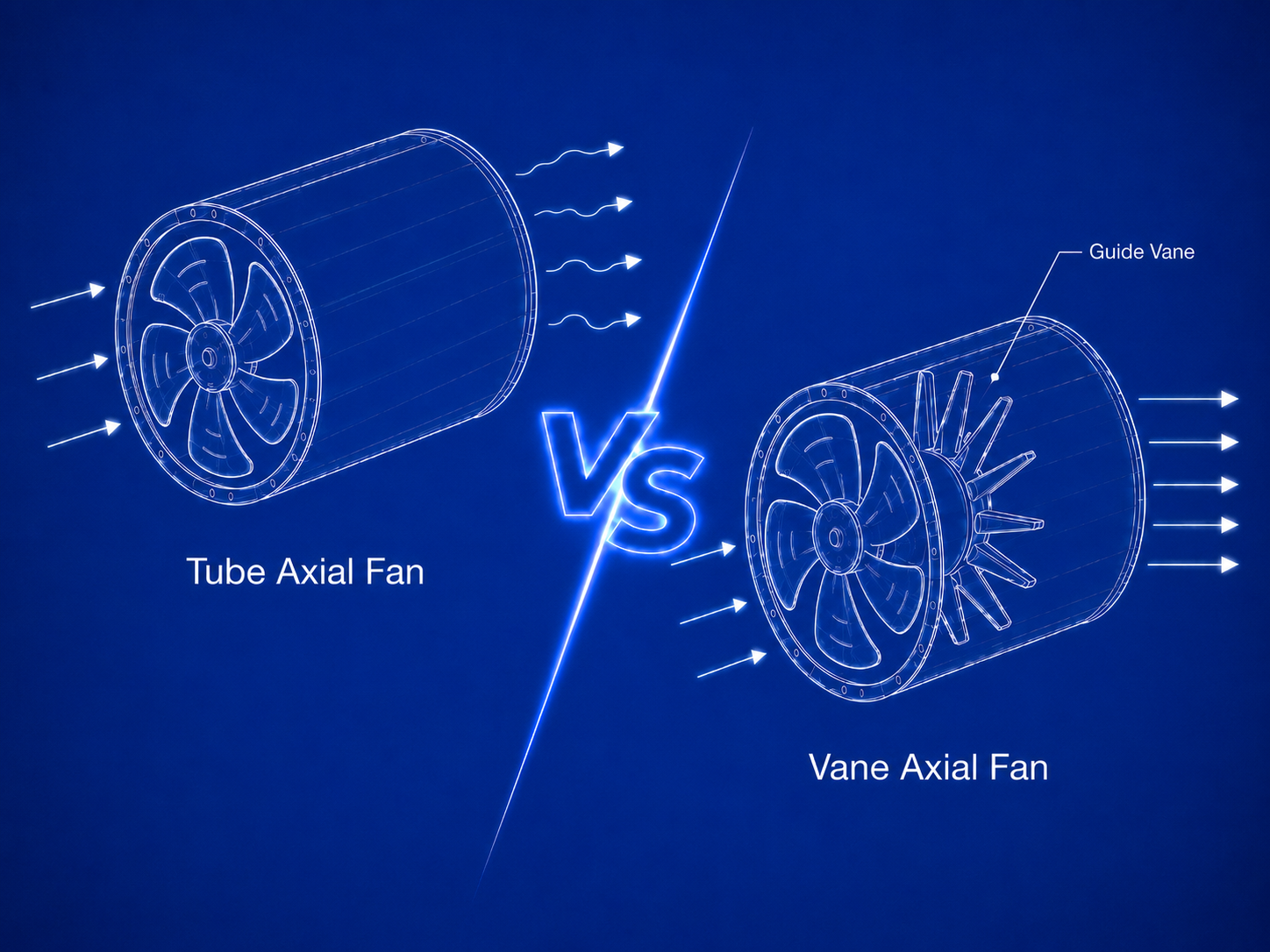
Unlike axial fans that produce concentrated airflow in one direction, cross flow fans create a long and stable air curtain along the entire length of the impeller. This design allows air to be distributed evenly across a large surface area, making it ideal for equipment such as air curtains, heating convectors, fireplaces, and electronic cooling systems.
With the rapid development of EC motor technology and brushless DC motors (BLDC), modern cross flow fans have also achieved significant improvements in energy efficiency, speed control, and noise reduction.
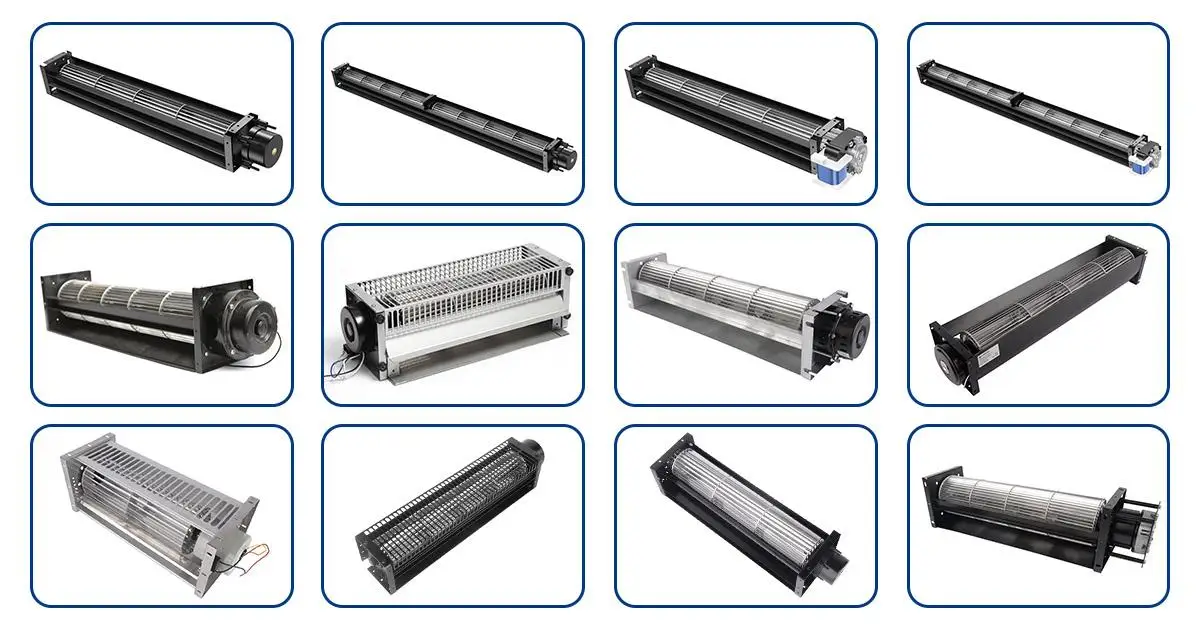
For HVAC engineers, equipment manufacturers, and procurement teams, understanding how cross flow fans work—and how to select the right one—can help improve system efficiency and long-term reliability.
This guide explains the engineering principles, design structure, motor technology, and key selection factors for cross flow fans used in modern HVAC and industrial equipment.
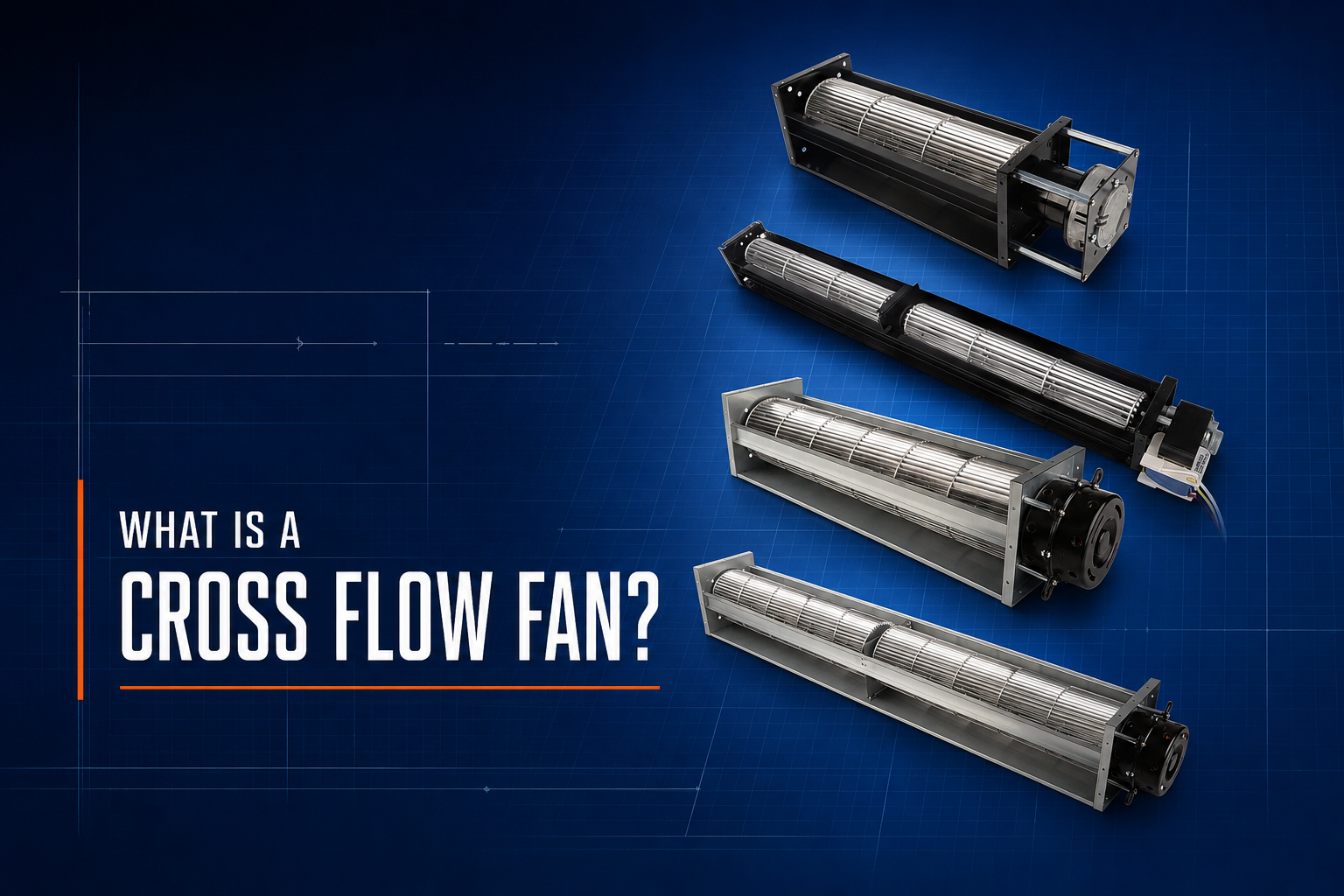
What Is a Cross Flow Fan?
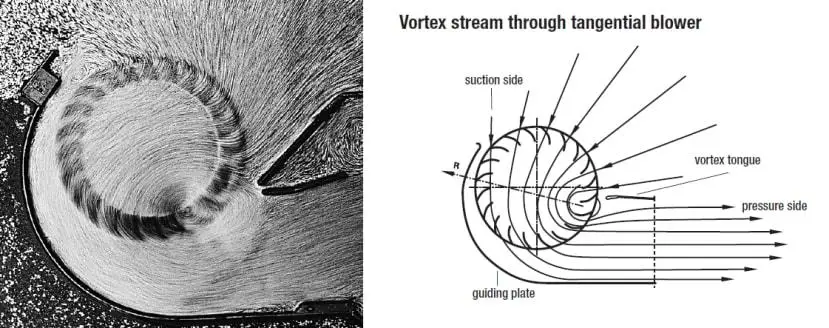
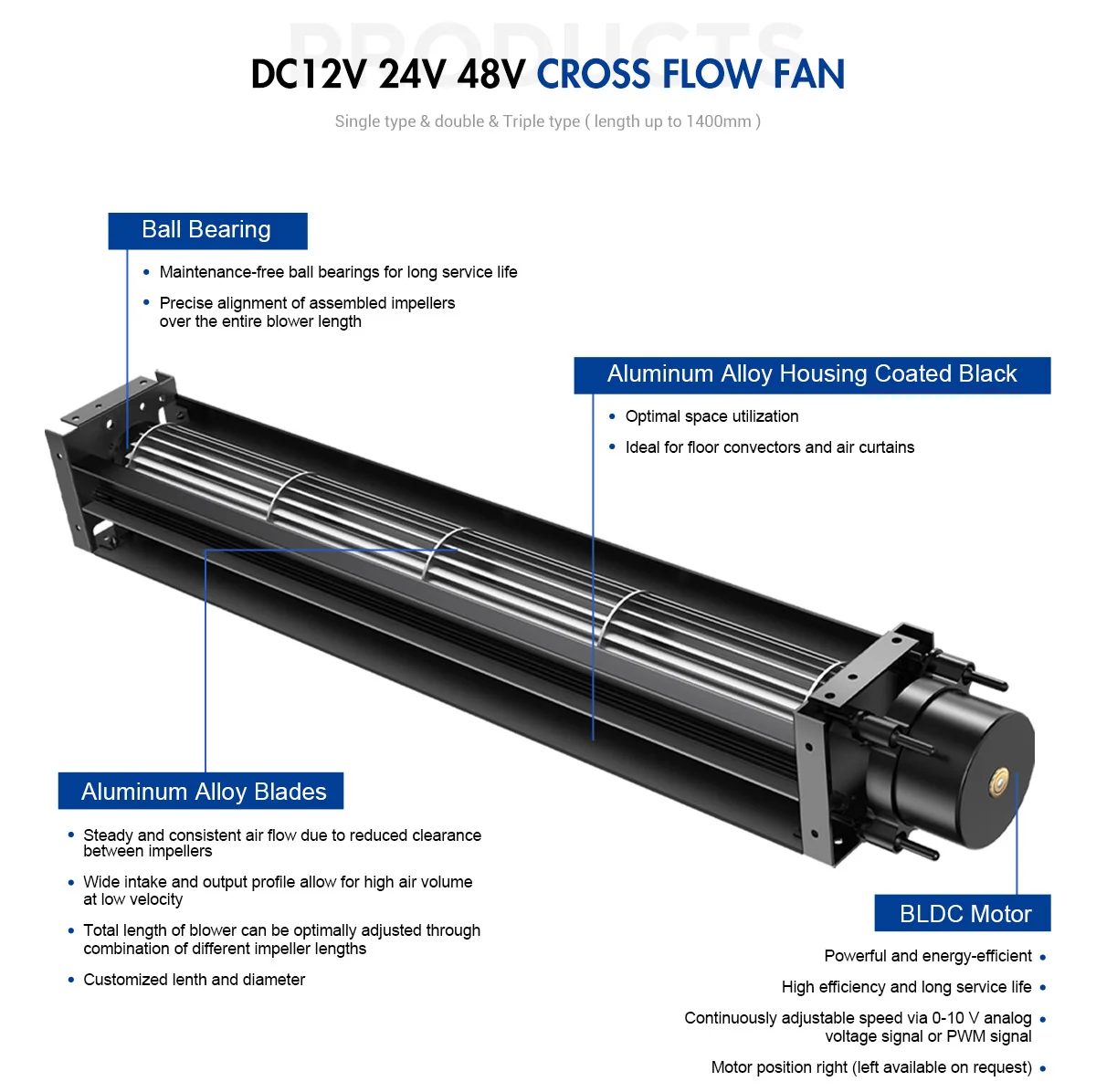
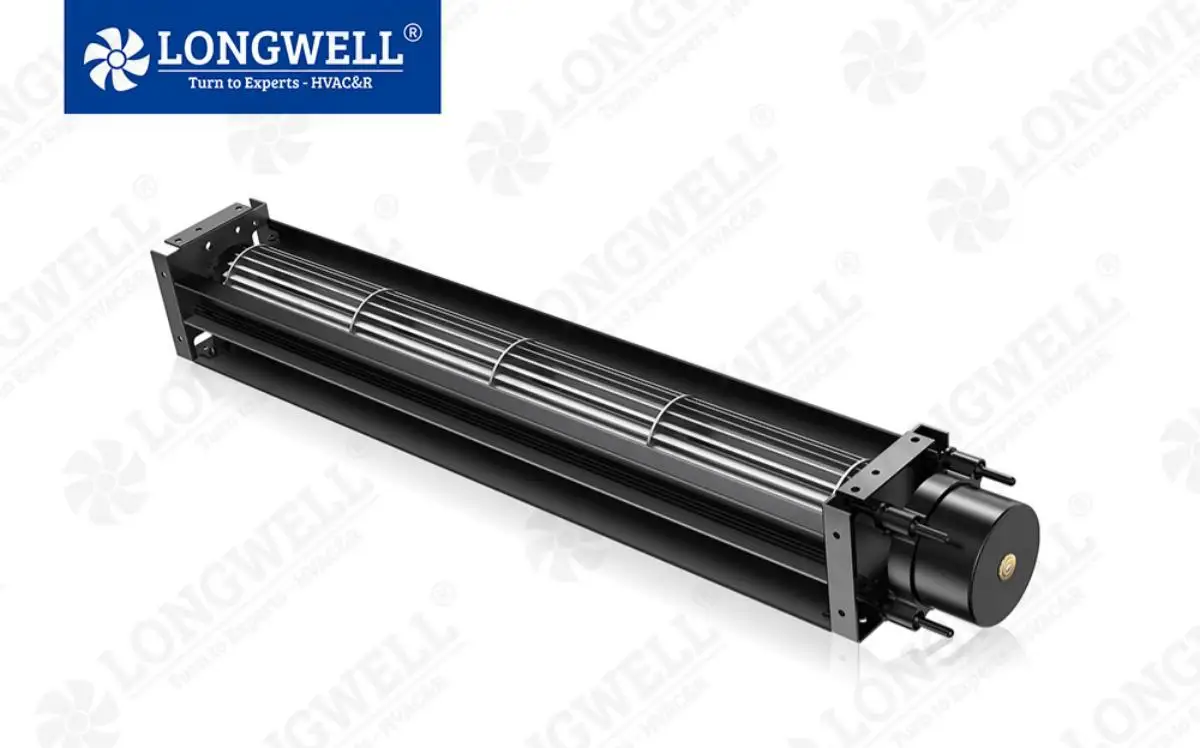
When the cross-flow fan operates, it allows air to flow through the entire length of the cylindrical impeller.The airflow enters from one side of the fan and exits through the opposite side after passing through the rotating blades.
This airflow pattern forms a wide and uniform air stream that differs significantly from axial or centrifugal fans.
Key Characteristics of Cross Flow Fans
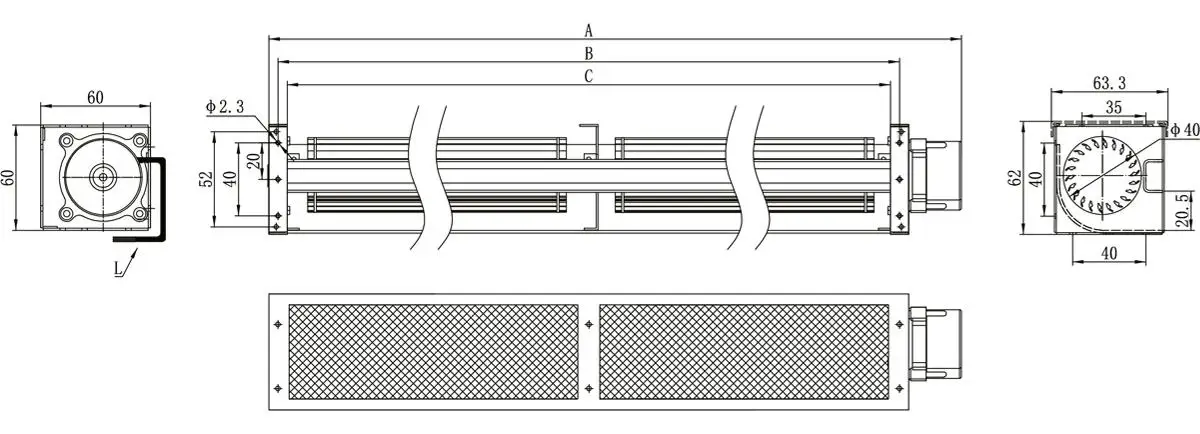
• Long cylindrical impeller design
• Wide and uniform airflow distribution
• Compact installation size
• Stable airflow at relatively low speeds
• Lower noise compared with many traditional fan types
Because of these characteristics, cross flow fans are widely used in applications where airflow must cover a wide area instead of a single point.
Main Applications of Cross Flow Fans

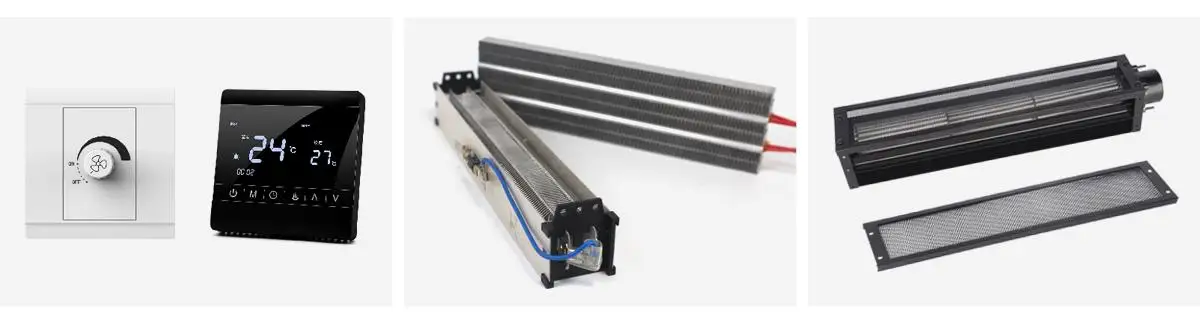
Cross flow fans are commonly used in a variety of HVAC and industrial systems.
Heating Equipment
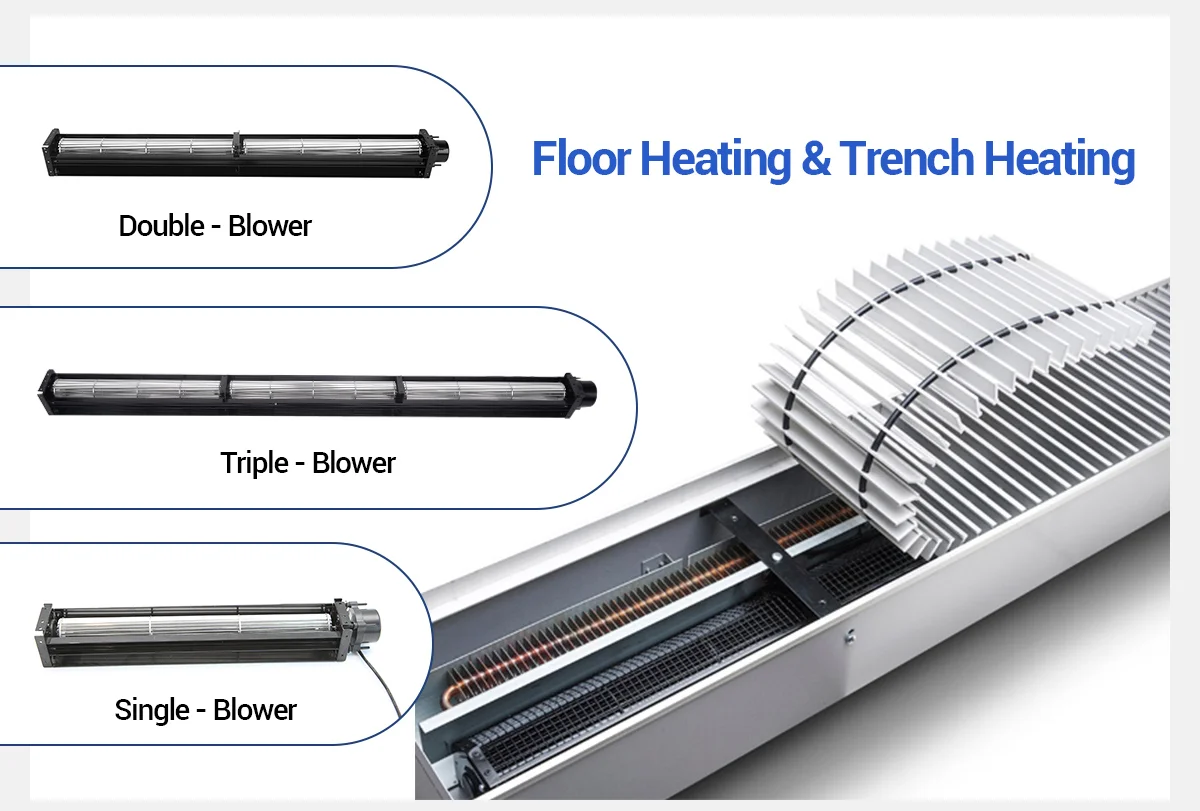
In heating convectors and trench heaters, cross flow fans distribute warm air evenly along the entire heating element, improving heat transfer efficiency.
Air Curtains
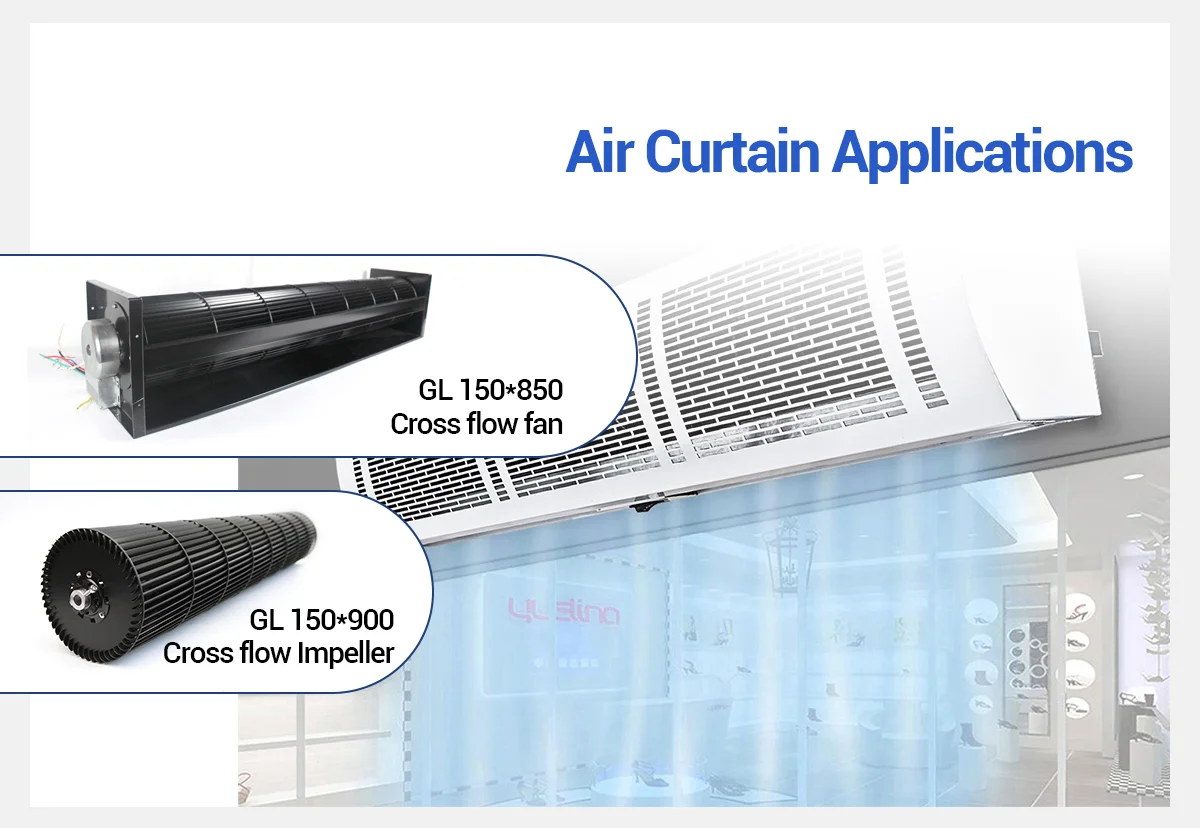
Air curtains installed above doors rely on cross flow fans to generate a continuous air barrier that separates indoor and outdoor environments.
Fireplaces and Heating Systems
Many modern electric fireplaces use cross flow fans to circulate warm air into the room while maintaining quiet operation.
Electronics Cooling
Cross flow fans are also used in electronic cooling applications where airflow must pass evenly across circuit boards or heat exchangers.
Commercial Refrigeration
Some refrigeration equipment uses cross flow fans to maintain stable airflow across cooling coils.

How Cross Flow Fans Work
The working principle of a cross flow fan involves a unique airflow pattern that forms inside the cylindrical impeller.
When the impeller rotates, air enters the fan from one side and moves through the blade structure. Inside the fan, two rotating air vortices are formed. These vortices guide the airflow through the impeller and push it outward through the outlet.
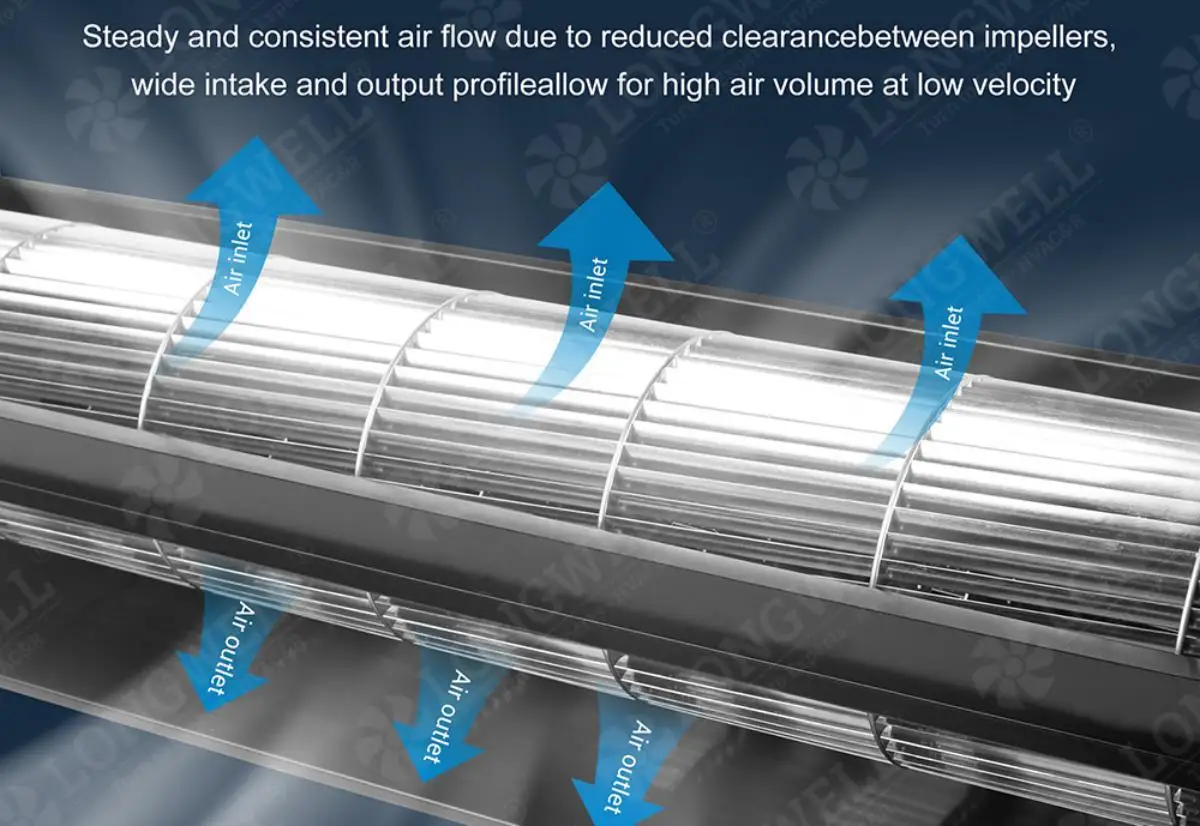
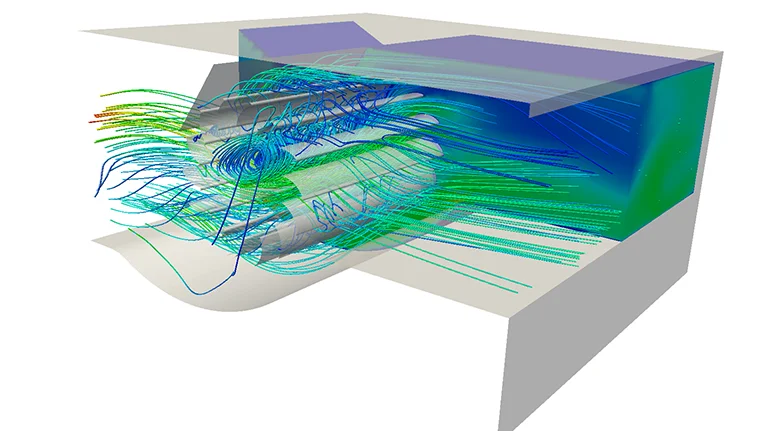
This airflow pattern allows the fan to create a long and continuous airflow stream rather than a narrow jet.
The design provides several benefits:
• Uniform airflow distribution
• Stable air pressure across long surfaces
• Efficient cooling or heating performance
Because of this airflow structure, cross flow fans are particularly effective when airflow must cover long heating elements or wide equipment surfaces.
EC Motor vs AC Motor in Cross Flow Fans
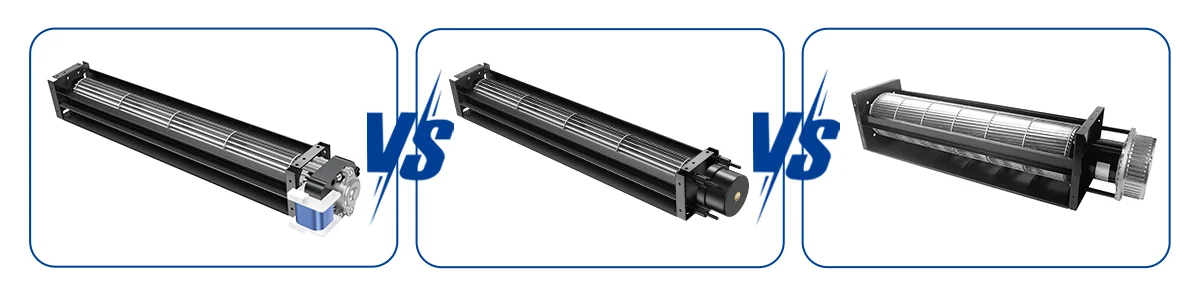
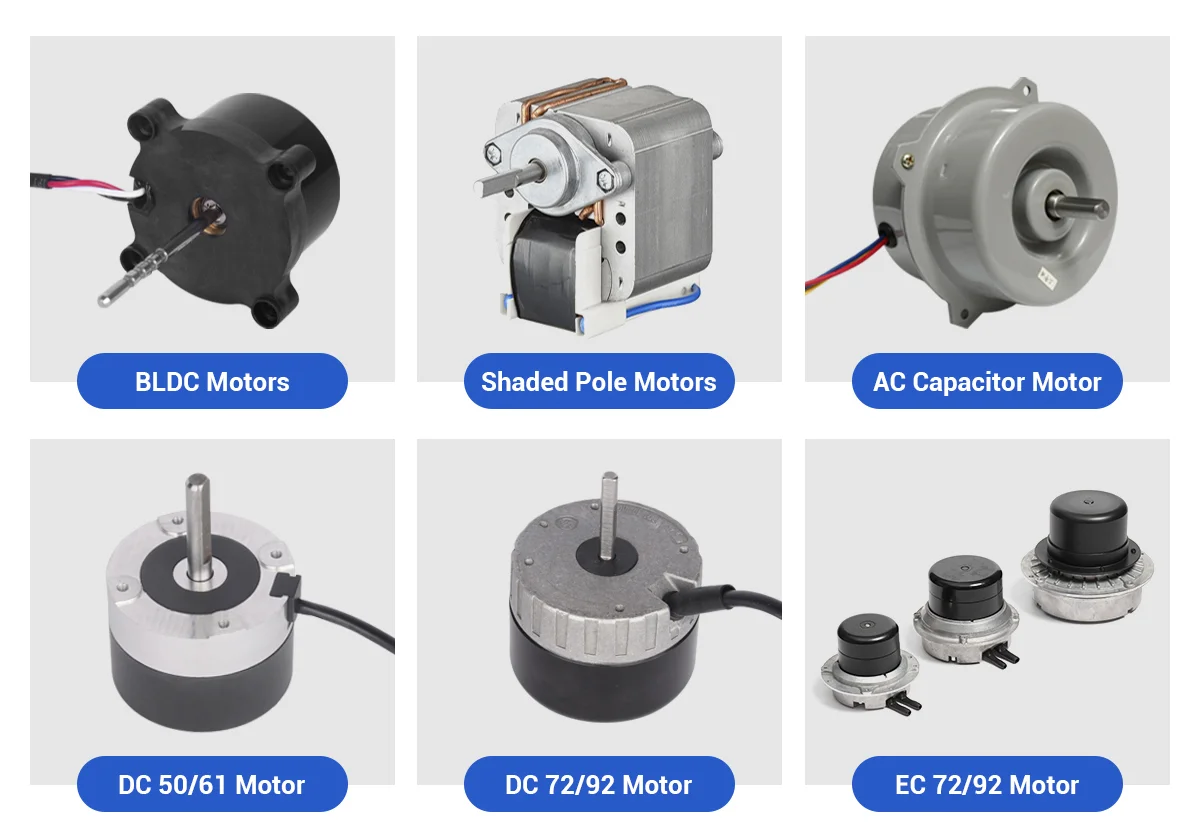
In the past, most cross flow fans used traditional AC motors. However, many modern systems are transitioning to EC motors or BLDC motors.
AC Motor Cross Flow Fans
AC motors are widely used because of their simple design and relatively low cost. However, they typically offer limited speed control and lower energy efficiency compared with newer technologies.
EC Motor Cross Flow Fans
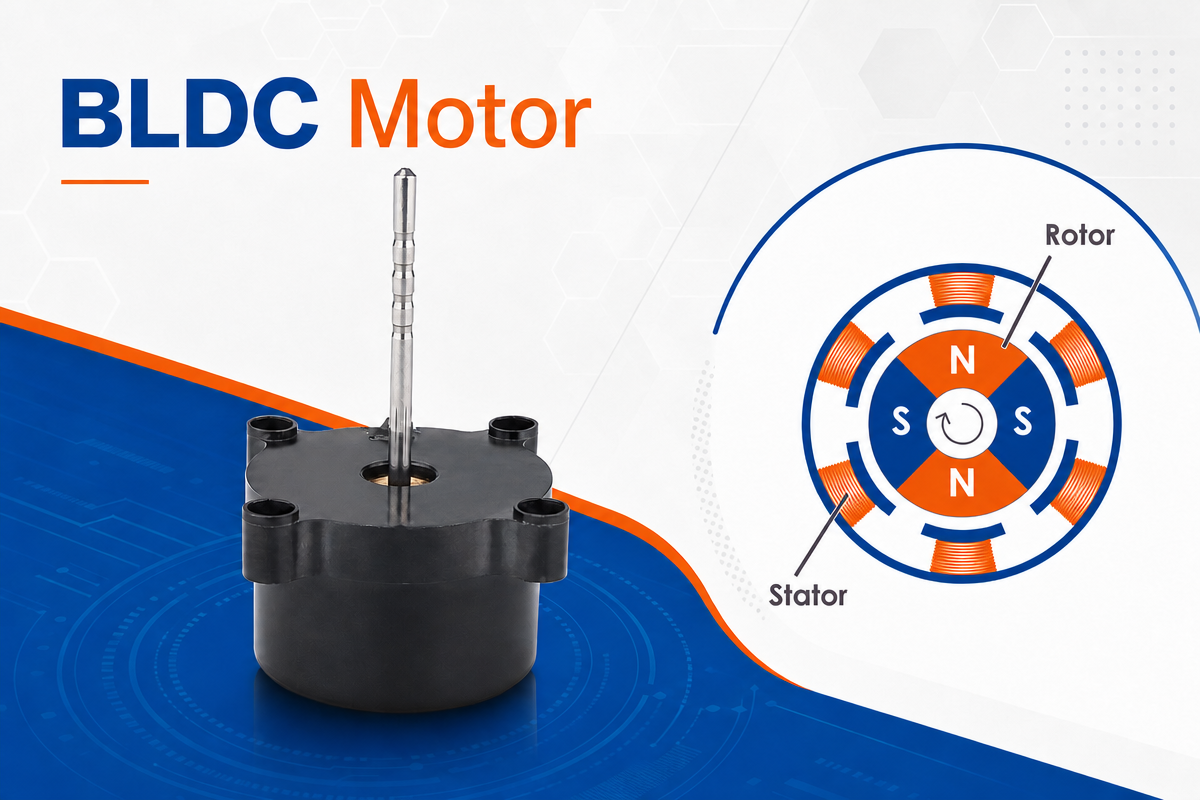
Electronically commutated motors combine the advantages of AC and DC motor technology. They integrate electronic controllers that allow precise speed control and higher efficiency.
Typical advantages include:
• Higher energy efficiency
• Lower operating noise
• Variable speed control
• Longer operating life
For many HVAC systems, EC motor cross flow fans can reduce energy consumption while improving airflow performance.
Important Design Components of a Cross Flow Fan
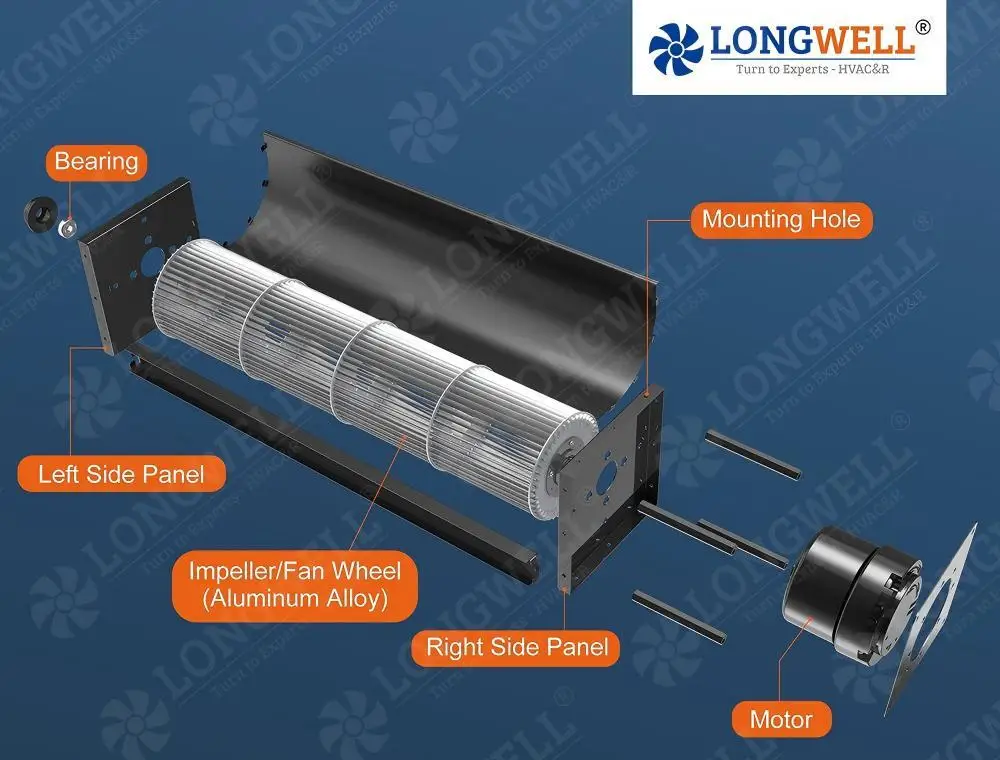
The performance and reliability of a cross flow fan depend on several key components.
Impeller
The impeller is the cylindrical rotor that moves air through the fan. Blade geometry and spacing strongly influence airflow performance.
Motor
The motor provides rotational energy to the impeller. Depending on the application, motors may be AC, DC, or EC type.
Bearings
High-quality cross flow fans often use ball bearings to ensure stable rotation and long operating life.
Housing
The fan housing helps guide airflow and improve aerodynamic efficiency. Proper housing design also reduces vibration and noise.
Key Factors When Selecting a Cross Flow Fan
Choosing the correct fan requires careful consideration of several engineering factors.
1. Airflow Requirement
Engineers should first determine the airflow rate required for the system. This depends on cooling load, heat transfer requirements, and system design.
2. Fan Size and Diameter
Cross flow fan diameters typically range from 50 mm to 140 mm, depending on the application.
3. Motor Power
Fan power requirements vary widely depending on airflow and pressure needs.
Small appliances may require only a few watts, while larger HVAC systems may require significantly higher motor power.
4. Noise Level
Noise is an important consideration in residential and commercial environments. Cross flow fans are often selected because they provide relatively quiet airflow.
5. Speed Control
Modern fans may include PWM control or analog voltage control to allow adjustable airflow.
6. Operating Lifetime
Industrial cross flow fans are often designed for 40,000 hours or more of operating life.
7. Installation Space
Because cross flow fans are often installed in narrow equipment housings, engineers must verify dimensional compatibility.
Advantages of Cross Flow Fans Compared With Other Fan Types
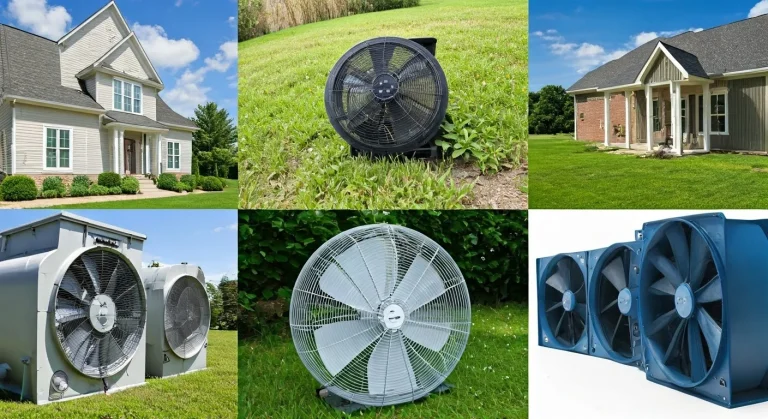
Cross flow fans provide several unique advantages compared with axial or centrifugal fans.
Uniform Air Distribution
The long impeller allows airflow to be distributed evenly across large surfaces.
Compact Design
The slim structure allows installation in equipment where space is limited.
Low Noise Operation
The airflow pattern helps reduce turbulence and noise compared with some other fan designs.
Flexible Applications
Cross flow fans can be used in heating, cooling, ventilation, and electronic equipment.
Choosing a Reliable Cross Flow Fan Manufacturer
For equipment manufacturers and system integrators, choosing a reliable fan supplier is essential.
A professional manufacturer can provide:
• Stable product quality
• Engineering support
• Custom fan dimensions
• Flexible motor options
• Global export capability
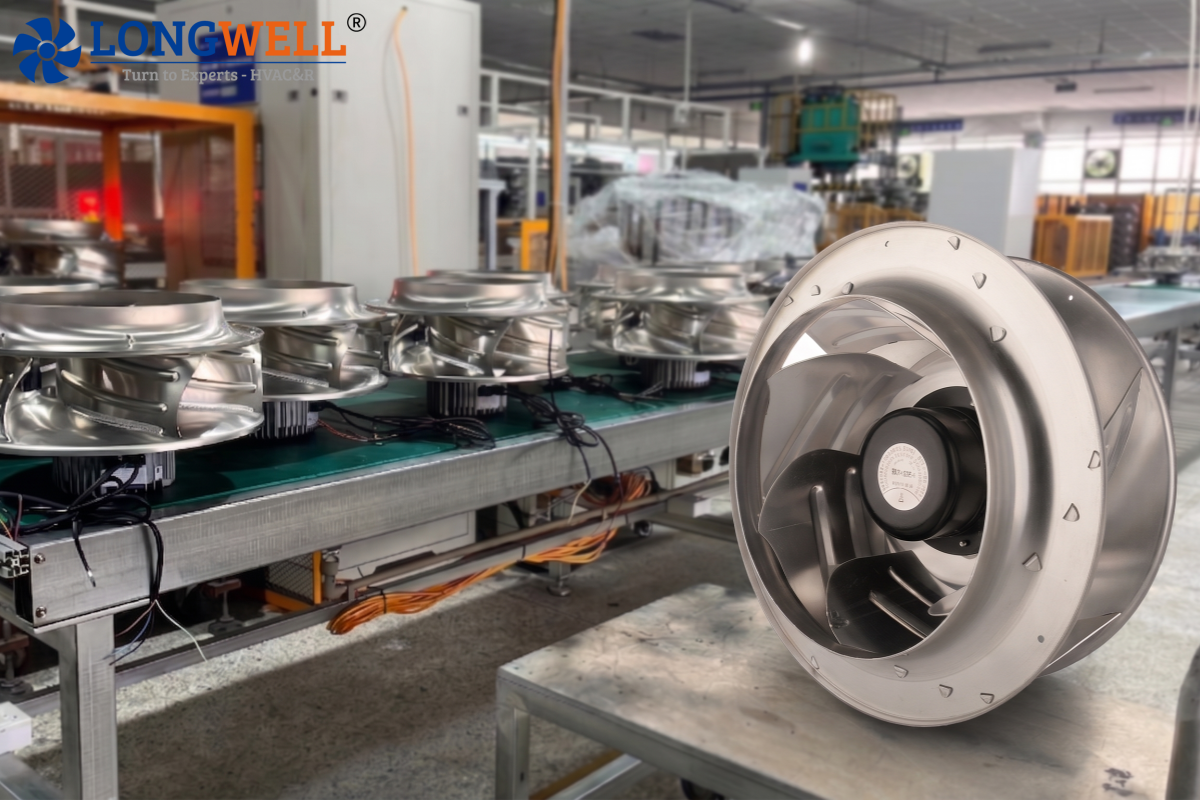
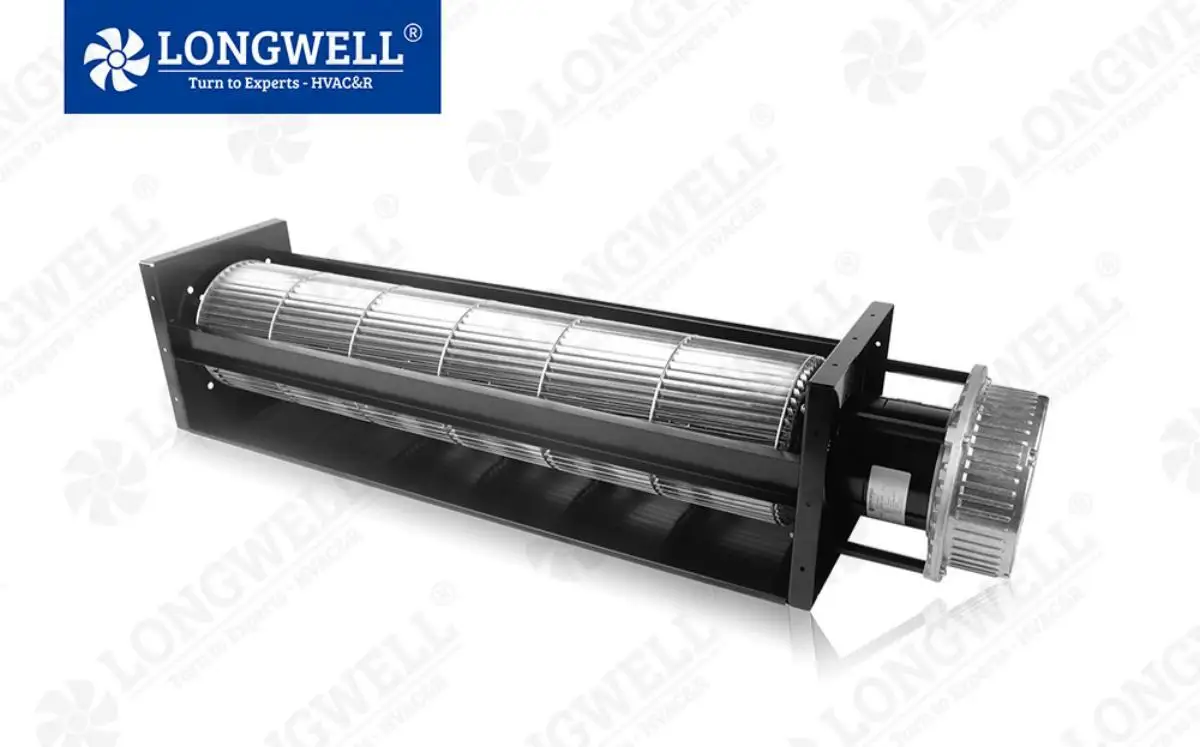
LONGWELL is a manufacturer specializing in industrial fans, including cross flow fans, axial fans, and centrifugal fans used in HVAC and electronic cooling applications.
With years of experience in fan manufacturing, LONGWELL provides both standard fan models and customized solutions for equipment manufacturers worldwide.
You can explore available products and technical specifications on the official website:
Conclusion
Cross flow fans play an important role in many HVAC and cooling systems because of their ability to generate wide and uniform airflow. Their compact structure, stable airflow characteristics, and relatively quiet operation make them ideal for applications such as air curtains, heating convectors, fireplaces, and electronic cooling systems.
With the growing adoption of EC motor technology, modern cross flow fans are becoming even more energy-efficient and easier to control.
By understanding the working principles and key selection factors discussed in this guide, engineers and purchasing teams can make more informed decisions when selecting cross flow fans for new equipment designs.
Frequently Asked Questions (FAQ) About Cross Flow Fans
1. What is a cross flow fan used for?
A cross flow fan is commonly used in HVAC systems and electronic cooling equipment where wide and uniform airflow is required. Typical applications include air curtains, heating convectors, electric fireplaces, electronics cooling systems, and commercial refrigeration equipment. Because the airflow extends across the entire length of the fan, cross flow fans are ideal for distributing air evenly over large surfaces.
2. What is the difference between a cross flow fan and an axial fan?
The main difference lies in the airflow pattern. An axial fan moves air parallel to the fan shaft, producing a concentrated airflow stream. A cross flow fan, on the other hand, moves air across the length of a cylindrical impeller, generating a wide and uniform airflow curtain. This makes cross flow fans more suitable for applications requiring even air distribution along a long surface.
3. Are EC cross flow fans more efficient than AC fans?
Yes. EC cross flow fans generally provide higher energy efficiency compared with traditional AC motor fans. Electronically commutated motors use integrated electronic control to optimize motor performance, which can significantly reduce energy consumption while maintaining stable airflow output.
4. How long does a cross flow fan typically last?
The operating lifetime of a cross flow fan depends on motor quality, bearing type, and operating conditions. Industrial-grade fans with ball bearings are commonly designed for lifetimes of around 40,000 hours or more. Proper installation and maintenance can further extend the service life.
5. What industries use cross flow fans?
Cross flow fans are widely used in HVAC equipment, heating systems, air curtain units, electronic cooling systems, medical devices, and refrigeration equipment. Their ability to provide uniform airflow makes them suitable for both residential and industrial applications.
6. What sizes are cross flow fans available in?
Cross flow fans are available in various diameters and lengths depending on the application. Typical fan diameters range from about 50 mm to 140 mm, while the impeller length can be customized to match the airflow requirements of specific equipment designs.
7. Why are cross flow fans quieter than some other fan types?
Cross flow fans often operate at lower rotational speeds and produce a more stable airflow pattern. This reduces turbulence and vibration, which helps minimize operating noise. Many modern cross flow fans using EC or BLDC motors can achieve very quiet operation suitable for residential or office environments.
8. How do I choose the right cross flow fan for my application?
Selecting the right cross flow fan requires evaluating several factors, including airflow requirements, fan size, motor power, noise limits, installation space, and speed control options. Working with an experienced fan manufacturer can help ensure the selected fan meets the performance and reliability requirements of the system.
Explore LONGWELL Cross Flow Fan Solutions
If you are looking for reliable cross flow fan solutions for HVAC systems, air curtain units, or electronic cooling equipment, LONGWELL offers a wide range of customizable fan models designed for industrial and commercial applications.
Learn more about our cross flow fan series and technical specifications on our official website: