Core Aerodynamic Performance Analysis: Technical Selection Guide for Forward vs. Backward Centrifugal Fans
 In the design of modern HVAC infrastructure, Air Handling Units (AHUs), and complex industrial ventilation networks, the selection of fluid machinery directly dictates the operational efficiency and thermodynamic stability of the entire system. Because of their exceptional ability to overcome high system resistance and establish stable static pressure, Centrifugal Fans serve as the core components of these systems.
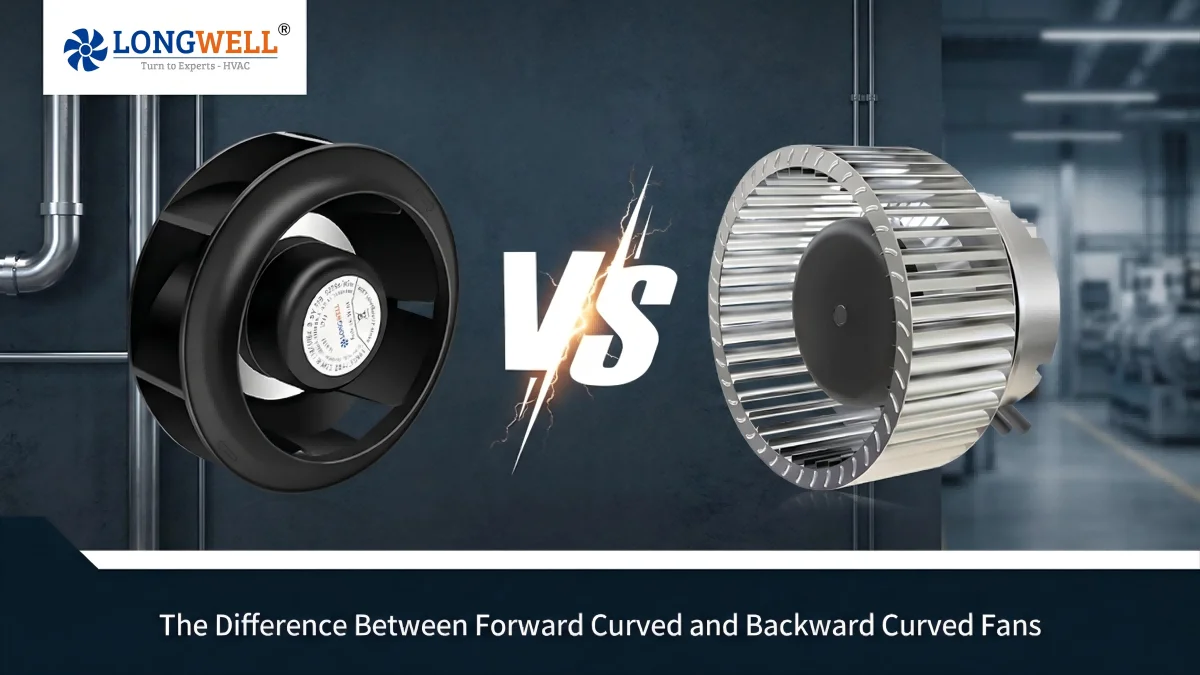
However, in applied engineering, the aerodynamic profile of the impeller leads to drastically different performance outcomes. For HVAC design engineers and equipment R&D teams, the most critical technical deliberation often narrows down to two mainstream architectures: the Forward Curved Centrifugal Fan and the Backward Curved Centrifugal Fan.
I. Aerodynamic Architecture and Operating Mechanisms
The fundamental principle of a centrifugal fan relies on the high-speed rotation of the impeller to convert mechanical energy into the kinetic energy and static pressure of the fluid. However, the absolute velocity vector of the airflow as it separates from the trailing edge is entirely dependent on the blade installation angle and curvature.
1. Forward Curved Centrifugal Fan
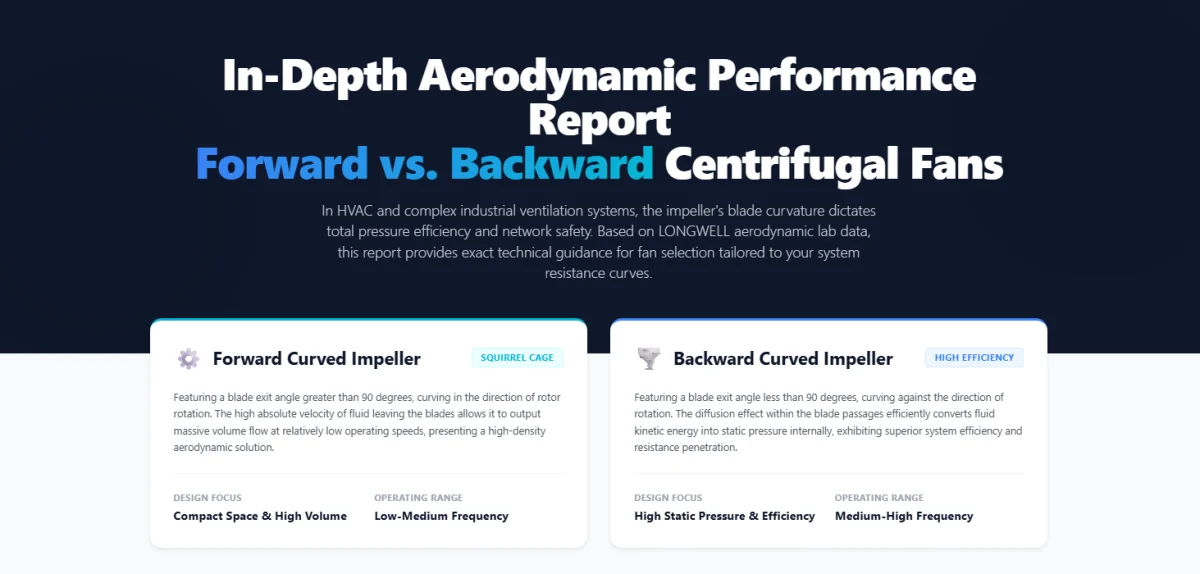
The forward-curved impeller typically consists of numerous shallow blades with short chord lengths. The blade exit angle is greater than 90 degrees, meaning the blades curve in the same direction as the rotor’s rotation (frequently referred to in the industry as a “squirrel cage” impeller).
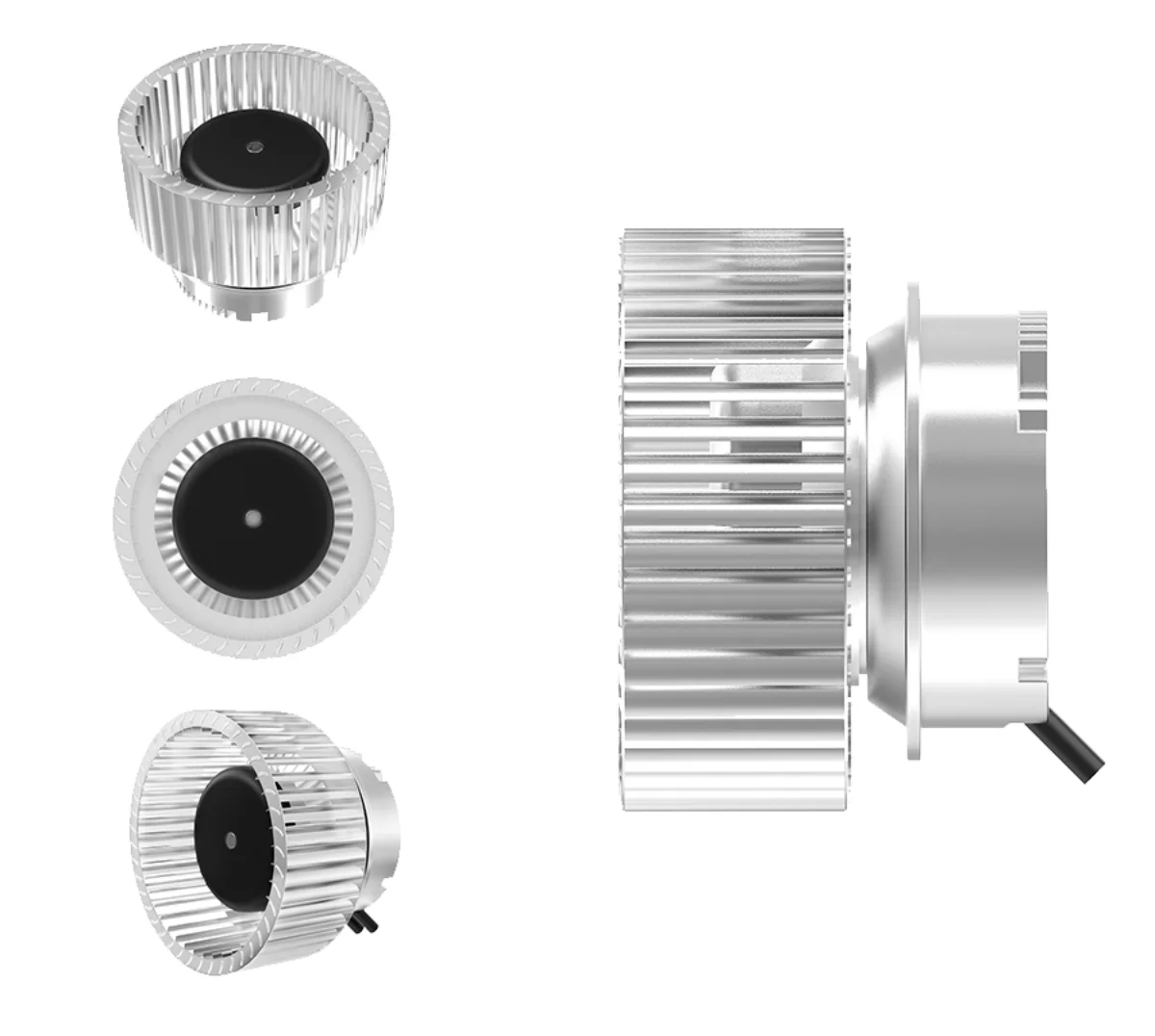
· Aerodynamic Profile: Because the absolute velocity of the fluid leaving the blades is high, the forward-curved fan can output massive volume flow at a relatively low operating speed (RPM). However, its efficiency in converting dynamic pressure into static pressure is comparatively low.
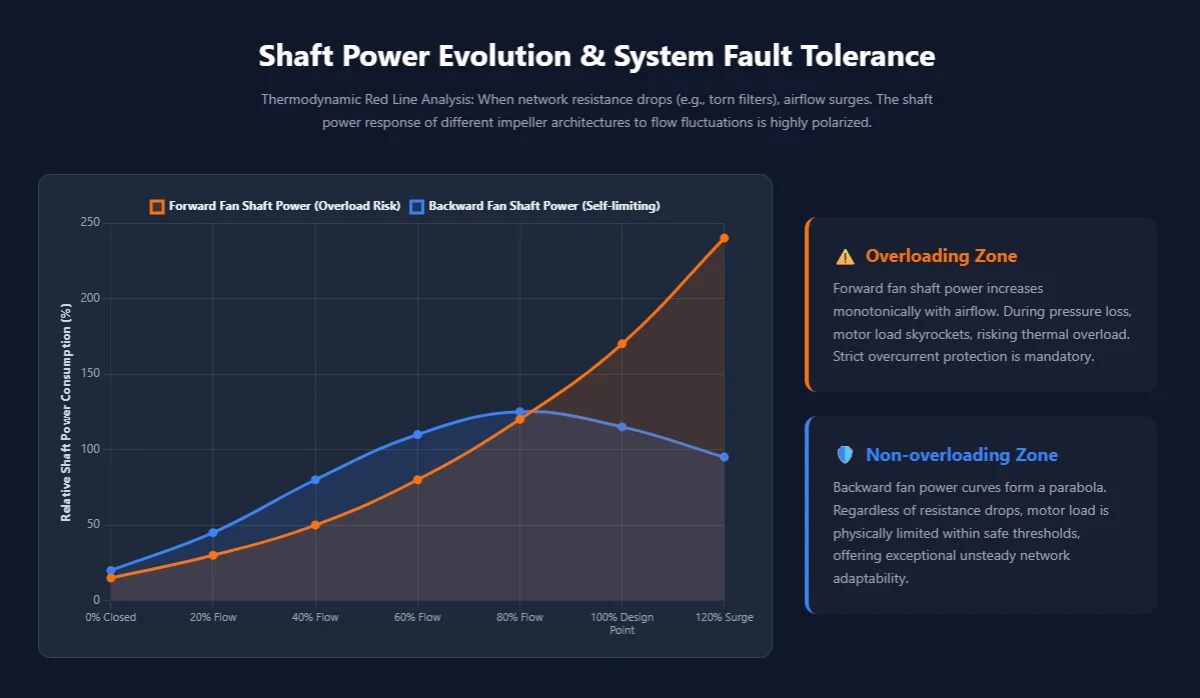
· Shaft Power Curve (Overloading Characteristic): This is a critical thermodynamic red line in engineering design. The shaft power of a forward-curved fan increases monotonically with airflow. If the network resistance drops suddenly (e.g., torn filters or accidentally fully opened dampers), the operating point rapidly shifts to the high-volume zone. This causes an extreme surge in motor load, which, without strict overcurrent protection, will easily trigger thermal overload and motor burnout.
· Engineering Applicability: Leveraging its low RPM, low acoustic footprint, and high spatial coupling density (compact physical size), this architecture is widely applied in residential ventilation, Fan Coil Units (FCUs), and light commercial AC equipment with low aerodynamic resistance.
2. Backward Curved Centrifugal Fan
The backward-curved impeller features fewer blades with longer chord lengths. The blade exit angle is less than 90 degrees, curving against the direction of rotation.
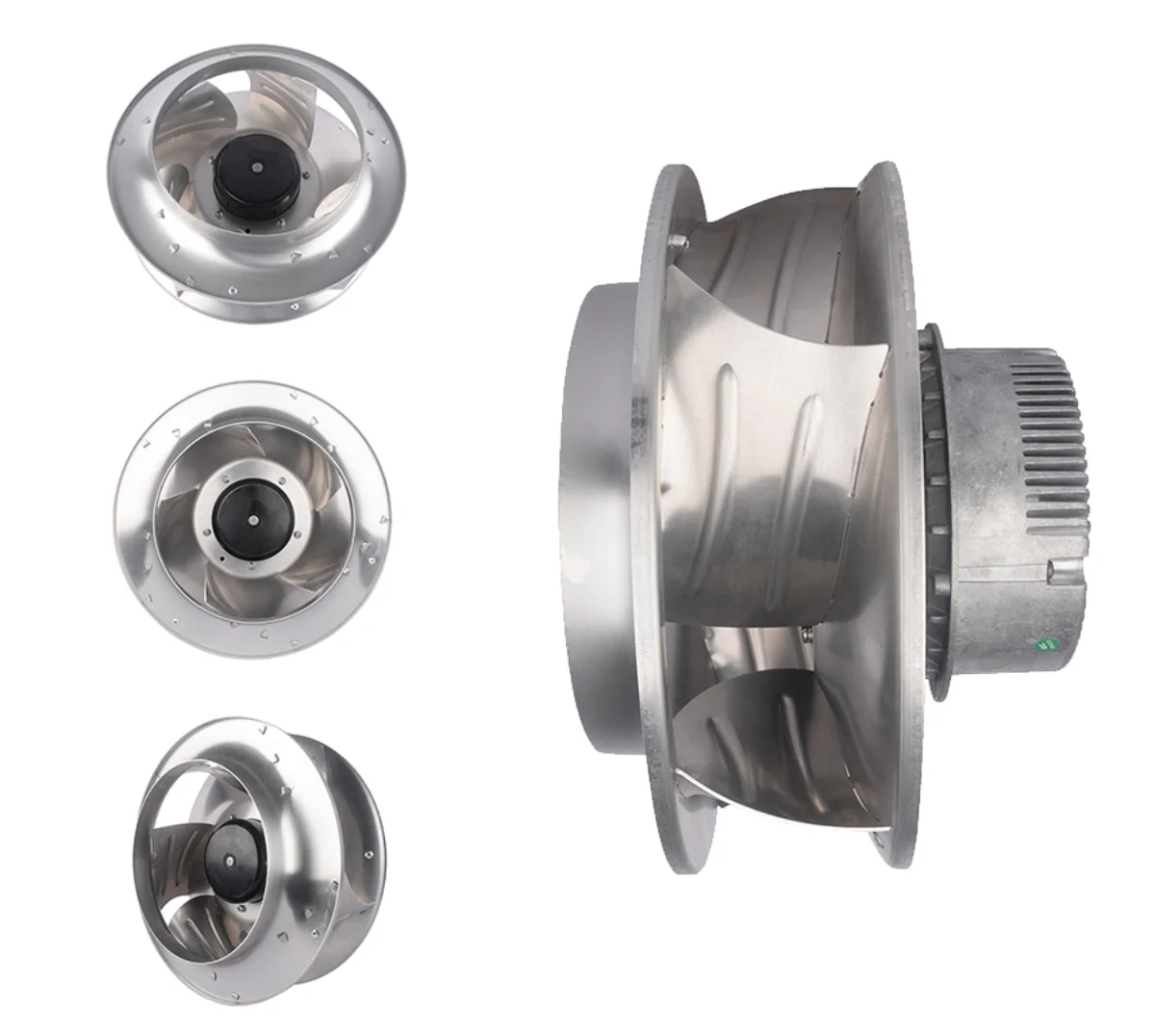
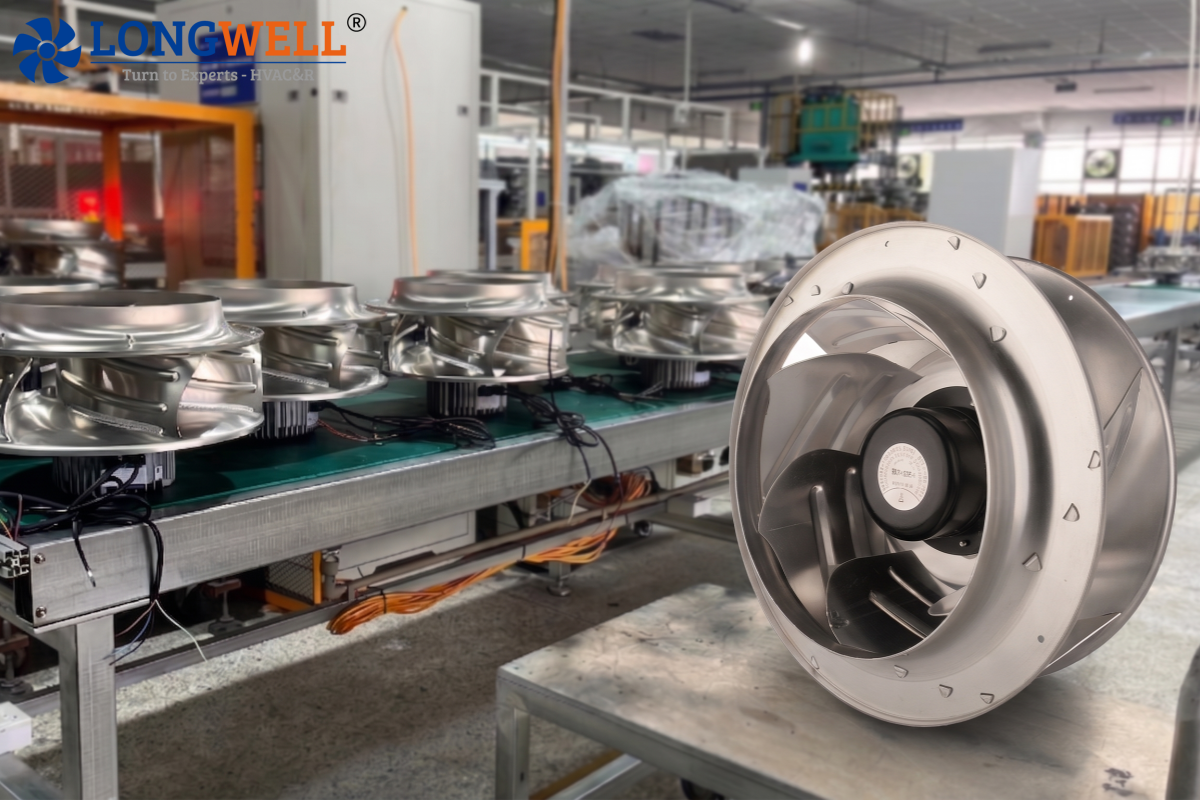
· Aerodynamic Profile: The relative velocity of the airflow gradually decreases within the blade passages. This diffusion effect allows fluid kinetic energy to be efficiently converted into static pressure directly inside the impeller. Consequently, this design boasts a superior system efficiency ratio.
· Shaft Power Curve (Non-Overloading Characteristic): This represents the most significant safety advantage of the backward-curved fan. Its shaft power curve forms a parabola—peaking near the designed operating point and gradually declining as airflow continues to increase. This means that regardless of drastic fluctuations in external network resistance, the motor load is physically limited within safe thresholds, ensuring supreme operational reliability.
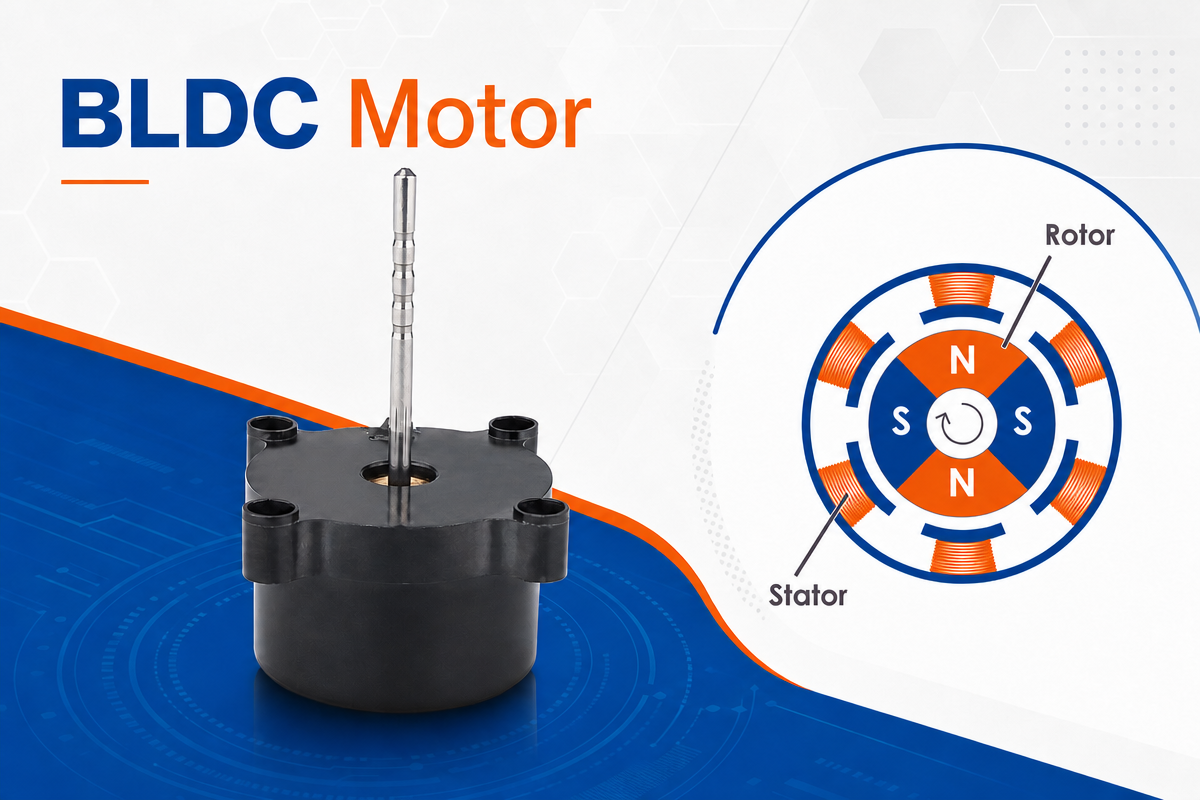
· Engineering Applicability: With its excellent static pressure penetration and high energy efficiency, this architecture is the optimal choice for high-resistance networks. It is heavily utilized in large AHUs, Computer Room Air Conditioning (CRAC) for data centers, and cleanroom purification systems. When paired with LONGWELL’s high-frequency EC (Electronically Commutated) motors, it yields extraordinary energy savings.
 II. Quantitative Comparison of Core Engineering Metrics
When matching a fan to a system, engineers must weigh the following technical dimensions:
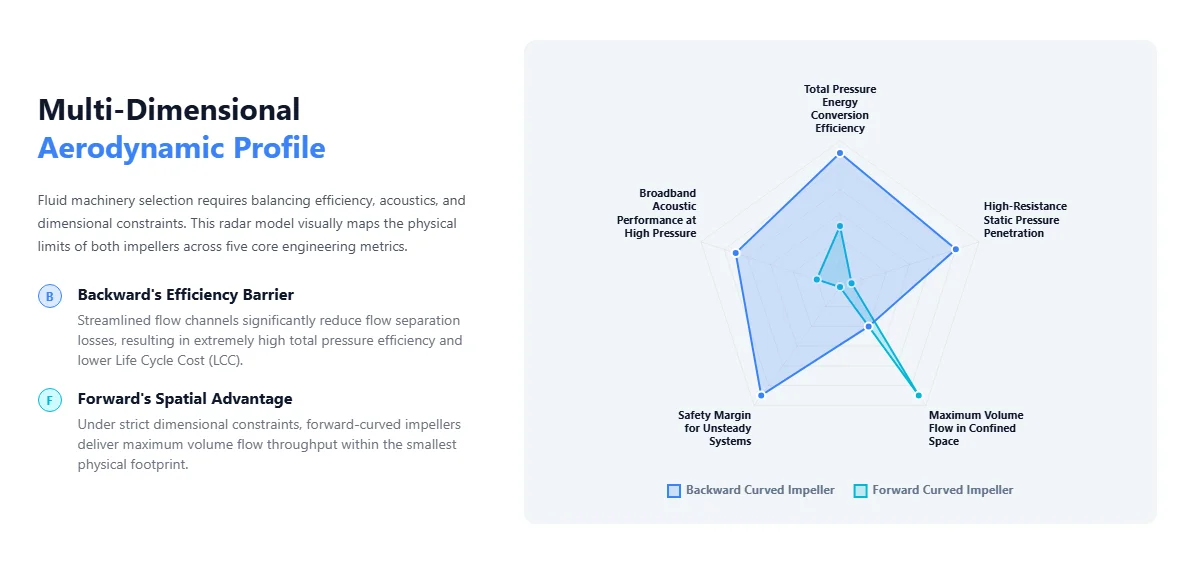
1. Overall System Efficiency: Backward Design Leads. Its streamlined flow channels significantly reduce fluid separation and vortex losses. The total pressure efficiency of the backward design heavily outperforms the forward design, drastically reducing the equipment’s Life Cycle Cost (LCC).
2. Spatial Coupling Density: Forward Design Leads. Under strict dimensional constraints within equipment housings, the forward impeller achieves maximum volume flow throughput within the smallest physical envelope.
3. Operational Safety Margin: Backward Design Leads. Benefiting from its inherent “non-overloading” power curve, the backward fan exhibits superior fault tolerance and stability when handling Variable Air Volume (VAV) systems or unsteady network resistance.
4. Acoustics: Dependent on the Operating Zone. In low-static-pressure, high-volume zones, forward fans perform better in low-frequency acoustics due to lower RPMs. However, forcing a forward fan to operate against high static pressure generates severe aerodynamic noise. Under high-pressure conditions, the broadband noise control of backward fans is significantly superior.
III. Extended Selection for Complex Conditions: Industrial Radial Fans & Blowers
Beyond commercial HVAC environments, certain specialized industrial processes impose far harsher demands on aerodynamic equipment. In these scenarios, conventional curved blade passages often fail to perform:
· Handling High Particulate Loads: If the conveyed fluid contains high concentrations of dust, wood chips, or viscous aerosols, curved blade passages are highly prone to adhesion and clogging, leading to dynamic imbalance. In such cases, an Industrial Centrifugal Fan is mandatory. Utilizing upright radial blades, it possesses exceptional aerodynamic self-cleaning capabilities, acting as the core equipment for pneumatic conveying and heavy industrial exhaust.
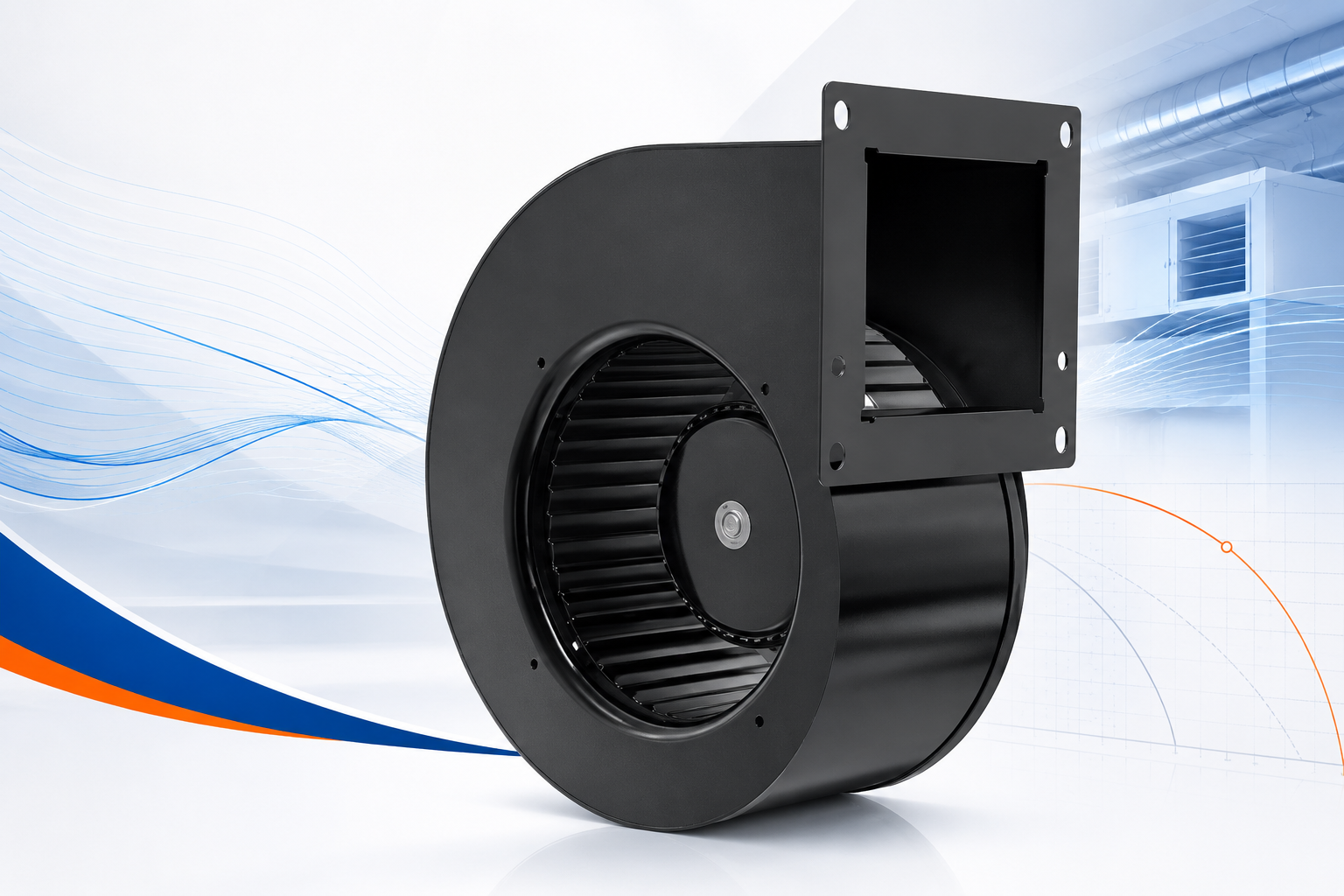
· Directional High-Pressure Jet Requirements: When a system requires high-velocity airflow to be forced into a highly restricted cross-section (e.g., industrial burner drafts or commercial concentrated kitchen exhaust), a Centrifugal Blower must be specified. Unlike open, free-running impellers, blowers encapsulate the impeller within a directional, logarithmic spiral volute (scroll housing). The diffusion effect of the volute pushes localized static pressure to its absolute maximum. Depending on exact pressure ratio demands, LONGWELL can flexibly equip blower volutes with either forward or backward impellers.
IV. Build Rigorous Fluid Mechanics Solutions with LONGWELL
Accurate fan selection is the cornerstone of ensuring thermodynamic balance, acoustic compliance, and long-term stability for any HVAC system. As a globally trusted aerodynamic equipment manufacturer, LONGWELL is dedicated to providing rigorous fluid machinery solutions for equipment R&D enterprises.
Whether your project requires extremely compact forward-curved assemblies or highly efficient backward-curved fan arrays matched with smart EC drive systems, our application engineering team will provide precise selection validation against your network resistance curves.
Explore more technical specifications and industry solutions:
· Visit the LONGWELL Official Website: www.longwellfans.com
· Access B2B Specifications & Purchasing: LONGWELL Global Alibaba Store