Breaking the 35dB Acoustic Boundary: A Technical Review of LONGWELL Assisting a Korean Home Appliance Giant in Conquering Noise Challenges
—— A Full Record from Fluid Simulation to EC Module Implementation
LONGWELL
Introduction: “Silence Anxiety” Under the LDK Trend
In the field of home appliance manufacturing, particularly in the refrigeration sector, Noise, Vibration, and Harshness (NVH) control has always been one of the toughest challenges. As global home design evolves towards “LDK Integration” (Living, Dining, Kitchen), the physical location of the refrigerator has shifted from a closed kitchen to the core of the family social area. This change in spatial attributes has directly led to a precipitous drop in user tolerance thresholds for noise.
In a home environment where late-night background noise is below 30dB, a refrigerator running at 42dB creates a presence that cannot be ignored. This was precisely the dilemma faced by a well-known Korean home appliance enterprise in early 2024: while their flagship side-by-side series offered excellent cooling performance, it suffered a significant setback in user satisfaction surveys in the high-end market due to noise issues from the compressor cooling module.
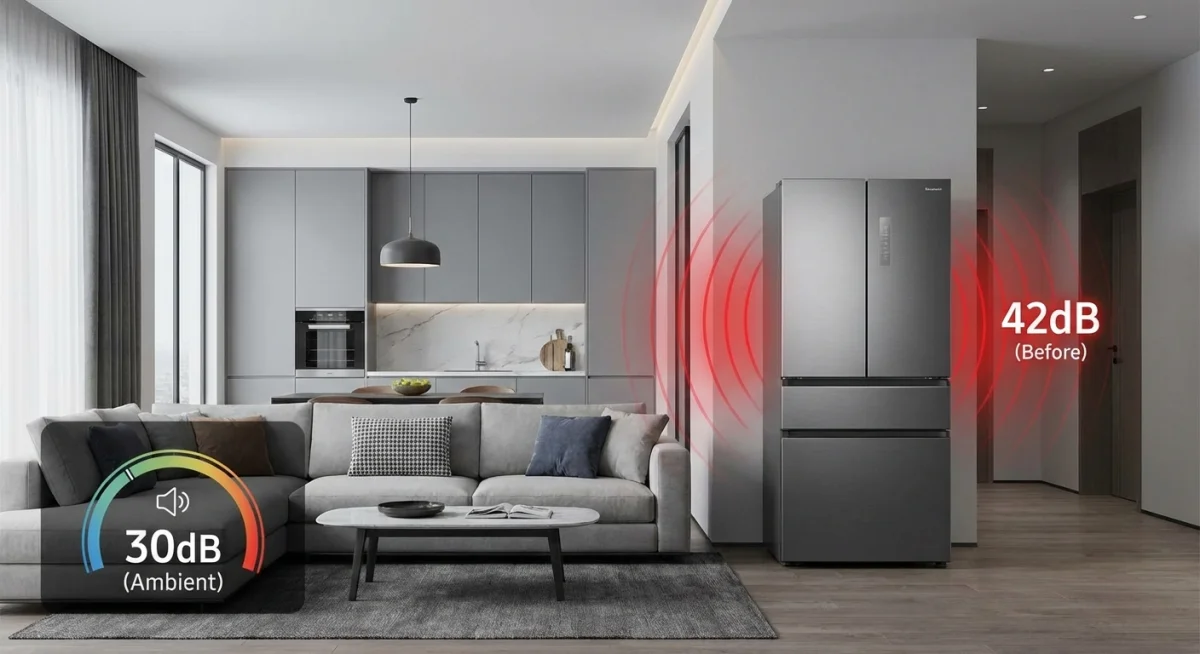
This article aims to review how Ningbo Longwell Electric (LONGWELL) intervened in this project. It details the engineering path of assisting the client in suppressing the overall machine noise to 35dB—an industry limit value—through overall optimization ranging from individual fans to the cooling subsystem.
I. Status Diagnosis: Systemic Misalignment Behind 42dB
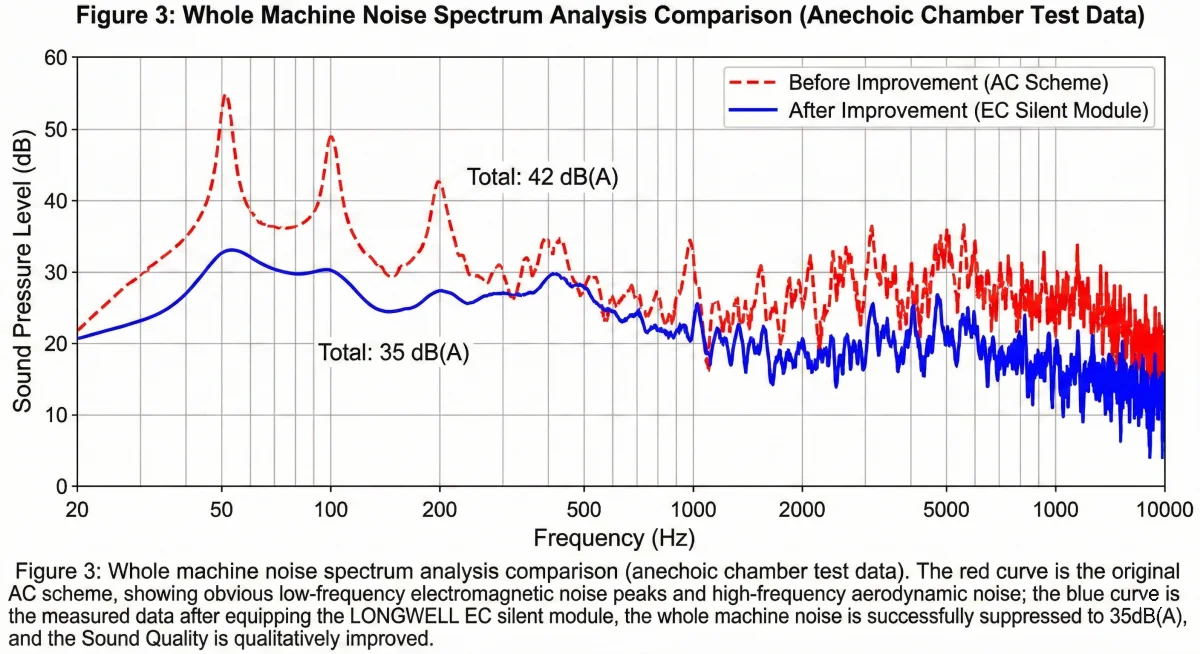
At the beginning of the project, we faced a typical “complex acoustic scene.” The client’s original solution had a measured noise level hovering around 42dB, accompanied by a distinct low-frequency hum and high-frequency wind noise.
After the LONGWELL technical team arrived, we did not recommend products immediately. Instead, we first conducted overall sound power level testing and spectrum analysis. Through data analysis, we identified three major bottlenecks causing the noise:
Impedance Mismatch in Aerodynamic Layout: The original air duct structure was too compact, with the air inlet too close to the fan. High-speed airflow struck the fan blades in a turbulent state before it could form a laminar flow, resulting in severe broadband aerodynamic noise. This problem, caused by poor “system impedance matching,” could not be cured simply by replacing the fan with one of the same specifications.
Physical Limitations of AC Motors: The client was originally using a traditional Alternating Current (AC) shaded-pole motor. Such motors are limited by the mains frequency, have a constant speed, and cannot adjust according to the load. More fatally, the inherent electromagnetic vibration frequency (line frequency noise) of the AC motor easily excited resonance in the refrigerator’s back panel, forming a low-frequency boom with strong penetrating power.
Rough Control Strategy: The original cooling system adopted a simple “On/Off” logic. When the compressor worked, the fan ran at full speed; when the compressor stopped, the fan stopped abruptly. This frequent transient sound pressure change is more likely to cause user annoyance psychologically than steady noise.
The conclusion was clear: This was not a simple demand for part replacement, but a systemic engineering rectification aimed at balancing “heat exchange efficiency and acoustic performance.”
II. Solution Construction: Shifting from “Fan Delivery” to “Fluid Engineering Services”
Addressing the pain points above, LONGWELL proposed the “EC Intelligent Cooling Module” technical route to the client. Our goal was set very aggressively: to drive the overall machine noise down from 42dB to 35dB.
35dB is an extremely demanding indicator. It means the sound of the refrigerator running will be lower than the background sound of a standard library, approaching the lower limit of human perception for environmental background noise. To achieve this, we formulated a three-step engineering implementation plan: Source Replacement, Path Streamlining, and Logic Rewriting.
III. Engineering Implementation: Key Technical Paths
1. Power Source Upgrade: Application of Sine Wave Driven EC Technology
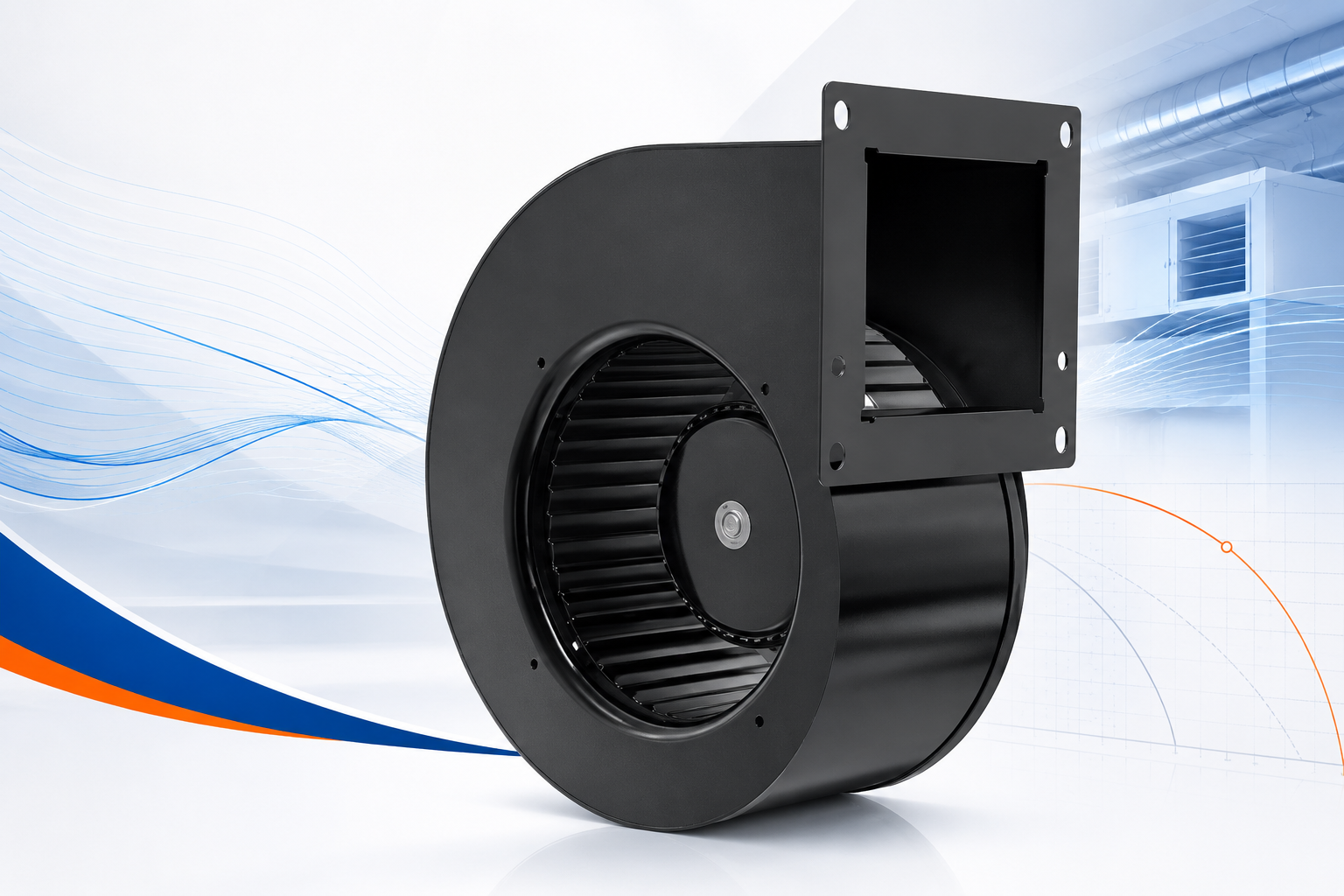
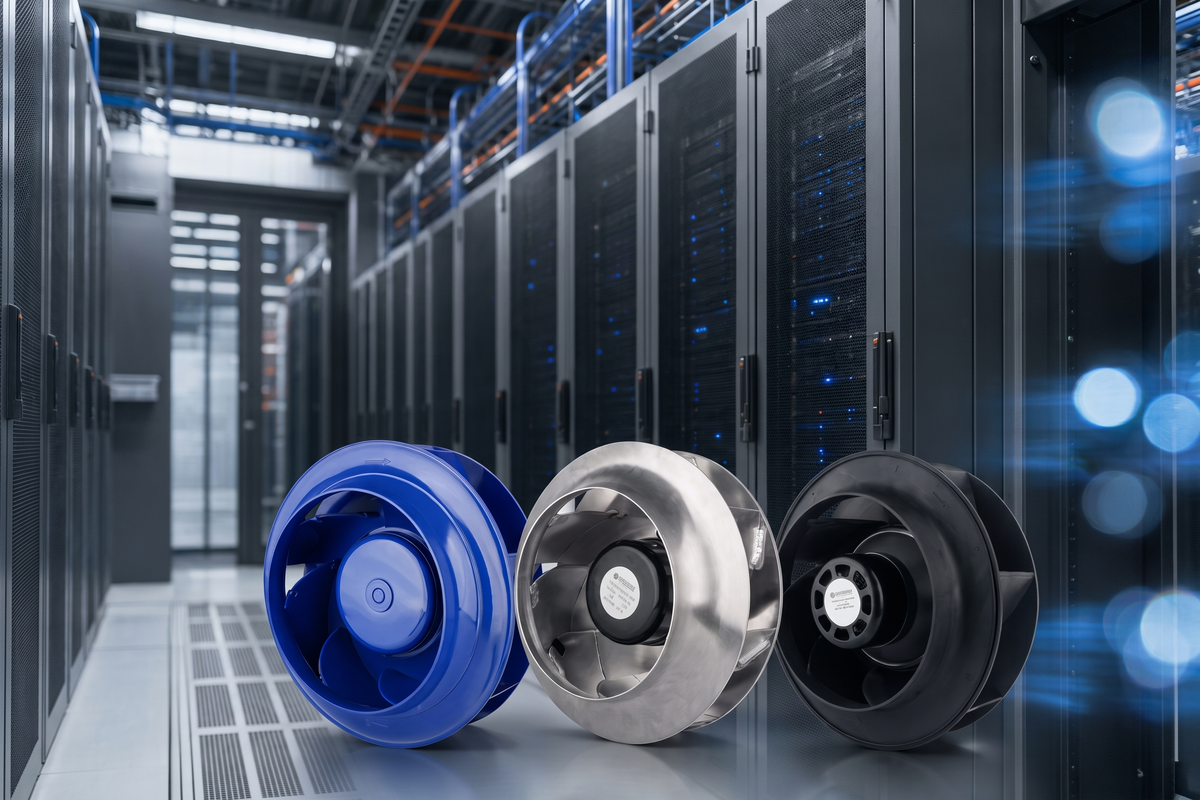
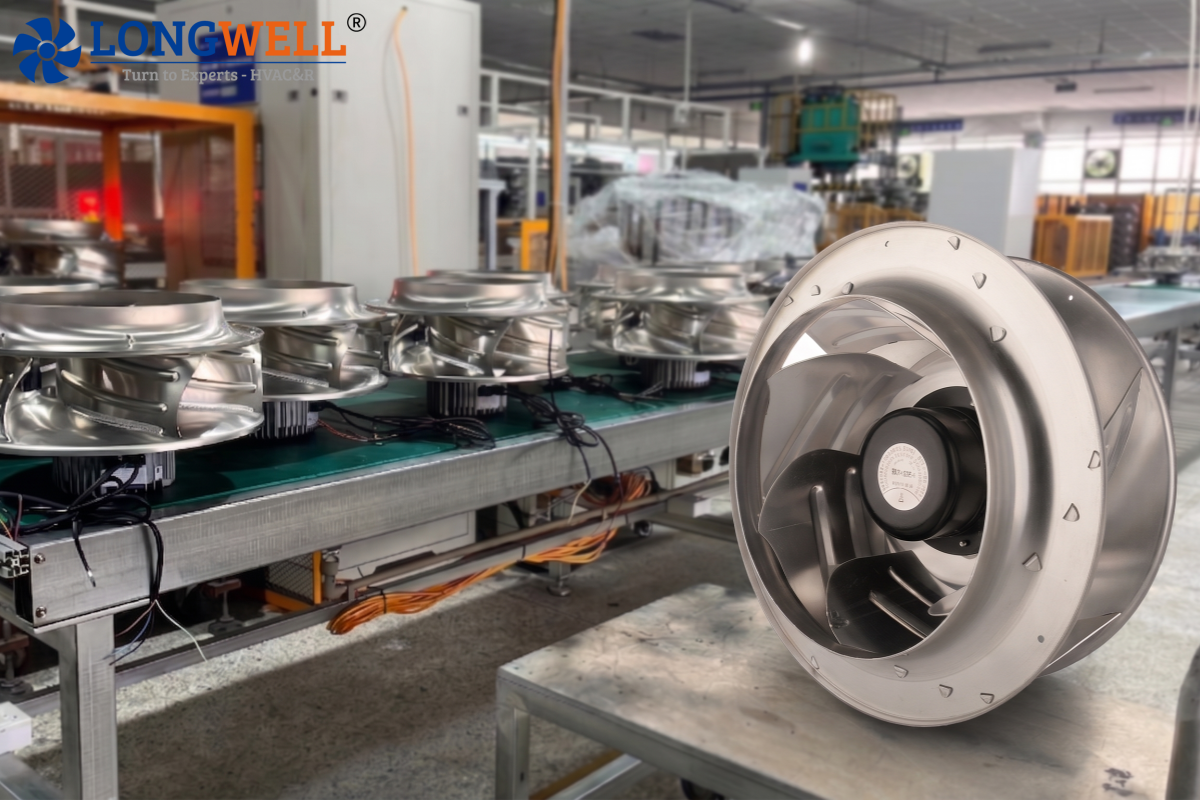
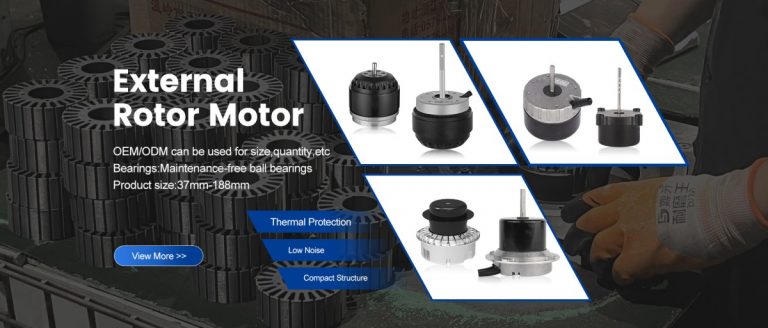
The first step in noise reduction is eliminating mechanical and electromagnetic noise. We abandoned the traditional AC motor and adopted the LW-EC series external rotor fan, custom-developed by LONGWELL.
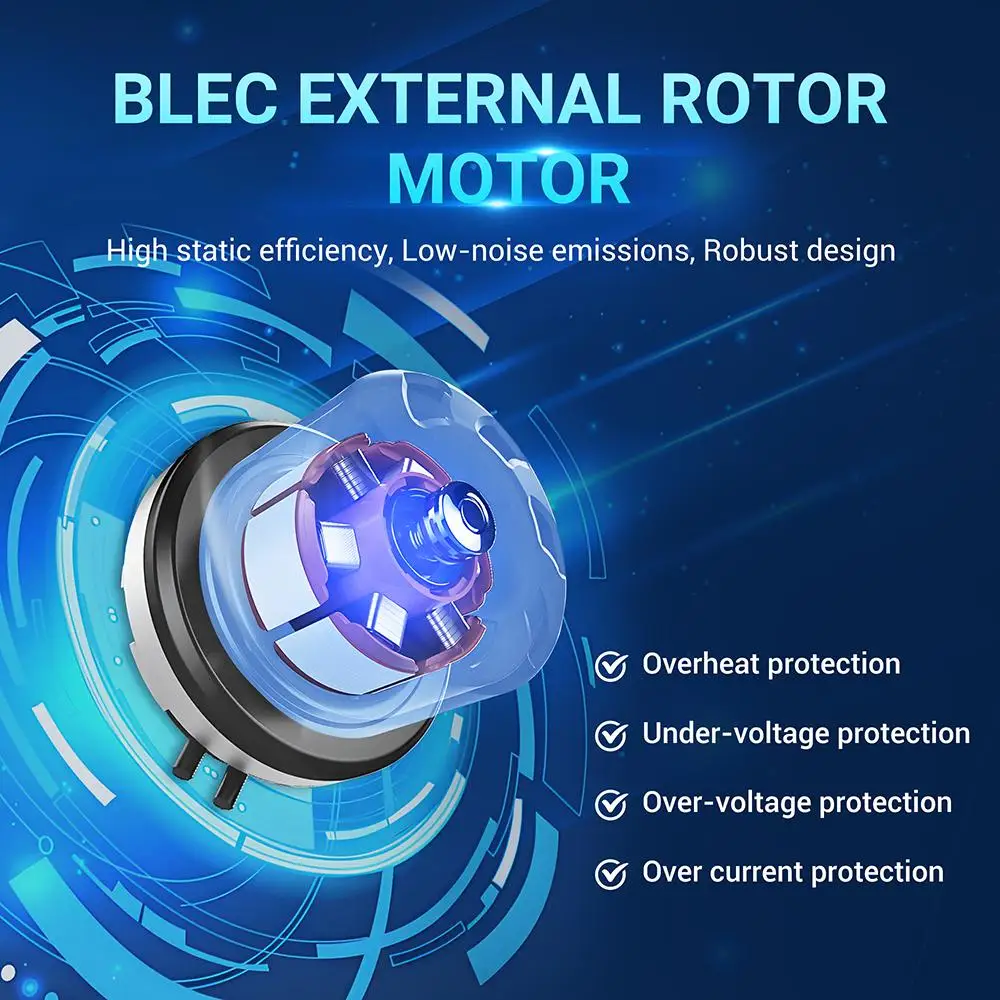 Here, it is necessary to explain the core value of EC Technology (Electronically Commutated).
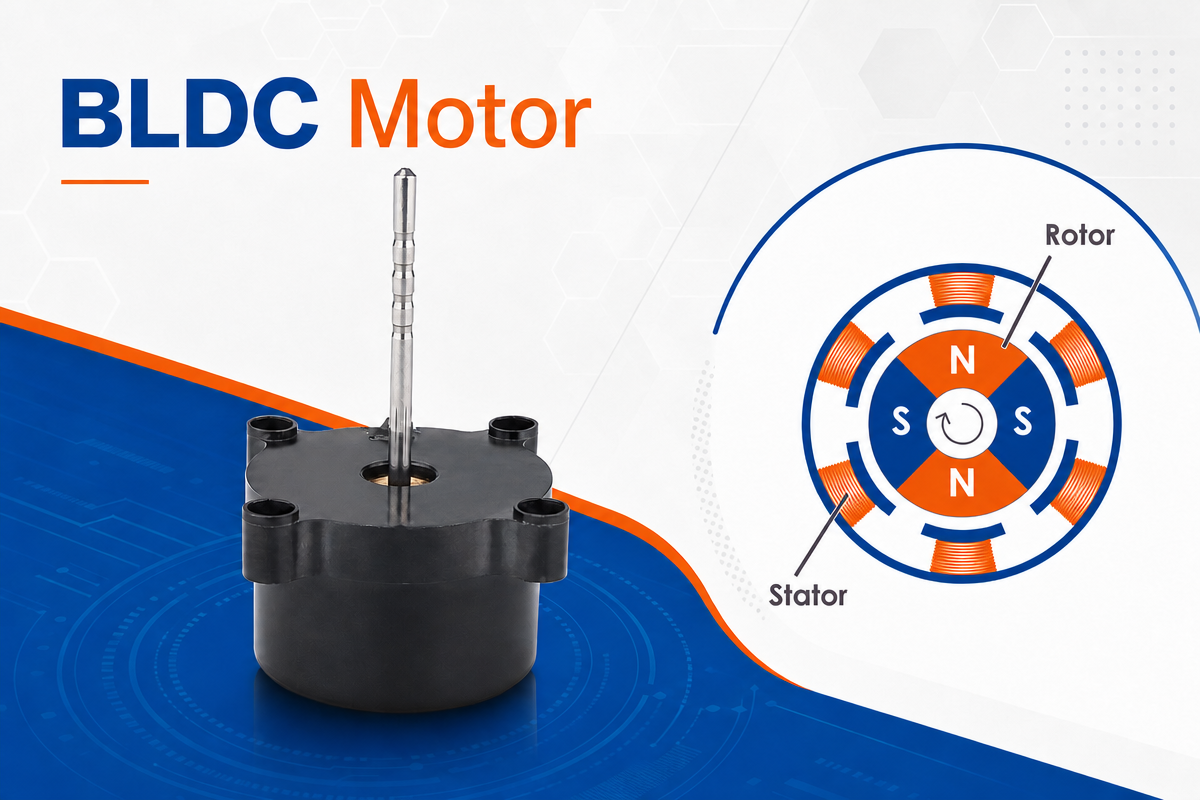
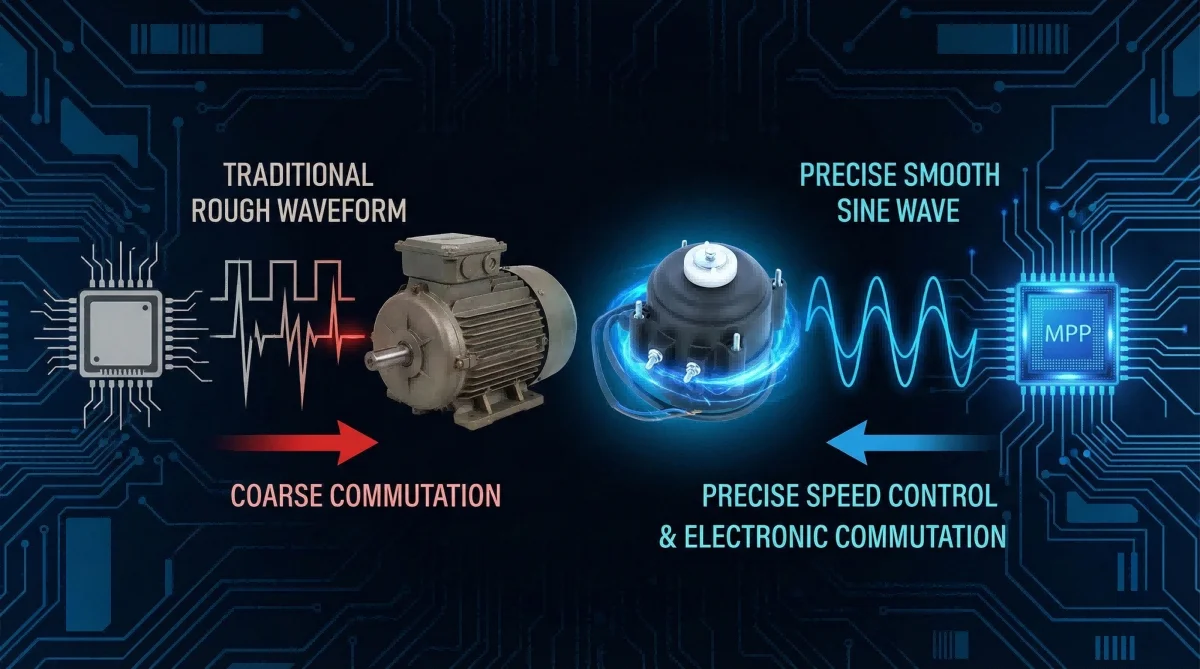
Layman’s Understanding: If the motor is the heart of the fan, then the EC Module is its “intelligent variable-frequency brain.” It combines an efficient brushless DC motor with an intelligent control circuit board. Unlike the passive “plug-and-play full speed” mode of traditional AC fans, an EC fan with this “brain” can precisely control speed and is 30%-50% more energy-efficient than traditional fans.
The core of this fan lies in its Sine Wave Drive technology. Unlike the square wave drive of ordinary brushless DC motors, the sine wave drive can output a continuous and smooth current waveform, greatly suppressing torque ripple during motor commutation.
Engineering tests showed: After replacing it with the EC motor, the electromagnetic noise generated by the motor itself dropped by about 4dB. Additionally, because the EC motor rotor is highly integrated with a dynamic balance precision reaching G6.3 grade, mechanical vibration caused by rotation was controlled within the micron range, effectively cutting off the solid sound transmission path.
2. Flow Field Reconstruction: Aerodynamic Optimization Based on CFD Bionics
Having solved the “source,” the next step was to solve the “path.” To eliminate high-frequency wind noise, the LONGWELL Fluid Laboratory used CFD (Computational Fluid Dynamics) software to perform high-precision flow field modeling on the refrigerator’s rear heat dissipation area.
Layman’s Understanding: You can imagine CFD technology as a “Digital Wind Tunnel.” Before opening molds for manufacturing, our engineers conducted a “virtual rehearsal” on high-performance computers. Through this virtual environment, we could visually see where the air flows smoothly and where noise-causing vortices are generated, allowing us to eliminate hidden dangers during the design phase and avoid blind trial and error.
Through CFD simulation cloud map analysis, we found severe airflow separation at the edge of the original fan blades. To address this, the engineering team introduced a bionic serrated leading-edge design. Inspired by the wings of owls (known for silent flight), the serrated structure effectively breaks large vortices into fine, fragmented small vortices, thereby dispersing noise energy concentrated in specific frequencies into a wide frequency band, making the auditory perception softer.
At the same time, we assisted the client in fine-tuning the air duct grille by adding guide ribs to comb the turbulent intake air into a smooth Laminar Flow, significantly reducing the drag coefficient. This not only reduced noise but also increased air volume by about 15%, leaving margin for subsequent speed reduction.
3. Algorithm Implantation: PWM Speed Regulation and PID Closed-Loop Control
Hardware determines the lower limit, while algorithms determine the upper limit. The core advantage of EC fans lies in their controllability. We integrated an intelligent control chip inside the fan and collaborated with the client’s electronic control department to develop a set of PID closed-loop control logic based on condenser temperature feedback.
The new logic completely changed the way the fan works:
Low-Load Cruising: At night or in winter, when heat dissipation demand is low, the fan maintains a low-speed operation of 600-800 RPM. At this time, the noise is almost inaudible, and power consumption is extremely low.
Linear Response: When the ambient temperature rises or the quick-freeze mode is turned on, the fan accelerates linearly through the PWM signal, avoiding step-change noise mutations.
Soft Start/Soft Stop: The fan start-stop is set with a 3-5 second acceleration/deceleration buffer period, eliminating the impact sound typical of traditional fan startups.
IV. Validation and Delivery: Commercial Value in Data Dimensions
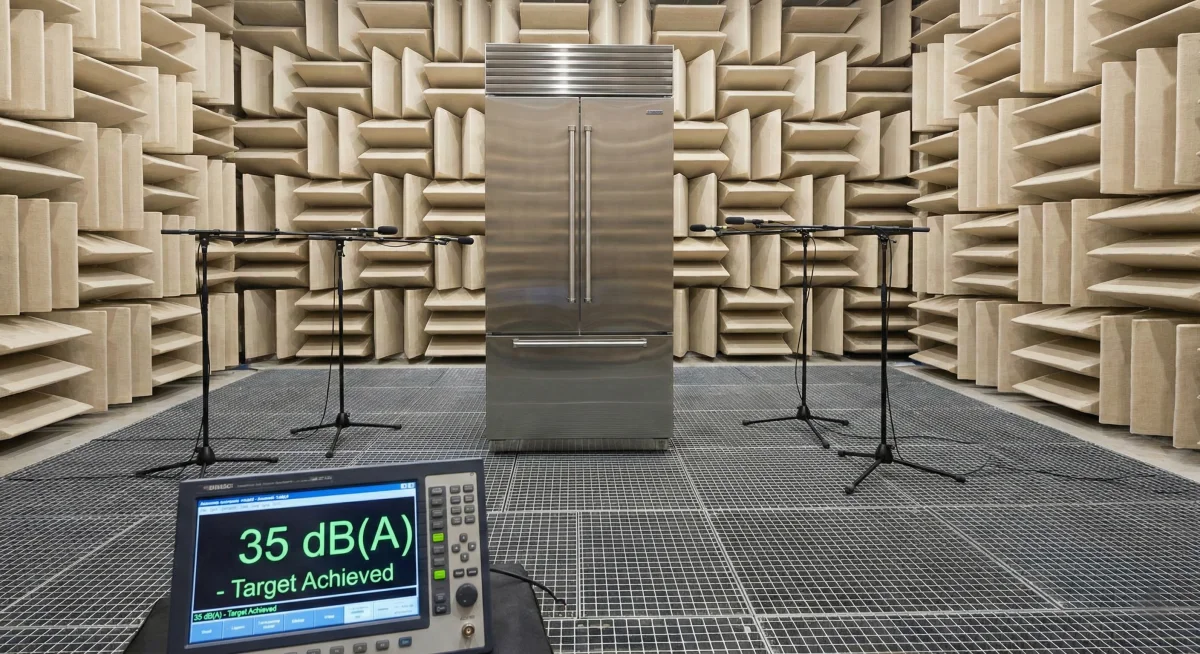
After 6 months of joint development and multiple rounds of verification (including fully anechoic chamber testing, high/low-temperature life testing, and whole-machine energy efficiency testing), the solution was finally finalized for mass production.
Acoustic Performance Compliance: Under standard operating conditions (ambient temperature 25℃), the overall machine operating noise stabilized at 35dB (A). In subjective listening evaluations, the original sharp wind noise disappeared, replaced by an extremely weak and uniform airflow sound, fully meeting the “bedroom-level” silence standard.
Market Performance Recovery: After the launch of the new models equipped with the LONGWELL EC module, the reputation disadvantage was quickly reversed. In the highly competitive domestic Korean market and high-end European and American markets, this series of refrigerators stood out with its ultimate quiet experience and was recommended by multiple industry media outlets. In the first year of listing, the sales of this model achieved a 180% year-on-year increase.
Scale Delivery Capability: As of the fourth quarter of 2025, LONGWELL has cumulatively delivered over 1.2 million customized EC silent fans to this client. In such large-scale delivery, our production line maintained a First Pass Yield (FPY) of over 99.9%, ensuring zero stagnation in the client’s production line.
Conclusion: The Evolution of Supply Chain Relationships
Reviewing the entire project, the leap from 42dB to 35dB is essentially an upgrade in the supply chain cooperation model.
In the context of traditional manufacturing, fan factories are often just “make-to-print” processors. However, in this project, LONGWELL demonstrated its core value as a “Thermal Management and Fluid Solution Provider”—we provide not only hardware but also a full set of technical support including Simulation Analysis (CFD) and Intelligent Algorithm Strategies (EC Technology).
As the home appliance industry moves towards intelligence and high-end positioning, the technical requirements for core component suppliers are constantly rising. Ningbo Longwell Electric (LONGWELL) will continue to cultivate the fields of EC technology and fluid mechanics, using solid engineering capabilities to assist global customers in conquering the next technical pain point and driving the industry towards a higher standard “Era of Silence.”