Why Restaurants Prefer Centrifugal Fans for Grease Removal and Air Purification

If you have ever walked into a commercial kitchen during the dinner rush, you know the atmosphere is intense. The heat, the steam, and, most critically, the heavy grease smoke generated by fryers, woks, and grills create a challenging environment. For restaurant owners and HVAC engineers, managing this air quality isn’t just about comfort—it is a matter of safety, fire code compliance, and operational efficiency.
This is where the centrifugal exhaust fan becomes the unsung hero of the food service industry. Unlike standard residential fans that simply move air, a commercial kitchen ventilation fan for oil fume extraction must be a powerhouse capable of battling high resistance and sticky contaminants.
In this guide, we will dive deep into the engineering behind why the centrifugal exhaust fan is the industry standard for grease removal, how to choose the right model for heavy loads, and why modern EC technology is changing the game for energy-conscious businesses.
The Science of Extraction: Why Commercial Kitchens Are Different
Before you can select a fan, you need to understand the enemy: grease-laden vapors. In a home kitchen, a simple hood might suffice. In a commercial setting, you are dealing with a completely different beast.
The Heavy Burden of Grease, Steam, and Heat
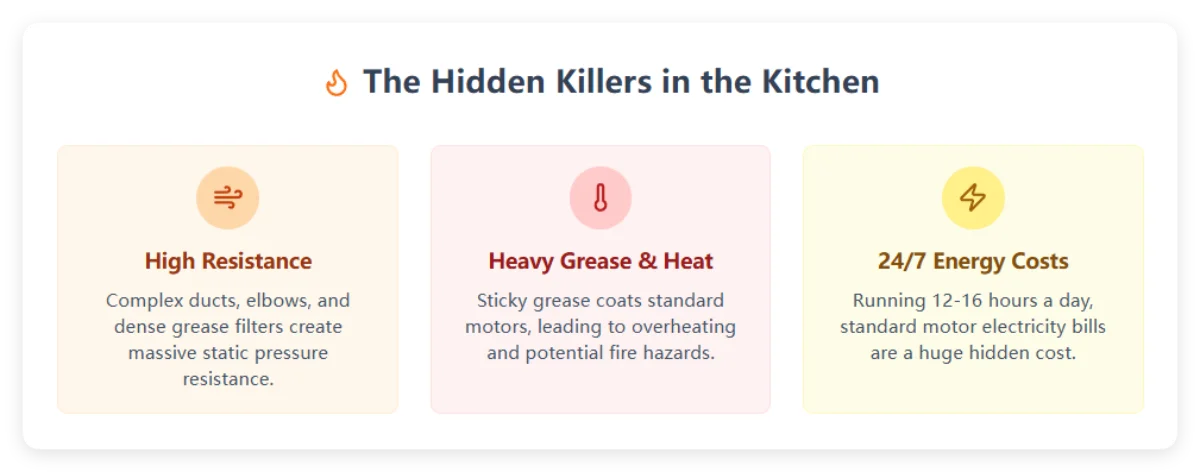
Cooking processes like charbroiling and deep-frying release particulate matter that is heavier and stickier than ordinary air. When this “grease smoke” cools, it condenses on every surface it touches. If your fan cannot pull these vapors out quickly enough, the grease settles on walls, ceiling tiles, and even on the plates of food you are serving.
A centrifugal exhaust fan grease smoke removal system is designed to create a strong vacuum effect, capturing these heavy particles at the source before they can disperse.
Understanding Static Pressure in Complex Ductwork
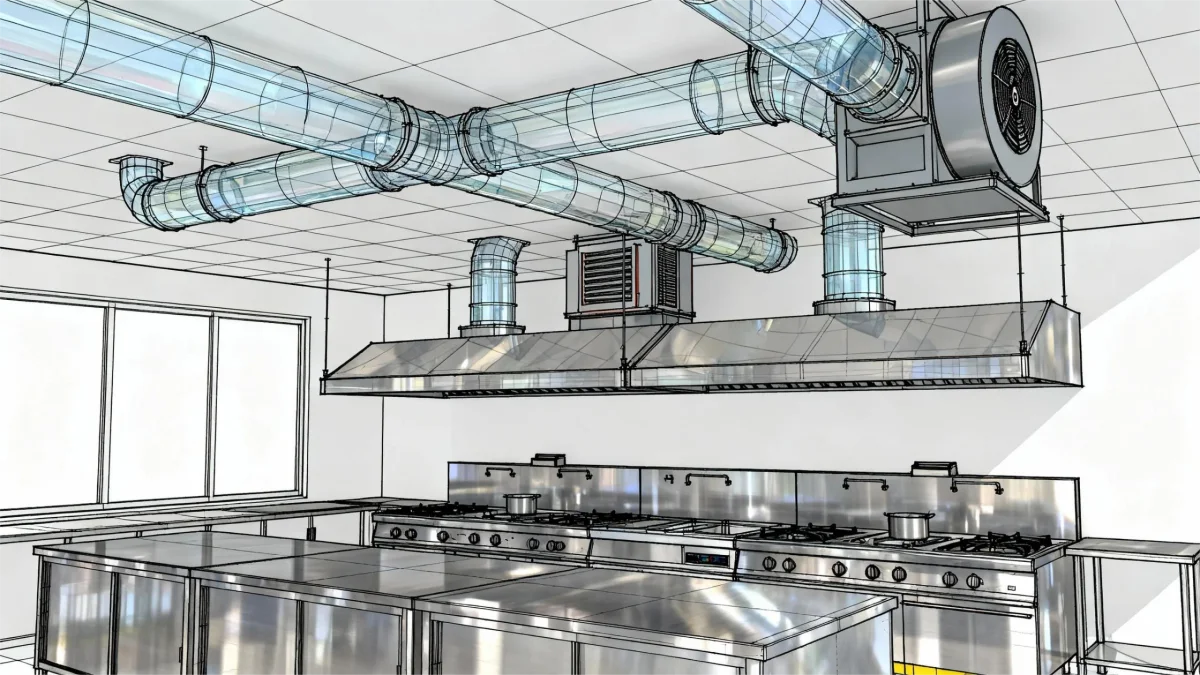
This is the number one reason why generic fans fail in restaurants. Commercial exhaust systems often involve:
· Long runs of ductwork to reach the roof.
· 90-degree bends and turns.
· Grease filters (baffle filters) at the hood.
· Secondary pollution control units (like electrostatic precipitators).
Every single one of these components adds resistance to the airflow. This resistance is measured as static pressure. A standard axial fan (like a box fan or propeller fan) cannot push against this resistance; the air simply bounces back. You need a fan designed to build high pressure to force that heavy, greasy air through the maze of filters and ducts.
Fire Codes and NFPA 96 Compliance Standards
In the United States, NFPA 96 is the standard for ventilation control and fire protection of commercial cooking operations. It dictates that fans must be able to handle high temperatures and that the grease must not accumulate in areas that could ignite.
Centrifugal vs. Axial: The Battle for Grease Removal
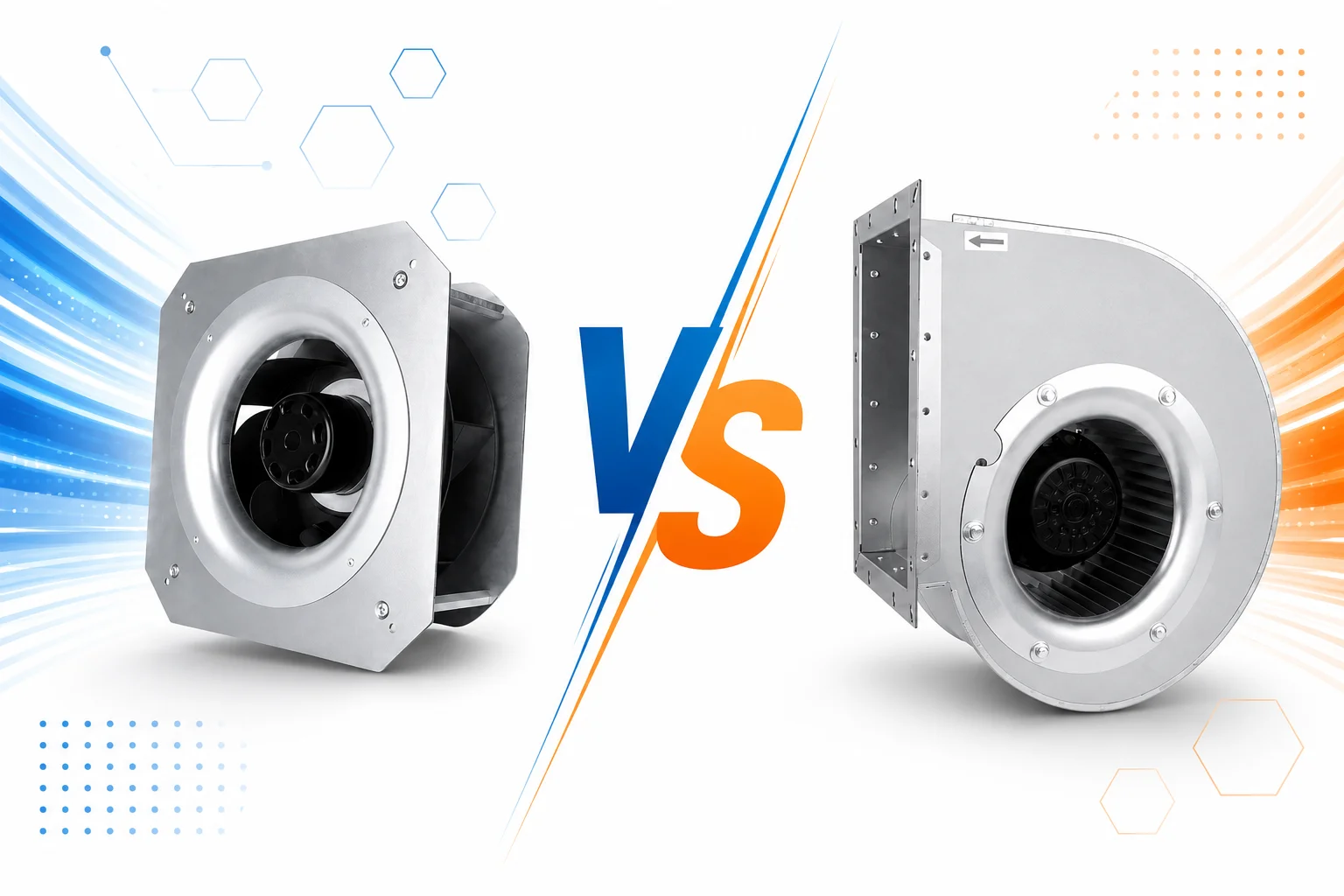
When browsing for ventilation solutions, you will primarily see two types of fans: Axial and Centrifugal. For heavy grease smoke removal, the choice is clear, but understanding why helps you make better purchasing decisions.
 How Axial Fans Operate (and Why They Fail Here)
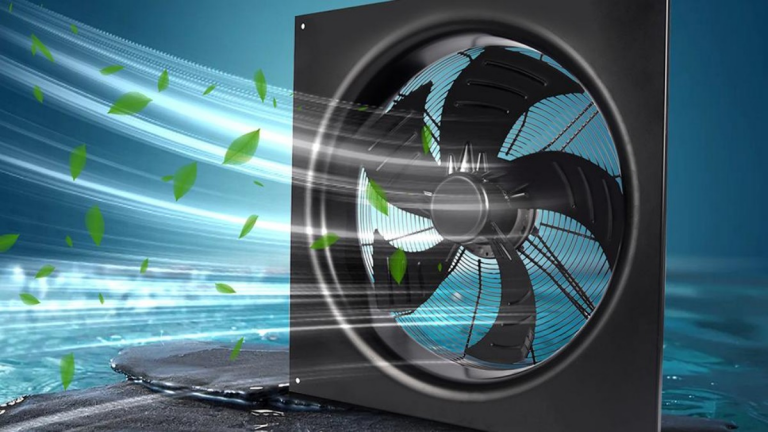
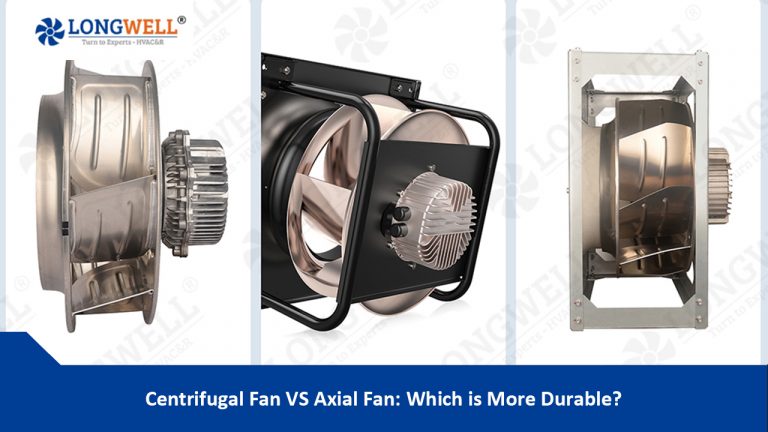
Axial fans work like an airplane propeller. The blades spin and push air parallel to the shaft. They are fantastic for moving large volumes of air at low pressure (think cooling a computer or a warehouse floor).
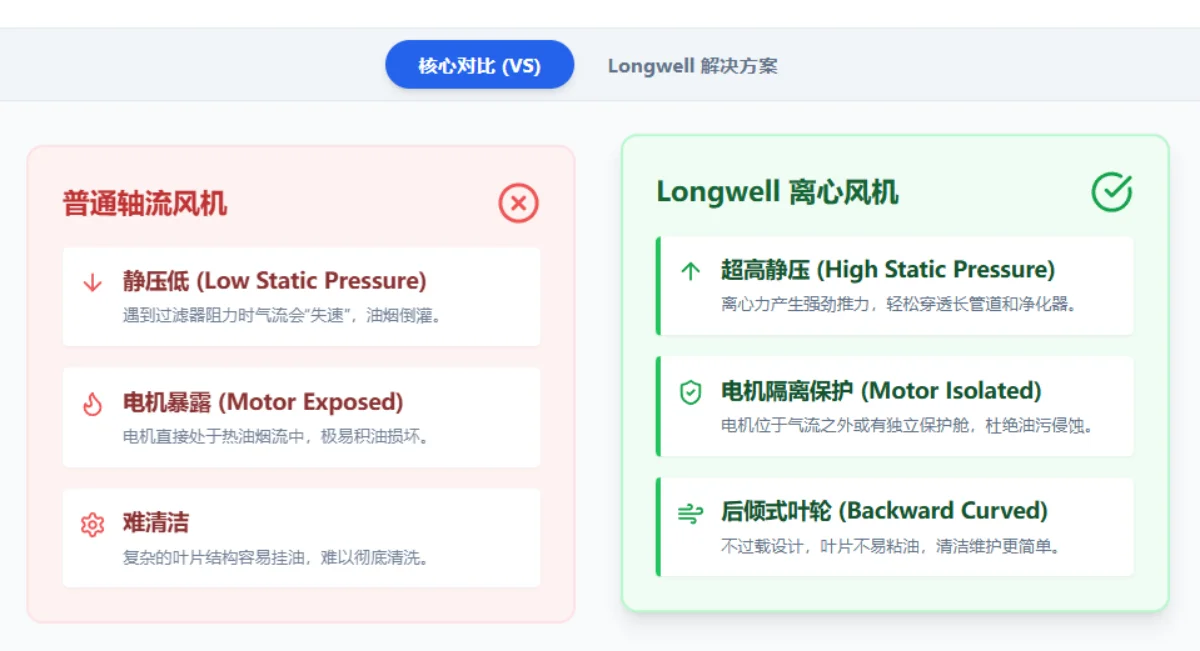
However, when an axial fan faces resistance—like a clogged grease filter—its performance drops off a cliff. It stalls. Furthermore, in most axial designs, the motor sits directly in the airstream. Blowing hot, greasy air over an electric motor is a recipe for failure and a massive fire risk.
The Centrifugal Advantage: Generating High Pressure
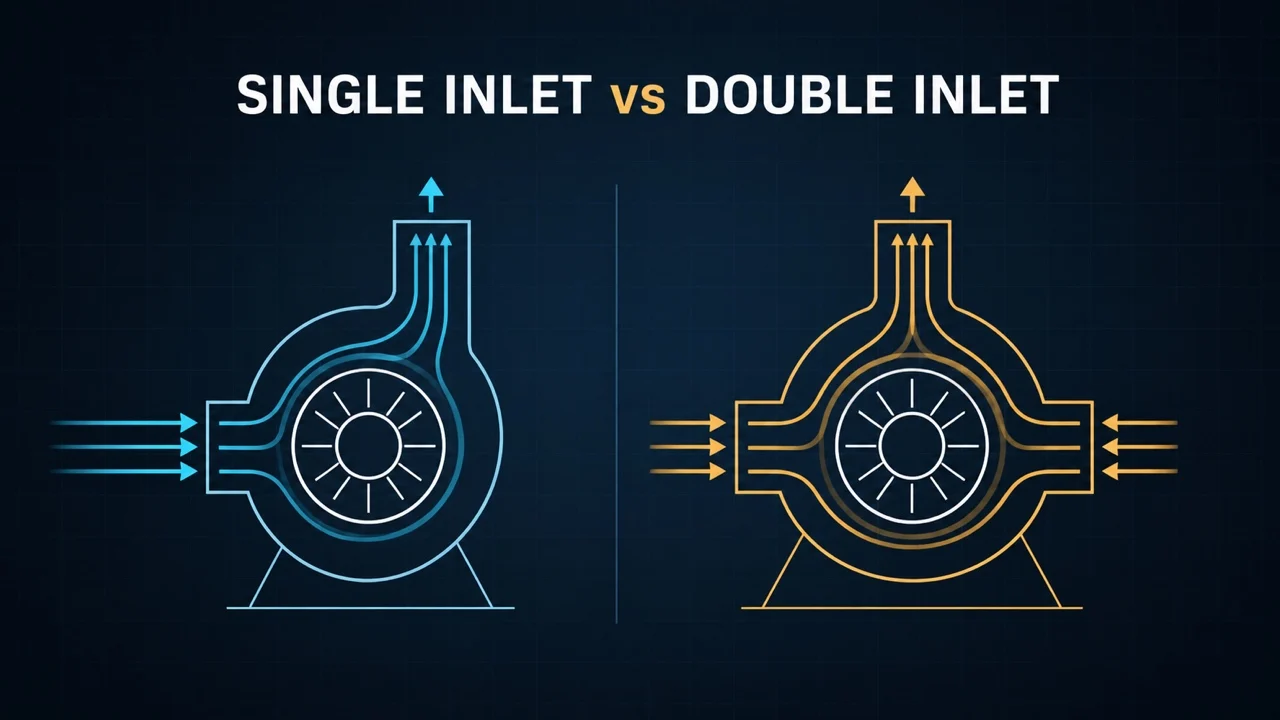
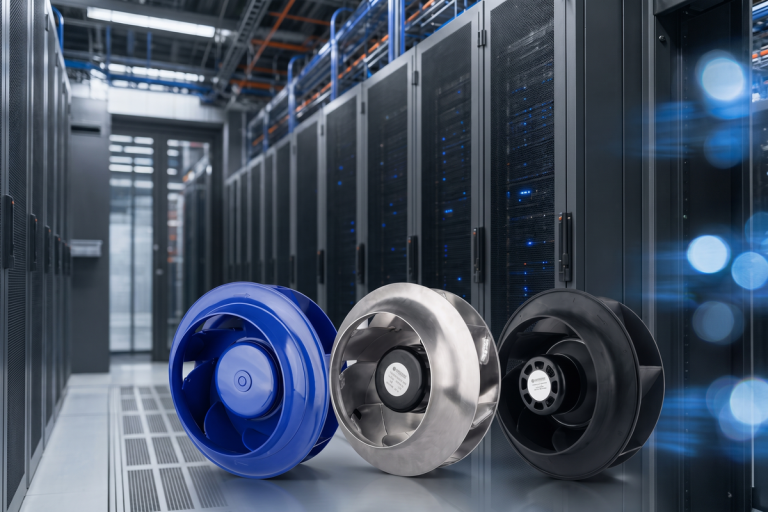
A centrifugal exhaust fan operates differently. It uses an impeller that looks like a hamster wheel or a turbine. Air enters the center of the wheel (the inlet) and is spun outwards 90 degrees by centrifugal force.
This 90-degree turn and the speed of the impeller create significant kinetic energy, which translates into high static pressure. This allows the fan to:
1. Suction: Pull smoke aggressively from the cooking surface.
2. Push: Force that smoke through long ducts and dense filters without losing airflow.
Keeping the Motor Safe from Grease Contamination
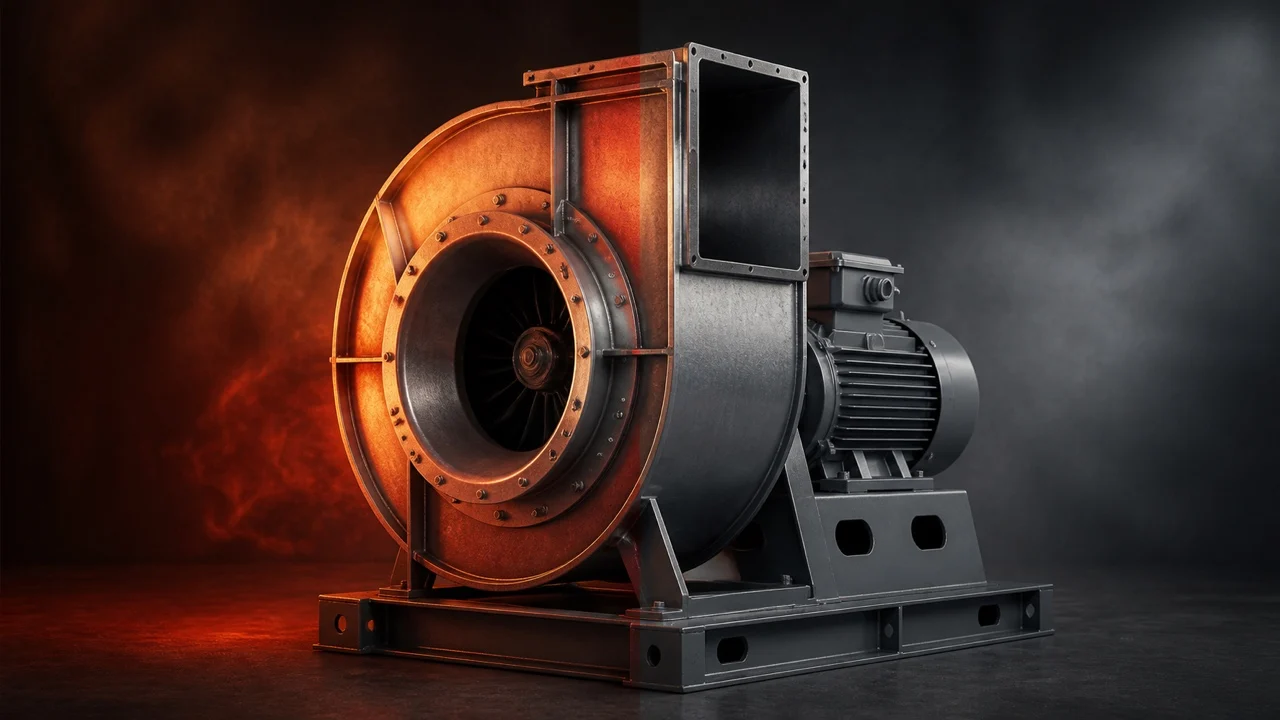
Crucially, most centrifugal blowers designed for kitchens (like “utility sets” or “mushroom fans”) are belt-driven or have the motor mounted outside of the air stream (or protected in a specialized compartment). This ensures that the centrifugal exhaust fan for heavy grease smoke removal keeps its sensitive electrical components clean, cool, and free from flammable grease buildup.
|
Feature |
Axial Flow Fan |
Centrifugal Exhaust Fan |
|---|---|---|
|
Airflow Direction |
Parallel to shaft |
90° Turn (Radial) |
|
Static Pressure |
Low |
High |
|
Resistance Handling |
Poor (Stalls easily) |
Excellent (Maintains flow) |
|
Primary Application |
General cooling, wall exhaust |
Ducted HVAC, Grease Exhaust, Dust Collection |
|
Motor Exposure |
Often in airstream |
Often isolated from airstream |
Key Design Features of an Effective Centrifugal Exhaust Fan
Not all centrifugal fans are created equal. When specifying a unit for a steakhouse or a burger joint, look for these specific engineering details.
Impeller Types: Backward Curved vs. Forward Curved
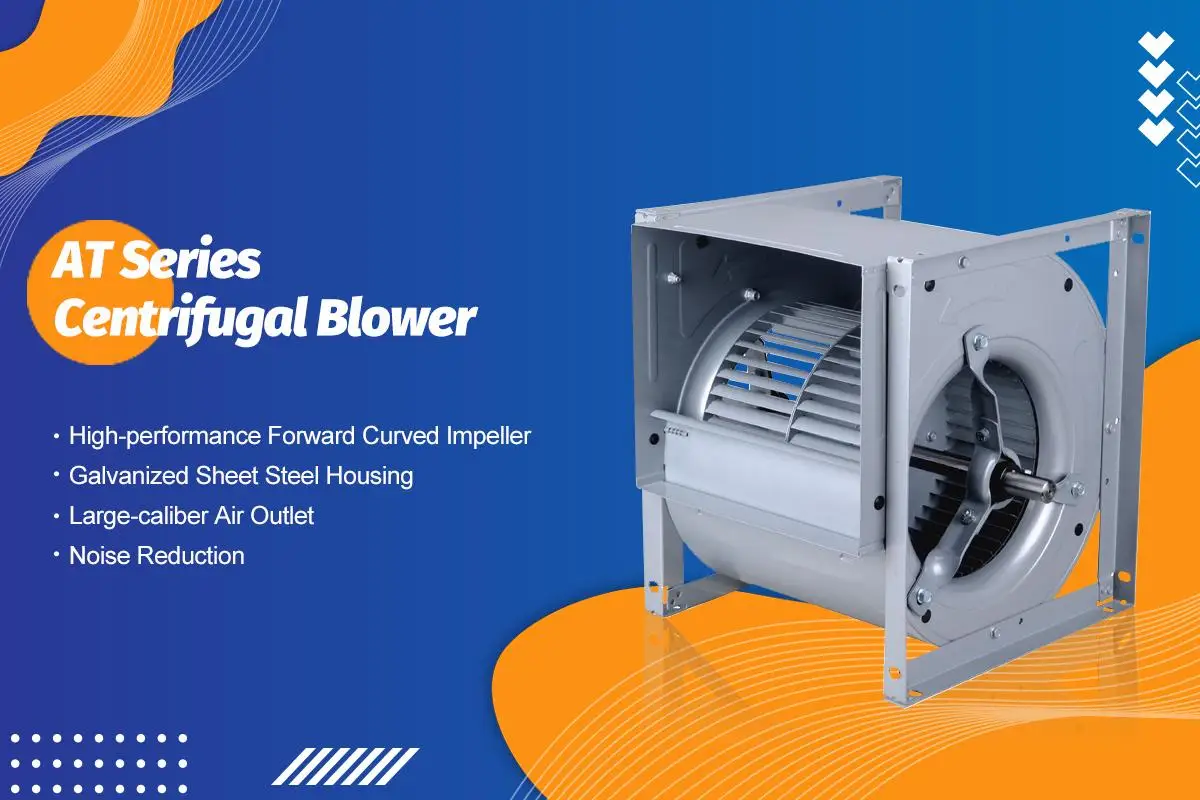
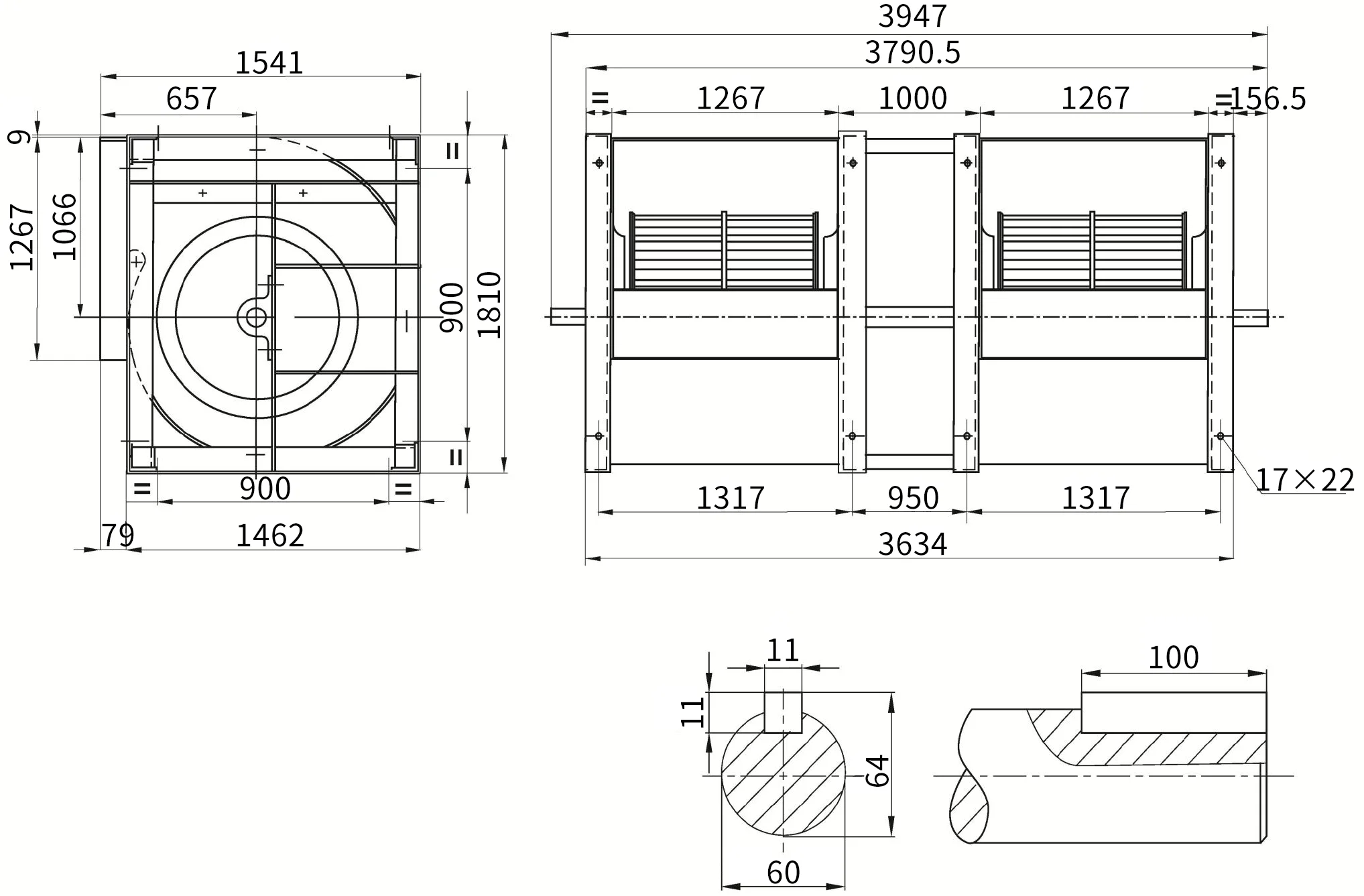
· Forward Curved (Squirrel Cage): These have many small blades curved in the direction of rotation. They generate huge airflow but are sensitive to grease buildup. If grease sticks to the small blades, it throws the fan off balance.
·Backward Curved / Backward Inclined: These blades curve away from the direction of rotation. They are structurally stronger and, most importantly, non-overloading. They are generally preferred for high-efficiency centrifugal fan for restaurant grease removal applications because their blade shape is less prone to “holding” grease, making them easier to clean and more stable under high pressure.
Housing Design and Grease Drainage
A proper kitchen exhaust fan will have a grease drain. Centrifugal force flings grease droplets against the fan housing walls. Gravity pulls this liquid grease down to a collection spout or cup. Without this feature, grease pools inside the fan, causing leaks onto the roof—a major environmental and fire hazard.
Material Durability Against Corrosion
Kitchen exhaust is corrosive. It contains moisture, fatty acids, and cleaning chemicals. Top-tier fans use galvanized steel or aluminum construction to resist rust. For coastal areas or particularly aggressive chemical environments, you might even consider specialized coatings.
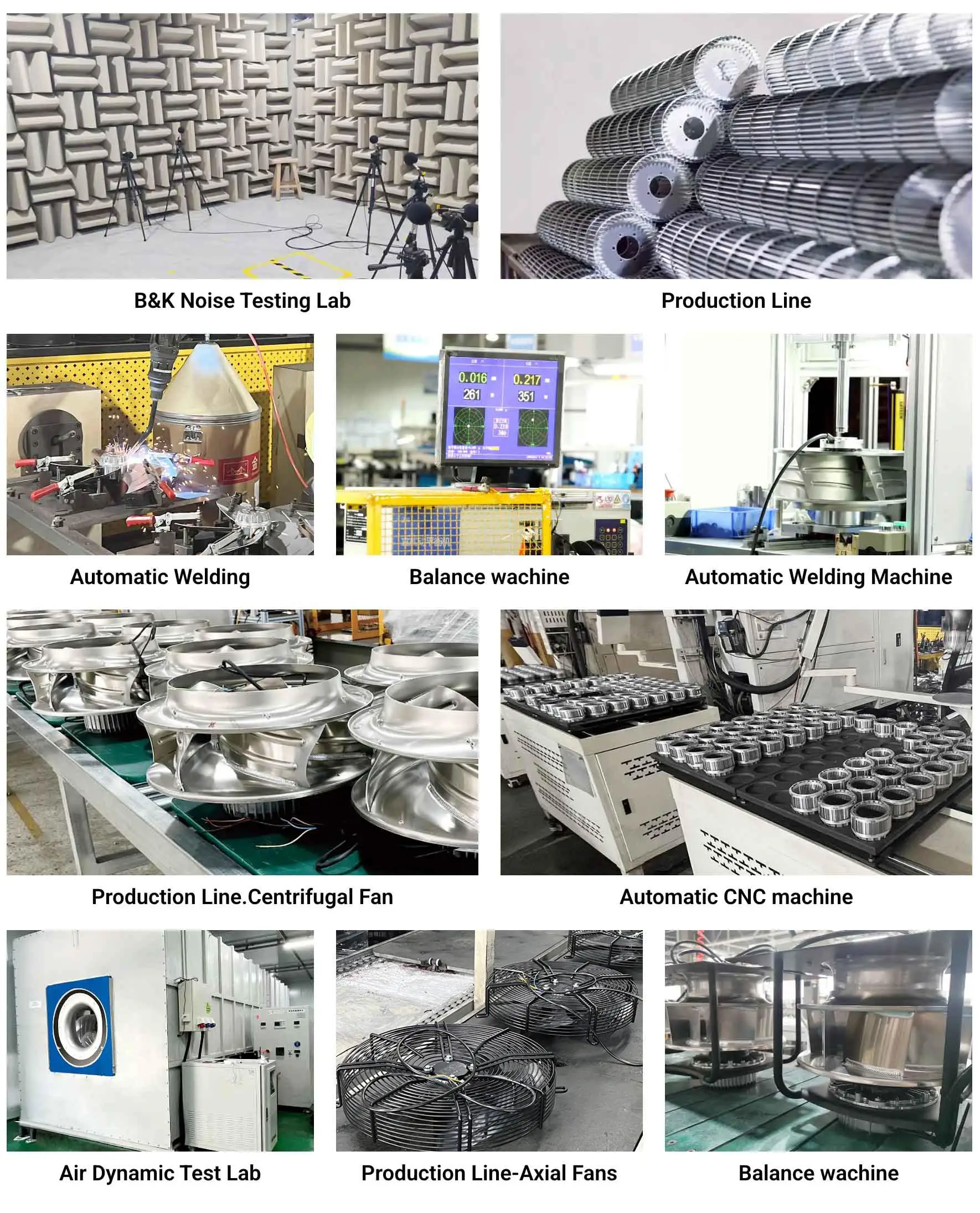
About LONGWELL
When sourcing components for high-performance ventilation systems, the manufacturer’s expertise is just as important as the product specs.
Ningbo Longwell Electric Technology Co., Ltd. (Website: www.longwellfans.com) is a professional manufacturer of HVAC fans and motors. We provide a full range of aerodynamic products including centrifugal fans, axial fans, cross-flow fans, and EC/DC/AC motors. Our products are widely used in HVAC, refrigeration and cold chain, electronic cooling, and industrial purification fields.
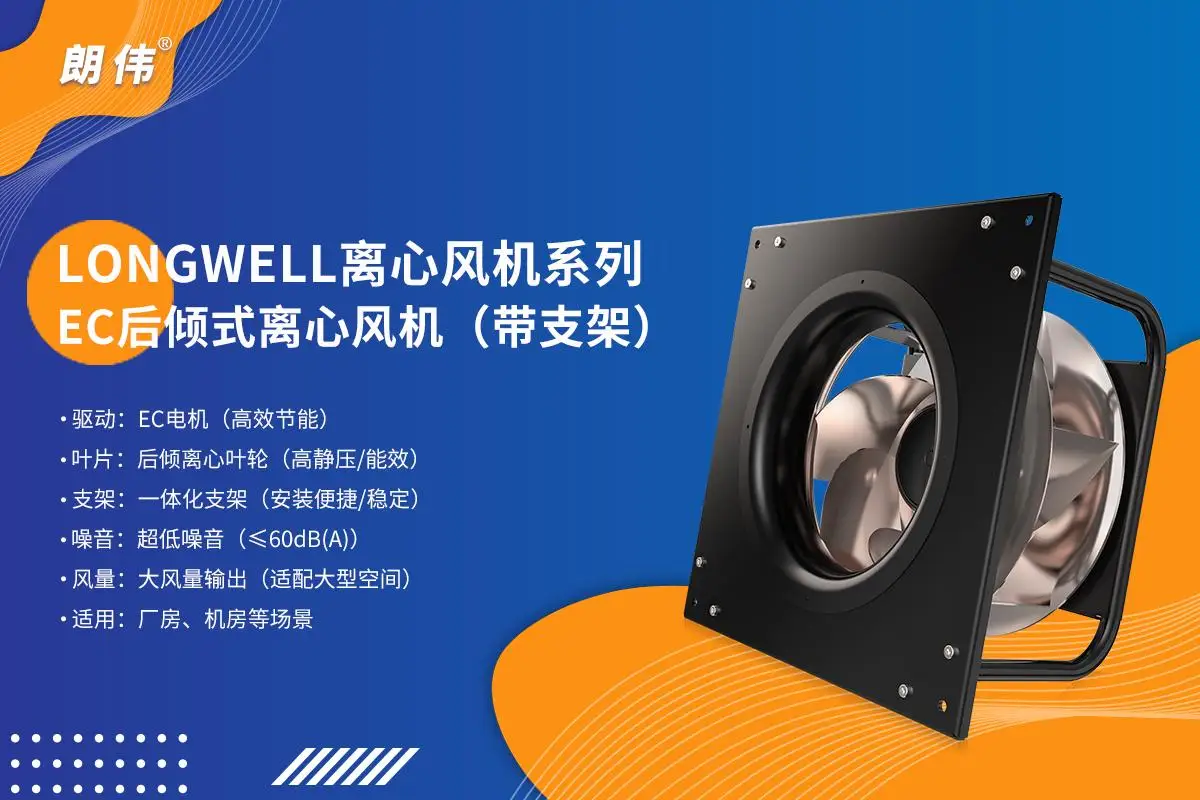
At Longwell, we understand that a commercial kitchen cannot afford downtime. That is why our EC centrifugal fans and backward curved impellers are engineered for durability and efficiency, providing the reliable static pressure needed for demanding grease exhaust applications.
Maximizing Efficiency with EC Motor Technology
The restaurant industry operates on thin margins. Energy costs are a massive line item. Traditional AC (Alternating Current) motors are reliable but energy-hungry. The modern standard is shifting toward EC (Electronically Commutated) motors.
What is an EC Centrifugal Fan?
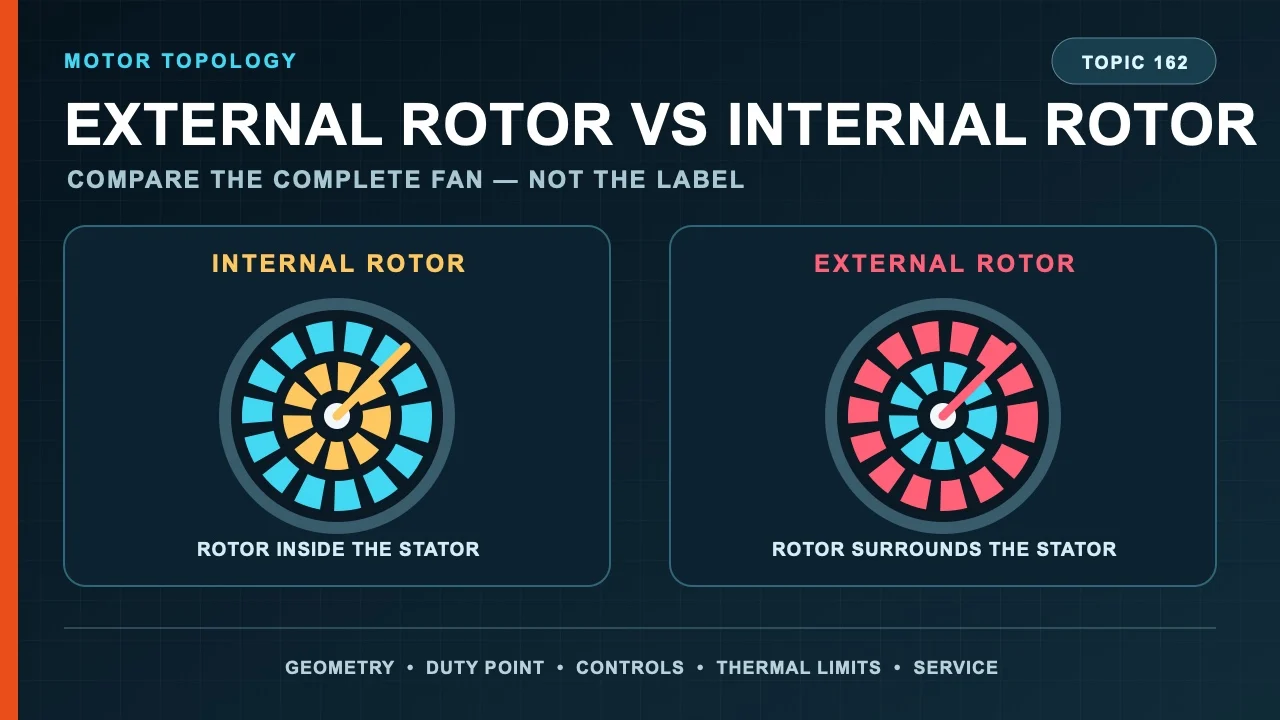
An EC motor combines the efficiency of DC voltage with the convenience of AC power supply. It uses permanent magnets and onboard electronics to control the rotor.
[Image 2: A side-by-side comparison visual of a traditional bulky AC motor versus a sleek, compact Longwell EC motor integrated into a centrifugal impeller.]
Energy Savings for 24/7 Operations
A high-efficiency centrifugal fan for restaurant grease removal equipped with an EC motor can reduce energy consumption by up to 30-50% compared to traditional AC motors. For a restaurant running its fans 12 to 16 hours a day, the ROI on an EC fan is often realized within the first year.
Intelligent Speed Control for Variable Kitchen Loads
A traditional AC fan is usually “on” or “off.” It runs at 100% even if you are only boiling water for prep.
Longwell EC fans support 0-10V or PWM control. This means you can link the fan speed to sensors.
· Dinner Rush: Sensors detect high heat/smoke -> Fan ramps up to 100%.
· Prep Time: Low heat/smoke -> Fan ramps down to 40%.
This capability, known as Demand Control Kitchen Ventilation (DCKV), drastically reduces the volume of conditioned air (heated or cooled air from the dining room) being sucked out of the building, saving even more on your HVAC bills.
Selecting the Right Fan for Heavy Grease Smoke Removal
How do you pick the specific model? It is not just about “bigger is better.”
Calculating CFM and Static Pressure Requirements
1. CFM (Cubic Feet per Minute): This is determined by the size of your hood and the type of cooking equipment. A heavy-duty charbroiler requires more CFM per linear foot of hood than a steam kettle.
2. Static Pressure (SP): Calculate the pressure drop of your ducts (length + bends) and your filters.
Tip: If you are adding a low-noise centrifugal exhaust fan for industrial kitchens, remember that adding silencers creates more static pressure. You need a fan curve that can handle that extra load.
Integration with Electrostatic Precipitators (ESP)
Many urban restaurants must install ESP units to remove smoke odors so they don’t disturb neighbors. ESP units add significant resistance. If you simply install a standard fan, the airflow will drop drastically. You must select a centrifugal blower with a steep performance curve to push air through the dense collection plates of an ESP.
Noise Considerations for Open-Concept Kitchens
Open kitchens are trendy, but nobody wants to shout over the roar of an exhaust fan.
· Blade Design: Backward curved impellers are generally quieter than radial blades.
· Sizing: An undersized fan running at super-high RPM is louder than a properly sized fan running at medium RPM.
· Location: Remote mounting (on the roof) is quieter than inline mounting, but if inline is necessary, look for units with insulated housings.
Installation and Maintenance Best Practices
Even the best commercial kitchen ventilation fan for oil fume extraction will fail if installed poorly.
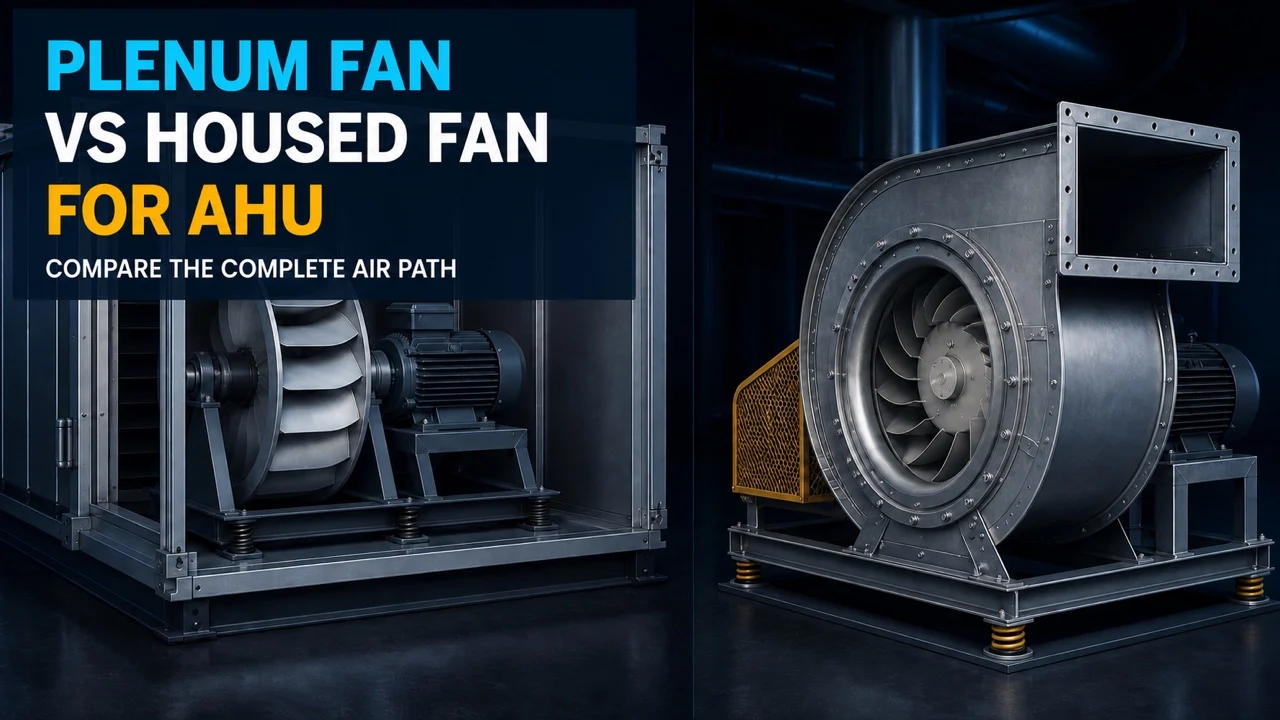
Rooftop vs. Inline Duct Installation
· Rooftop (Upblast): The most common for grease. It blasts the contaminated air straight up, away from the roof surface. It is easy to access for cleaning.
· Inline: Installed inside the ductwork. This is often necessary in high-rise buildings where roof access is far away. However, inline fans for grease must have access doors for cleaning, or they become severe fire hazards.
Cleaning Protocols to Prevent Fire Hazards
Grease is fuel. A spark from a wok can travel up the duct and ignite the grease in the fan.
· Frequency: High-volume operations (burgers, wok cooking) may need monthly cleaning.
· Access: Ensure your fan has a “hinge kit.” This allows cleaners to tilt the fan back to clean the duct underneath without damaging the fan or the wiring.
Troubleshooting Common Vibration and Noise Issues
If your fan starts vibrating:
1. Check the Wheel: Is there uneven grease buildup? This causes imbalance.
2. Check the Belt: On belt-driven units, a loose or worn belt causes slipping and vibration. (Note: Longwell EC direct-drive fans eliminate belt maintenance entirely).
3. Check the Mounts: Are the vibration isolators (springs or rubber) intact?

Future Trends: Smart Ventilation Systems
The future of centrifugal exhaust fan grease smoke removal is smart connectivity. We are seeing a shift towards fully integrated systems where the fan communicates with the makeup air unit (MAU) and the building management system (BMS).
By utilizing Longwell’s EC motors with Modbus or 0-10V communication, restaurant owners can monitor fan health remotely. Imagine getting an alert on your phone that your fan’s vibration levels are rising before it fails during Friday night service. That is the reliability modern food service demands.
Whether you are designing a new ghost kitchen or retrofitting a historic diner, choosing a high-static pressure, easy-to-clean centrifugal fan is the single most important decision for your air quality strategy.
FAQ: Centrifugal Fans for Kitchen Ventilation
Q1: Why can’t I use a regular axial fan for my restaurant hood?
A: Axial fans cannot handle the “static pressure” created by grease filters and long duct runs. They will stall, leading to smoke filling the kitchen and grease accumulating in the ducts, which is a major fire hazard.
Q2: What is the best type of centrifugal fan for heavy grease?
A: A fan with a backward curved impeller is typically best. It offers high efficiency, high static pressure capabilities, and its blade design is non-overloading and generally easier to clean than forward-curved “squirrel cage” wheels.
Q3: How often should I clean my centrifugal exhaust fan?
A: It depends on your cooking volume. Heavy grease environments (wok cooking, charbroiling) require monthly or quarterly cleaning. Lower volume kitchens might be semi-annual. Always follow NFPA 96 guidelines and local fire codes.
Q4: Are EC centrifugal fans worth the extra cost for a kitchen?
A: Yes. Kitchen fans often run all day. An EC centrifugal fan saves 30-50% on electricity and allows for variable speed control, which can save thousands of dollars annually in conditioned air loss.
Q5: What is the difference between an upblast and a utility set fan?
A: An upblast fan sits directly on the roof curb and blows air straight up (best for grease). A utility set is usually larger, can be floor or roof-mounted, and is used for very high-static pressure applications or where the fan needs to be located indoors (with ducting to the outside).
Q6: Can a centrifugal fan help with odor control?
A: Indirectly, yes. Odor control requires filters (carbon or electrostatic). These filters add resistance. Only a powerful high-efficiency centrifugal fan can push air through these dense filters to effectively remove odors.
Q7: How do I reduce the noise of my kitchen exhaust fan?
A: Ensure the fan is properly sized so it doesn’t have to run at max RPM. Use low-noise centrifugal exhaust fans with insulated housings, install flexible connectors to isolate vibration, and consider placing the fan further from the hood (e.g., on the roof) if possible.