LONGWELL
www.longwellfans.com
Ningbo Longwell Electric Technology Co., Ltd.
TECHNICAL GUIDE — INTERNATIONAL EDITION
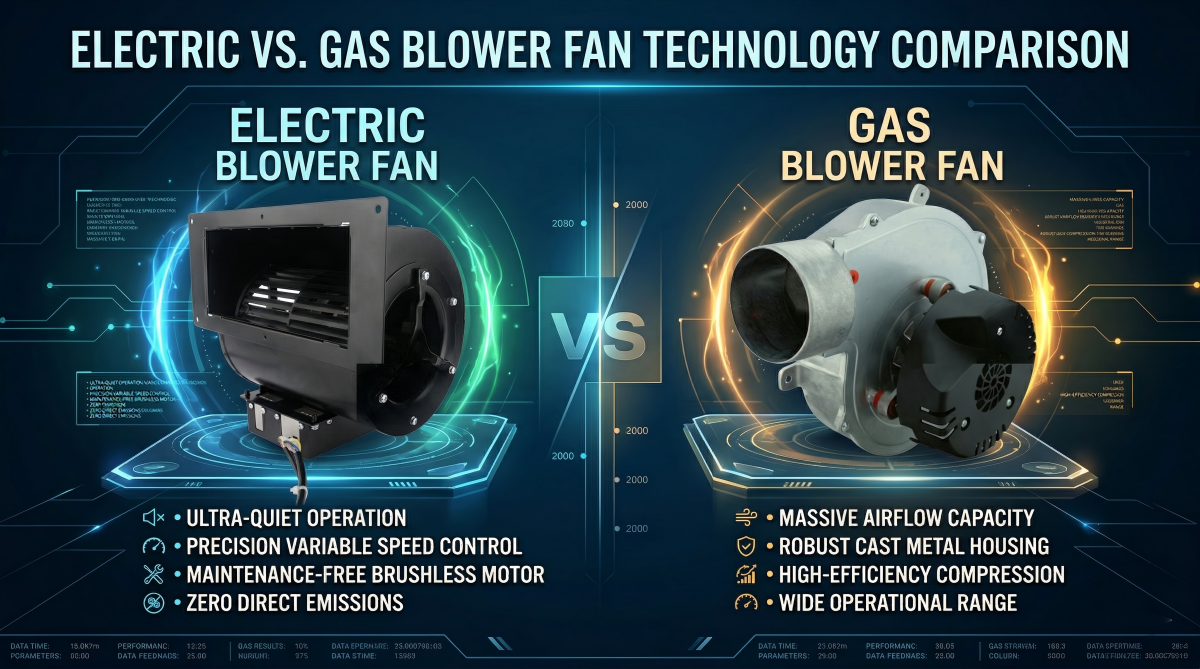
Electric vs Gas Blowers
Cost, Performance and Environmental Impact
A Practical Guide for Global Facility Managers and Procurement Professionals
April 2026 | All pricing in USD (CNY reference included)
Opening: The Real-World Case That Started the Rethink
In early 2024, a major automotive parts manufacturing facility faced a familiar situation: their paint shop ventilation system was running on six LPG-powered blowers installed when the plant was built fifteen years earlier. The machines worked — but the annual fuel bill was substantial. Beyond the ¥380,000 (~USD 52,000) spent on LPG each year, there were also quarterly maintenance visits from gas service contractors.
When the LONGWELL team conducted an on-site assessment, the conclusion was straightforward. Replacing the gas units with properly specced electric axial blowers — matched to the actual static pressure and airflow requirements — would reduce energy consumption by approximately 40% while delivering the same ventilation performance. Including equipment, installation, and a modest electrical upgrade, the payback period came in at under 14 months.
After the first full year on electric, the facility had saved ¥231,000 (~$32,000). The gas blowers were decommissioned, the fuel lines capped, and the maintenance burden reduced considerably.
The right choice depends on your operating environment, utility infrastructure, load profile, and cost horizon. This guide walks through the decision systematically — covering the factors that matter most for global industrial and commercial buyers.
Background: Why Global Buyers Are Revisiting This Decision
At first glance, the electric vs gas blower question might seem settled. Electrification is advancing across virtually every industrial equipment category, and the environmental case for electric systems strengthens every year. So why are gas blowers still being specified for new projects?
The honest answer is that gas blowers retain genuine advantages in specific scenarios — and that many facilities currently running on gas are doing so not because it’s optimal, but because no one has systematically reviewed the full lifecycle cost picture with current market conditions.
What Has Changed in 2026
Three macro forces are reshaping this decision globally:
- Electricity costs have stabilized while fuel prices remain volatile. Industrial electricity tariffs in most developed markets now average USD 0.08–0.15/kWh, with renewable energy options increasingly available at competitive rates.
- Carbon compliance costs are rising across jurisdictions. The EU ETS carbon price has fluctuated between EUR 50–90/tonne in recent years. In the US, state-level programs like California’s Cap-and-Trade add direct costs to Scope 1 emissions. China’s national ETS is expanding coverage year by year.
- Supply chain sustainability requirements are accelerating. Major OEMs and multinational buyers increasingly require Scope 1 and Scope 2 reporting from suppliers. Direct combustion equipment is harder to decarbonize at the facility level, making it a strategic liability.
Where Gas Still Makes Sense
To be clear: gas-powered blowers remain the practical choice in genuine off-grid scenarios — remote construction sites, agricultural applications in areas without grid access, disaster response, and truly temporary deployments where the cost of grid connection cannot be justified. These applications represent a legitimate and important use case. This guide focuses on the majority of permanent industrial and commercial ventilation applications where grid power is available.
Core Analysis: 5 Key Dimensions
At-a-Glance Comparison
|
Dimension |
Electric Blower |
Gas Blower |
|
Purchase Cost |
$$–$$$ |
$$$–$$$$ |
|
Installation Cost |
Low (if grid available) |
Medium–High |
|
Annual Energy Cost |
★ Significantly lower |
2–4× higher |
|
Maintenance Cost/yr |
★ Lower, predictable |
Higher, complex |
|
CO₂ Emissions |
★ Lower (Scope 2) |
Higher (Scope 1) |
|
Off-Grid Operation |
✗ Not suitable |
★ Suitable |
|
Variable Speed Control |
★ Excellent (VFD) |
Poor |
|
Indoor Air Quality |
★ Zero combustion gases |
Requires exhaust mgmt |
|
ESG / Carbon Compliance |
★ Favourable |
Increasingly difficult |
Step 1 Purchase Cost and Installation
Common misperception: Comparing sticker prices between electric and gas blowers can be misleading. Gas units sometimes appear cheaper upfront — but that’s only the first component of total installed cost.
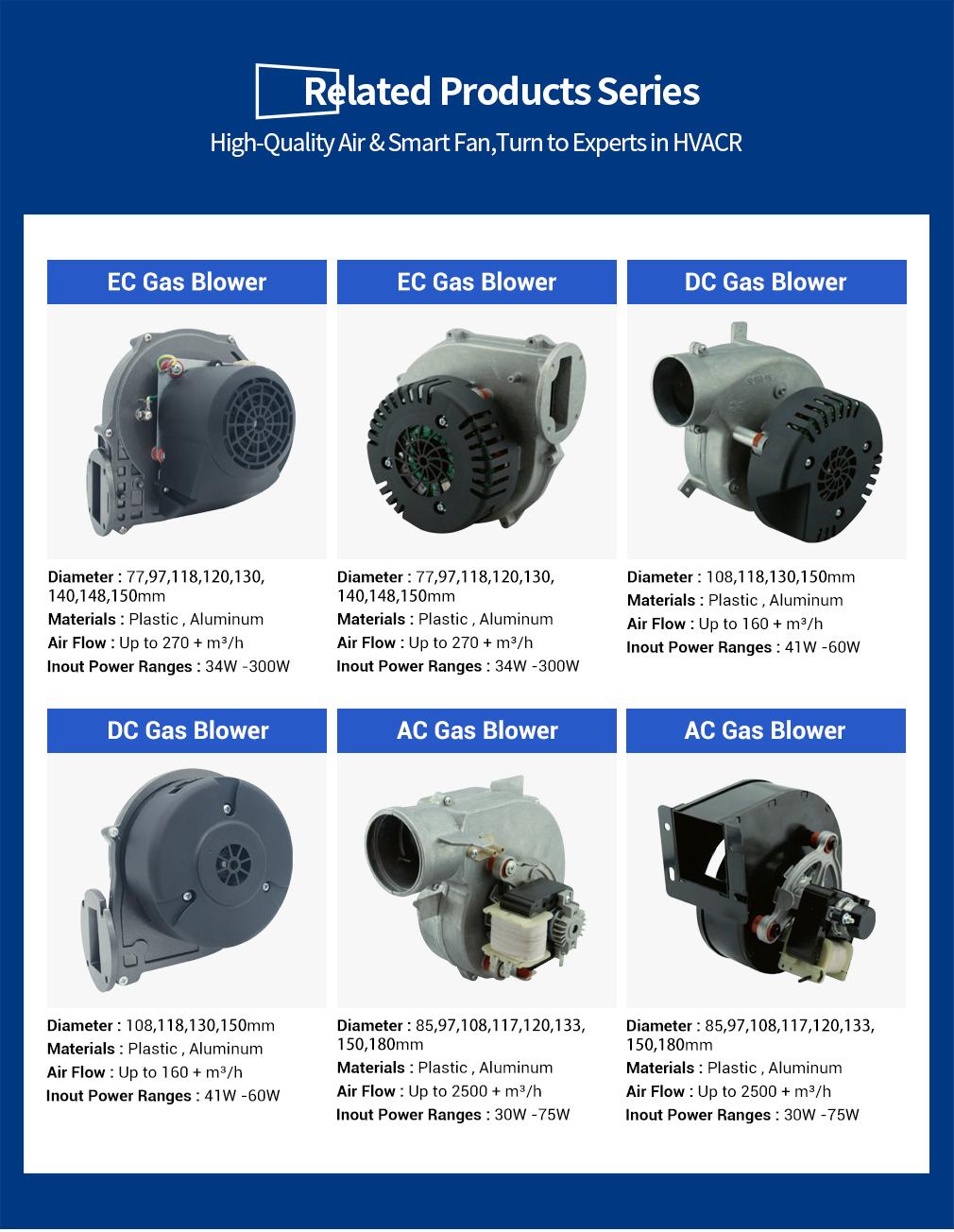
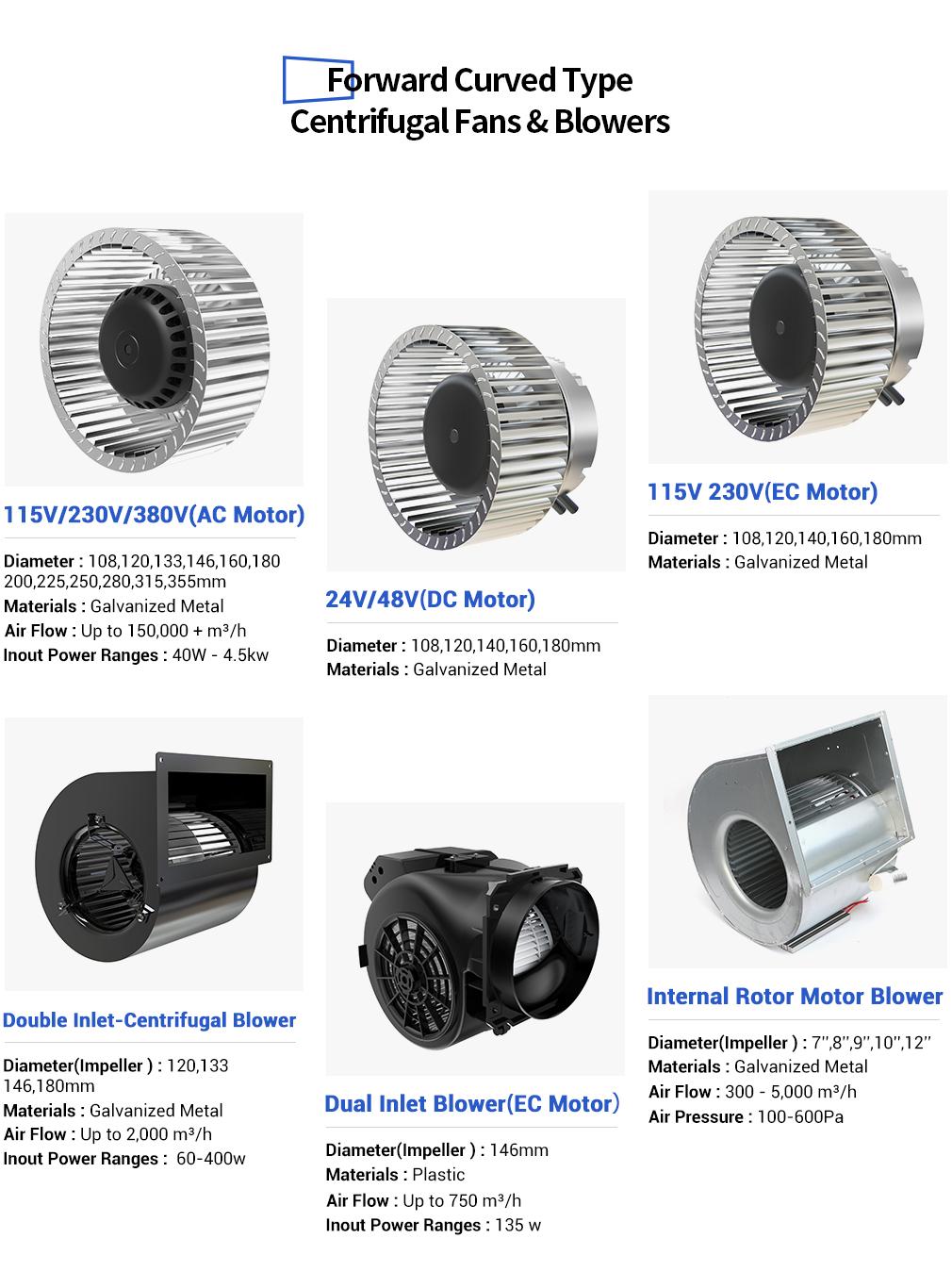
A mid-range industrial electric axial blower rated at 3,000 m³/h at 300 Pa static pressure (IE3 motor, IP55) typically ranges from USD 500–1,200 (¥3,500–8,000). A comparable gas-powered blower with equivalent performance typically starts at USD 800–2,000, with hazardous-area (ATEX/IECEx) configurations reaching USD 3,500+.
Installation — where the cost picture shifts:
- Electric: Requires 380–480V three-phase connection, mounting hardware, switchgear and cable runs. Cost is minimal if three-phase power is already available on-site — a common scenario in virtually any permanent industrial facility.
- Gas: Requires gas supply line or on-site storage tank, exhaust flue system, CO and combustible gas detection, combustion air ventilation, and permits. In many jurisdictions, gas installation requires certified gas engineers and regulatory inspection.
Recommendation: Use total installed cost (equipment + installation + commissioning + permits) as your comparison baseline, not purchase price alone.
Step 2 Energy Cost Over the Equipment Lifecycle
This is the dimension that most reliably favours electric — but only if calculated correctly.
10-Year Energy Cost Comparison (Medium-duty blower, 8 hrs/day, 300 days/year)
|
Electric (IE3/VFD) |
Gas (Natural Gas) |
|
|
Input Rating |
4.0 kW |
~5.5 kW thermal |
|
Annual Consumption |
9,600 kWh |
~4,800 m³ NG |
|
Unit Cost |
$0.10/kWh avg. |
$0.40/m³ avg. |
|
Annual Energy Cost |
$960 |
$1,920 |
|
10-Year Energy Cost |
$9,600 |
$19,200 |
|
10-Year Savings (Electric) |
$9,600 |
— |
Over 10 years, a single mid-size blower can save $9,600 in energy costs by going electric. Scale that across a facility with 10–20 units: the cumulative difference represents $96,000–192,000.
VFD variable speed advantage: Fan power follows a cube law relative to speed (P ∝ n³). Running a fan at 80% speed consumes only ~51% of full-load power. Gas blowers cannot modulate efficiently across load ranges. VFD-controlled electric systems typically achieve 25–40% additional energy savings over fixed-speed electric systems.
VFD Speed Control — Energy Savings at a Variable Load Facility
|
Fan Speed |
Power Consumption |
Annual Cost (USD) |
|
100% (full load) |
100% (4.0 kW) |
$960 |
|
80% speed |
~51% (2.0 kW) |
$490 |
|
60% speed |
~22% (0.9 kW) |
$216 |
Step 3 Maintenance Requirements and Downtime Risk
Side-by-Side Maintenance Comparison
|
Electric Blower |
Gas Blower |
|
|
Key wear parts |
Bearings, capacitors |
Burners, igniters, heat exchangers, gas valves |
|
Replacement frequency |
Every 3–5 years (bearings) |
Annual inspection; parts every 1–3 years |
|
Annual maintenance cost |
$50–200 |
$300–800+ |
|
Failure severity |
Motor/bearing fault (predictable) |
Gas leak, flame failure, CO risk (critical) |
|
Field diagnostics |
Standard electrical testing |
Requires licensed gas technician |
In practice, annual gas blower maintenance costs run 2–4× higher than equivalent electric units. Gas equipment failures also carry higher risk severity — gas leaks, flame failure, and CO incidents require immediate certified response. Electric failures are typically predictable and diagnosable by standard electrical testing.
Special-case note: For cold storage, data centers, pharmaceutical manufacturing, and food processing — applications requiring 24/7 continuous operation with zero tolerance for combustion gases or process interruption — electric is the only viable option. Blower downtime in these applications is not acceptable.
Step 4 Environmental Impact: The Global Carbon Picture
The argument that “electricity is just as polluting because the grid runs on coal” is increasingly outdated. Global grid decarbonization has accelerated significantly.
The global average grid emission factor is approximately 0.45 kg CO₂/kWh in 2024 — down from 0.50 in 2020 and declining. Regions with strong renewable penetration (Europe, North America, parts of Asia Pacific) show factors of 0.20–0.35 kg CO₂/kWh. Even in coal-heavy grids, electric blowers typically emit less than their gas equivalents over the full fuel cycle.
Annual CO₂ Emissions — Same Blower, Same Duty Cycle
|
Electric (Grid avg.) |
Gas (Natural Gas) |
|
|
Annual Consumption |
9,600 kWh |
4,800 m³ NG |
|
Emission Factor |
0.45 kg CO₂/kWh (global avg.) |
2.0 kg CO₂/m³ NG |
|
Annual CO₂ |
~4.3 tonnes |
~9.6 tonnes |
Scope 1 vs Scope 2 — Why this matters for global procurement: On-site fuel combustion = Scope 1 (direct GHG emissions). These are the hardest emissions to offset and the first target of corporate decarbonization programs. Grid electricity = Scope 2 (indirect emissions). Scope 2 can be addressed through renewable energy certificates (RECs), power purchase agreements (PPAs), or on-site solar. For facilities with active ESG reporting, Scope 1 combustion equipment is increasingly a strategic liability.
Carbon pricing: EU ETS carbon price (EUR 50–90/tonne CO₂ in recent years) means each gas blower in a covered facility carries a direct compliance cost. California’s Cap-and-Trade, China’s national ETS, and emerging carbon markets in Southeast Asia all add cost pressure to direct combustion. Electric blowers carry no direct carbon compliance cost.
Step 5 Application Fit: The Decision Framework
Application Decision Matrix
|
Application Scenario |
Recommended Choice |
|
Permanent facility with grid access |
⚡ Electric (with VFD) |
|
Indoor / enclosed space / air quality required |
⚡ Electric |
|
ESG reporting / carbon compliance required |
⚡ Electric |
|
Variable ventilation load — energy savings needed |
⚡ Electric (VFD essential) |
|
Areas with renewable energy tariffs available |
⚡ Electric |
|
Remote site / no reliable grid access |
⛽ Gas |
|
Truly temporary deployment (<3 months) |
⛽ Gas |
|
Disaster response / emergency field use |
⛽ Gas |
|
Existing gas unit in grid-connected permanent facility |
🔄 Lifecycle review — Electric likely wins |
The most important re-evaluation trigger: if you have a gas blower operating in a grid-connected permanent facility, and it hasn’t been reviewed in 3–5 years, the economics almost certainly look different today than when it was originally specified. Run the lifecycle numbers.
Common Mistakes: 3 Costly Assumptions
Mistake 1 Comparing Nameplate Ratings Without Reviewing Actual Operating Conditions
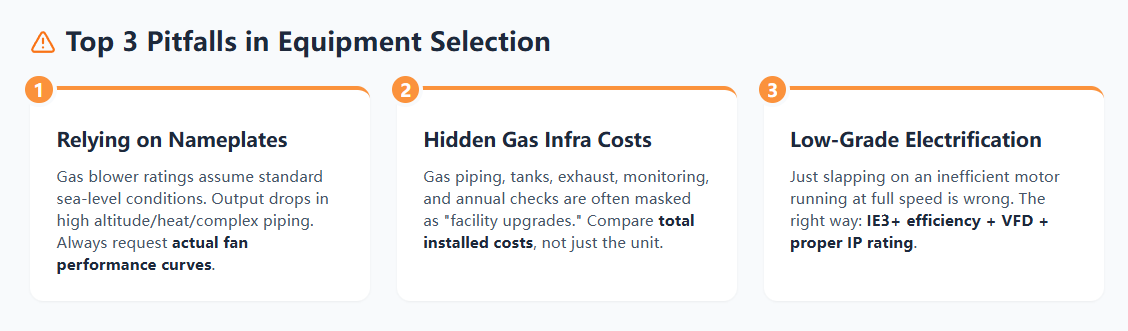
Gas blower airflow is often rated at standard atmospheric conditions (sea level, 20°C). In real installations at altitude, high ambient temperature, or against significant system resistance, actual delivered airflow can fall 15–30% below the nameplate figure. Electric blower performance is tested and documented under standardized conditions per ISO 5801 and AMCA 210, providing complete pressure-flow characteristic curves for accurate real-world prediction.
Always request the fan curve (pressure-flow chart), not just the headline airflow number. Verify performance at your actual operating point, not just peak rated conditions.
Mistake 2 Treating Gas Infrastructure Costs as “Site Infrastructure” Outside the Budget
The gas supply line, storage tank, pressure regulator, solenoid valve, exhaust ductwork, gas detection system, annual inspection fees, and regulatory permits are real costs — but they frequently don’t appear in equipment capital budgets because they’re categorized as site infrastructure. This is a budget accounting convenience, not an economic reality.
When evaluating whether a gas blower is cheaper, request a full cost breakdown including everything required to put the unit into safe, compliant, operational service. Compare that total to the electric option.
Mistake 3 Confusing “Basic Electric” with “Properly Applied Electric Blower Technology”
A low-cost direct-on-line motor running at full speed regardless of ventilation demand, without adequate protection or control integration, is not a fair representation of modern electric blower technology. A properly designed electric blower system includes: IE3 or IE4 super-premium efficiency motor, correctly sized variable frequency drive (VFD), enclosure protection appropriate to the environment (IP55 minimum for dusty/humid conditions), and integration with building management or process control systems.
If you’ve used electric blowers before and been underwhelmed, it’s worth asking whether the original system was properly engineered. The performance gap between a well-designed electric system and a basic one is significant.
Conclusion: The Decision With Full Information
The real question is not “electric or gas” — it’s: what does your actual operating profile look like, what infrastructure do you have, and which technology serves your application better across a full lifecycle?
For the majority of permanent industrial and commercial ventilation applications in 2026 — with available grid power, varying or predictable load profiles, and active sustainability commitments — the answer consistently favours electric. The economics are compelling, the technology is mature and reliable, and the path to decarbonization is far clearer for electric systems than for combustion-based alternatives.
Your Action Checklist:
☐ Audit your current blower inventory. Flag any gas-powered units in grid-connected, permanent applications for lifecycle review.
☐ Build a 10-year total cost of ownership model using your actual operating hours, local utility rates, and current fuel prices. Most facilities find the gap is larger than expected.
☐ Quantify your Scope 1 emissions from on-site combustion. Understand what that means for your carbon compliance costs under applicable regulations.
☐ Specify fan curves and pressure-flow data in your RFQ — not just rated airflow. Require performance verification at your actual operating conditions.
☐ For any application with variable load, make VFD capability a baseline requirement, not an optional upgrade. The energy savings typically repay the additional VFD cost within 12–24 months.
LONGWELL’s technical team provides free consultation and on-site assessment for blower selection and system design. We supply fans and blowers — and we help you build the case for the right system. Contact us at www.longwellfans.com or through your regional distributor.
— LONGWELL
Ningbo Longwell Electric Technology Co., Ltd.
Professional Axial Fan & Industrial Blower Manufacturer
HVAC | Industrial Ventilation | Process Air | Custom Solutions
www.longwellfans.com