Deep Dive: An HVACR Engineer’s Guide to Evaluating True Cross Flow Fan Quality
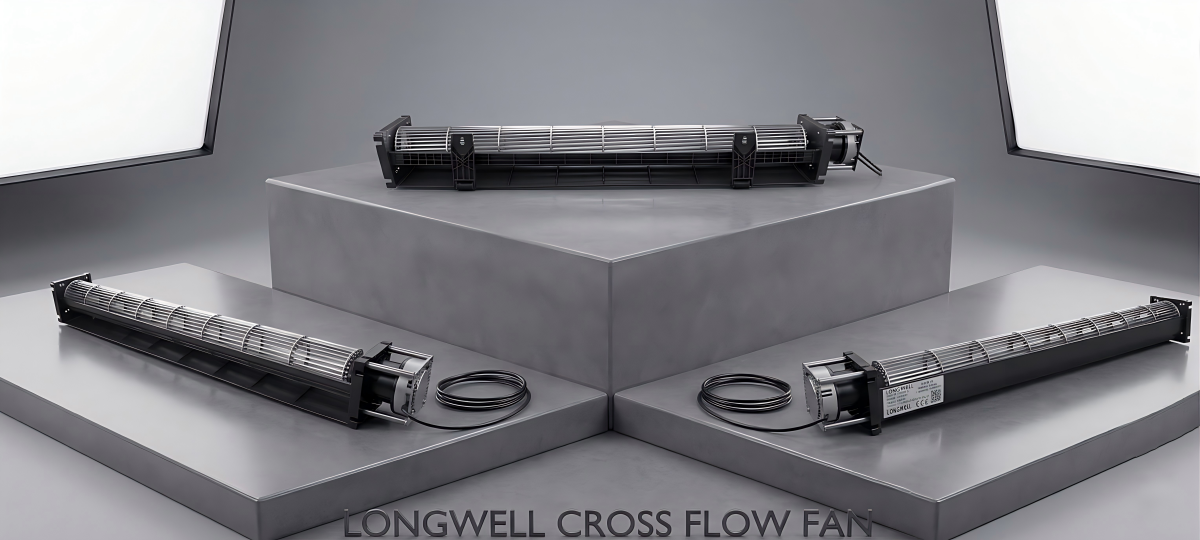
During the design and procurement phases of modern HVACR (Heating, Ventilation, Air Conditioning, and Refrigeration) projects, selecting a cross flow fan that can stand the test of time is often quite a technical challenge. If you frequently browse supplier spec sheets, you’ll notice that products on the market today are highly homogenized. Relying solely on nominal “maximum airflow” or “static pressure” data is no longer enough to predict how these units will actually perform under complex, harsh real-world conditions.
To avoid the systemic risks of premature component failure or significant performance drops post-delivery, engineering and procurement teams need a hardcore evaluation logic that goes far beyond “paper data”. Today, let’s talk about how to avoid these common selection traps.
1. Look Beyond the Surface: Dig Deep into the BOM and Motor Insulation Class
When you first inspect a fan, checking the casing for gaps or the blades for micro-cracks is just baseline quality control. If you want to judge whether it’s truly durable, you have to dig deep into its BOM (Bill of Materials), especially the motor system.
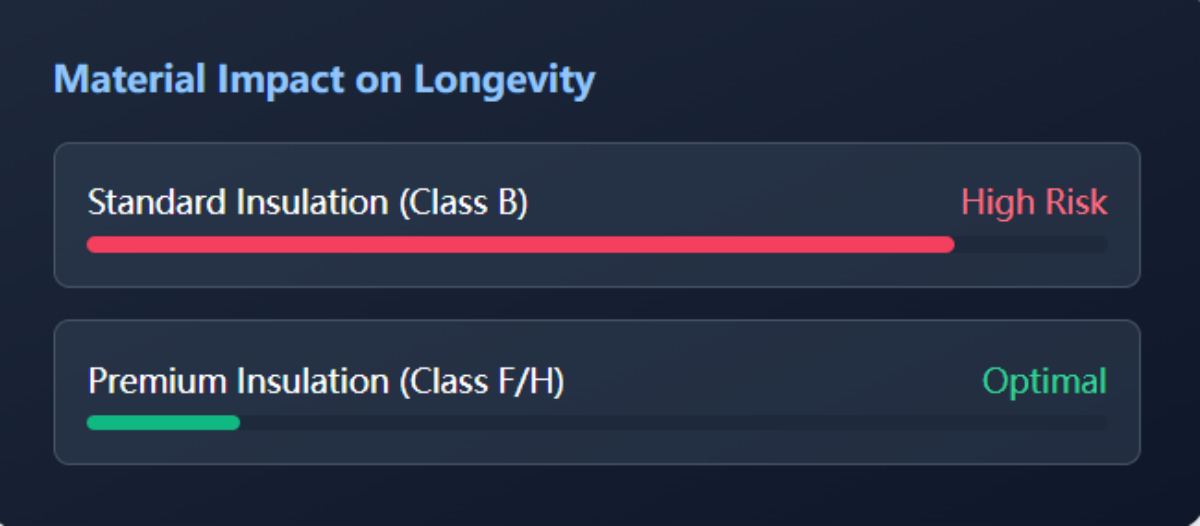
To win price wars, some manufacturers cut corners on invisible internal components. For example, they might use substandard insulation materials or non-compliant copper wire windings. Under continuous high temperatures or alternating loads, these motors are extremely prone to thermal fatigue or even electrical breakdown.
A professional engineering evaluation must strictly scrutinize the motor’s “temperature resistance class” and the quality of the components on the control board (especially for the widely used EC/DC motors). High-grade insulation materials can directly eliminate the hidden dangers of electrical faults at the physical level—this is the fundamental basis for extending the equipment’s lifespan.
2. Ditch “Bare Machine Data”: Test Aerodynamic Performance Under Real System Resistance
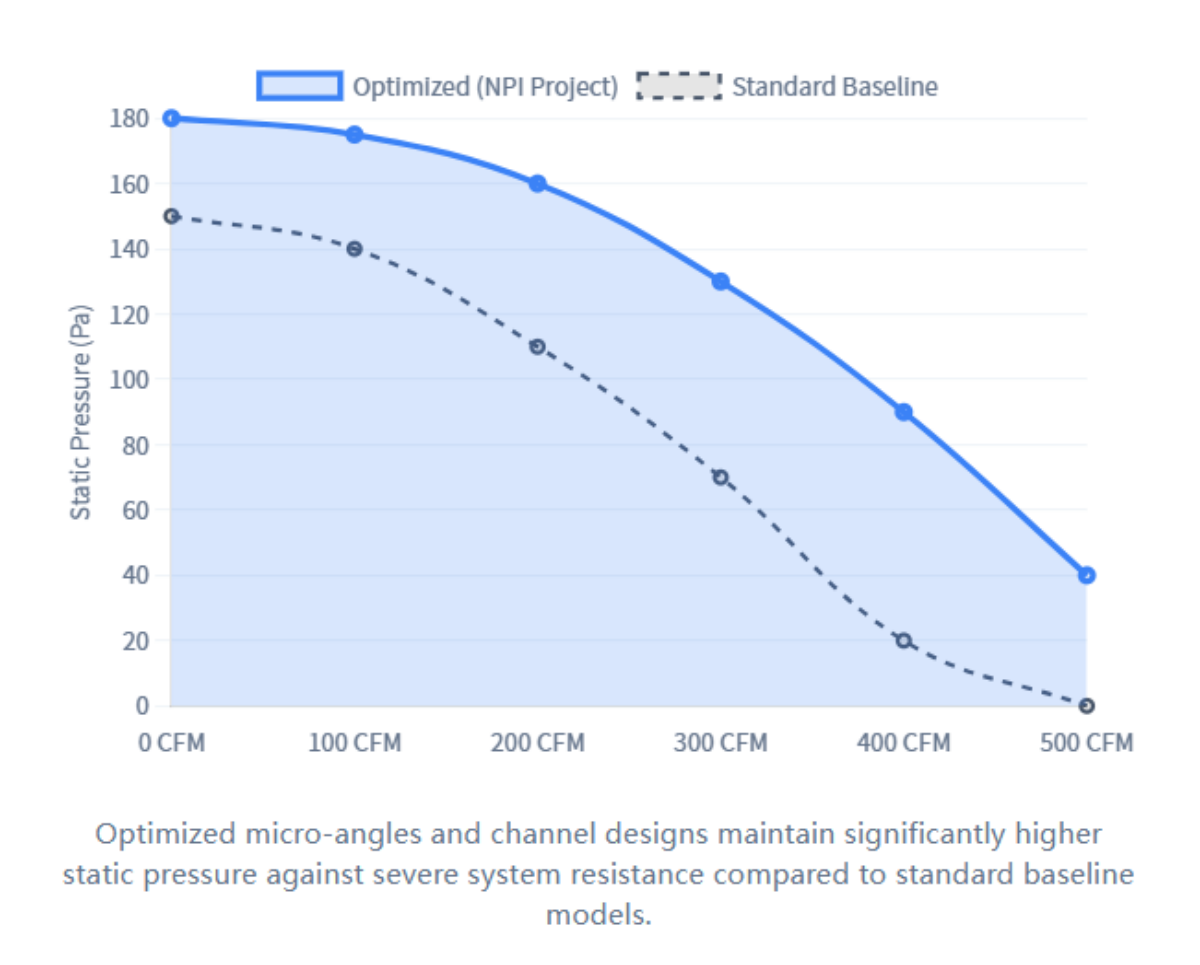
Conventional performance tests are often conducted in completely open, unobstructed environments. The “maximum airflow” measured in this way has very little reference value in actual engineering. Think about it: in real HVAC equipment (like trench heaters, convectors, or air curtains), the cross flow fan has to aggressively push air through densely packed heat exchange fins and thick filters. Therefore, the static pressure curve under dynamic load is the ultimate truth for validating aerodynamic design.
Let’s look at a real-world example. In a recent custom NPI (New Product Introduction) project for the US market, the engineering team was tasked with an extreme challenge: going from concept to mass production in just 90 days. The client’s requirements were harsh—the fan had to maintain stable airflow under extreme internal system resistance. The team didn’t guess blindly; they immediately utilized fluid simulation and wind tunnel testing. By fine-tuning the micro-angle of the aluminum blades and the airflow channels, they rigorously minimized flow resistance. This targeted optimization based on a “real resistance model” ensured the final product could easily handle high-load requirements.
3. Manufacturing Tolerances and NVH Control: The Touchstone of Craftsmanship
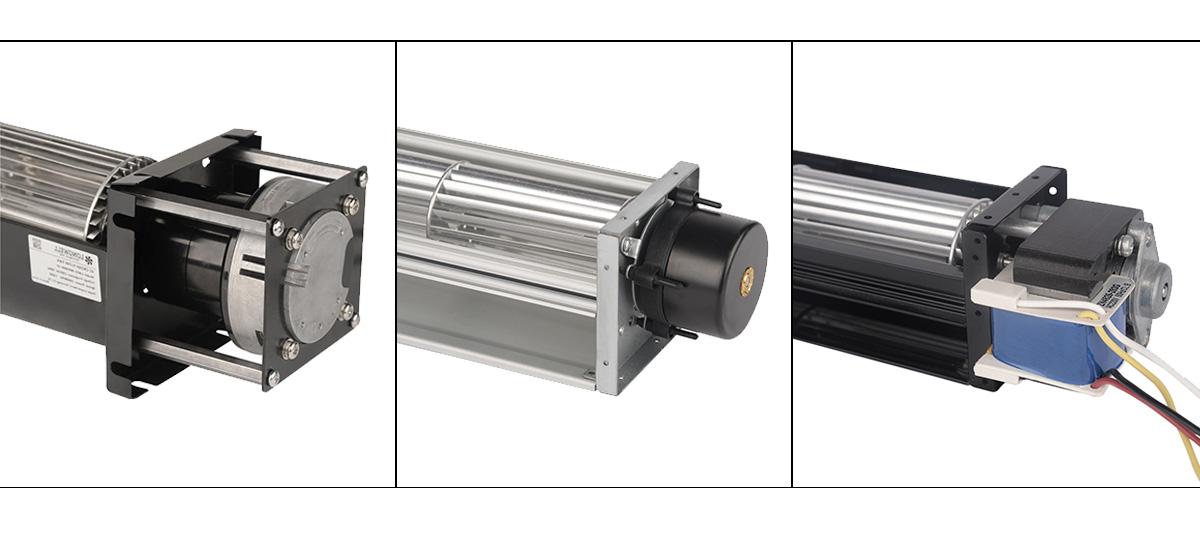
Good materials require excellent craftsmanship. A cross flow fan features an elongated, cylindrical structure, making it inherently prone to torsional deformation. If there are microscopic pores in the welded joints, or if the assembly tolerances are too loose, these tiny manufacturing flaws will directly amplify into severe NVH (Noise, Vibration, and Harshness) issues.
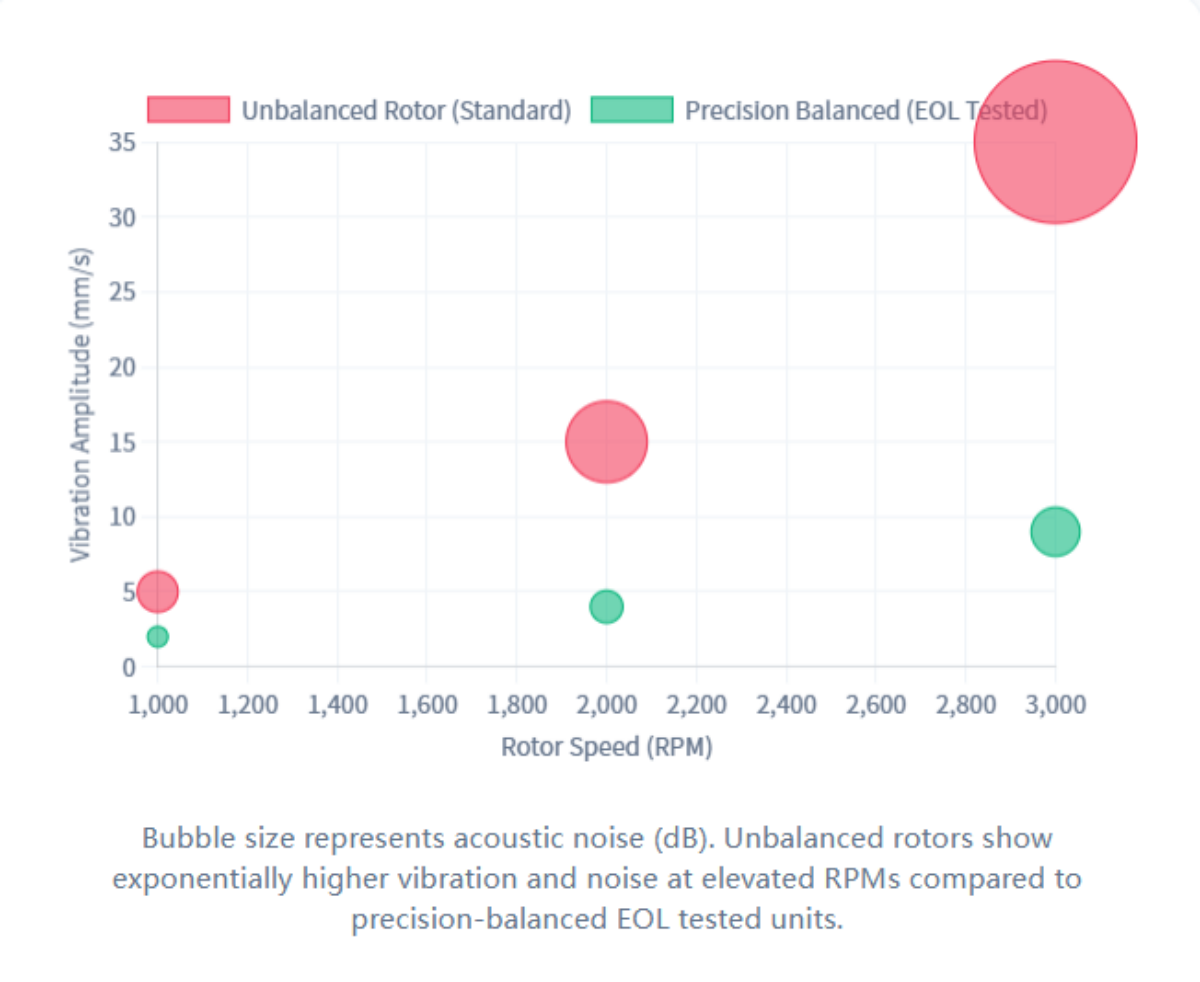
The core focal point here is the dynamic balance of the rotor. If the factory’s dynamic balance calibration is imprecise, the rotor will generate eccentric centrifugal forces when rotating at high speeds. Over time, bearing wear accelerates, noise increases exponentially, and eventually, the mechanical unit fails. Only those manufacturers willing to invest heavily in automated assembly lines and rigorous End-of-Line (EOL) testing can deliver products with long-term stability and exceptional acoustic performance.
4. Calculating the “Total Bill”: Supply Chain Resilience and TCO (Total Cost of Ownership)
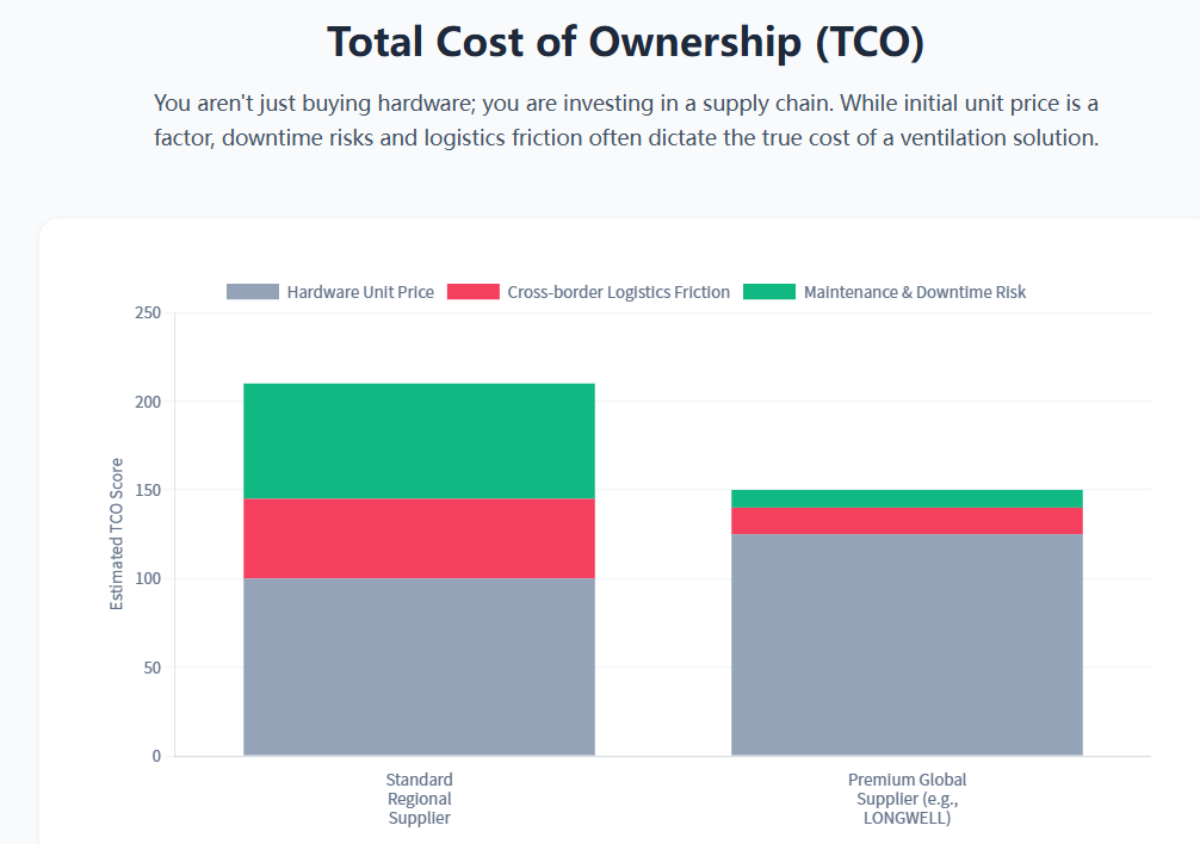
In today’s era of global procurement, you are absolutely not just buying a piece of hardware; you are investing in the entire delivery and service network behind the supplier. The unit price certainly matters, but smart procurement teams have long since shifted their focus to TCO (Total Cost of Ownership).
Especially when your project aims to enter international markets like North America and Europe, having authoritative regional certifications (like CE or RoHS) and an ISO 9001 quality management system is just the ticket for entry. What truly sets a supplier apart is their global delivery capability.
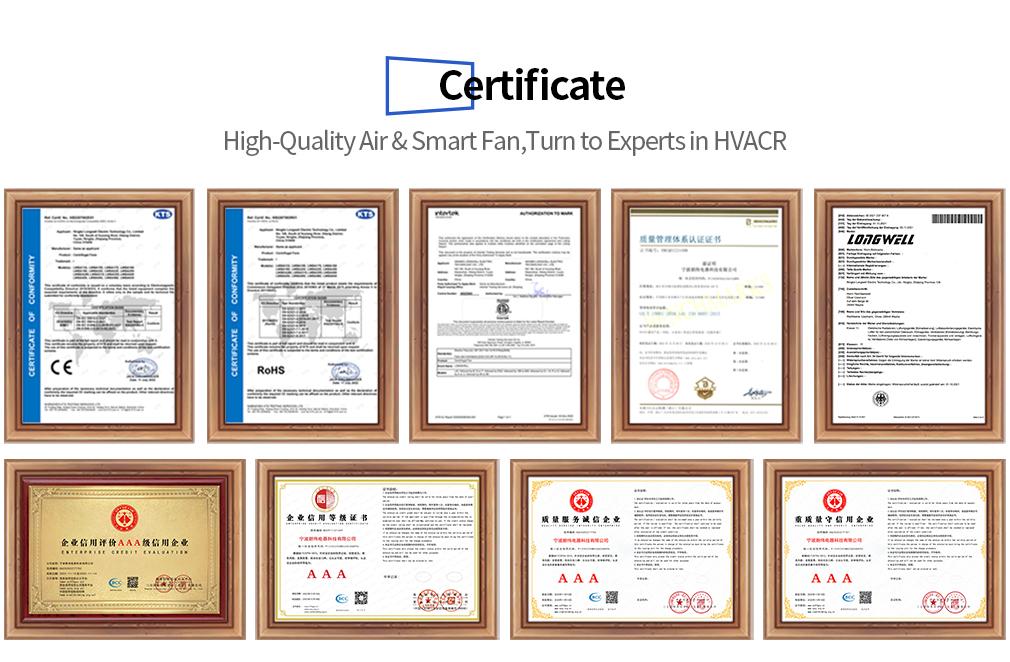
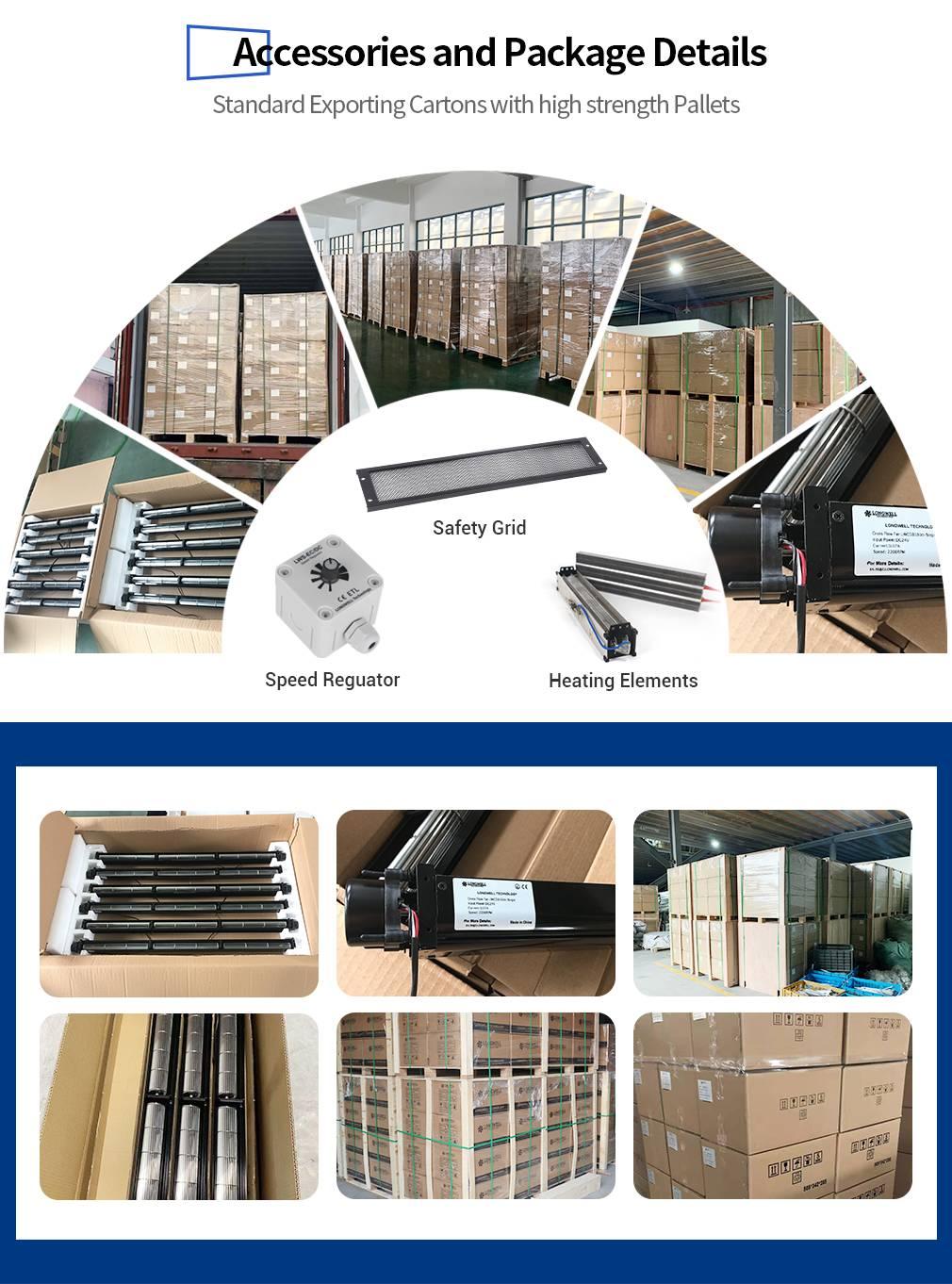
Take the well-known industry supplier LONGWELL as an example. Not only is their hardware top-tier, but more importantly, they leverage mature logistics networks (including strategically placed overseas warehouses) and comprehensive after-sales technical support to build an incredibly resilient supply chain infrastructure. This capability drastically reduces the friction costs of cross-border communication, shortens product iteration cycles, and most crucially—helps you avoid the exorbitant trial-and-error risks associated with production downtime.
Conclusion
Evaluating the quality of a cross flow fan, frankly speaking, is about “piercing through” beautifully packaged data sheets to verify a supplier’s actual engineering execution capability. By relentlessly examining core materials, validating aerodynamic performance under real fluid resistance, comprehensively assessing manufacturing precision, and evaluating the supply chain’s risk-resistance, engineering teams can truly identify ventilation solutions that will stand the test of time.