Southeast Asia Warehouse “Sauna Days” Terminator: Low-Cost Ventilation Strategy in High Humidity and Heat Environments
— A Guide to Warehouse Cooling and Moisture Control Based on LONGWELL Aerodynamic Technology
In logistics parks in Ho Chi Minh City, Bangkok, or Manila, warehouse managers face a common enemy: The Tropical Climate.
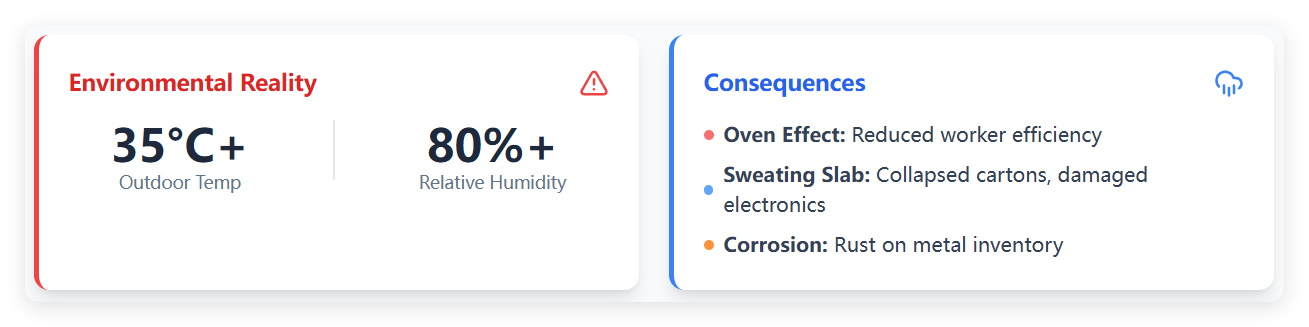
When outdoor temperatures approach 35°C and relative humidity exceeds 80%, traditional steel structure warehouses turn into giant “steamers.” This not only causes a decline in worker stamina but, more fatally, triggers “Sweating Slab”, leading to soggy cardboard boxes, rusted metal inventory, and damaged electronic components.
As a manufacturing expert deeply rooted in ventilation and cooling equipment, Ningbo Longwell Electric Technology Co., Ltd. (LONGWELL) combines years of experience serving the Southeast Asian market to explain how to utilize modern ventilation technology to solve heat accumulation and high humidity problems with extremely low operating costs.
Why do ordinary exhaust fans “fail” in Southeast Asia?
In temperate zones, simple air convection is enough for cooling. But in Southeast Asia, you face Latent Heat—the massive energy carried by moisture in the air.
If a warehouse is installed with only a few small-sized exhaust fans, the following problems often occur:
1. Insufficient Negative Pressure: Unable to create enough pressure difference to quickly extract hot air, resulting in heat accumulation below the roof (Thermal Stratification).
2. Numerous Dead Zones: Cargo racks block airflow, creating countless high-temperature dead zones.
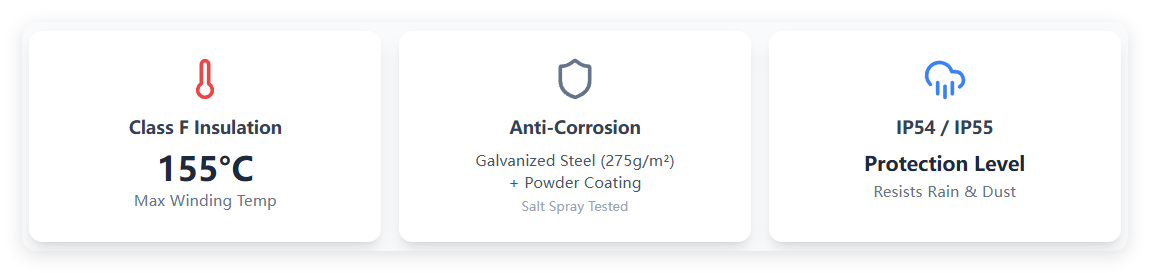
3. Short Equipment Lifespan: Ordinary motors use Class B insulation (rated for 130°C). They burn out easily under the baking sun (roof surfaces can reach 60°C+) and cannot withstand salt spray corrosion.
LONGWELL’s Solution: We don’t just sell fans; we provide a design solution based on Computational Fluid Dynamics (CFD).
Strategy 1: High-Performance Axial Fan Combo
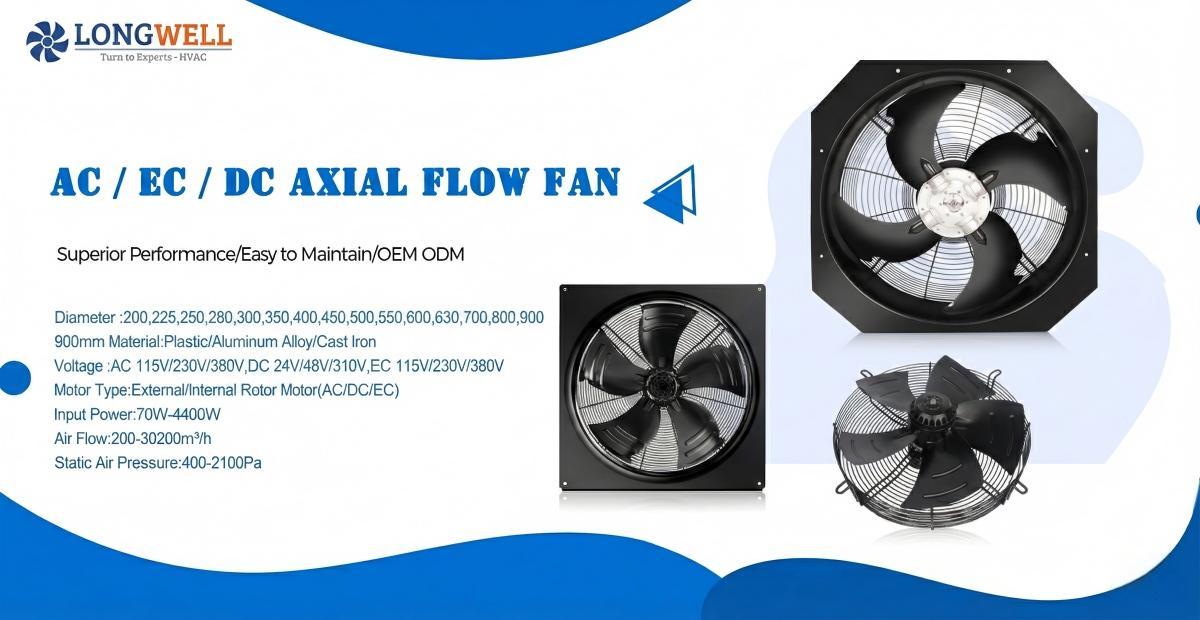
In complex warehouse environments, simple exhaust is often insufficient. We need a precise combination of “High Airflow Coverage” and “High Static Pressure Penetration” tailored to the resistance characteristics of different areas.
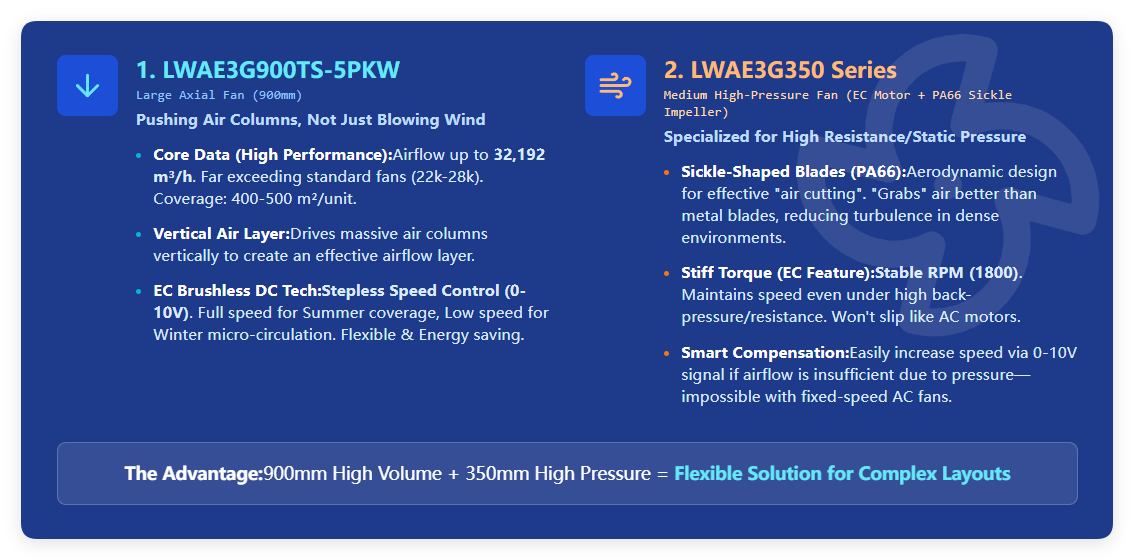
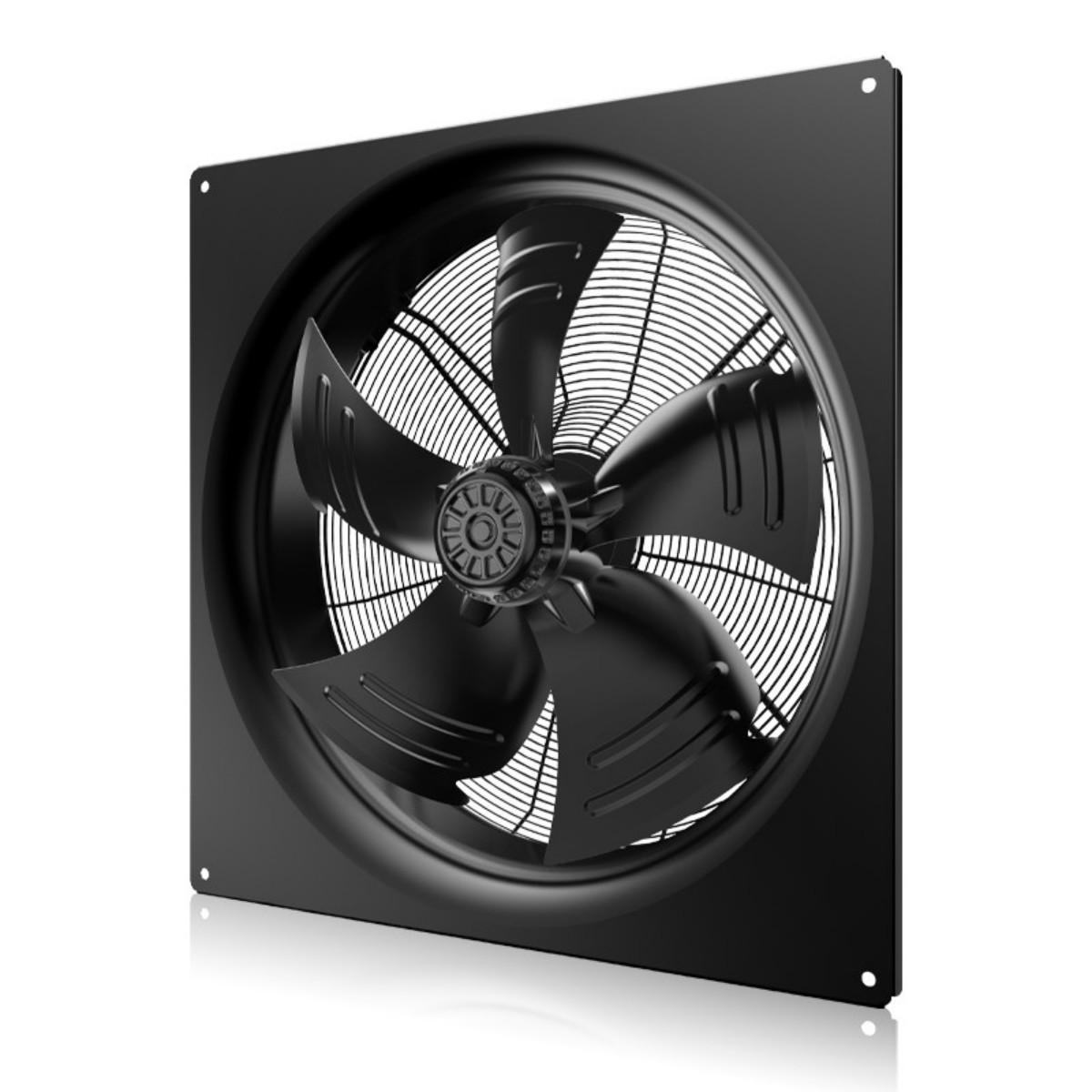
1. LWAE3G900TS-5PKW Series Large Axial Fan
Don’t be fooled by its low speed. LONGWELL’s large axial fan LWAE3G900 has a diameter of 900mm (0.9 meters). It is designed not just to “blow wind,” but to push a massive column of air vertically, creating substantial airflow layers.
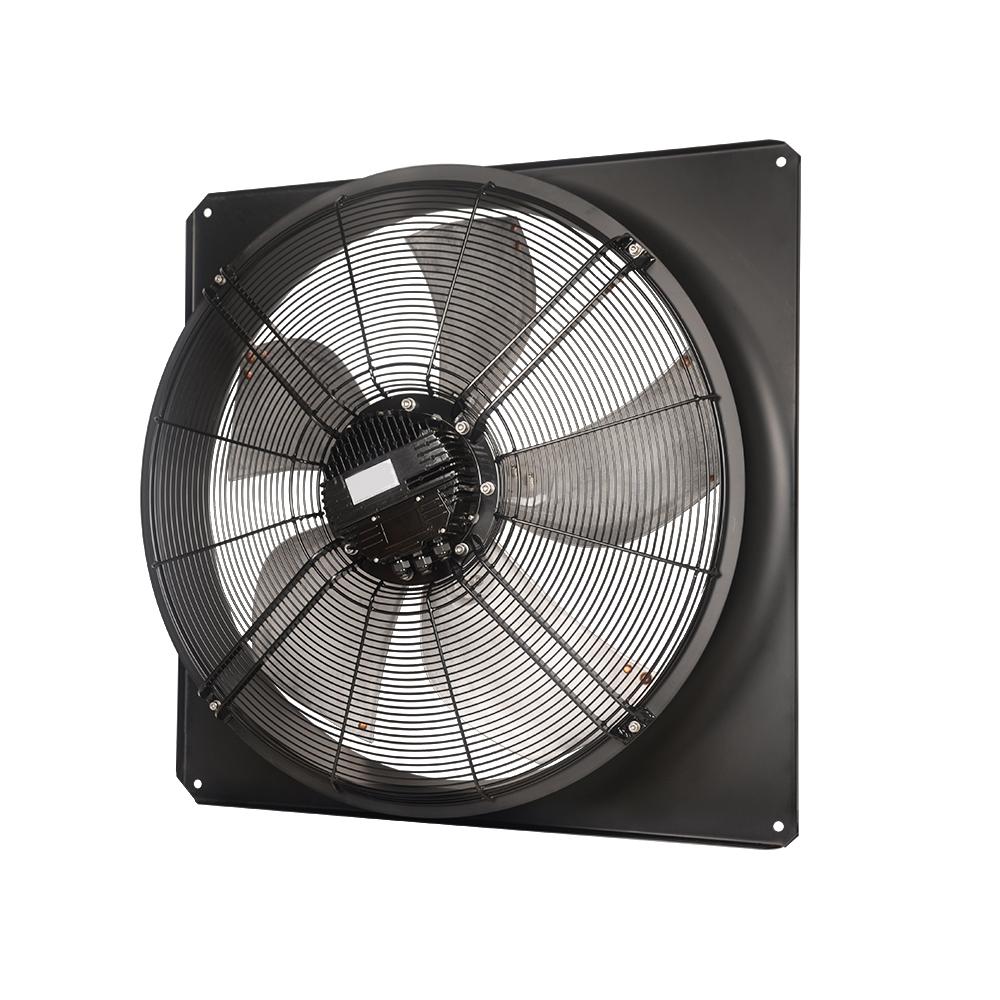
· Core Data (High Performance): Airflow reaches 32,192 m³/h. This is far superior to standard fans of the same size (typically 22,000–28,000 m³/h). A single unit covers 400–500 square meters.
· Vertical Airflow Layer: Pushes a huge column of air to move vertically, forming a significant airflow layer.
· EC Brushless DC Technology: Stepless speed regulation (0-10V). It can run at full speed in summer to cover large areas, and at low speed in winter to maintain micro-circulation, making it more flexible and energy-efficient than AC fans.
2. LWAE3G350 Series Medium High-Pressure Fan
The LWAE-350 (EC motor + PA66 sickle impeller) has significant advantages over ordinary metal blade fans in high-resistance (high static pressure) environments:
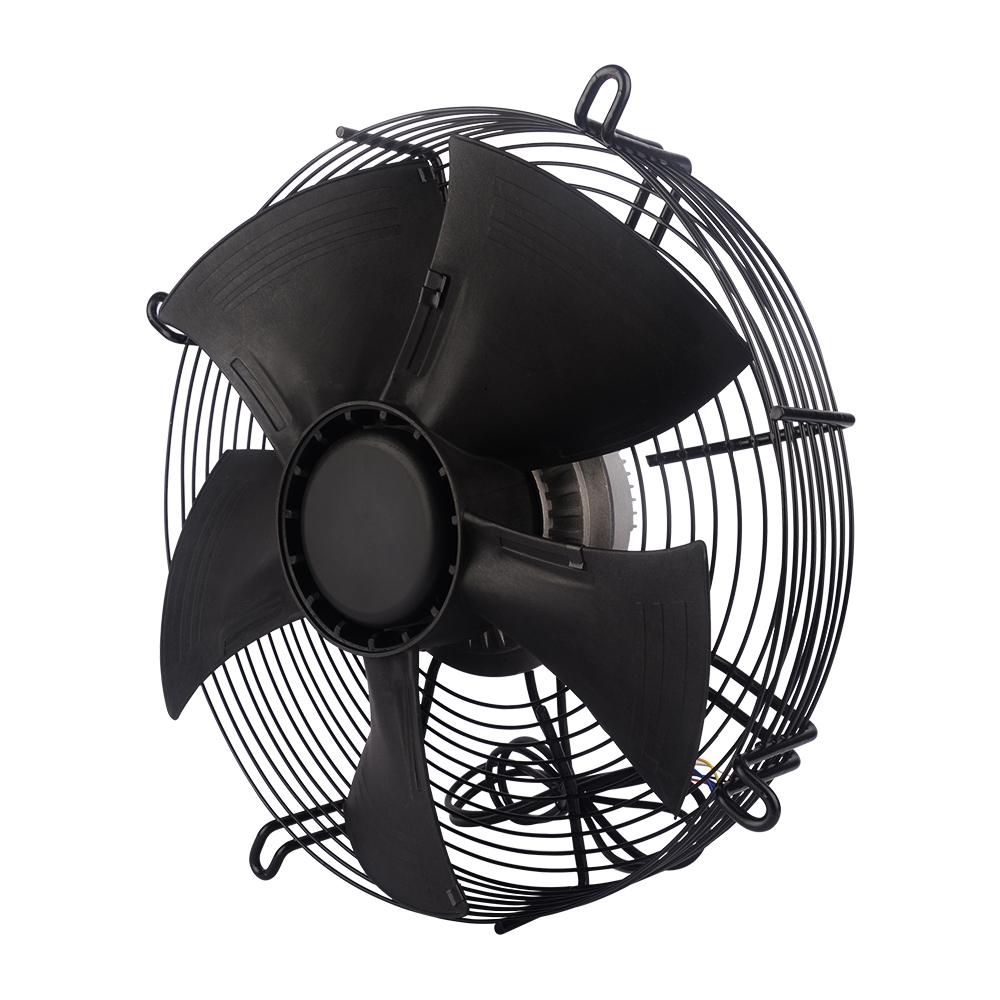
· “Air Cutting” Ability of Sickle-shaped Blades (Aerodynamic Performance):
– Features: The impeller is made of PA66 (Nylon) and utilizes a complex sickle-shaped aerodynamic design.
– High-Pressure Advantage: Ordinary stamped metal blades often cause airflow to “slip” or reflux on the blade surface when facing resistance (like dense condenser fins), preventing air from blowing through. This sickle-shaped blade effectively “grabs” the air, reducing turbulence, and maintains stable airflow output even under high back pressure.
· EC Motor’s “Stiff Torque”:
– Stable Speed: When resistance increases (high-pressure environments), the speed of ordinary AC induction motors drops significantly (increased Slip), causing airflow to plummet. EC motors feature higher efficiency and torque characteristics; they maintain speed (1800 RPM) even under resistance, ensuring air penetrates the heat sink.
– Stepless Speed Regulation: In high-pressure environments, if airflow is insufficient, the EC motor can easily speed up via a 0-10V signal (if within design margin), whereas ordinary AC fans are fixed-speed and cannot dynamically adjust.
Strategy 2: Reject High Energy Consumption, Fully Embrace EC Technology
In the Philippines and Vietnam, industrial electricity is not cheap. If your warehouse requires 24-hour ventilation (e.g., cold chain transit areas or precision electronics storage), traditional AC (Alternating Current) fans are not only power-hungry but also difficult to control.
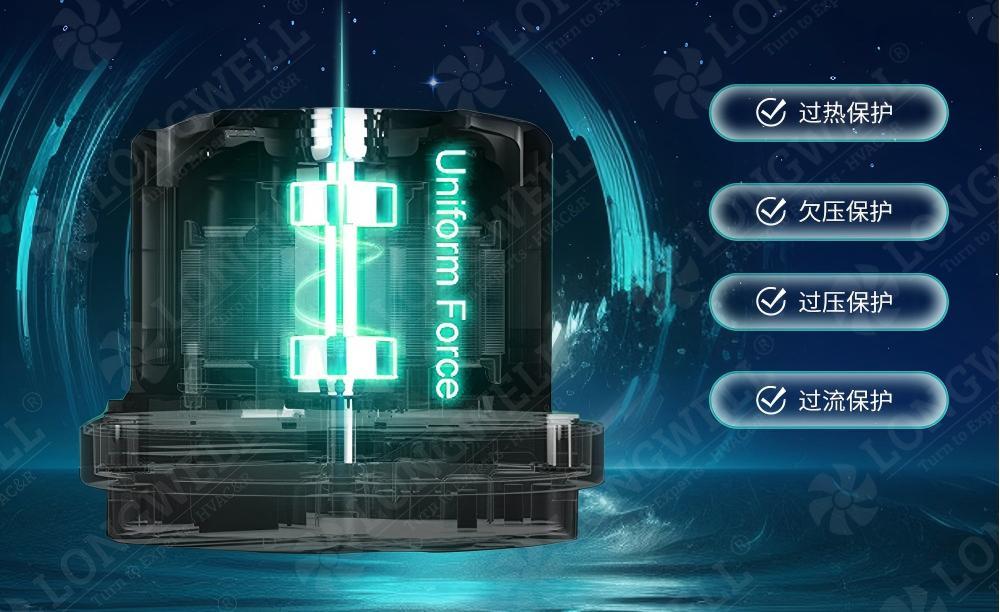
LONGWELL leads the EC (Electronically Commutated) motor revolution. This is a brushless DC motor with a built-in smart control chip that can run directly on AC power.
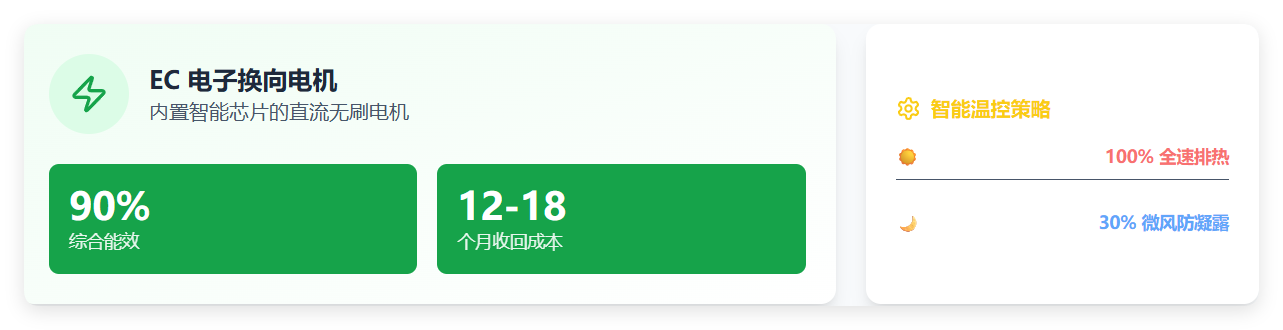
· Energy Return: Compared to traditional fans, the comprehensive energy efficiency of LONGWELL EC fans is as high as 90%. In a typical 2,000-square-meter warehouse, upgrading to EC fans can usually recover the cost through electricity savings within 12–18 months.
· Smart Temperature Control: Supports 0-10V or PWM speed regulation. You can connect it to temperature and humidity sensors:
– Daytime High Heat: 100% Full speed operation for powerful heat extraction.
– Nighttime Cool: Automatically drops to 30% speed, maintaining only a micro-breeze circulation to prevent condensation while remaining ultra-quiet.
Strategy 3: Weatherproof Protection Customized for “Tropical Monsoons”
Southeast Asia is not just hot; it has salt spray and heavy rain. Ordinary iron sheet fans won’t last two years here before becoming rusty. LONGWELL implements strict manufacturing standards for products in this region:
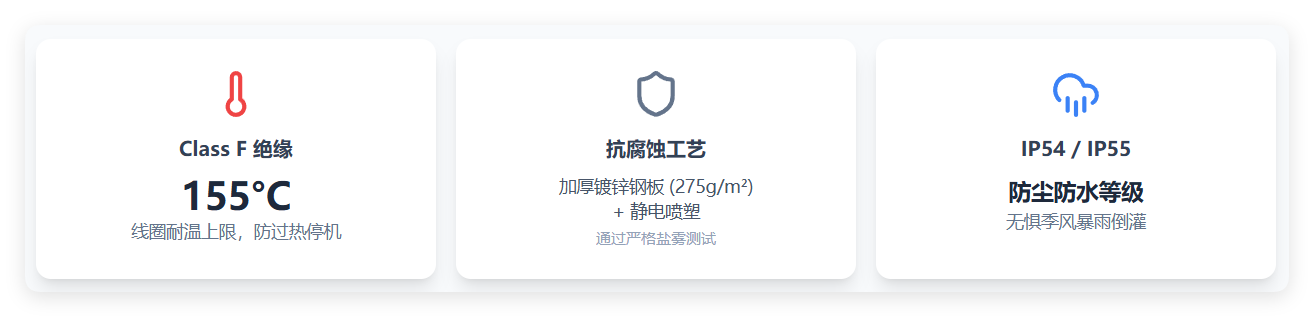
1. Class F Insulation: Our motor coils withstand temperatures up to 155°C. Even in the hottest Thai afternoons, the roof fan runs stably without stopping due to overheating.
2.Anti-Corrosion Craftsmanship:
– Housing: Uses thickened galvanized steel sheet (zinc layer up to 275g/m²) or high-quality cold-rolled steel with Electrostatic Powder Coating, passed strict salt spray tests.
– Blades: Available in stainless steel or high-strength aluminum alloy options, which are lightweight and fearless of humid air erosion.
3. Protection Rating IP54/IP55: Whether it is the LWAA Series Axial Fan or the LWBE Series Centrifugal Fan, both possess dust and water spray protection, fearless of monsoon rainstorms.
How to Plan a Ventilation Solution for Your Warehouse?
Do not buy blindly. A scientific ventilation system is calculated based on Air Changes Per Hour (ACH). According to LONGWELL’s engineering experience in Southeast Asia:
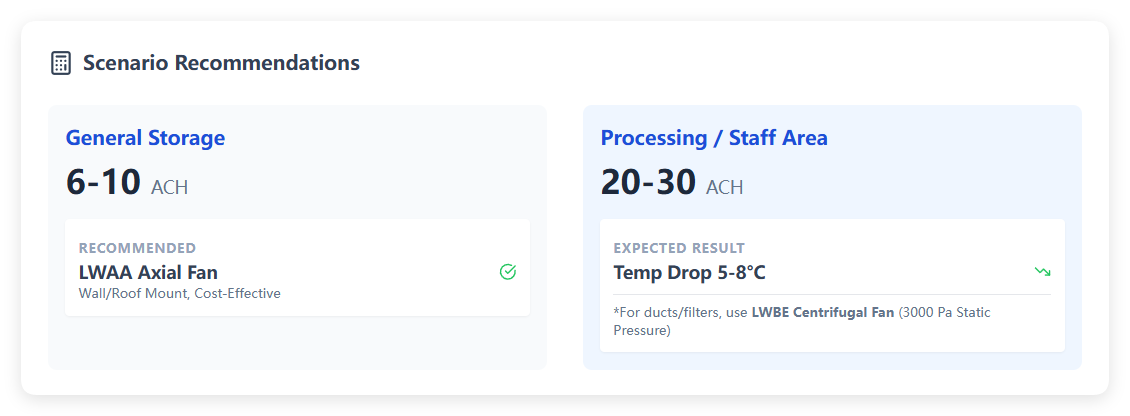
Scenario Recommendations:
· General Storage: Recommended 6-10 times/hour. Sufficient to prevent heat accumulation.
– Recommended Equipment: LWAA Axial Fan (Wall/Roof mount, high cost-performance).
· Processing Area / Crowded Areas: Recommended 20-30 times/hour. Combined with HVLS giant fans, can achieve a perceived temperature drop of 5-8°C.
Selection Advice:
· If you only need simple heat extraction: Choose the LWAA Series Axial Fan (Wall/Roof installation). It is easy to install and cost-effective.
· If connected to long ducts or requiring filtration: You must choose the LWBE Series Backward Centrifugal Fan. They possess static pressure up to 3000 Pa, ensuring airflow penetrates resistance to reach every corner.
Conclusion
In Southeast Asia, a warehouse is not just a place to store goods, but a key node in supply chain efficiency. A dry, cool, and fresh environment is the foundation for safeguarding inventory value and employee efficiency.
Ningbo Longwell (LONGWELL), with over 20 years of HVAC manufacturing experience, provides complete solutions from core components (motors, impellers) to complete machine systems. Our products not only meet international certifications like CE and UL but have also withstood practical tests in harsh tropical environments.
Don’t want your warehouse to continue being a “Sauna”?
Visit our official website www.longwellfans.com to view detailed specification sheets, or contact our technical team directly to get free airflow simulation advice tailored to your warehouse layout.

Data in this article is derived from LONGWELL official laboratory test data and general industry standards. Actual results may vary slightly depending on the environment and installation method.