In-Depth Analysis of External Rotor Axial Flow Fans
Structural Principles · Technical Advantages · Industry Selection Guide
—— LONGWELL External Rotor Axial Flow Fan Series ——
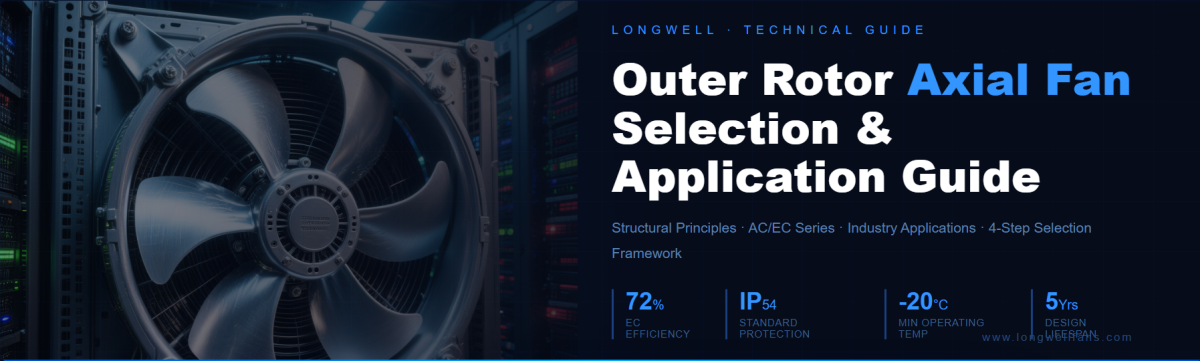
Abstract: In fields such as HVAC (Heating, Ventilation, and Air Conditioning), industrial refrigeration, and data center cooling, external rotor axial flow fans, with their unique “external rotor and direct-drive impeller” configuration, are gradually replacing traditional internal rotor solutions. This article starts from the electromagnetic-aerodynamic coupling mechanism, systematically outlines the structural characteristics, energy efficiency advantages, and typical industry selection logic of external rotor axial flow fans, and provides practically valuable technical references combined with the product series of Ningbo LONGWELL Electric Technology Co., Ltd.
Keywords: External Rotor Axial Flow Fan, EC Axial Fan, LONGWELL Fan, Industrial Cooling Fan, High-Efficiency Axial Fan, External Rotor Motor Fan Selection
1. Rediscovering “External Rotor”: An Underestimated Fan Revolution
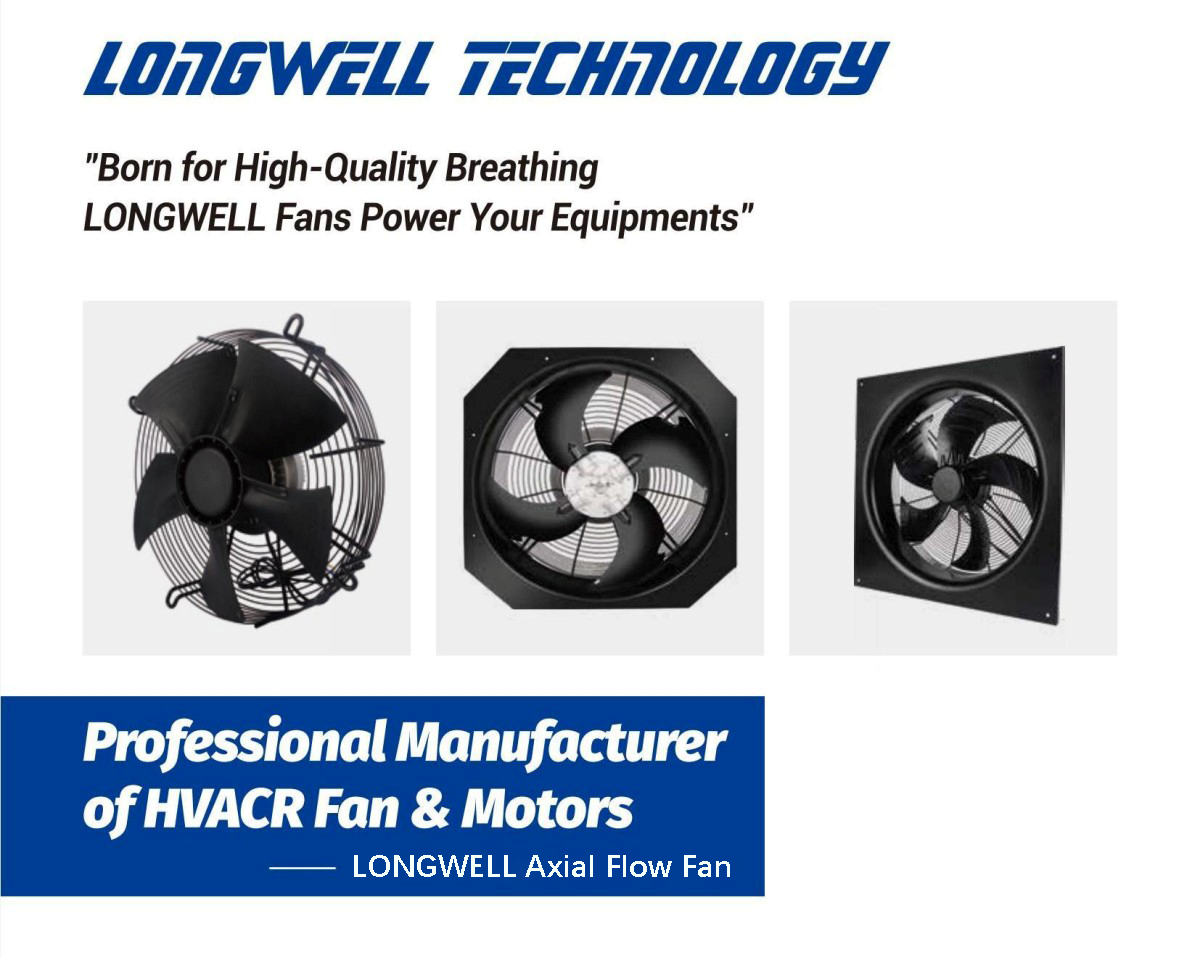
There is a long-standing misconception in the fan industry: many engineers default to equating axial flow fans with the internal rotor configuration of “cage motor + drive shaft + impeller” when selecting. However, external rotor axial flow fans break this inherent framework by moving the motor rotor to the outside of the stator, with blades directly riveted or injection-molded onto the external rotor body, achieving high-level physical integration of motor and impeller.
This structural adjustment may seem simple, but it actually triggers a series of systematic performance improvements—including but not limited to axial dimension reduction, speed and airflow ratio optimization, vibration noise reduction, and extended maintenance cycles. Ningbo LONGWELL Electric Technology Co., Ltd. (Brand: LONGWELL, Website: www.longwellfans.com) has been deeply engaged in the external rotor axial flow fan field for over 20 years with complete self-developed production lines. The following will systematically deconstruct the technical logic of this structure from the mechanism level.
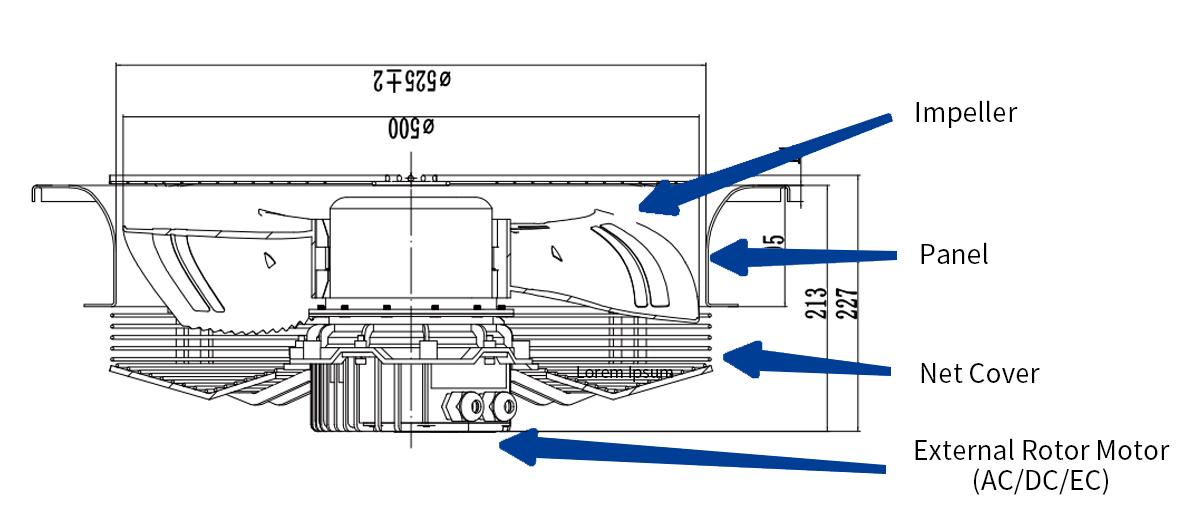
1.1 Working Mechanism of External Rotor Motor
In traditional internal rotor motors, the stator is fixed inside the housing, and the rotor rotates at high speed internally and transmits torque through the output shaft. The external rotor motor reverses this relationship: the stator is fixed on the central shaft (stationary), and the outer rotor housing rotates around the stator. Blades are welded or bolted to the outer circumference of the rotor housing, rotating together with the rotor, completely eliminating independent drive shafts and couplings.
The core difference lies in the moment of inertia distribution: The external rotor distributes mass at a larger radius, achieving greater moment of inertia under the same power input, which is beneficial for maintaining stable airflow output at low speeds and reducing speed fluctuations caused by sudden load changes.
1.2 Horizontal Comparison with Internal Rotor Fans
The following table provides a systematic comparison of external rotor axial flow fans and traditional internal rotor axial flow fans from seven dimensions, helping engineers quickly establish a selection judgment framework:
|
Comparison Dimension |
Outer Rotor Axial Fan |
Traditional Inner Rotor Axial Fan |
|---|---|---|
|
Motor Structure |
Rotor on the outside, blades fixed directly to the rotor. |
Rotor on the inside, requires a shaft to connect to the impeller hub. |
|
Axial Dimension |
Extremely compact; high overlap between motor and impeller. |
Relatively long; requires a drive shaft extension. |
|
Cooling Method |
Rotor is external; excellent self-cooling through rotation. |
Motor is enclosed; requires additional cooling measures. |
|
Noise Level |
Lower noise due to low speed and large blade diameter (typically <65dB). |
Relatively higher, affected by the transmission structure. |
|
Installation Space |
Shallow installation depth, ideal for space-constrained areas. |
Requires deeper installation space. |
|
Energy Efficiency |
Direct drive with zero transmission loss; IE3/IE4 levels available. |
Belt/shaft drive introduces 5~10% extra energy loss. |
|
Maintenance Cycle |
Bearings are external, making lubrication and replacement easy. |
Requires disassembly to access bearings. |
LONGWELL Selection Suggestion: When the axial depth of the installation space is limited (<200mm), strict noise control requirements (<65dB) are imposed, or the equipment needs to operate under high-frequency start-stop conditions, an external rotor axial flow fan is usually a better choice.
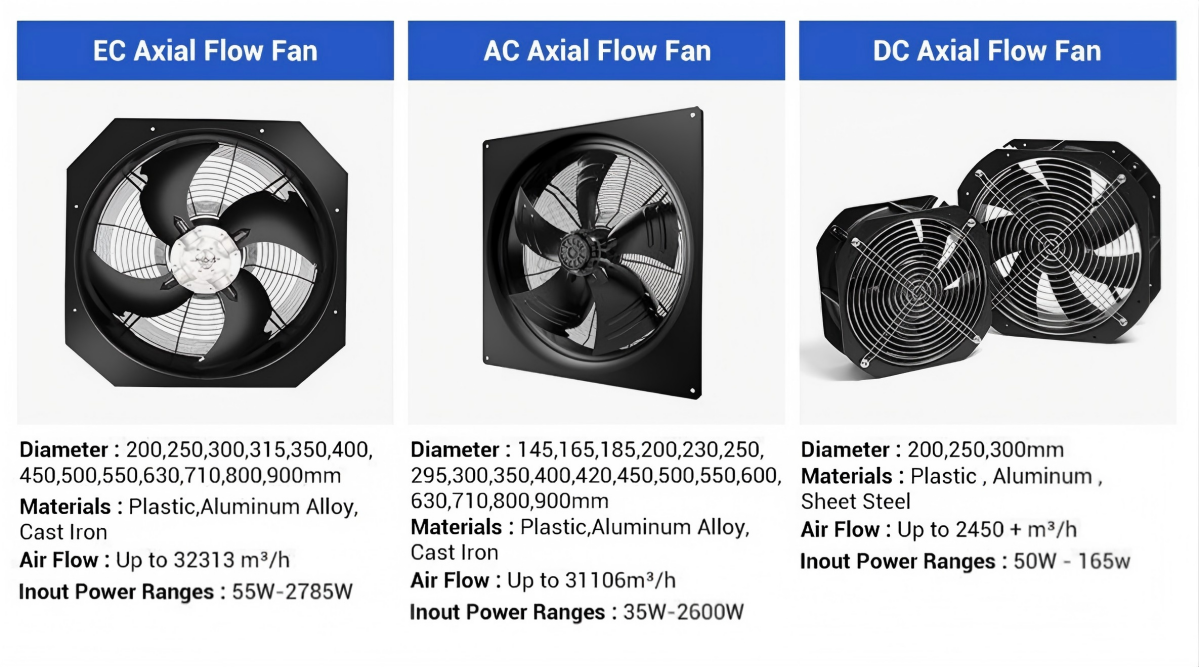
2. LONGWELL Outer Rotor Axial Fan Series Panorama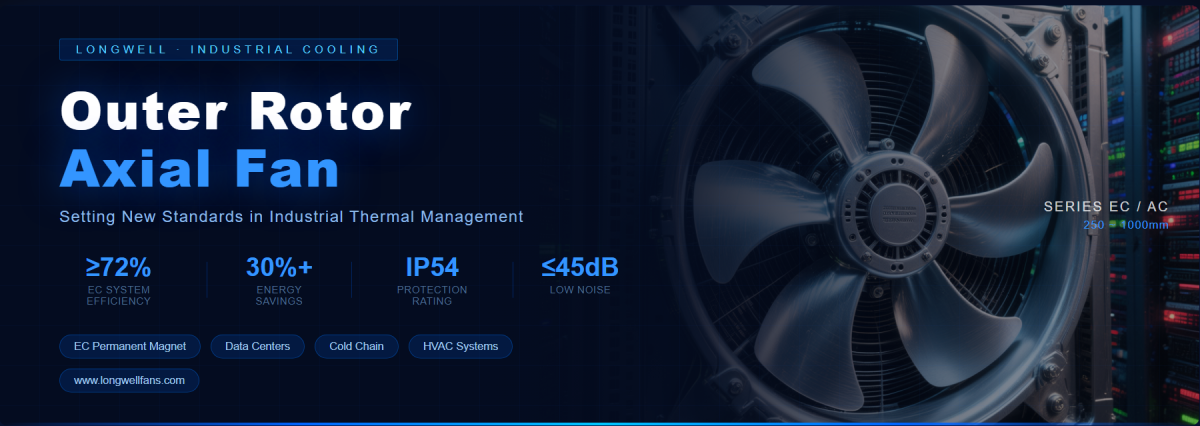
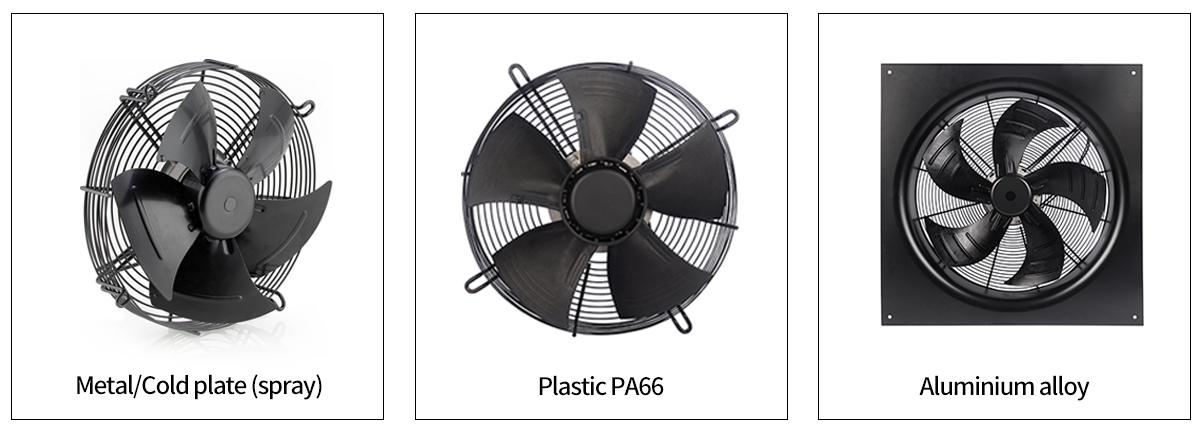
LONGWELL’s outer rotor axial fan product system is divided into three main series based on drive technology and application scenarios, covering everything from standard ventilation to high-end intelligent energy-saving requirements.
2.1 AC Series: The Solid Foundation of Engineering-Grade Reliability
The AC outer rotor axial fan is driven by an alternating current induction motor. The stator windings use F-class heat-resistant enameled wire, allowing continuous operation in a wide temperature range from -20℃ to +60℃. The cast-aluminum rotor casing is dynamically balanced, keeping vibration levels well within the ISO 1940 G2.5 standard.
· Blade Materials: Engineering-grade reinforced nylon (Standard) / Cast aluminum (Reinforced) / Stainless steel (Corrosion-resistant).
· Motor Poles: 4-pole (1400rpm) / 6-pole (930rpm) / 8-pole (710rpm) optional, matching different pipe network resistance curves.
· Installation Methods: Bolted flange, duct insertion, and wall-mount interfaces.
· Protection Level: Standard IP54, upgradable to IP65 (suitable for outdoor or washdown applications).
Typical Customers: Cold storage evaporators, industrial oven circulation, transformer cooling cabinets, clean room AHUs, and other scenarios requiring stable, reliable, and cost-effective solutions.
2.2 EC Series: The Energy Efficiency Revolution of Permanent Magnet Direct Drive
The EC (Electronically Commutated) series is LONGWELL’s flagship technology line. It replaces induction motors with permanent magnet brushless DC motors and utilizes a built-in DSP controller to achieve stepless speed regulation and adaptive power tracking.
Quantifiable Efficiency Advantage: Under identical airflow output conditions, EC outer rotor axial fans can save 30% to 50% more energy compared to AC fans of the same size. Peak motor efficiency exceeds 92%, meeting the IE4 Super Premium Efficiency level (IEC 60034-30-1).
- Speed Control: 0-10V analog signal / PWM / Modbus RS-485 / BACnet MS/TP (Standard configuration).
- Power Factor: ≥0.97 (at full load), requiring no compensation capacitors.
- EMC Level: CE certified, compliant with EN 61000-3-2 harmonic limits.
- Soft Start: Built-in current-limiting ramp; starting current does not exceed 1.3 times the rated value, protecting the power distribution system.
Typical Applications: Ideal for environments requiring year-round variable conditions, such as data center cold aisles, supermarket freezer air curtains, and building central HVAC AHUs. Annual Energy Consumption (AEC) can be drastically reduced, with an ROI usually within 18 to 36 months.
2.3 High Temperature / Explosion-Proof Dedicated Series
For special working conditions such as metallurgy, petrochemicals, and painting/baking, LONGWELL has launched High-Temperature and Explosion-Proof series:
High-Temperature Type (HT Series): H-class insulation (180℃), capable of handling hot airflow up to +120℃. The impeller uses high-silicon cast aluminum alloy, the casing is coated with high-temperature ceramic paint, and the bearing grease is Kluber Isoflex NBU 15 (continuous operation at +150℃).
Explosion-Proof Type (Ex Series): Complies with ATEX Zone 2 (IIB T4) certification. The motor features an explosion-proof cast iron casing, and all fasteners use 316L stainless steel. Rotor blades are treated with anti-static grounding to eliminate dust explosion risks. Suitable for explosive gas environments like organic solvent vapors, coal dust, and grain dust.
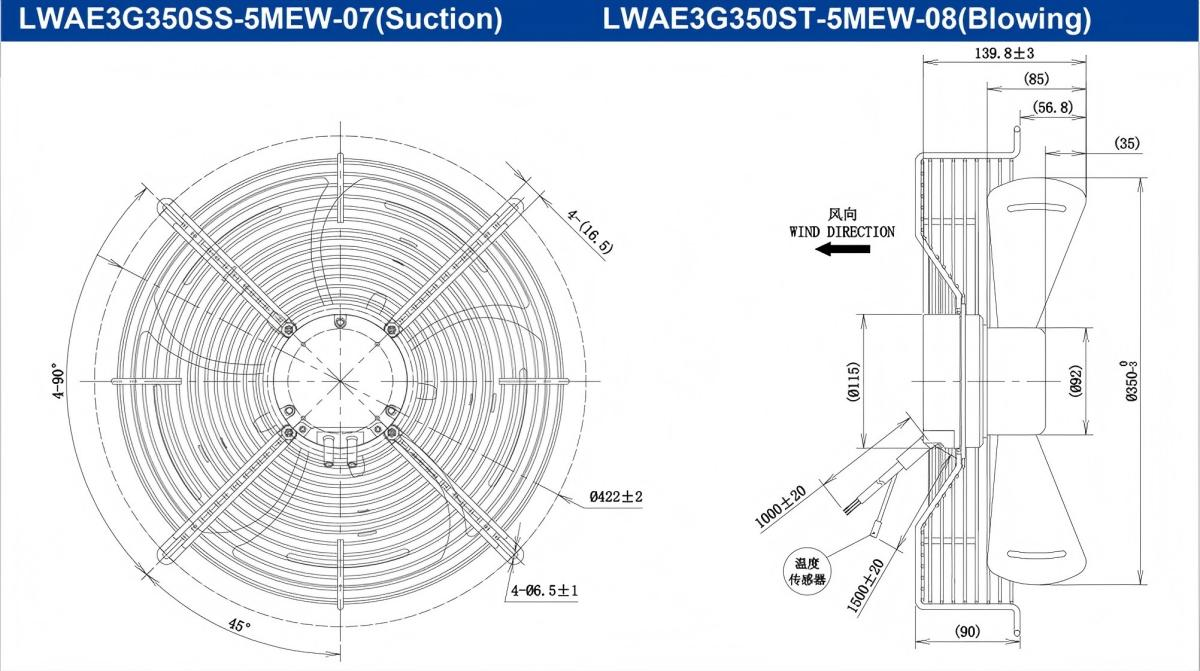
3. Core Parameter Specifications Quick Reference
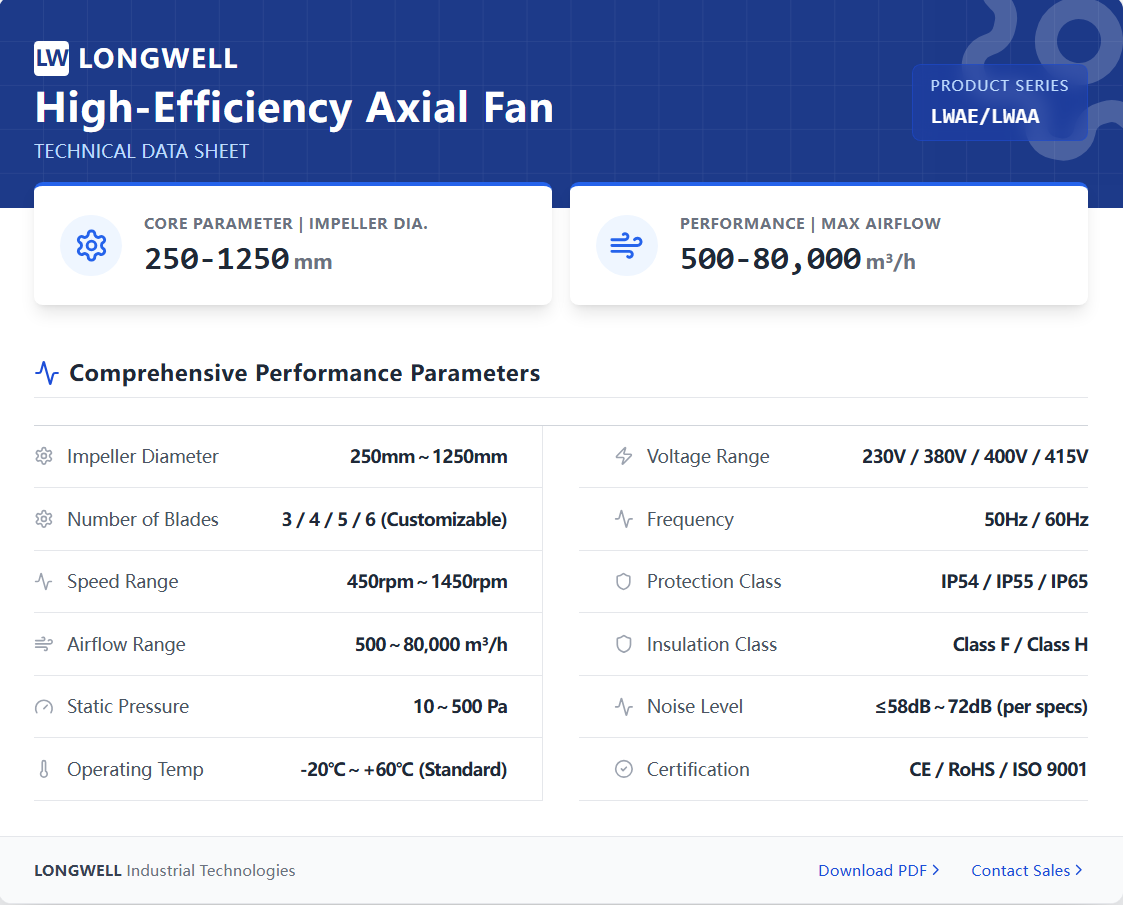
Note: Custom specifications (e.g., special voltages, ultra-wide temperature ranges, specific certifications) can be evaluated by the LONGWELL engineering team.
4. In-Depth Industry Application Analysis
The application scenarios for outer rotor axial fans go far beyond simple “ventilation.” Let’s focus on a few typical industries to analyze LONGWELL’s technical adaptation logic.
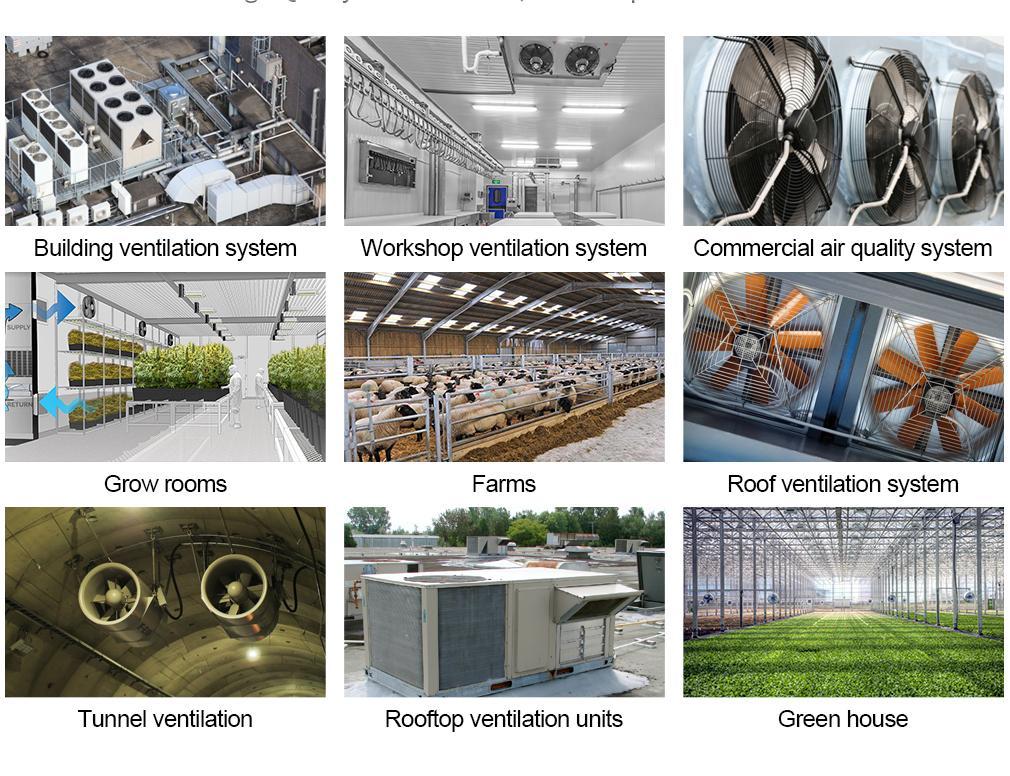
4.1 Data Centers: The Dual Challenge of Temp Control and PUE
Modern data centers aim for highly precise PUE (Power Usage Effectiveness), and fan power consumption in HVAC and server cooling systems usually accounts for 20%~35% of total electricity use. Relying on precise speed control, EC outer rotor axial fans dynamically adjust airflow based on real-time heat loads, avoiding the energy waste of fixed-speed fans. LONGWELL EC series seamlessly integrates into DCIM platforms via Modbus RS-485, supporting multi-fan PID control to keep rack outlet temperature fluctuations within ±0.5℃.
4.2 Cold Chain & Cold Storage: Low-Temp Start and Defrosting
Cold storage evaporator fans face two major challenges: low-temperature starts (risk of stalling due to thickened grease at -25℃) and reverse operation during defrosting cycles. LONGWELL AC outer rotor series features:
-
-
- Special low-temp grease (-40℃ freezing point) and sealed bearings.
- PTC thermistor protection to prevent winding burnout during stalls.
- Reversible operation (CW/CCW), running in reverse during defrosting to accelerate frost shedding, reducing defrost time by ~30%.
-
4.3 HVAC Units: The New Standard for Modular Integration
Commercial AHUs and FCUs are rapidly moving towards modularity and compactness. The “low-profile” structure of outer rotor fans (axial length is typically only 55%~70% of inner rotor equivalents) makes them the preferred choice for AHU integration. LONGWELL EC versions support 0-10V signals for Building Automation Systems (BAS), enabling real-time status reporting for predictive maintenance.
4.4 Industrial Equipment Cooling: From Lasers to Transformers
Industrial cooling requires “high wind pressure, precise direction, and anti-vibration.”
Laser Cutters: LONGWELL EC series ensures extremely low EMI (radiated emissions below CISPR 11 Class B), safeguarding stable laser output.
Dry-Type Transformers: For forced air cooling on 1000kVA+ transformers, fans installed with a 3-stage thermostat control can reduce winding hotspot temperatures by 15~25℃.
4.5 Agriculture & Animal Husbandry: 24/7 Stable Airflow
A power outage or fan failure of over 30 minutes in intensive farming can be catastrophic. LONGWELL agricultural AC fans use full aluminum alloy blades (replacing plastic) to extend lifespan by 2-3 times in corrosive environments (ammonia, H2S) and feature thermal protectors for 24/7 uninterrupted operation.
5. Scientific Selection: A 4-Step Decision Framework
Faced with a massive matrix of models, LONGWELL provides a 4-step framework to help engineers quickly lock in the optimal spec:
Step 1 — Confirm Operating Parameters:
- Required Air Volume (Q): Based on air change rate or heat load calculations.
- System Static Pressure (ΔP): Estimated pipe/obstacle resistance + 20% margin.
- Installation Environment: Temp/humidity, indoor/outdoor, altitude, corrosion/explosion risks.
Step 2 — Select Drive Technology:
-
-
- < 2000h/year, stable conditions → AC Series (Lower initial investment).
- ≥ 4000h/year, or variable speed needed → EC Series (Lower Lifecycle Cost).
- Harsh environments → Specialty Series (HT / Ex).
-
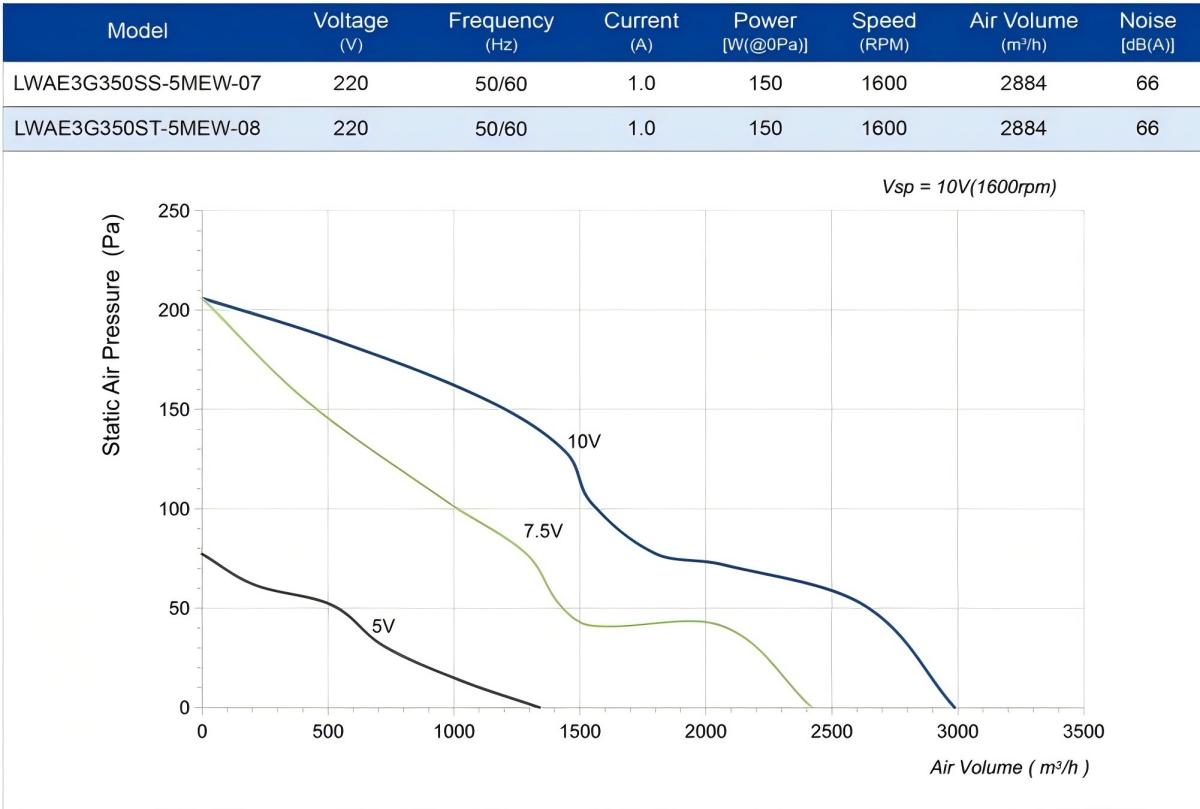
Step 3 — Verify Performance Curve:
-
-
- Plot the system resistance curve against the fan’s Q-P curve to ensure the operating point falls within the efficiency island (η peak ±15%). LONGWELL’s website offers an online selection tool.
-
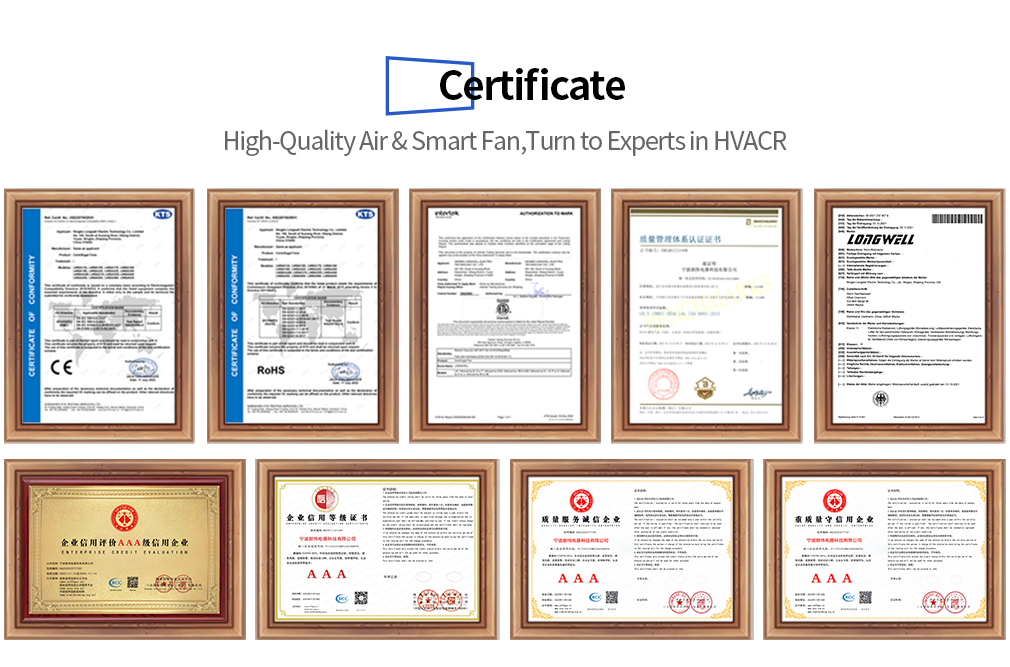
Step 4 — Safety & Certification Check:
-
-
- EU: CE (EMC + LVD), ErP Lot 6.
- North America: UL/cUL, FCC.
- Hazardous Areas: ATEX / IECEx.
-
6. Installation, Commissioning, and Long-Term Maintenance Guide
Proper installation and debugging are crucial for ensuring fan performance:
6.1 Installation Requirements
① Clearance: Maintain at least 0.5D (D = impeller diameter) of free space before the inlet and after the outlet to prevent air recirculation. Use inlet guide rings if space is tight.
②Vibration Isolation: Use rubber damping pads (Shore A 40~60°) on the base. Tighten bolts symmetrically in three stages to prevent flange deformation.
③ Wiring & Grounding: EC control cables (0-10V/RS-485) must be routed separately from power lines (≥200mm gap). Ensure reliable grounding (<0.1Ω).
④ First Run Check: Jog the motor 3 times to confirm correct rotation direction. Listen for abnormal noises and verify starting current is <1.5x the rated value.
6.2 Preventive Maintenance Schedule (Recommended)
【Monthly】Visually inspect blades for cracks/deformation; clean casing dirt; check bolt torque.
【Quarterly】Measure vibration speed (Limit: ≤2.8mm/s RMS); clean filters (if applicable).
【Biannually】Check bearing noise; read EC motor operation logs and alarm records via diagnostic interface.
【Annuakkyor or 5000h】Replace bearing grease (every 3000h for HT models); check insulation resistance (>1MΩ); verify balance.
【5 Years or 20000h】Evaluate motor winding insulation aging; replace bearing assemblies if necessary.
7. Green Manufacturing and Sustainability Commitment
Regular maintenance extends fan service life and ensures optimal performance:
LONGWELL integrates sustainability from R&D to manufacturing.
Product Level: The lifecycle carbon footprint (LCA) of the EC series is reduced by ~38% compared to previous AC generations, verified by SGS (ISO 14067).
Manufacturing Level: LONGWELL’s Ningbo factory utilizes a solar + storage microgrid (47% renewable energy in 2024). Cast aluminum impellers use >95% recycled aluminum, drastically cutting mining-related emissions while maintaining mechanical integrity.
Vision 2030: We aim for all EC products to meet the EU No. 2023/827 Class A energy efficiency rating (FMEG) by 2030, promoting a circular economy.
Conclusion: Choose Outer Rotor, Choose the Next Generation of Fan Technology
The outer rotor axial fan is not merely a minor tweak of “flipping the motor inside out,” but a technological evolution that redefines the boundaries of fan performance from its structural roots. Lower noise, higher efficiency, longer lifespan, and stronger integration—the synergistic improvement across these four dimensions gives the outer rotor configuration immense market replacement momentum amidst growing pressures for energy conservation and carbon reduction.
With over 20 years of dedicated R&D in outer rotor fans, Ningbo Longwell Electric Technology Co., Ltd. (LONGWELL) has built a complete product matrix. Whether you are an HVAC design engineer, an industrial equipment procurement manager, or a data center efficiency director, LONGWELL has mature, ready-to-deploy solutions.
Visit our official website www.longwellfans.com to download the complete selection manual, or call our technical hotline for exclusive engineering support.
LONGWELL | Born for high-quality breathing,LONGWELL Fans Power Your Equipments !
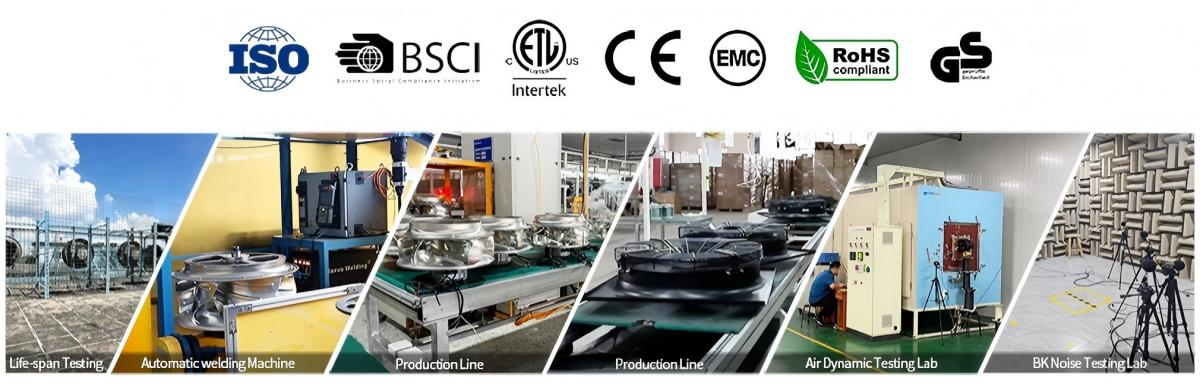
www.longwellfans.com | ISO 9001:2015 | CE / RoHS / ATEX