Industrial Axial Fans for Warehouse Ventilation: A Practical Guide to Cooling

Managing indoor temperatures during peak summer months is a consistent challenge for facility managers. When heat accumulates in a large metal-structured warehouse, it doesn’t just make the environment uncomfortable—it can impact equipment performance and workforce efficiency.
While full air conditioning is often cost-prohibitive for expansive industrial spaces, industrial axial fan warehouse cooling offers a practical and energy-efficient alternative.
This guide explores the engineering behind effective ventilation. We will look at why axial flow fans are typically the preferred choice for high-volume air movement, how to accurately calculate your airflow requirements, and where to position fans to effectively flush out heat.

Understanding Heat Stratification
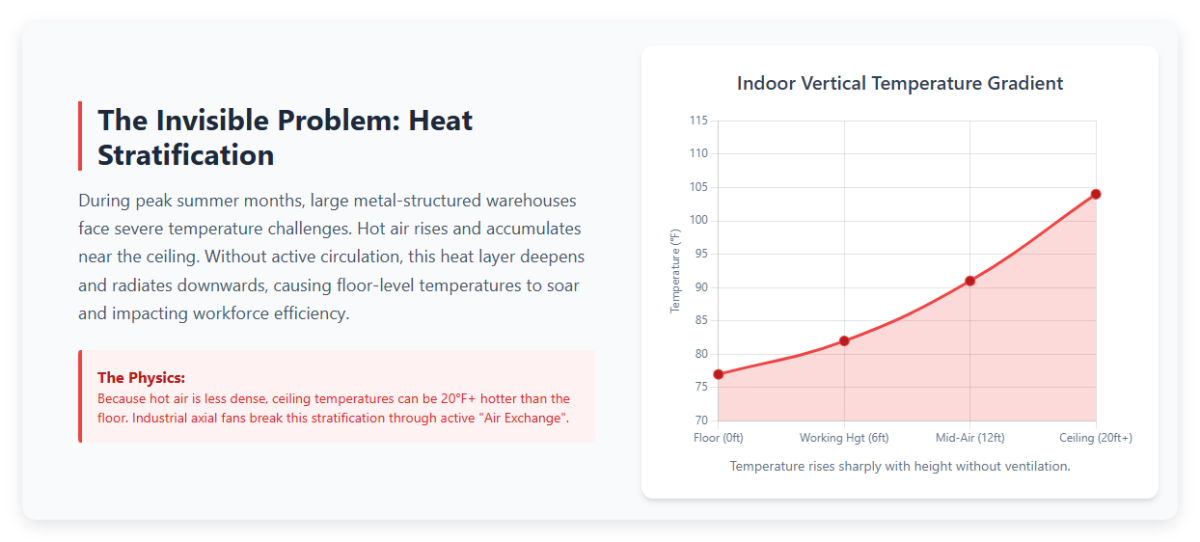
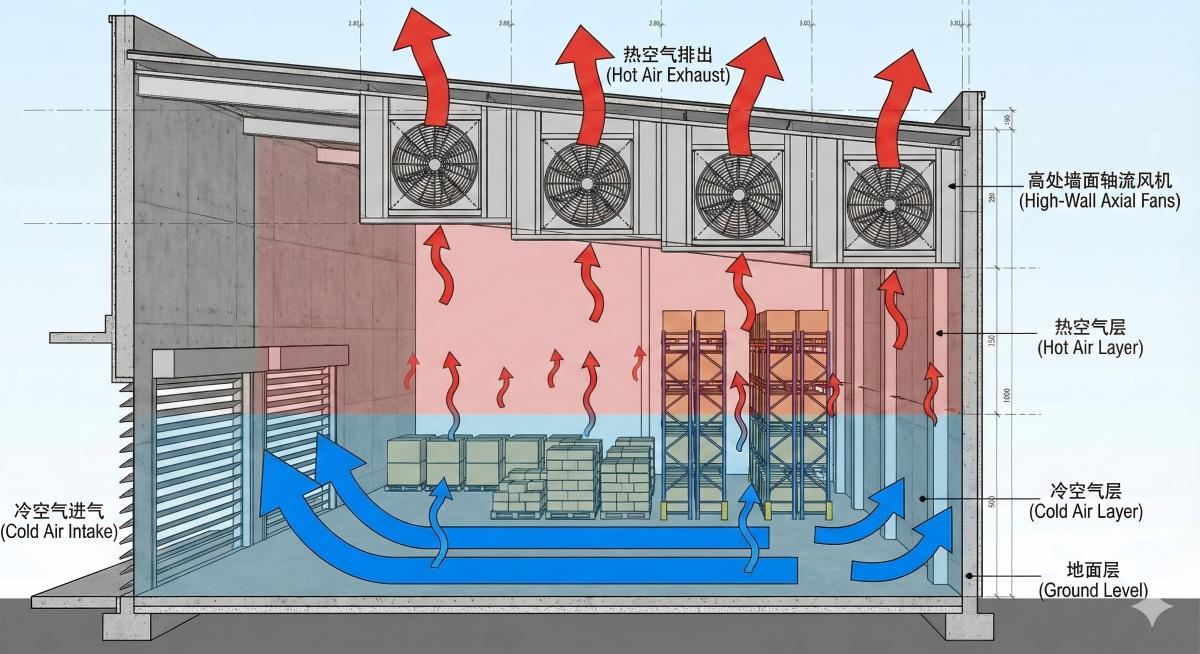
Before selecting hardware, it is important to understand the thermal dynamics of your building. In high-ceiling facilities, heat stratification is a primary issue. Hot air rises and accumulates near the ceiling. Without active circulation, this heat layer deepens and eventually radiates downward, raising the temperature at the floor level.
Industrial axial fans address this by facilitating air exchange. Unlike centrifugal blowers, which are designed to push air against high resistance in ductwork, axial fans are engineered to move large volumes of air at low pressure. They create a pressure differential that exhausts hot, stale air and draws in cooler outdoor air.
By achieving a sufficient air exchange rate—typically replacing the facility’s air volume 6 to 10 times per hour—you can maintain indoor temperatures closer to ambient outdoor levels without the high operational costs of mechanical cooling.
Comparing Fan Types: Why Axial?
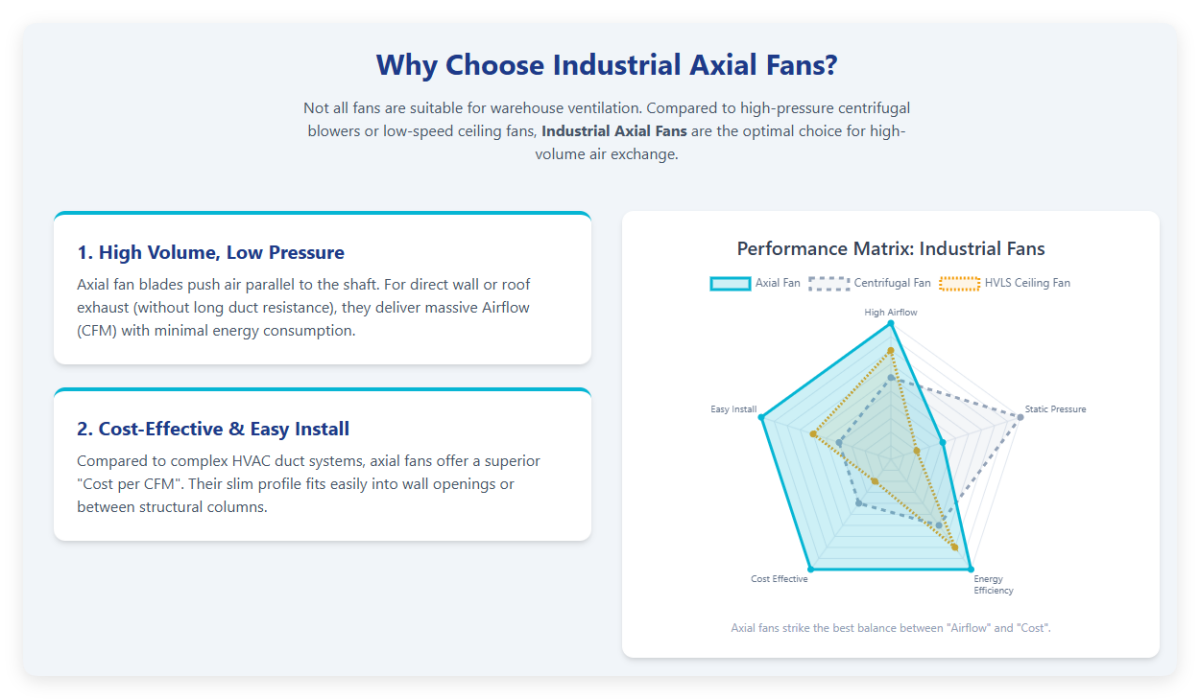
When evaluating ventilation options, you will typically encounter three main categories: axial fans, centrifugal fans, and HVLS (High-Volume Low-Speed) ceiling fans. For general warehouse exhaust and intake, industrial axial fans are often the most logical solution. Here is why:
1. Efficiency in High-Volume Airflow
The propeller-style blade design of an axial fan moves air parallel to the shaft. This configuration allows for high CFM (Cubic Feet per Minute) performance with relatively low energy consumption, provided there is minimal backpressure. For direct wall or roof exhaust applications, where duct resistance is negligible, axial fans are highly efficient.
2. Compact and Flexible Installation
Axial fans generally have a slimmer profile than centrifugal options. Whether plate-mounted for walls or grid-mounted for equipment cooling, they fit easily between structural columns or into standard wall openings, saving valuable floor space.
3. Cost-Effectiveness
For general ventilation, axial fans usually offer a better cost-to-performance ratio (Cost per CFM) than complex HVAC systems. Installation is straightforward, often requiring only basic framing and wiring.
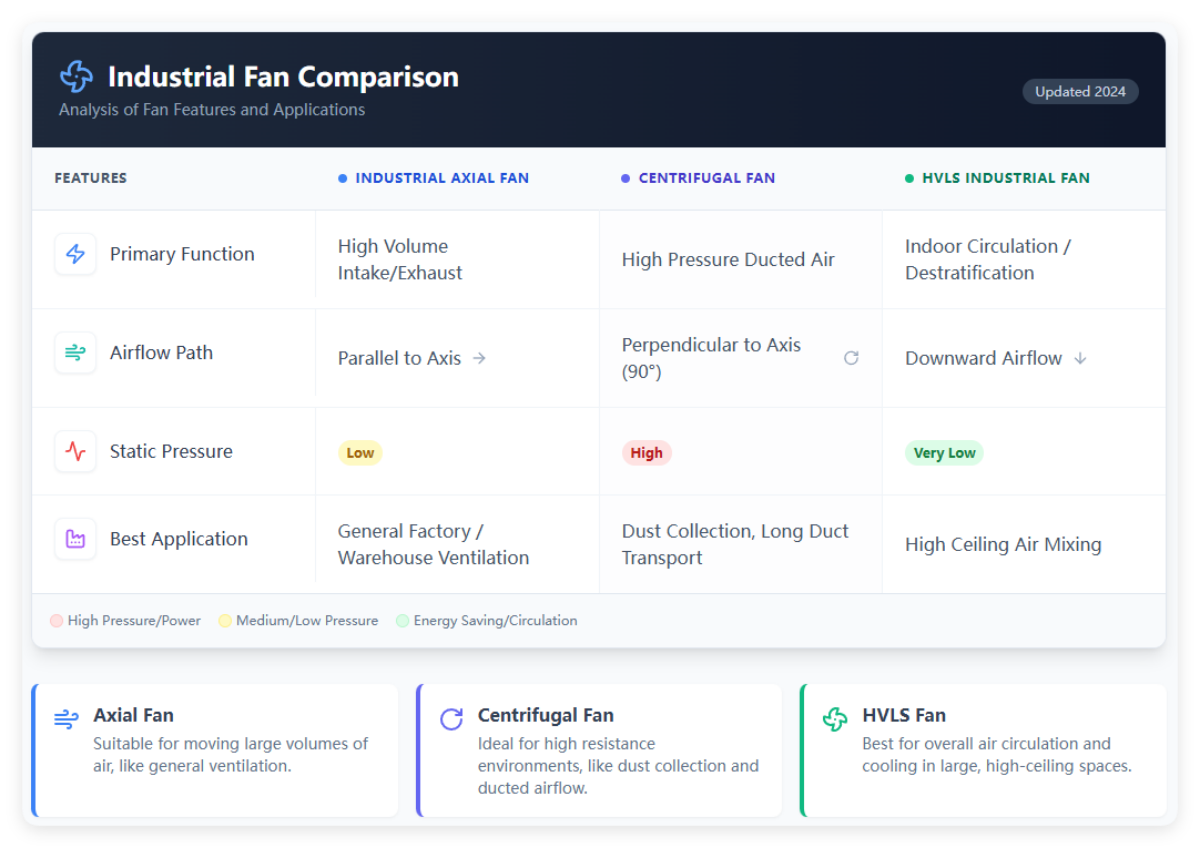
Table 1: Quick Comparison of Industrial Fan Types
Sizing Your Ventilation System
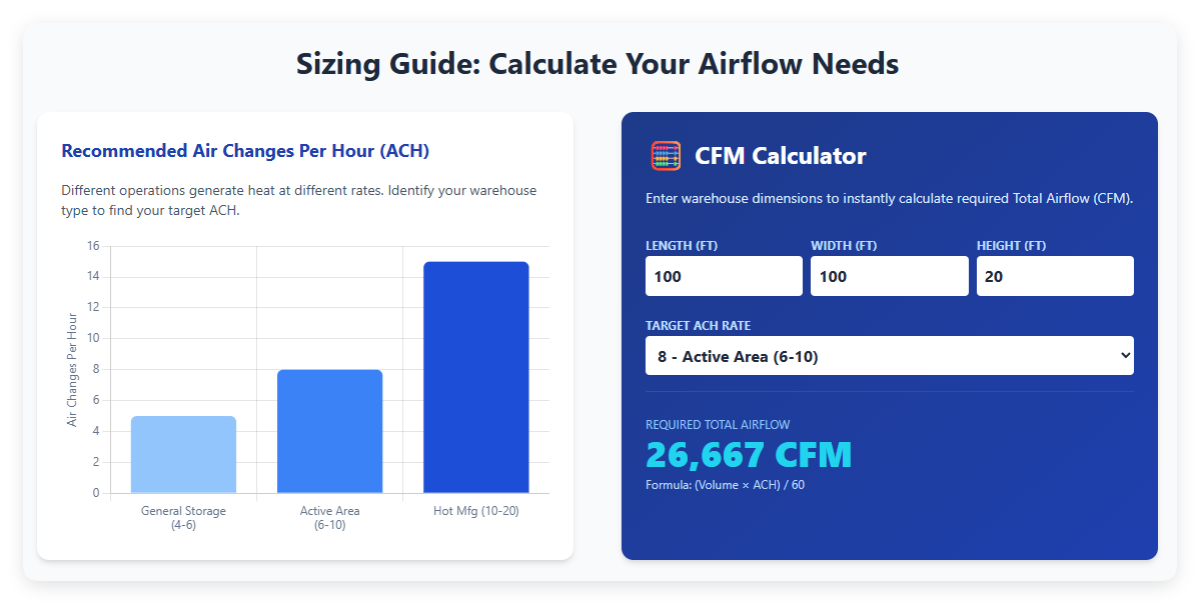
Selecting the right fan starts with the math. You need to determine the required Air Changes per Hour (ACH) for your specific operation.
Typical ACH Guidelines:
· General Storage / Warehousing: 4–6 ACH
· Active Working Areas: 6–10 ACH
· Hot Manufacturing Processes: 10–20+ ACH
Calculation Steps:
1. Determine Volume: Length × Width × Ceiling Height = Total Cubic Feet.
2. Apply ACH: Multiply the volume by your target ACH.
3. Find CFM: Divide the result by 60 minutes.
Example: A 10,000 sq. ft. warehouse with 20 ft. ceilings has a volume of 200,000 cubic feet. For an active warehouse aiming for 8 air changes per hour:
(200,000*8) / 60≈26,667 CFM.
You would need a fan array that collectively provides roughly 26,667 CFM.
Motor Technology: AC vs. EC
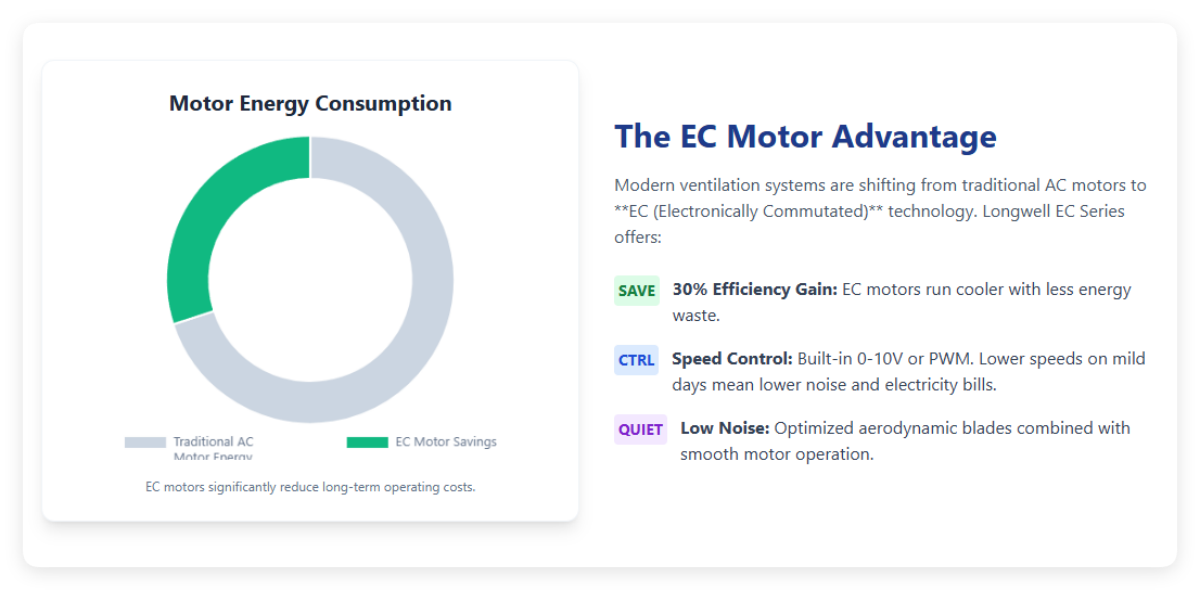
Modern ventilation systems are increasingly adopting EC (Electronically Commutated) motors.
· AC Motors: Standard, reliable, and lower upfront cost.
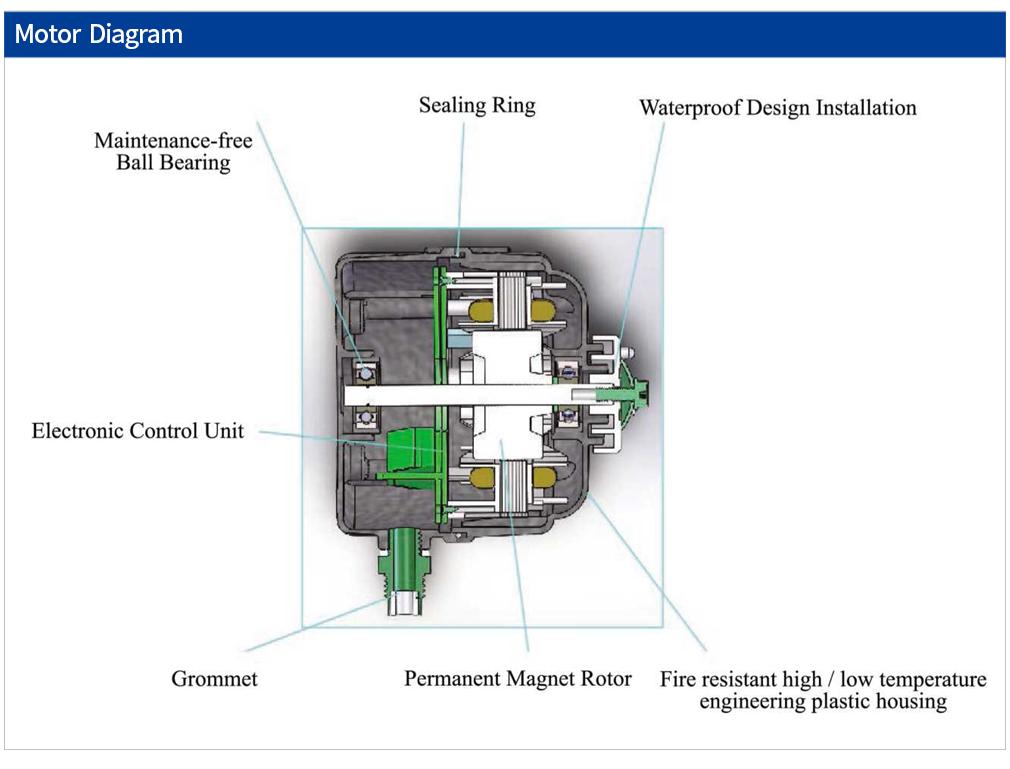
· EC Motors: Combine AC and DC technology for higher efficiency. They typically run cooler and offer built-in speed control (0-10V or PWM). This allows facility managers to reduce fan speed on milder days, significantly lowering energy consumption and noise.
Strategic Installation Guide
Placement is just as critical as fan capacity. A common error is placing intake and exhaust points too close together, creating a “short circuit” where fresh air is exhausted before it cools the workspace.
The Cross-Flow Strategy
The goal is to sweep fresh air across the entire floor plan.
1. Intake: Position intake sources (louvers, doors, or supply fans) on the coolest side of the building or near the floor level.
2. Exhaust: Install industrial axial fans high on the opposite wall or on the roof.
3. Flow: This arrangement leverages natural convection (heat rising) and ensures a continuous path of airflow across the working zone.
Managing Negative Pressure
Most warehouse systems use exhaust fans to create negative pressure, pulling fresh air in through passive openings. Ensure you have enough intake area (open doors, windows, or louvers) to prevent the fans from starving for air, which reduces performance and can strain the motors.
Longwell: Engineered Air Movement
Reliability is key for industrial equipment. At Longwell, we focus on manufacturing fans that balance durability with aerodynamic efficiency.
About LONGWELL
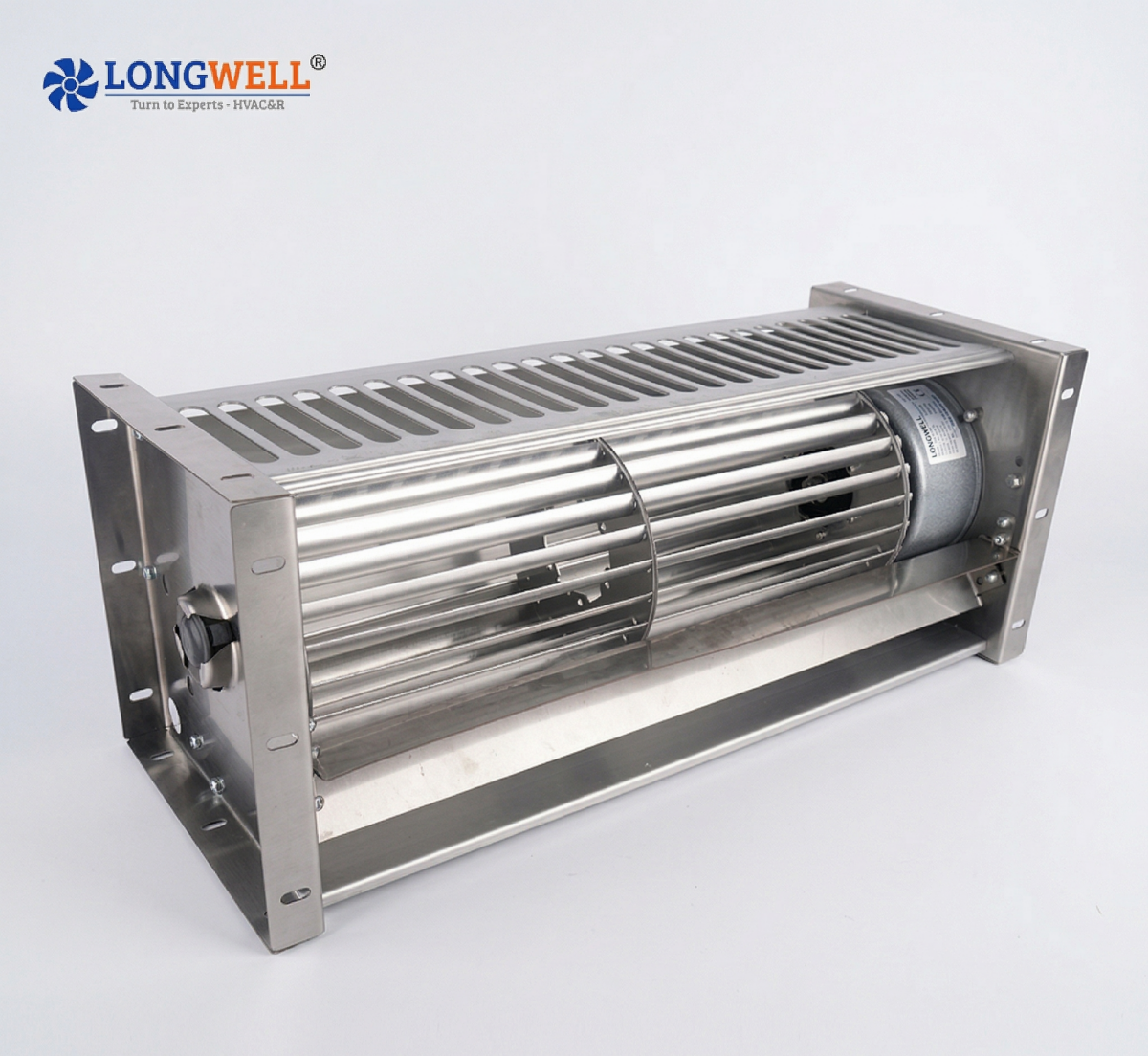
Ningbo Longwell Electric Technology Co., Ltd. (Website: www.longwellfans.com) is a specialized manufacturer of HVAC fans and motors. Our portfolio includes centrifugal fans, axial fans, cross-flow fans, and EC/DC/AC motors, serving industries ranging from HVAC and refrigeration to industrial purification. We aim to provide components that improve system performance and longevity.
Product Recommendations
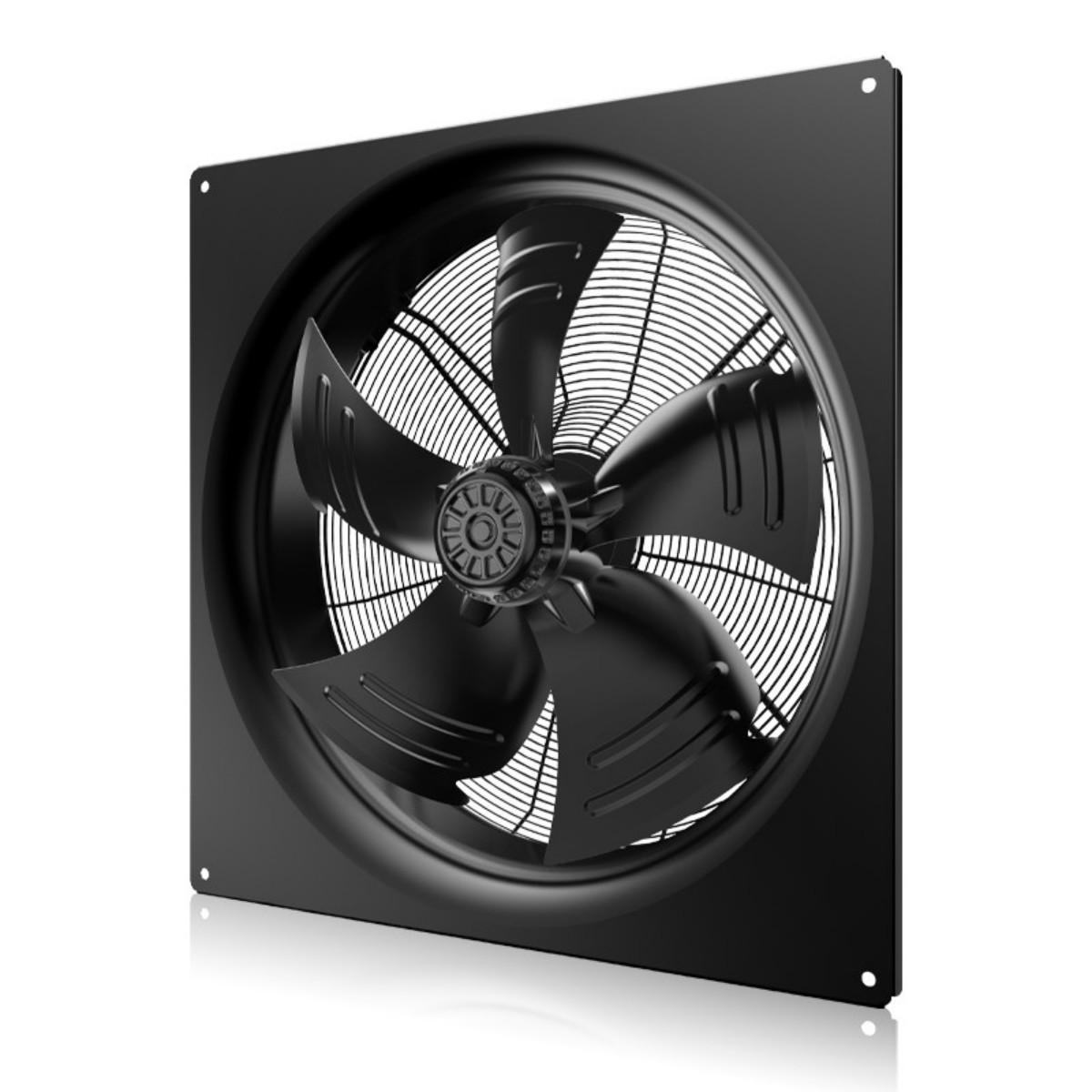
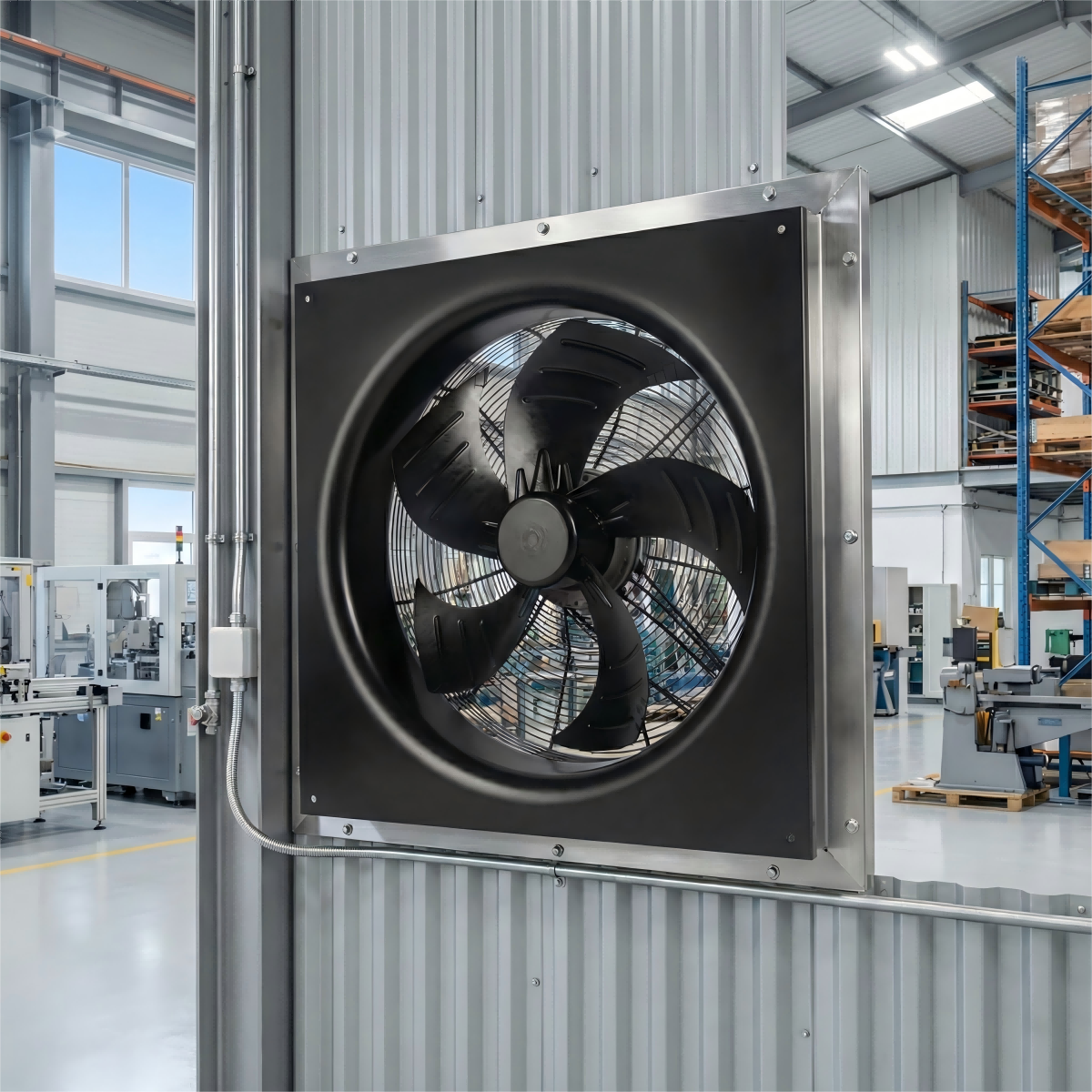
For warehouse ventilation, our External Rotor Axial Fans are a common choice:
· Diameters: Available from 200mm up to 1000mm+ to suit various wall openings.
· Mounting: Grid or plate options for straightforward installation.
· Efficiency: Our EC series provides precise speed control, making them ideal for facilities looking to optimize energy usage.
Whether you are retrofitting an older building or designing a new ventilation system, Longwell offers the technical data and performance curves to help you make an informed decision.
 Maintenance for Longevity
Industrial axial fans are generally low-maintenance, but periodic checks ensure consistent performance.
· Cleaning: Dust buildup on blades can cause imbalance and vibration. Inspect and clean blades every 3–6 months.
· Fasteners: Check mounting bolts and vibration dampeners to ensure the unit remains secure.
· Bearings: Listen for unusual noise. Longwell motors typically use sealed ball bearings designed for a long service life, reducing the need for manual lubrication.
Summary
Cooling a large warehouse is a matter of airflow management. By utilizing industrial axial fans, you can effectively remove heat and improve air quality without the heavy investment of a chiller system. The key lies in accurate sizing (CFM), selecting efficient motor technology, and strategic placement to ensure cross-flow ventilation.
For technical specifications and sizing assistance, view our Industrial Axial Fan specifications here.
FAQ
Q1: How do I calculate how many fans I need?
A: Calculate your building’s total volume in cubic feet, multiply by the desired Air Changes Per Hour (typically 6-10 for warehouses), and divide by 60 to get the required Total CFM. Then, divide Total CFM by the airflow rating of your chosen fan model.
Q2: Should I use exhaust fans or intake fans?
A: Exhaust fans (pulling air out) are most common for heat removal. However, if your facility is dusty, using intake fans with filters to create positive pressure can help keep dust out.
Q3: What is the main benefit of EC motors over AC motors?
A: EC motors are more energy-efficient and offer easier speed control. This allows you to run fans at lower speeds when full cooling isn’t required, saving energy and reducing noise.
Q4: Where is the best place to mount exhaust fans?
A: Mount them as high as possible on the wall or on the roof. Heat rises, so high placement allows you to vent the hottest air while drawing cooler air from lower openings.
Q5: Can these fans be used with speed controllers?
A: Yes. EC fans have built-in speed control capabilities (0-10V/PWM). Standard AC fans can also be speed-controlled, but require compatible voltage regulators or VFDs depending on the motor type.