How to Choose the Right Axial Compact Fan for Your Application: A Comprehensive Guide
Effective thermal management is the unsung hero of modern electronics and industrial design. Whether you are engineering a high-density server rack, a medical device, or a commercial refrigeration unit, the heat generated by components is your primary enemy. The solution often comes down to a deceptively simple component: the Axial Compact Fan.
However, selecting the right fan isn’t just about picking a size that fits the hole in your chassis. It requires a delicate balance of airflow, static pressure, noise requirements, and power efficiency.
In this guide, we will walk you through the technical nuances of selecting the perfect axial compact fan. We’ll cover everything from aerodynamic principles and motor types (AC, DC, EC) to real-world case studies that demonstrate how the right choice can save your project from thermal failure.
Understanding the Basics: What is an Axial Compact Fan?
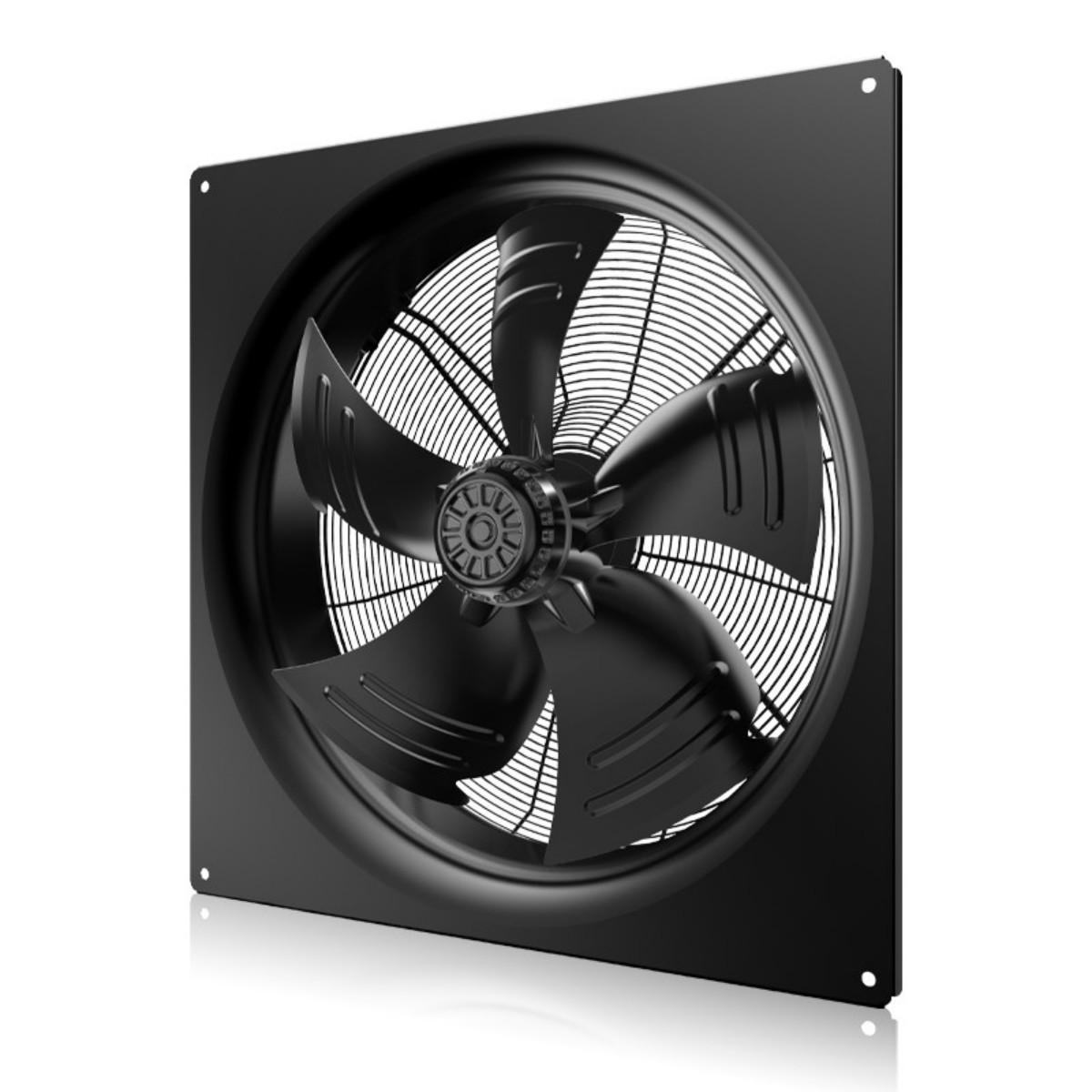
Before diving into the specs, let’s clarify the mechanics. An axial compact fan is named for the direction of its airflow: the air enters and exits the fan parallel to the shaft (axis) of the motor.
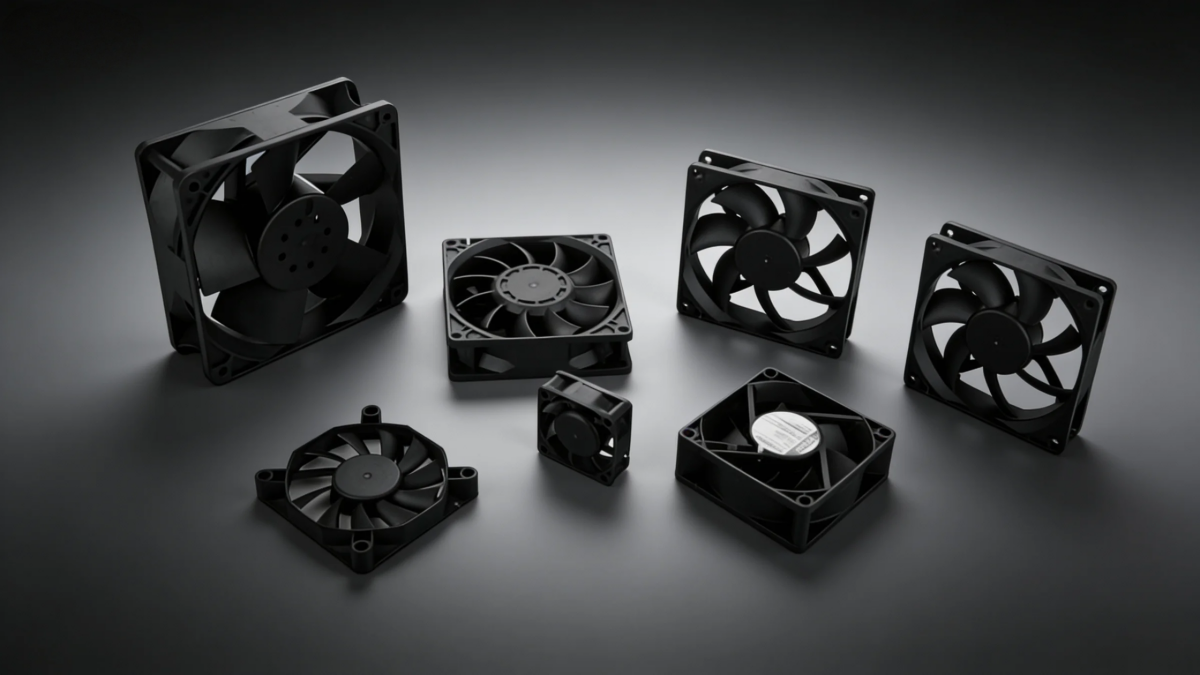
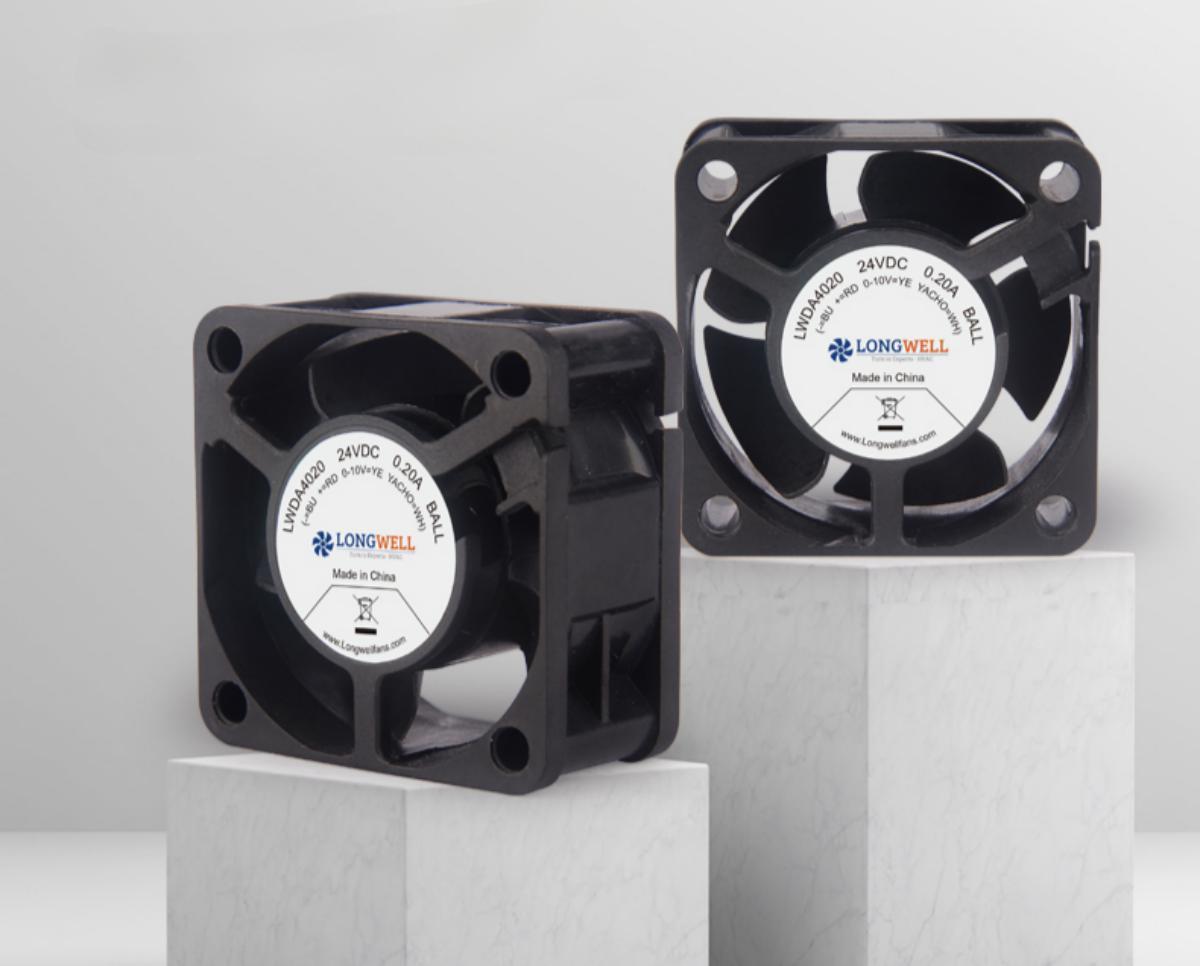 These fans are characterized by their “box” or square frame design, making them easy to mount directly onto equipment chassis, heat sinks, or ventilation panels. They are the industry standard for applications requiring high airflow rates at relatively low static pressures.
How They Work
The impeller blades rotate around a central hub, creating a pressure difference that draws air in and pushes it out in a straight line. This design is highly efficient for moving large volumes of air when there is low resistance (impedance) in the flow path.
Core Components
When you look at a datasheet from an axial compact fan manufacturer in China or elsewhere, you are essentially evaluating three main components:
1. The Impeller: The shape, angle, and number of blades determine the airflow (CFM) and noise profile.
2. The Motor: The heart of the fan, usually integrated into the hub (external rotor motor), available in AC, DC, or EC variants.
3. The Frame: Provides structural integrity and mounting points (flanges or ribs).
Axial vs. Centrifugal: When to Stick with Axial?
You should choose an axial compact fan when your primary goal is “flushing” heat out of an enclosure.
· Choose Axial Compact Fans if: You need high volume airflow, the path is relatively straight, and back-pressure is low to moderate.
· Choose Centrifugal Blowers if: You need to push air 90 degrees, or you are forcing air through dense filters or tightly packed ducts where static pressure is high.
Critical Performance Parameters for Selection
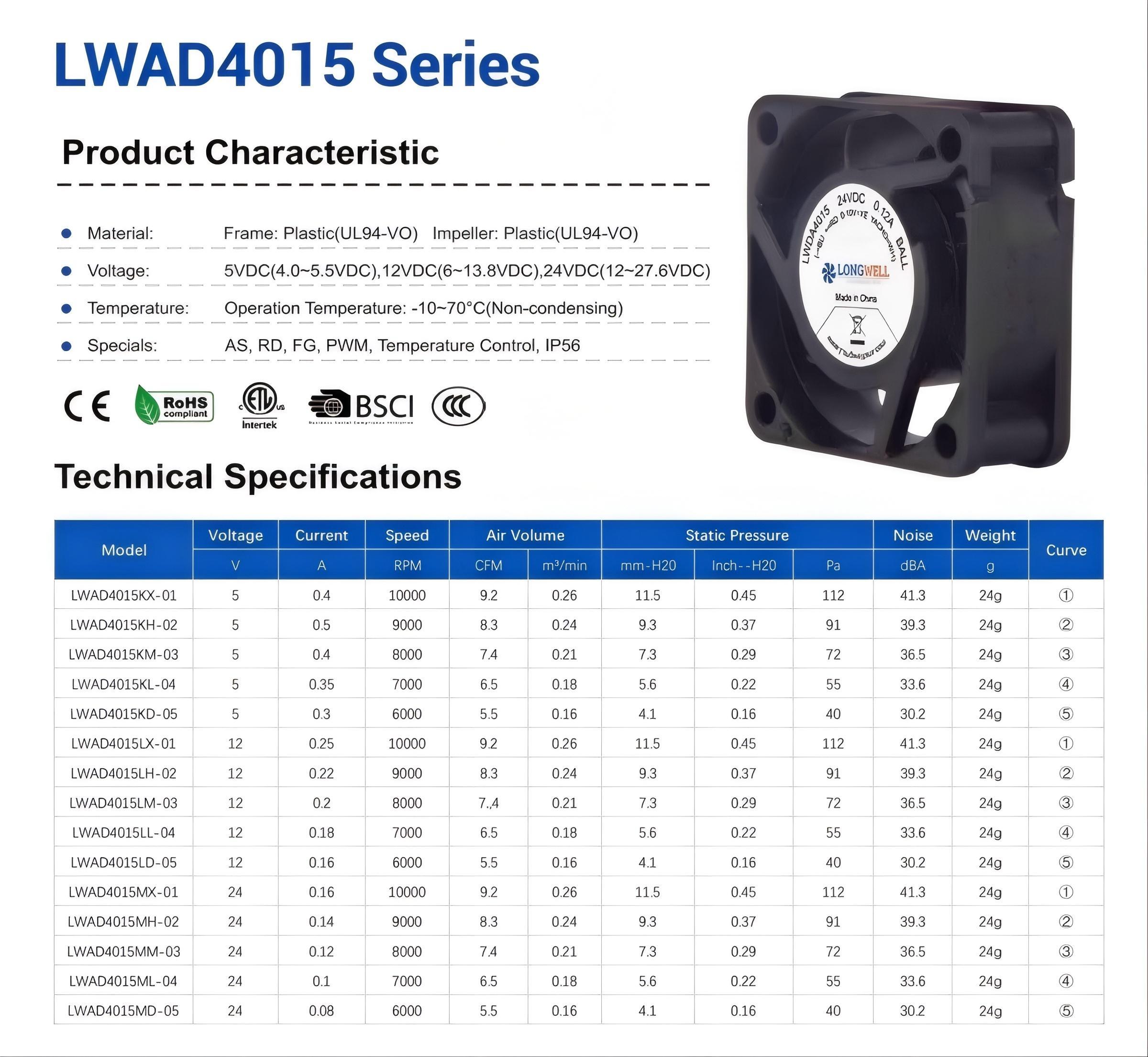
When browsing through a catalog—like the extensive list of axial compact fans at LONGWELL—the numbers can get overwhelming. Here is how to decode the critical specs relevant to your project.
1. Airflow (CFM) vs. Static Pressure
This is the most common trade-off.
· Airflow (CFM – Cubic Feet per Minute): How much air the fan moves when there is zero resistance.
· Static Pressure (mmH2O or Pa): How hard the fan can push air against resistance.
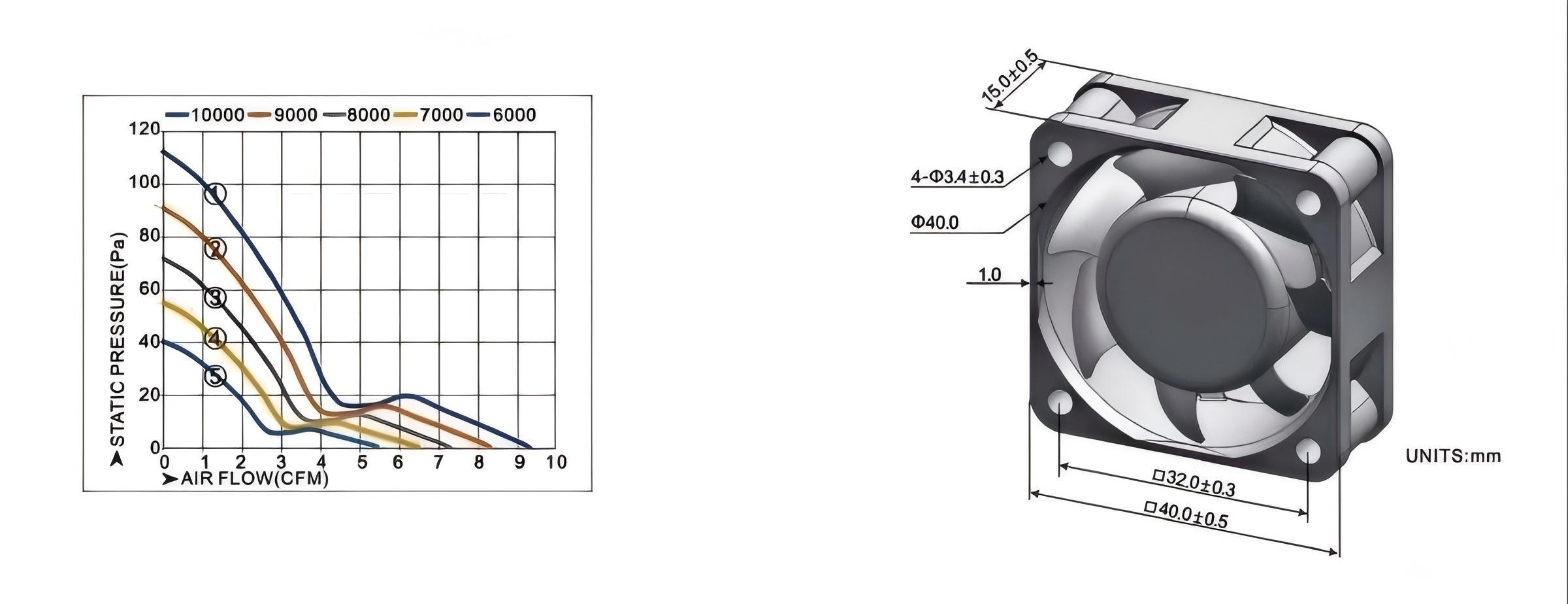
· Pro Tip: Do not just look at the max CFM. You need to look at the P-Q Curve (Performance Curve). If your device is packed with cables and PCBs, you need a fan with a steeper curve (higher static pressure) to maintain adequate airflow.
2. Noise Levels: The Acoustic Challenge
For industrial machinery, a loud fan might be acceptable. But for a compact axial fan for electronics cooling in an office projector or medical device, silence is golden. Noise is measured in dBA (decibels A-weighted).
To achieve a quieter operation without sacrificing too much airflow, look for:
· Blade Design: Sickle-shaped or winglet-tipped blades reduce turbulence.
· Lower RPM: Larger fans running at slower speeds are generally quieter than small fans screaming at high RPMs.
· DC Axial Compact Fan with Low Noise: DC motors often offer smoother operation and better speed control than basic AC motors, reducing vibration-induced noise.
3. Electrical Specifications: AC vs. DC vs. EC
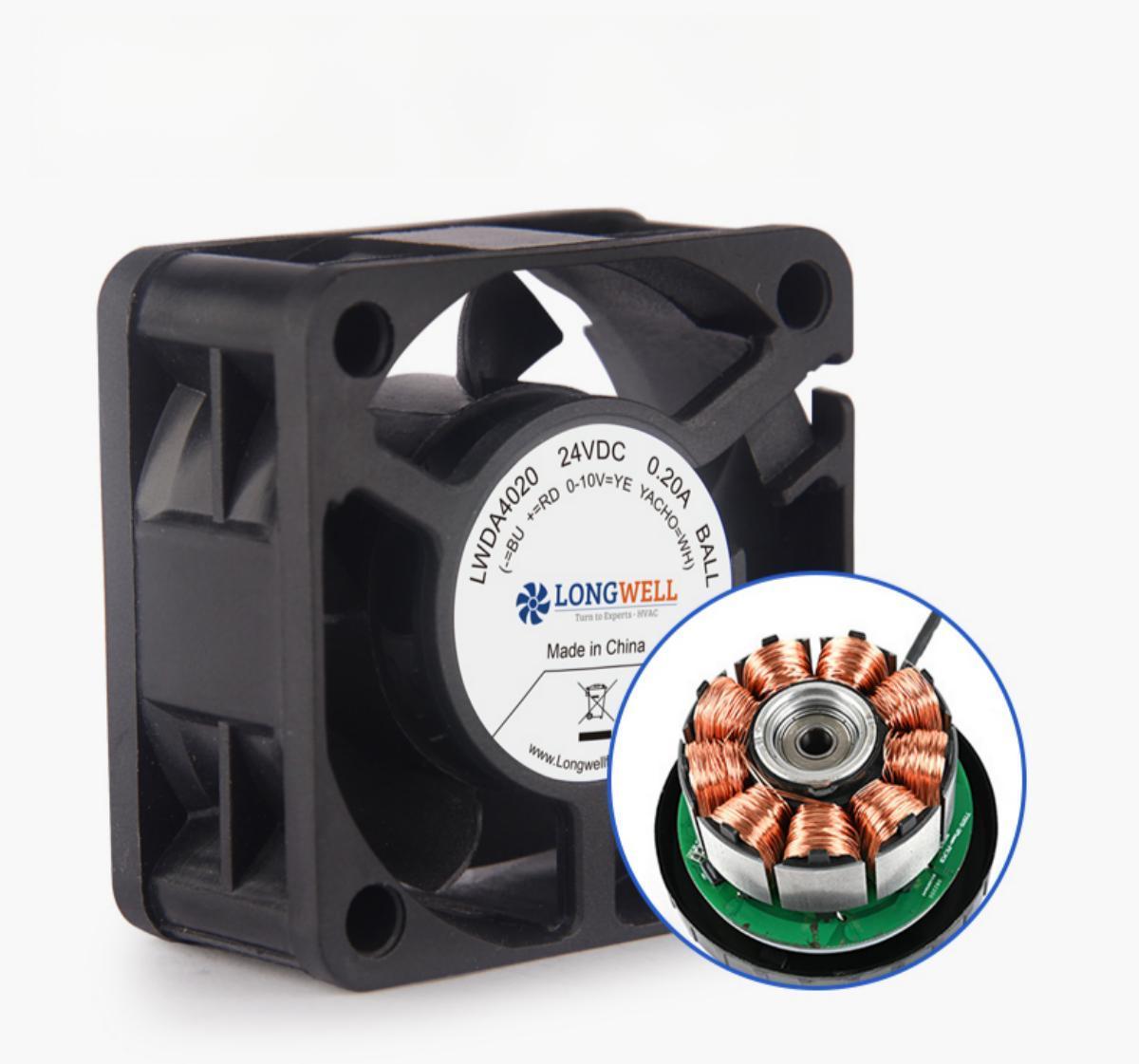
Your power source dictates your initial choice, but efficiency goals should drive your final decision.
|
Feature |
AC Compact Fan |
DC Compact Fan |
EC Compact Fan |
|---|---|---|---|
|
Power Source |
Mains (115V/230V) |
Direct Current (12V, 24V, 48V) |
Mains (AC input, DC conversion) |
|
Efficiency |
Low to Medium |
High |
Very High |
|
Speed Control |
Limited |
Excellent (PWM/0-10V) |
Excellent (PWM/Modbus) |
|
Typical Use |
Industrial Cabinets |
Electronics, Telecom |
Smart HVAC, Energy Saving |
For modern applications, especially battery-operated or precision cooling, a DC axial compact fan with low noise is often the superior choice due to its controllability and efficiency.
Durability Factors: Ensuring Long-Term Reliability
A fan failure typically means system failure. To ensure your product lasts through its warranty period, pay close attention to the bearing system and protection ratings.
Bearing Systems: Sleeve vs. Ball
· Sleeve Bearings: Quieter initially and cost-effective. However, they rely on oil lubrication that can dry out, especially in high temperatures. Life expectancy: ~30,000 hours.
· Ball Bearings (Dual Ball): More robust. They can operate in higher temperatures and can be mounted in any orientation (vertical or horizontal). Life expectancy: ~50,000 to 70,000+ hours.
At LONGWELL, we typically recommend Dual Ball Bearings for any industrial axial compact fan for OEM applications where maintenance access is difficult.
IP Ratings: Dust and Moisture
If your fan is cooling an outdoor telecom cabinet or an industrial control panel in a factory, standard fans will fail due to dust ingress or moisture.
· IP20/IP44: Standard indoor use.
· IP54/IP55: Dust protected and splash-proof.
· IP67/IP68: Fully dust-tight and submersible. Crucial for harsh environments.
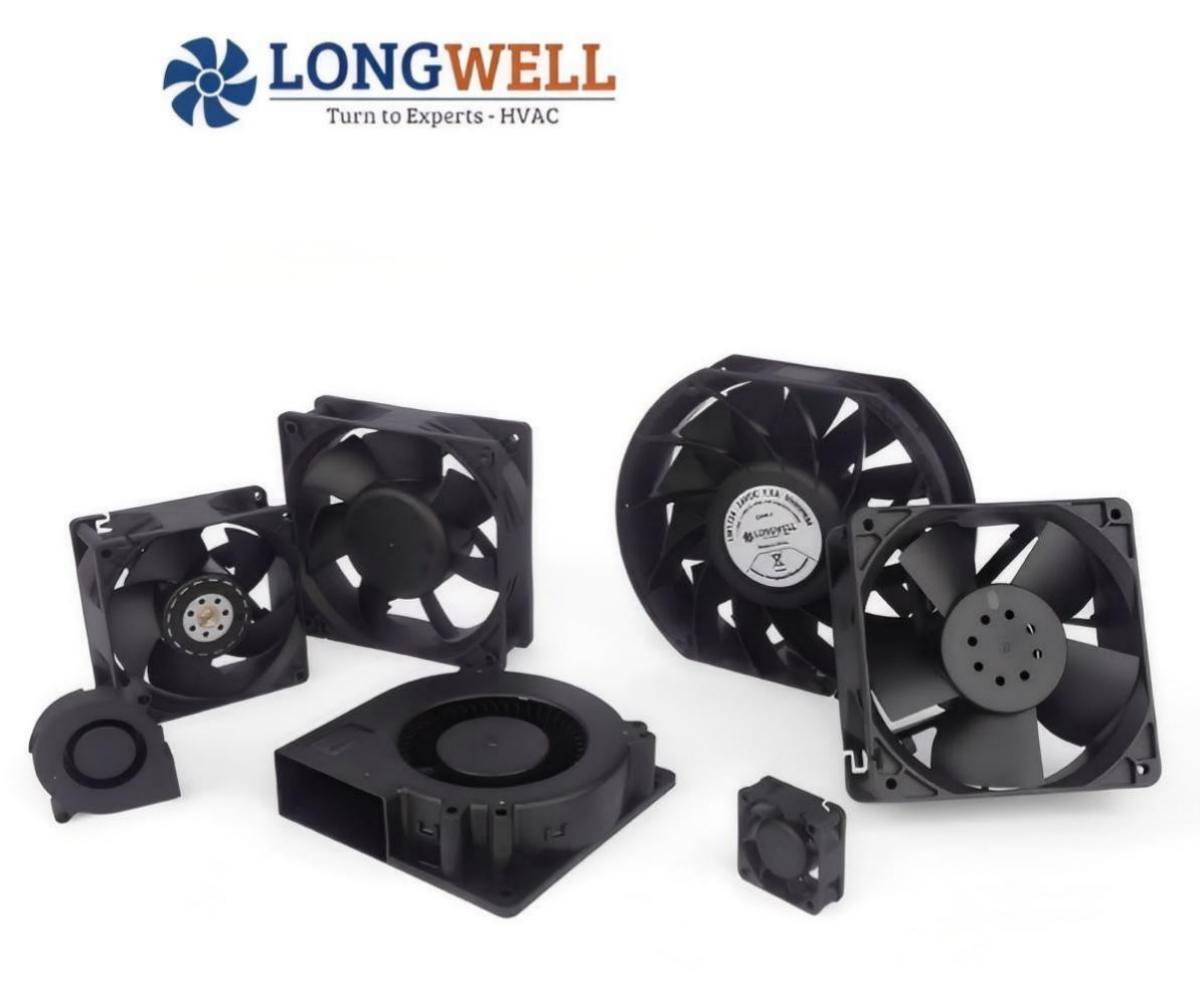
Real-World Applications and Case Studies
Theory is useful, but let’s look at how these selection criteria play out in the real world. Here are scenarios based on typical projects we encounter at LONGWELL.
Case Study 1: The Silent Medical Workstation
The Challenge: A manufacturer of portable ultrasound machines needed a cooling solution. The previous fan was too loud (55 dBA), distracting doctors and patients. Space was extremely tight (less than 30mm depth available).
The Solution: We proposed a customized version of the LWAD series DC axial fan.
· Type: DC axial compact fan with low noise.
· Size: 60mm x 60mm x 25mm.
Modification: We utilized a specialized fluid dynamic bearing and tuned the PWM control curve. The fan runs at low RPM during standard operation (30 dBA) and only ramps up if internal sensors detect a temp spike.
The Result: Noise complaints dropped to zero, and the battery life of the portable unit improved by 15% due to the lower power consumption of the DC motor.
Case Study 2: High-Heat Industrial Welding Power Supply
The Challenge: An OEM client producing welding equipment faced frequent fan failures. The environment was filled with metal dust, and ambient temperatures often reached 60°C (140°F).
The Solution: An industrial axial compact fan for OEM applications with upgraded durability.
· Specs: High-airflow 120mm AC fan with a metal frame.
· Upgrade: Dual ball bearings (high temp grease) and full IP55 conformal coating on the motor windings.
The Result: The Mean Time Between Failures (MTBF) doubled, significantly reducing warranty claims for the manufacturer.
Customer Spotlight
“We have been sourcing axial compact fans from China for years, but consistency was always an issue until we switched to Longwell. Their engineering team didn’t just sell us a part number; they helped us simulate the airflow in our new chassis. The DC fans we use now are quieter and have better static pressure than the premium European brands we used to buy, at a much more competitive price point.”
— Michael T., Senior Procurement Manager, HVAC Electronics Division
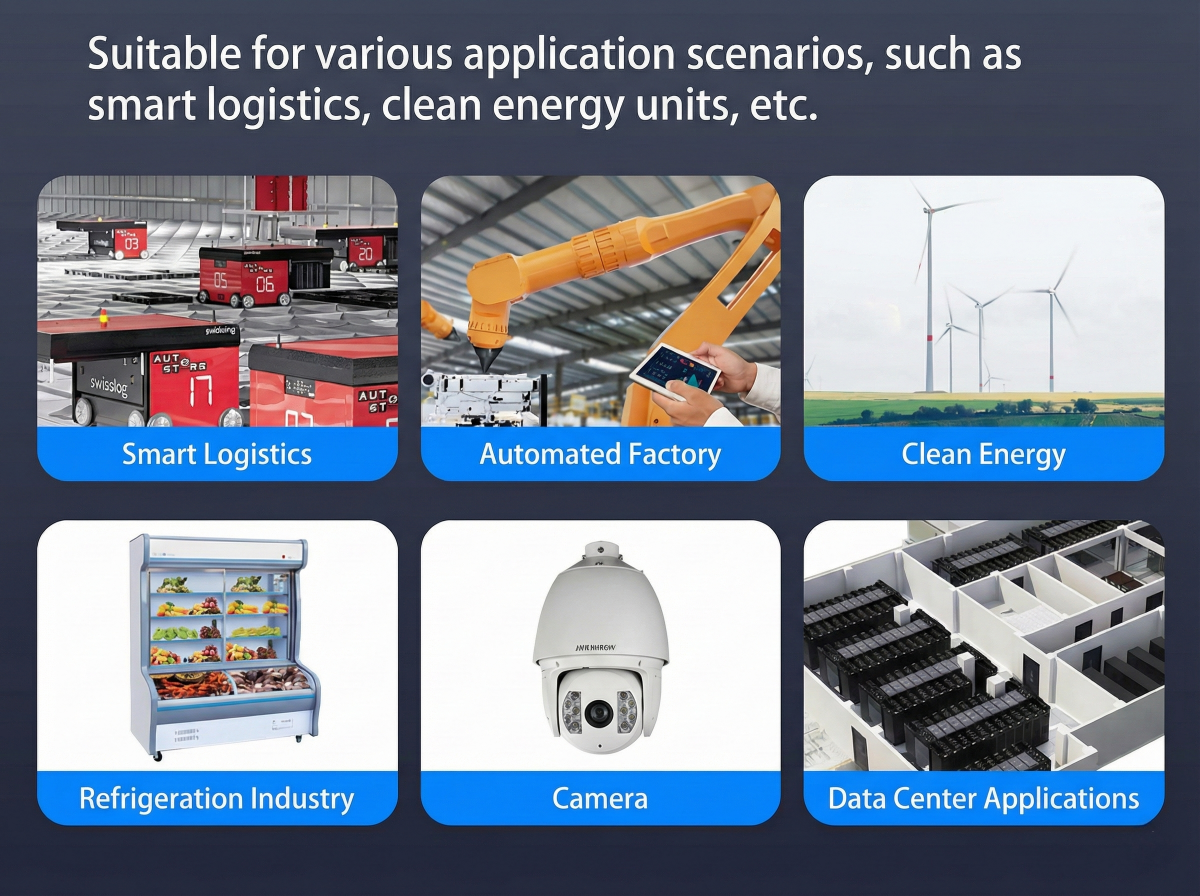
About LONGWELL: Your Partner in Air Movement
When you are integrating components into your final product, the manufacturer you choose is just as important as the product specs.
Ningbo Longwell Electric Technology Co., Ltd. (Website: www.longwellfans.com) is a premier professional manufacturer of HVAC fans and motors. We don’t just assemble parts; we engineer aerodynamic solutions. Our portfolio covers the full spectrum: centrifugal fans, axial fans, cross-flow fans, and advanced EC/DC/AC motors.
Our products are the heartbeat of systems in HVAC, refrigeration (cold chain), electronic cooling, and industrial purification fields globally. Whether you need a standard axial compact fan for HVAC electronics or a fully custom air conditioning impeller, Longwell brings ISO-certified quality and deep engineering expertise to your supply chain.
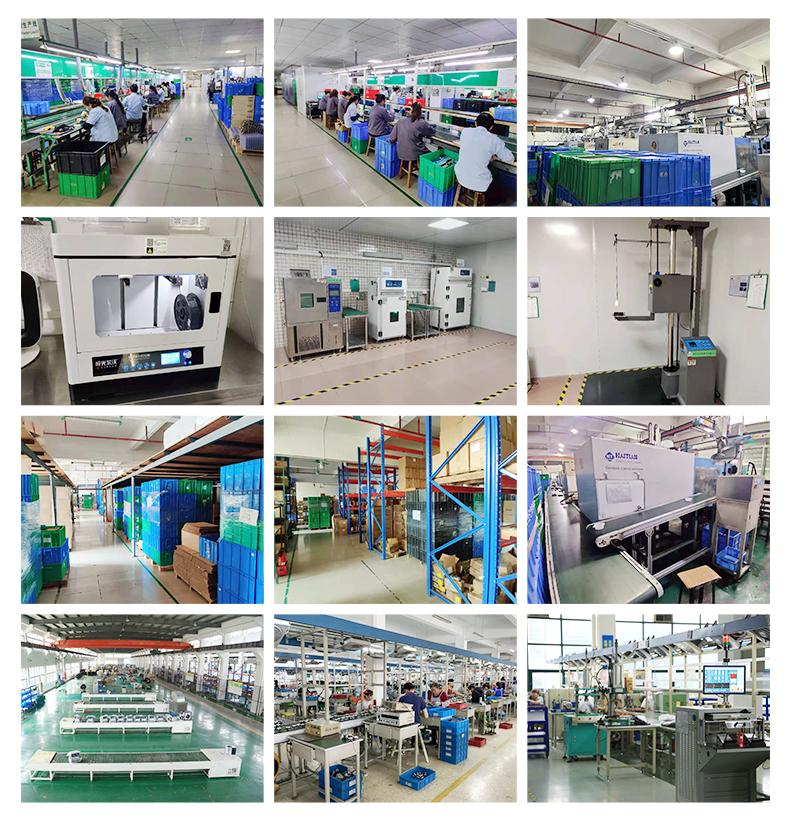
Installation and Optimization Tips
Even the best fan will underperform if installed incorrectly. Here are three tips to ensure your axial compact fan delivers on its datasheet promises.
1. Mind the Clearance
Do not mount the fan directly against a wall or a flat component. Leave a plenum (gap) of at least 10-15mm on the intake side. If the intake is blocked, the fan starves for air, noise increases drastically (cavitation), and airflow drops.
2. Manage Vibration
Vibration generates noise. Use rubber anti-vibration mounts or silicone gaskets instead of hard metal screws when possible. This isolates the fan frame from the chassis, preventing the case from acting as a speaker amplifier.
3. Use PWM Control Smartly
If you are using a DC or EC fan, utilize the Pulse Width Modulation (PWM) feature. There is no need to run the fan at 100% speed when the device is idle. Programming a smart thermal curve extends bearing life and reduces dust accumulation.
FAQ: Common Questions About Axial Compact Fans
Here are some of the most frequent questions we receive from engineers and buyers regarding fan selection.
Q1: What is the main difference between an axial compact fan and a centrifugal blower?
A: An axial fan moves air parallel to the shaft and is best for high airflow with low resistance (flushing air out). A centrifugal blower pushes air perpendicular to the shaft and creates higher pressure, making it better for pushing air through ducts or filters.
Q2: Can I use a DC axial compact fan for HVAC electronics that run on AC power?
A: Yes, but you will need an internal power supply unit (PSU) or transformer to convert the AC mains to 12V, 24V, or 48V DC. Alternatively, you can use an EC fan, which takes AC input but operates with the efficiency of a DC motor internally.
Q3: How do I know if I need a high static pressure fan?
A: Look at the density of your device. If the air has to pass through thick heatsink fins, dust filters, or a crowded server rack, you have high impedance. In this case, prioritize static pressure (mmH2O) over max airflow (CFM).
Q4: Why are Longwell axial fans considered a good alternative to top European brands?
A: As a leading axial compact fan manufacturer in China, Longwell utilizes similar high-quality materials (like Japanese ball bearings) and advanced aerodynamic designs but offers more flexibility in customization and a more competitive cost structure for OEM applications.
Q5: What is the lifespan of a typical axial compact fan?
A: It depends on the bearing and temperature. A sleeve bearing fan typically lasts 30,000 hours at 40°C. A high-quality dual ball bearing fan from Longwell can last upwards of 50,000 to 70,000 hours, even in tougher conditions.
Q6: Do you offer waterproof axial fans?
A: Yes. For outdoor or industrial environments, we offer fans with IP55, IP67, or even IP68 ratings, which protect the motor and electronics from dust, water jets, and submersion.
Conclusion
Choosing the right axial compact fan is a critical step in product design that impacts reliability, user experience, and energy efficiency. Whether you need a standard cooling solution for a server or a custom industrial axial compact fan for OEM applications, the key lies in balancing airflow, pressure, and durability.
Don’t leave your thermal management to chance. Contact LONGWELL today to discuss your specific cooling requirements, and let our engineers help you select the perfect fan for your next project.