Best Centrifugal Blower Fan Supplier in China: High Static Pressure & Energy-Efficient Options
Finding the equilibrium between high static pressure capabilities and energy efficiency is the constant challenge for HVAC engineers and procurement managers. Whether you are designing a complex Air Handling Unit (AHU), a robust dust collection system, or a precision cooling unit for electronics, the centrifugal blower fan is the heartbeat of your system.
Choosing the right partner is just as critical as selecting the right fan curve. As global supply chains evolve, sourcing the best centrifugal blower fan supplier in China has become a strategic move for OEMs looking to balance cost with advanced EC (Electronically Commutated) technology. This guide will walk you through the technical nuances of centrifugal blowers, how to match them to your specific applications, and why manufacturers like Longwell are setting the standard for aerodynamic performance.
Understanding the Centrifugal Blower Fan: Mechanics and Efficiency
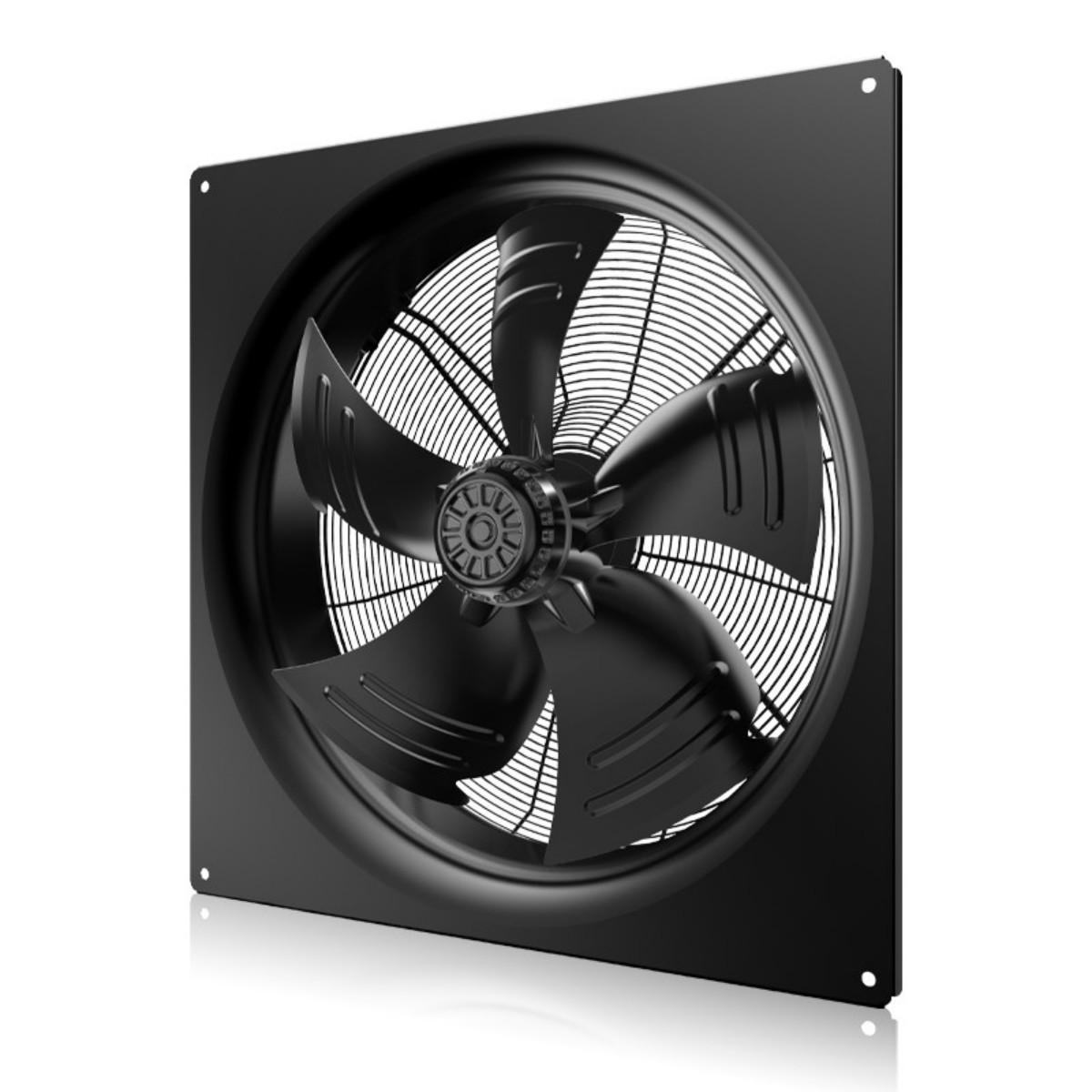
Unlike axial fans that move air parallel to the shaft, a centrifugal blower fan relies on centrifugal force to accelerate air outwards. The air enters the impeller axially, is accelerated radially, and then exits tangentially 90 degrees from the intake. This mechanism is what generates the high pressure required to overcome resistance in ductwork, filters, and dampers.
The Role of the Scroll Housing
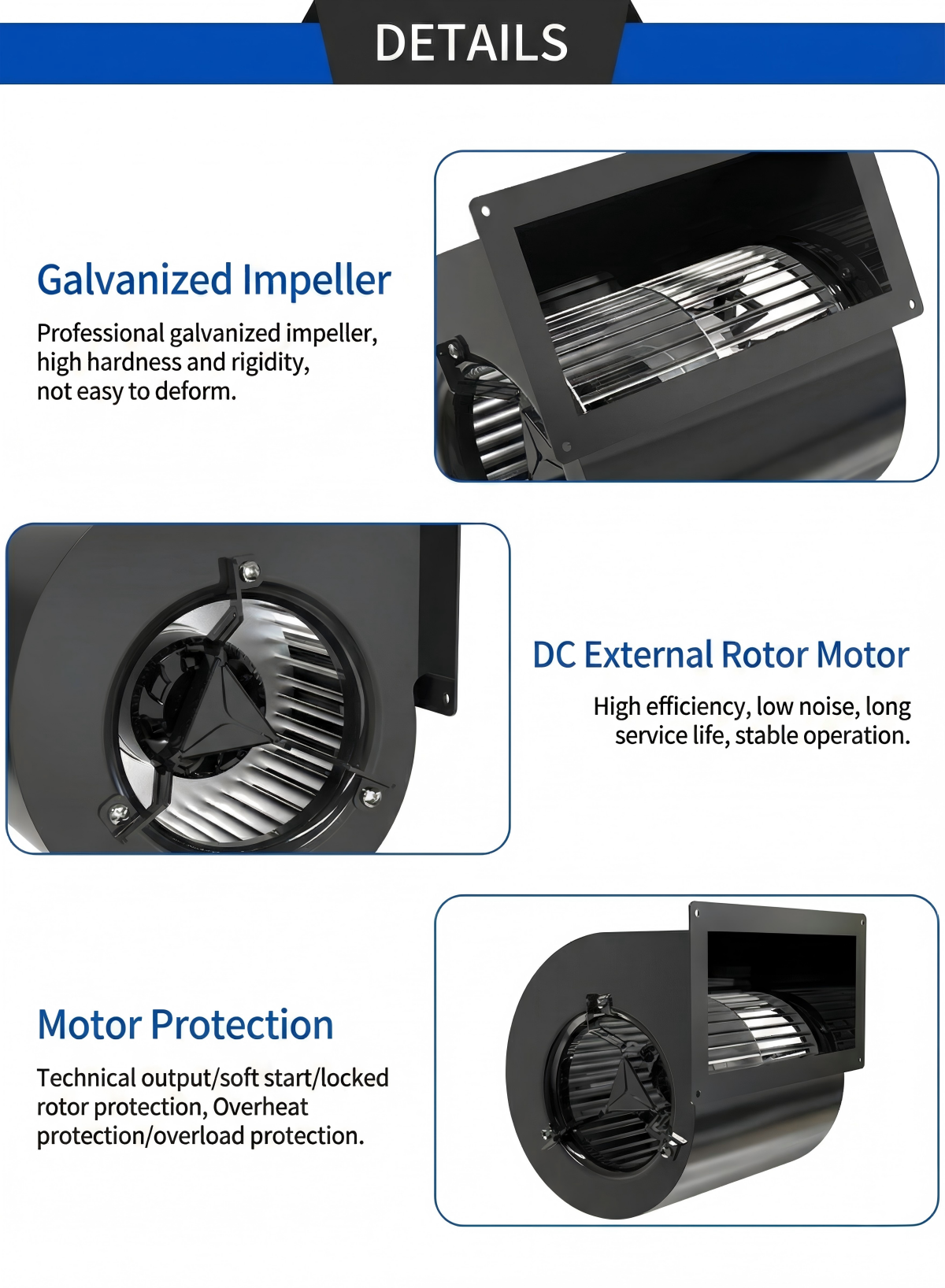
The distinctive “snail shell” shape of a centrifugal blower isn’t just aesthetic. This scroll housing acts as a diffuser. As the air leaves the impeller tips at high velocity, the expanding area of the housing converts that kinetic energy (velocity pressure) into potential energy (static pressure).
 Motor Technology: AC vs. DC vs. EC
The driver behind the impeller defines the system’s efficiency.
· AC Motors: Reliable and low cost, but limited speed control and lower efficiency.
· DC Motors: High efficiency, but often require external conversion from grid power.
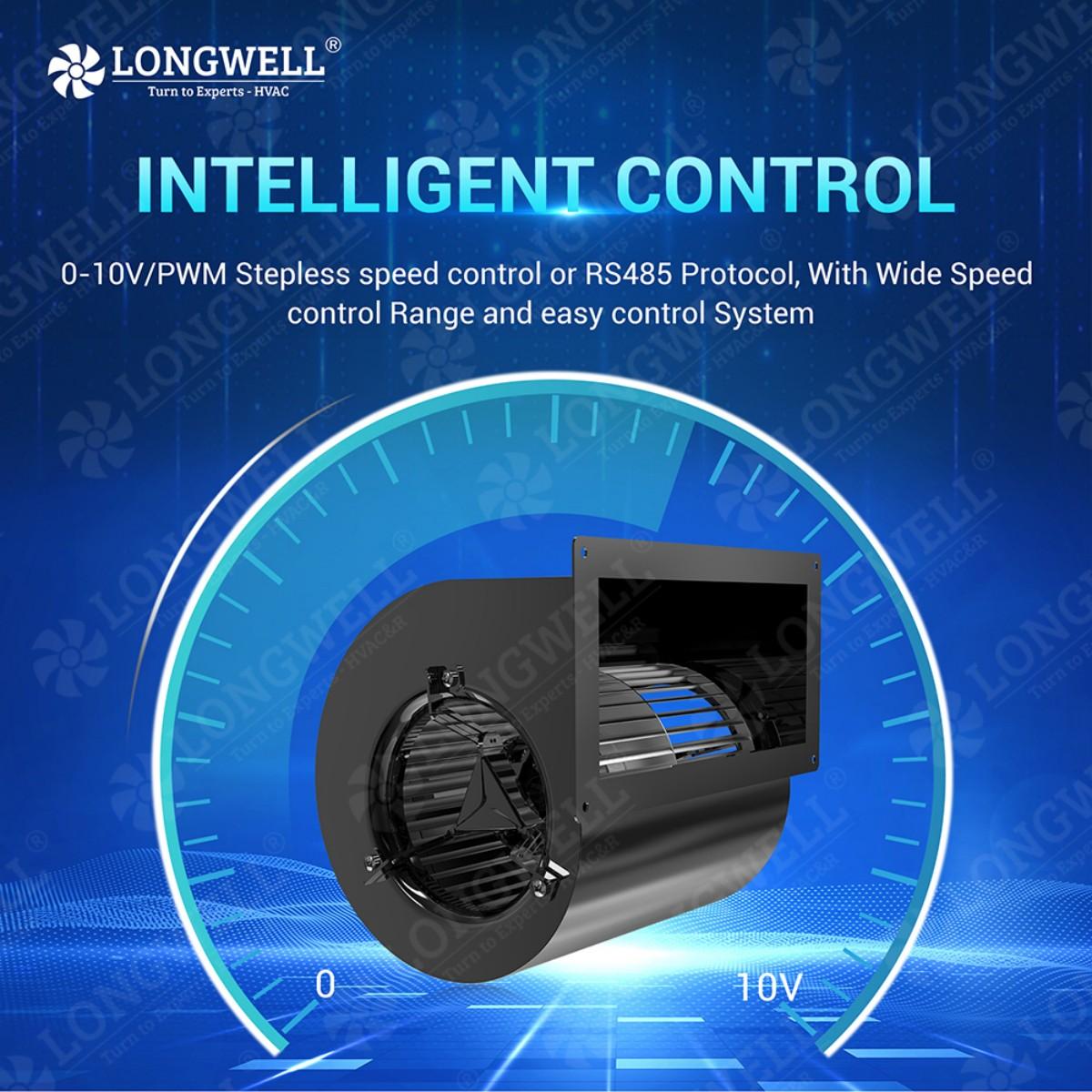
· EC Motors: The industry gold standard. Longwell integrates on-board electronics that allow the motor to run on AC mains while operating internally as a DC motor. This provides infinite speed control (0-10V/PWM), lower heat generation, and efficiency ratings often exceeding IE4 standards.
Single Inlet vs. Double Inlet (SISW vs. DIDW)
· Single Inlet (SISW): Air enters from one side. Ideal for localized cooling or when one side of the fan is blocked by a motor or wall.
· Double Inlet (DIDW): Air enters from both sides. These blowers provide higher airflow volumes at the same rotational speed, making them perfect for large-scale industrial centrifugal blower fan for ventilation.
Types of Impellers: Selecting the Right Curve
Not all centrifugal blowers behave the same. The geometry of the blade determines the fan’s characteristics.
Forward Curved Centrifugal Blowers
These feature a large number of shallow blades facing the direction of rotation.
· Characteristics: They generate high air volumes at relatively low speeds. They are generally quieter but possess a “non-overloading” power curve—meaning if resistance drops (e.g., a duct disconnects), the motor can overload.
· Best Application: Ideal as a forward curved centrifugal blower for air handling units (AHUs) or residential HVAC where static pressure requirements are moderate (typically under 1000 Pa).
Backward Curved Centrifugal Blowers
The blades curve away from the direction of rotation.
· Characteristics: These are designed for high static pressure and high efficiency. They are non-overloading, making them safer for variable system resistances.
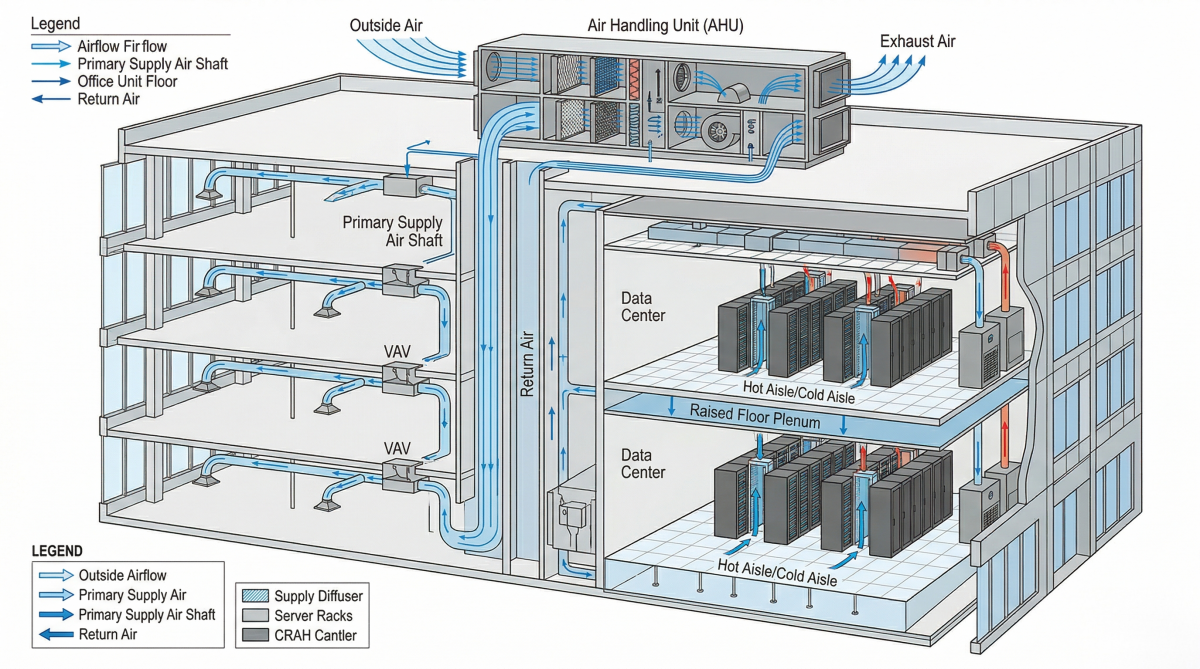
· Best Application: High-pressure ventilation, data center cooling, and systems requiring rigorous energy compliance.
Comparison: Forward vs. Backward Curved
|
Feature |
Forward Curved (FC) |
Backward Curved (BC) |
|---|---|---|
|
Pressure Capability |
Low to Medium |
High |
|
Efficiency |
Moderate (60-65%) |
High (up to 80%+) |
|
Noise Level |
Lower (at low speeds) |
Low (aerodynamic design) |
|
Space Requirement |
Compact |
Varies |
|
Motor Load |
Can overload at free air |
Non-overloading |
|
Typical Use |
FCU, Residential HVAC |
Industrial HVAC, Cleanrooms |
Critical Sizing Parameters for HVAC Systems
When you are specifying a blower, “big enough” is not a specification. Oversizing leads to noise and wasted energy; undersizing leads to system failure.
Matching Static Pressure and Airflow
You need to overlay your system’s resistance curve (duct friction + filter drop + coil drop) with the fan’s performance curve. The operating point is where these two lines intersect. For applications involving HEPA filters or long duct runs, you must prioritize a high pressure centrifugal blower for dust collection or cleanroom ventilation to ensure adequate flow is maintained as filters load up.
Acoustic Performance
Noise is a primary design constraint in commercial buildings. A low noise centrifugal blower for HVAC isn’t just about a quiet motor; it’s about aerodynamic stability. Longwell engineers focus on balancing the impeller to G6.3 or G2.5 standards to minimize vibration-induced noise. Furthermore, selecting a fan that operates near its peak efficiency point will naturally result in the lowest turbulence and noise.
Environmental Robustness
For industrial applications, the material matters.
· Galvanized Steel: Standard for HVAC.
· Plastic (PA66): Often used in smaller, lighter impellers.
· Stainless Steel/Aluminum: Required for corrosive environments or high-heat applications.
High-Demand Applications for Centrifugal Blowers
Air Handling Units (AHU) and Rooftop Units
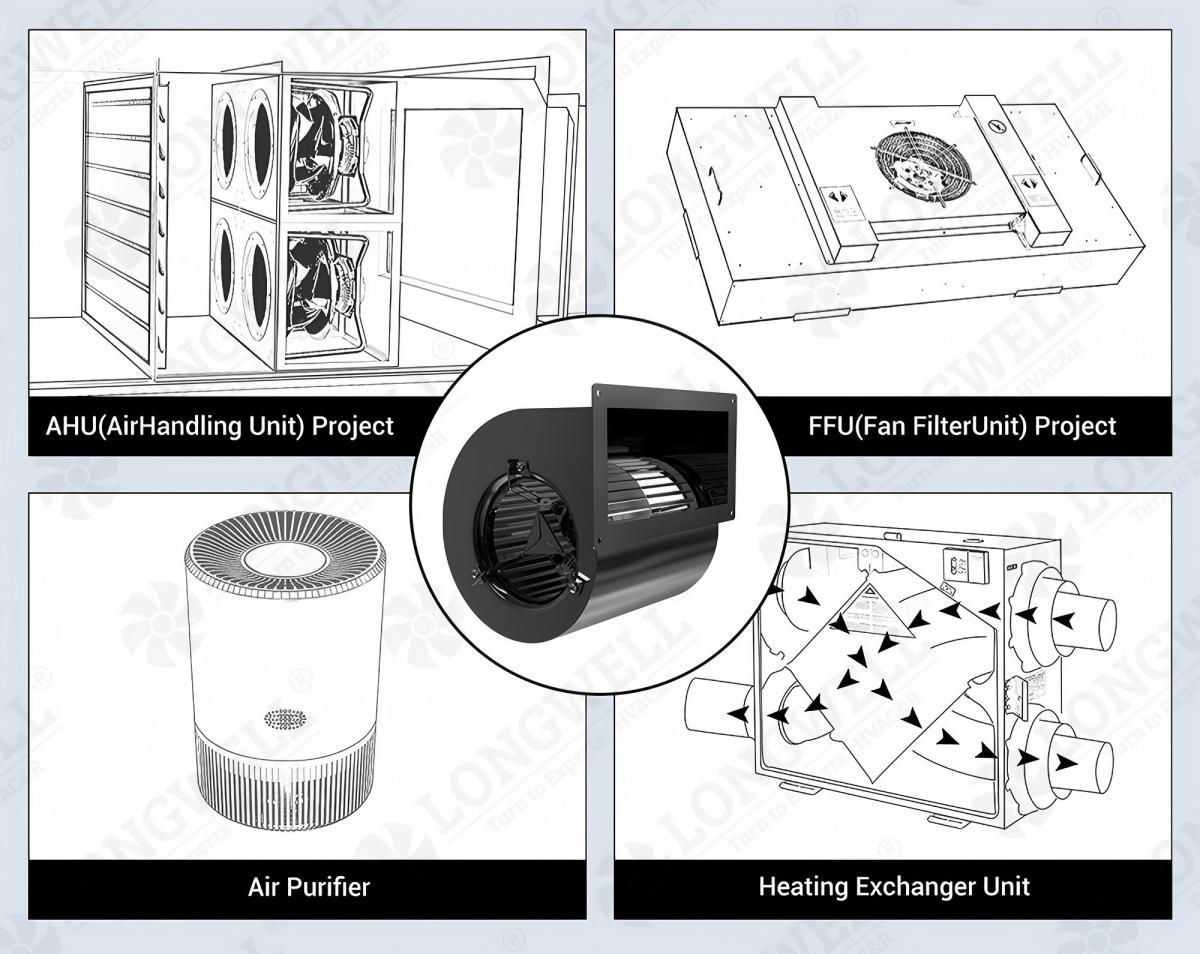
In large commercial spaces, the AHU is the lung of the building. Here, the forward curved centrifugal blower for air handling units is a staple due to its ability to move large volumes of air in a compact scroll housing. Modern retrofits often replace belt-driven AC blowers with direct-drive EC plug fans or blowers to eliminate belt dust and maintenance.
Industrial Dust Collection and Extraction
Woodworking shops, metal fabrication plants, and chemical processing facilities rely on negative pressure to remove particulates. These systems have high resistance. A high pressure centrifugal blower for dust collection must maintain suction even as filter bags become coated with dust.
Electronics and Cabinet Cooling
Heat is the enemy of reliability. Centrifugal blowers are used to spot-cool VFD cabinets, server racks, and medical imaging equipment. The high velocity allows the air to penetrate dense component layouts more effectively than axial fans.
Why Longwell is Your Trusted Partner in China
Sourcing from China offers cost advantages, but the distinction between a “cheap supplier” and a “manufacturing partner” is quality assurance and R&D depth.
Advanced R&D and EC Technology
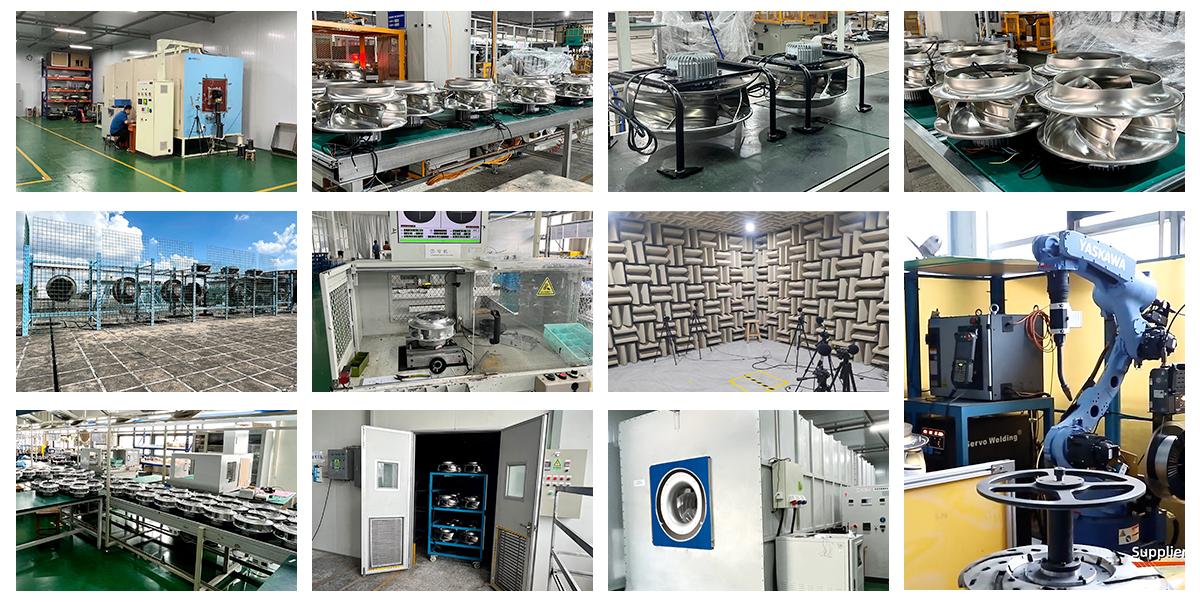
At Longwell, we don’t just assemble parts; we design the aerodynamics and the electronics. Our EC motors are developed in-house to ensure perfect integration with our impellers. This results in energy-efficient options that meet ErP 2015/2020 standards and help your projects achieve LEED or other green building certifications.
About LONGWELL
Ningbo Longwell Electric Technology Co., Ltd. (Website: www.longwellfans.com) is a professional manufacturer of HVAC fans and motors. We provide a full range of aerodynamic products including centrifugal fans, axial fans, cross-flow fans, and EC/DC/AC motors. Our products are widely used in HVAC, refrigeration and cold chain, electronic cooling, and industrial purification fields. With over a decade of experience, we bridge the gap between Chinese manufacturing efficiency and Western quality standards.
Customization and OEM Services
Off-the-shelf isn’t always the answer. Whether you need a specific mounting bracket, a customized PWM control curve, or a specialized connector for rapid assembly, Longwell acts as an extension of your engineering team. This flexibility makes us a top contender for the title of best centrifugal blower fan supplier in China.
 Installation and Maintenance Best Practices
Even the best fan will fail if installed poorly.
Mitigating System Effect
“System effect” occurs when air enters the fan turbulently due to an elbow or obstruction placed too close to the inlet. This drastically reduces performance. Always ensure there is a straight run of ductwork (typically 2.5x the duct diameter) leading into the blower inlet.
Vibration Isolation
While Longwell fans are dynamically balanced, mounting them on vibration isolators (spring or rubber mounts) prevents structure-borne noise from traveling through the building frame. This is crucial when installing a low noise centrifugal blower for HVAC in residential or office complexes.
Routine Checks
· Impeller Inspection: Check for dust buildup on blades, which can cause imbalance.
· Bearing Monitoring: Listen for grinding noises. Longwell uses high-quality ball bearings (often NSK or NMB) rated for 30,000 to 50,000 hours, but harsh environments can reduce this lifespan.
 Conclusion
Selecting a centrifugal blower is a balance of physics and economics. You need high static pressure to overcome system resistance, energy efficiency to lower operating costs, and reliability to protect your brand reputation. By partnering with a dedicated manufacturer like Longwell, you gain access to premium industrial centrifugal blower fans for ventilation and HVAC without the premium price tag.
Whether you are retrofitting an old AHU or designing a new dust collection system, our engineering team is ready to assist with sizing and selection.
Ready to optimize your air movement system?
Browse our full catalog of Centrifugal Blower Fans or contact our engineering team today for a custom simulation and quote.
FAQ: Centrifugal Blower Fans
Q1: What is the main difference between a centrifugal blower and an axial fan?
A: An axial fan moves air parallel to the shaft (like a desk fan) and is best for high volume, low pressure. A centrifugal blower pushes air out radially 90 degrees from the intake, creating much higher static pressure, making it suitable for ducted systems and high-resistance applications.
Q2: How do I know if I need a forward curved or backward curved blower?
A: Use a forward curved centrifugal blower for clean air applications requiring high volume at low-to-medium pressure (like residential HVAC). Choose a backward curved blower for high-pressure applications, better energy efficiency, or environments where the air might contain some particulates.
Q3: Why are EC motors recommended for centrifugal blowers?
A: EC (Electronically Commutated) motors combine the efficiency of DC motors with the ease of AC power. They offer significant energy savings (up to 30-50% over AC), run cooler, and provide easy speed control without VFDs, which is essential for modern variable air volume (VAV) systems.
Q4: Can Longwell customize the mounting or voltage for my specific equipment?
A: Yes. As a leading centrifugal blower fan supplier in China, Longwell offers extensive OEM services. We can customize voltage (115V/230V/380V), mounting flanges, connectors, and control logic to fit your specific manufacturing line.
Q5: How do I reduce the noise of my centrifugal blower?
A: Start by selecting a low noise centrifugal blower for HVAC correctly sized so it operates near its peak efficiency point. Additionally, ensure proper vibration isolation mounting, use flexible duct connectors, and ensure the inlet airflow is smooth and unobstructed.
Q6: What maintenance does a centrifugal blower require?
A: Direct-drive blowers (like those from Longwell) require very little maintenance. Primarily, you should periodically clean the impeller blades to prevent imbalance and inspect the condition of the bearings. Belt-driven units require regular belt tensioning and replacement.