Commercial Air Conditioner Fan Blades: An OEM Guide to Custom Cooling Solutions
The efficiency of your entire HVAC system often hangs by a thread—or more accurately, spins on a hub. Whether you are designing a new rooftop unit (RTU) or retrofitting an aging industrial chiller, the air conditioner fan blade is not just a moving part; it is the aerodynamic heart that dictates airflow, noise levels, and energy consumption.
For HVAC engineers and procurement managers, choosing the right impeller or blade is rarely a “pick-and-place” task. Standard off-the-shelf components frequently fail to meet specific static pressure requirements or corrosion resistance standards needed in harsh environments.
In this guide, we will dive deep into the engineering behind custom air conditioner fan blades—from selecting the right materials to determining the correct diameter—and why partnering with a specialized OEM air conditioner fan blade factory like Longwell can save your project from costly inefficiencies.
The Hidden ROI: The Cost of the Wrong Blade
Before we discuss customization, we must understand the stakes. Using a generic or poorly sized blade in a commercial air conditioning system is not just an engineering oversight; it is a financial risk.
· Reduced Airflow (CFM): If the pitch or diameter is off by even a fraction of an inch, the system may struggle to exchange heat efficiently, leading to immediate compressor strain.
· Increased Noise Pollution: Poorly balanced blades or incorrect aerodynamic profiles cause turbulence, resulting in noise complaints in office buildings or residential zones.
· Premature Motor Failure: A blade that is too heavy or has an aggressive pitch without a matching motor can cause overheating and burnout.
When you source a HVAC air conditioner fan blade, you are looking for the perfect balance between static pressure capability and airflow volume.
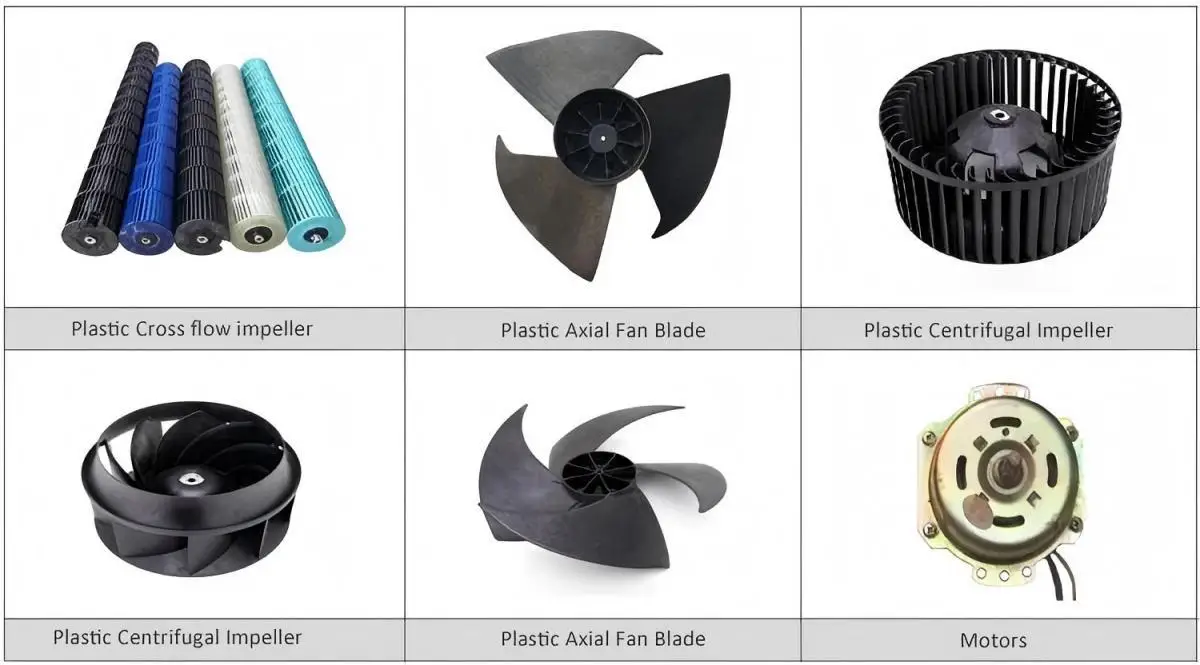
Anatomy of Airflow: Which Blade Type Do You Need?
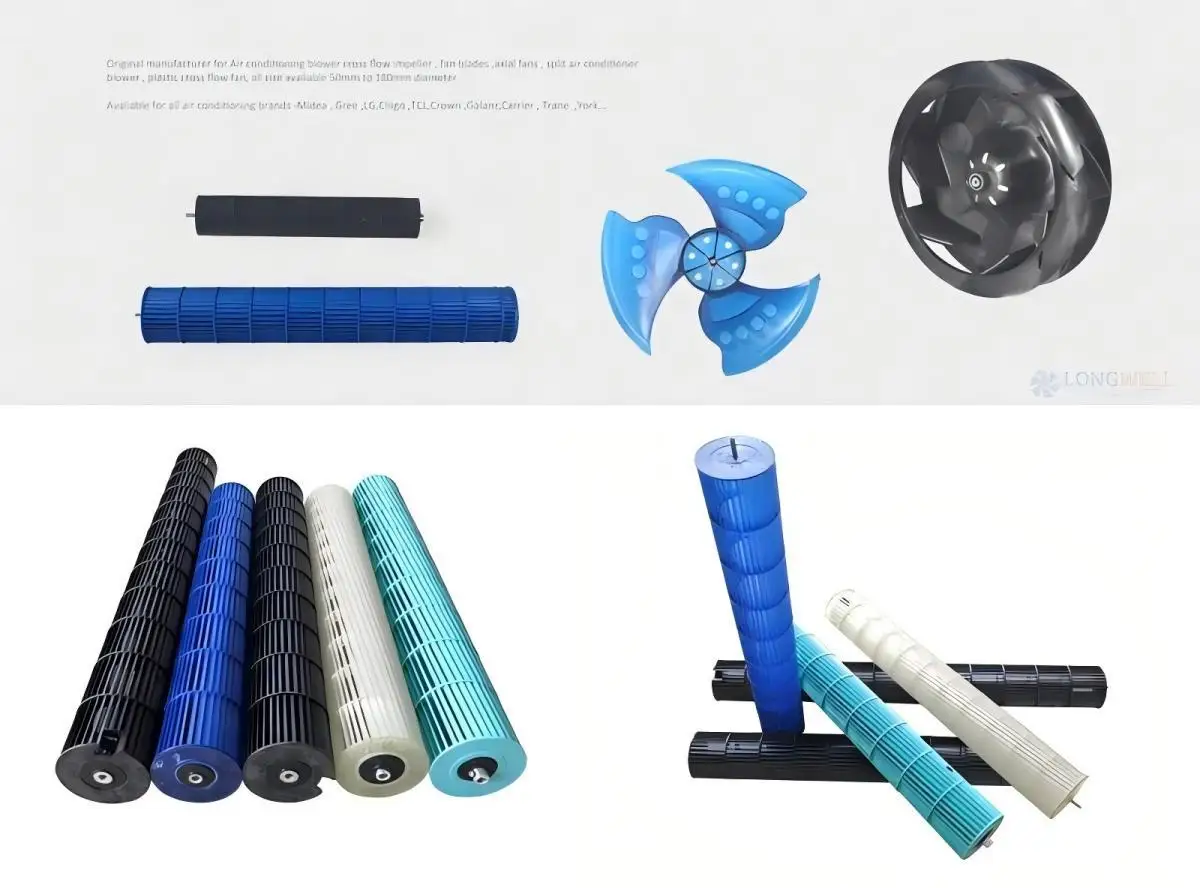
Commercial and industrial cooling systems utilize different fan technologies depending on the application. Understanding the distinction is the first step in customization.
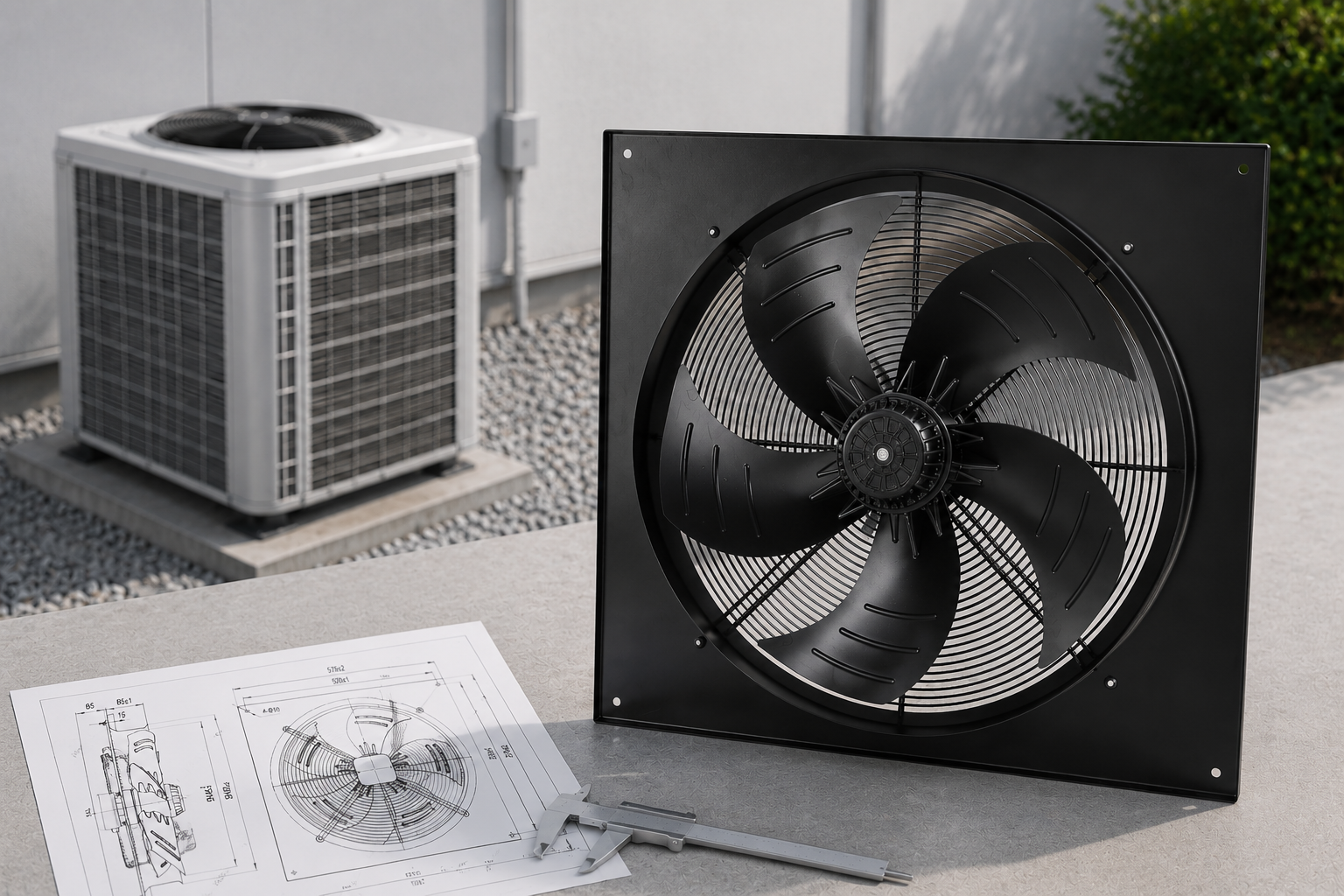
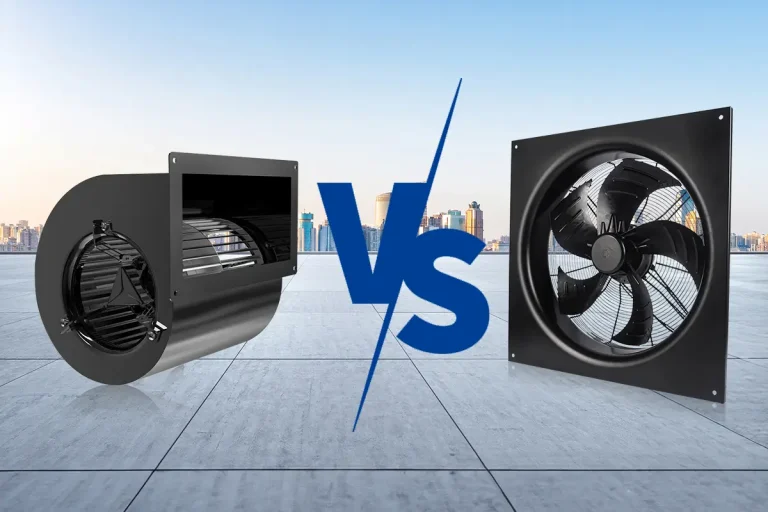
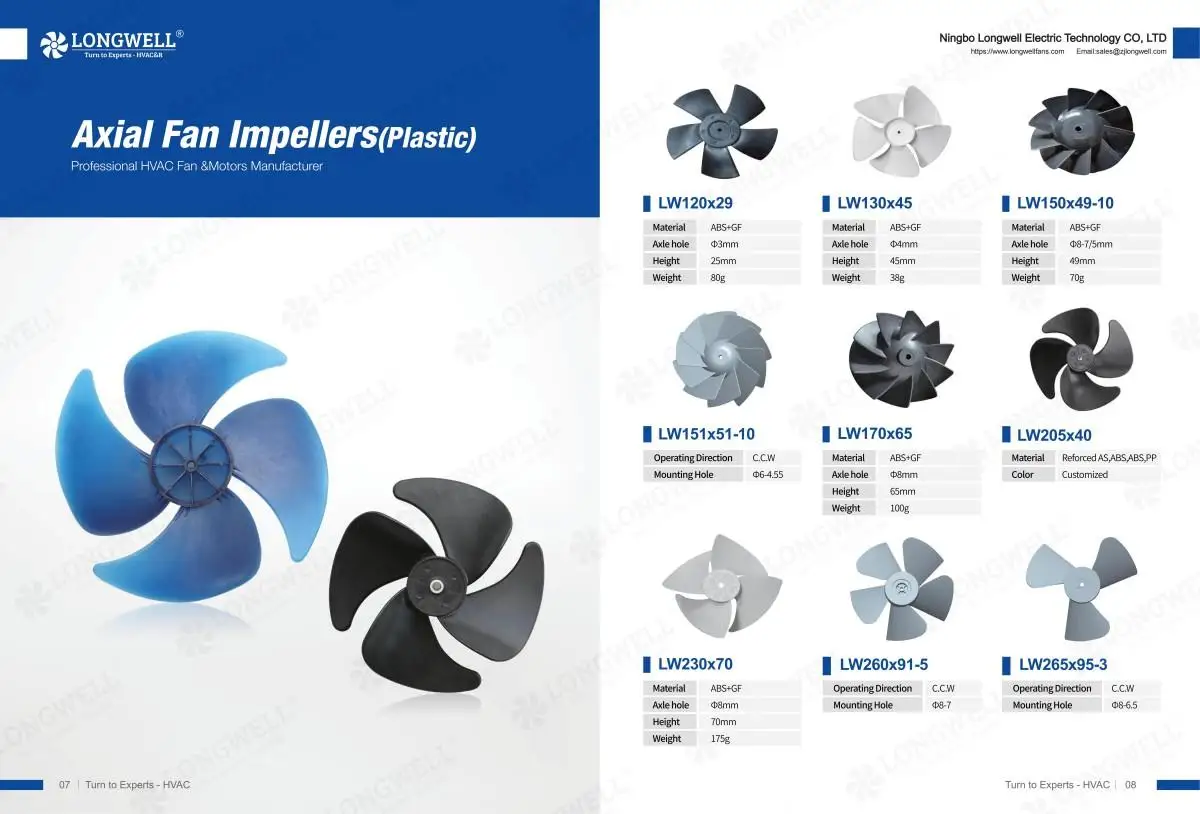
1. Axial Fan Blades (The Outdoor Workhorse)
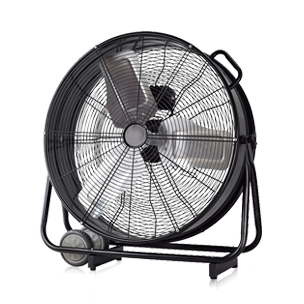
These are the most common blades found in outdoor condensing units, moving air parallel to the shaft.
· Best For: Condensers, heat exchangers, and cooling towers requiring high airflow volume at low to medium static pressure.
· Longwell Customization: We offer varying numbers of blades (3 to 7 wings) and adjustable pitch angles to match specific motor RPMs.
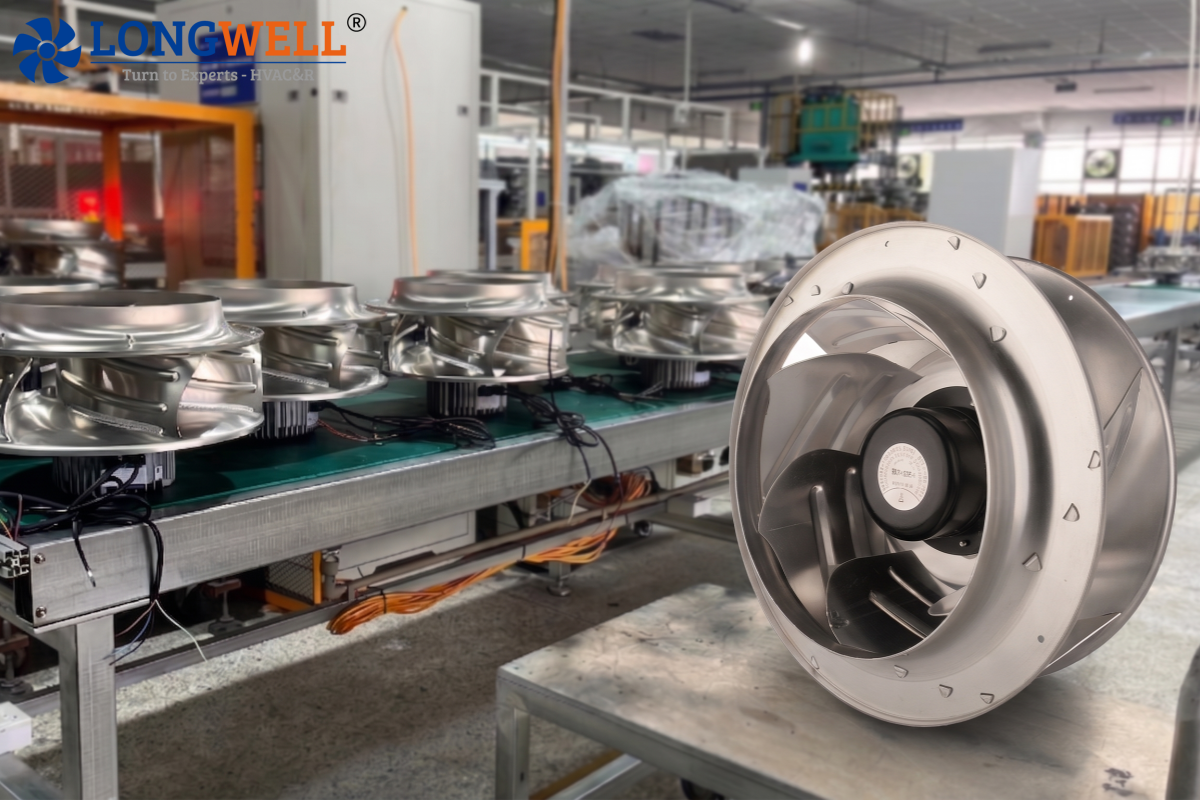
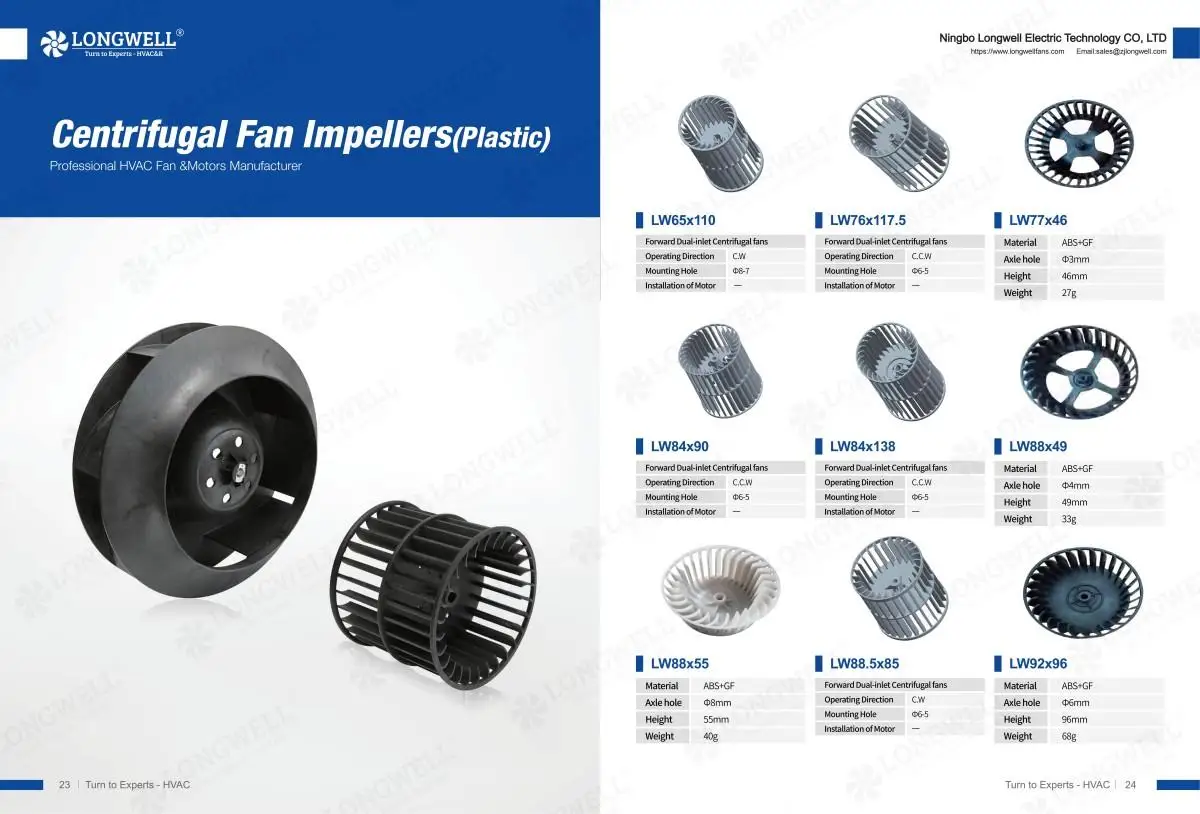
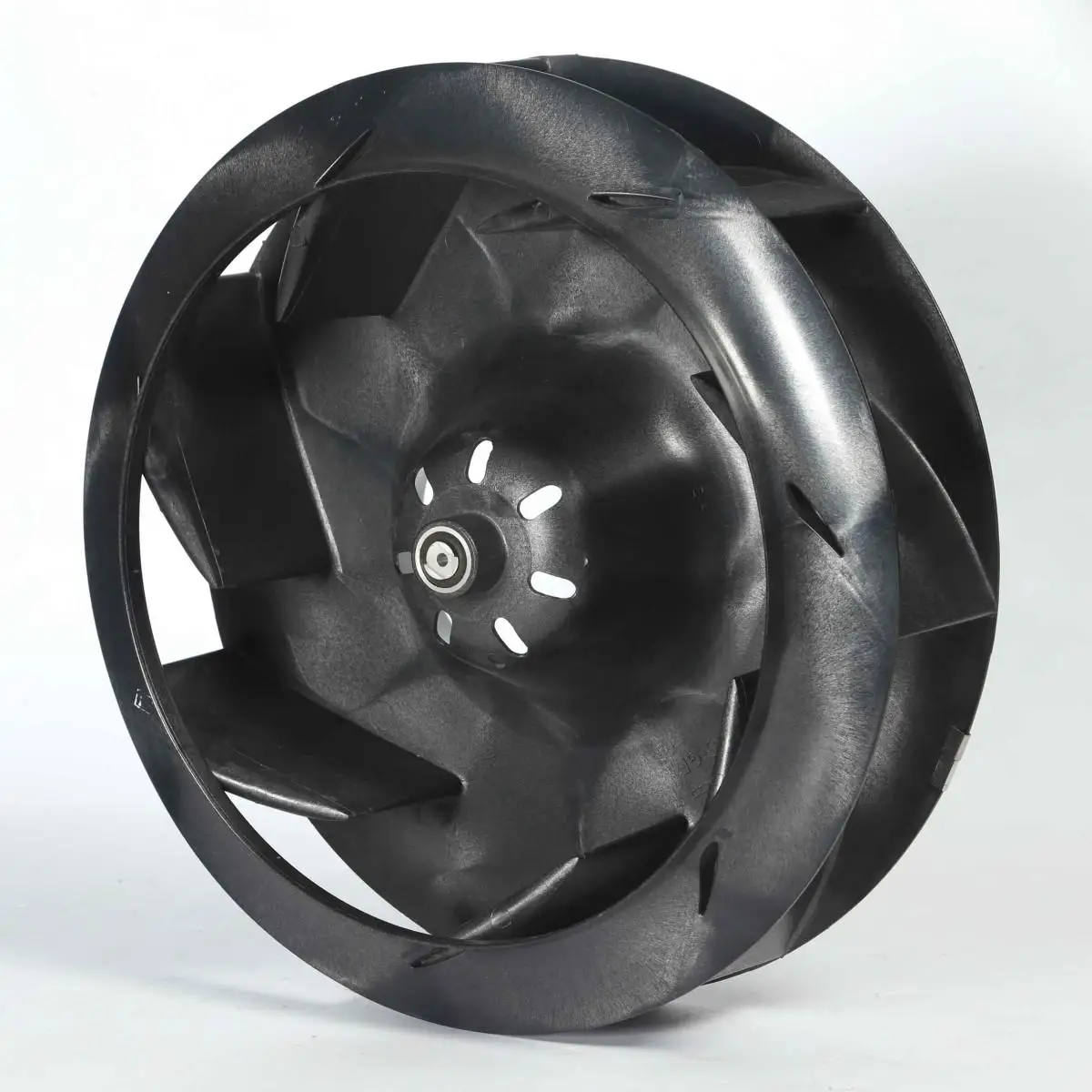
2. Centrifugal Impellers (The Pressure Master)
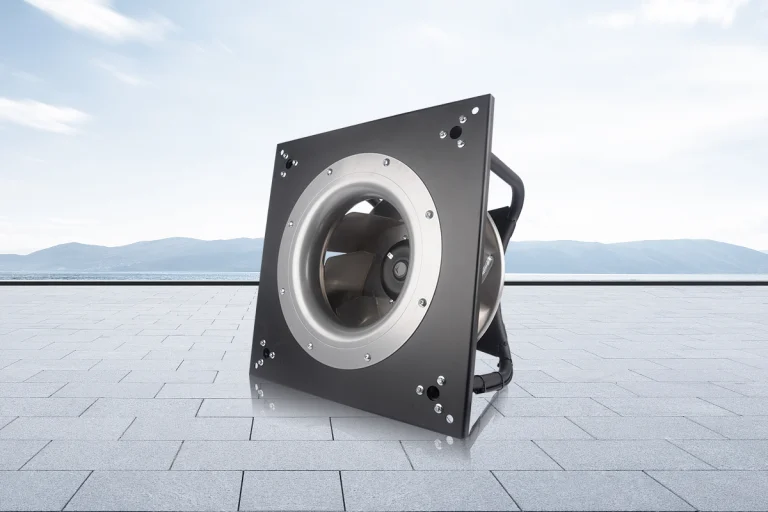
Often referred to as blower wheels, these draw air in axially and discharge it radially.
· Best For: Air Handling Units (AHUs) and ducted systems where the fan must handle high static pressure to push air through filters and long ductwork.
· Options: Forward-curved for quieter operation with more airflow, or Backward-curved for high efficiency and non-overloading characteristics.
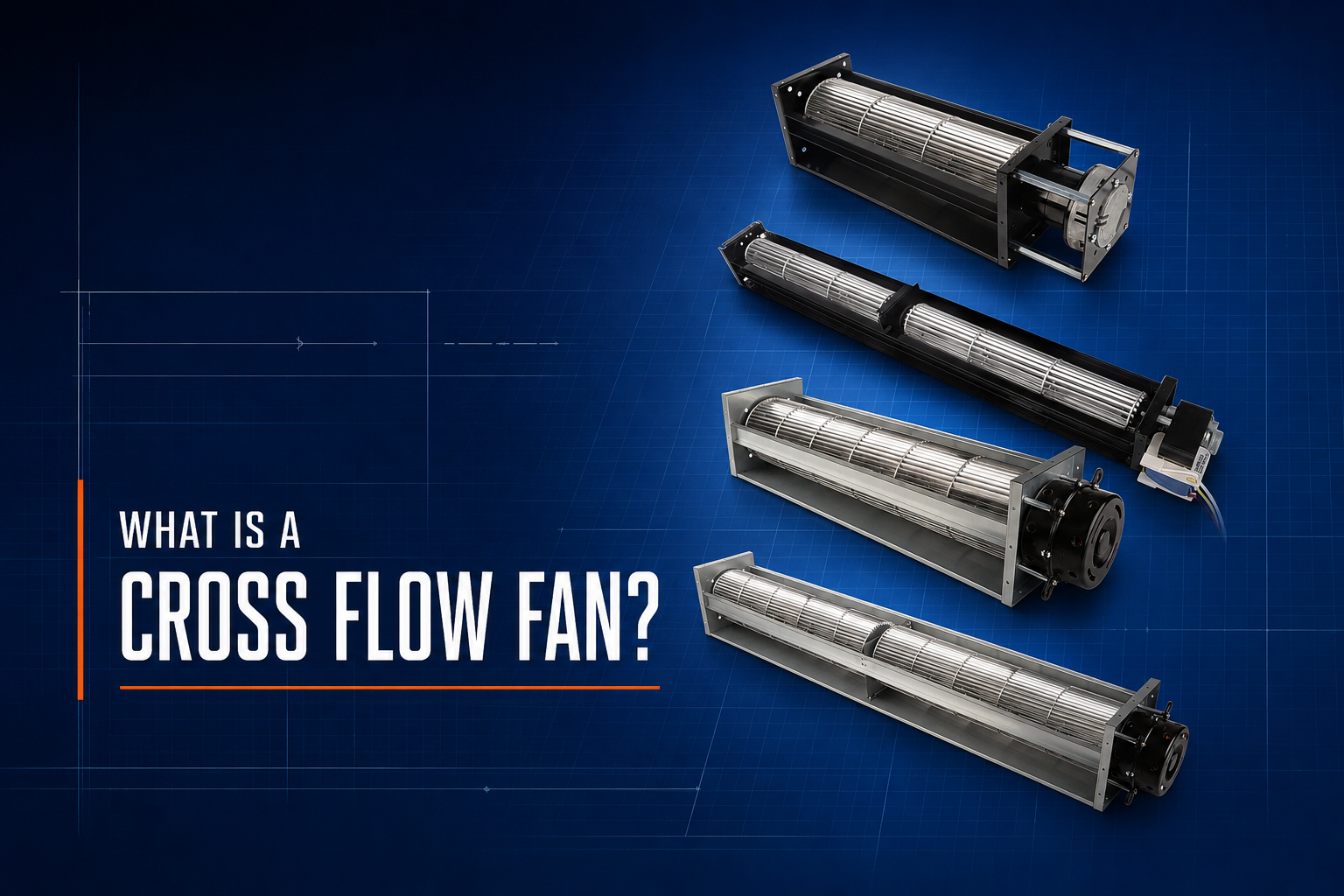
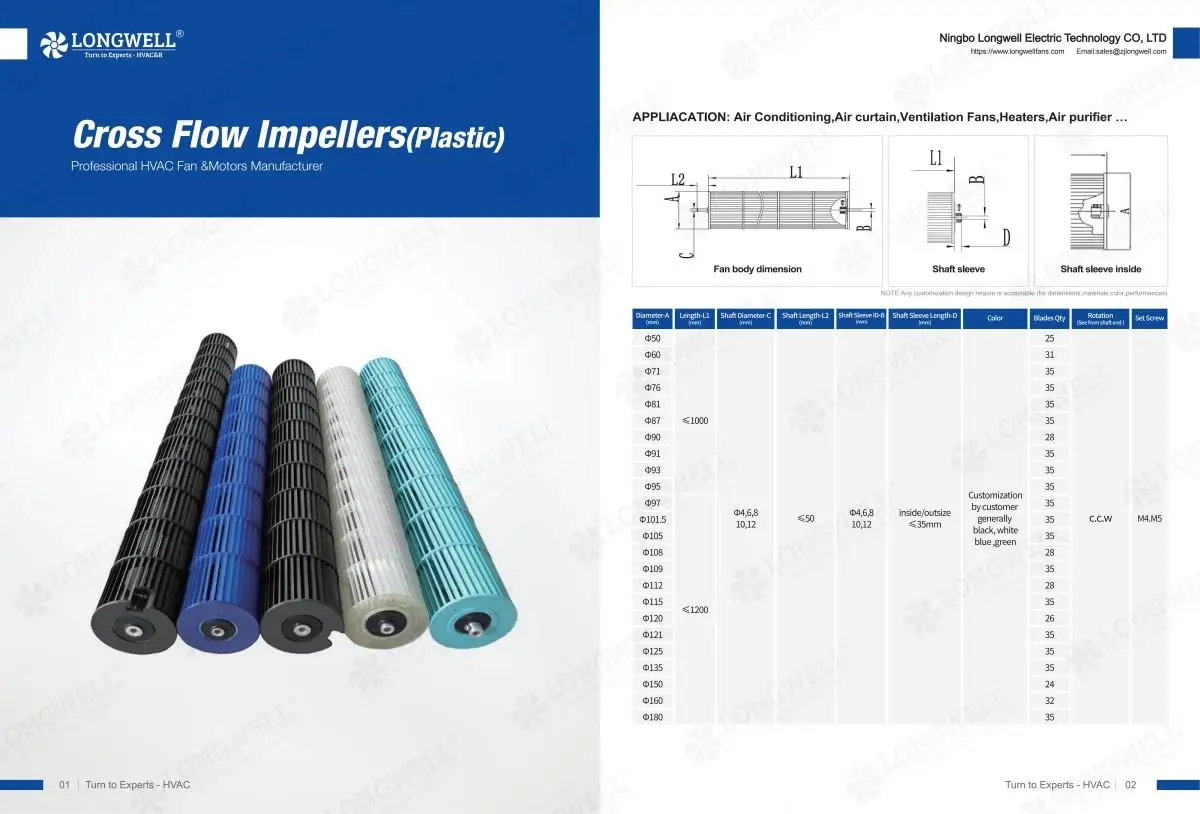
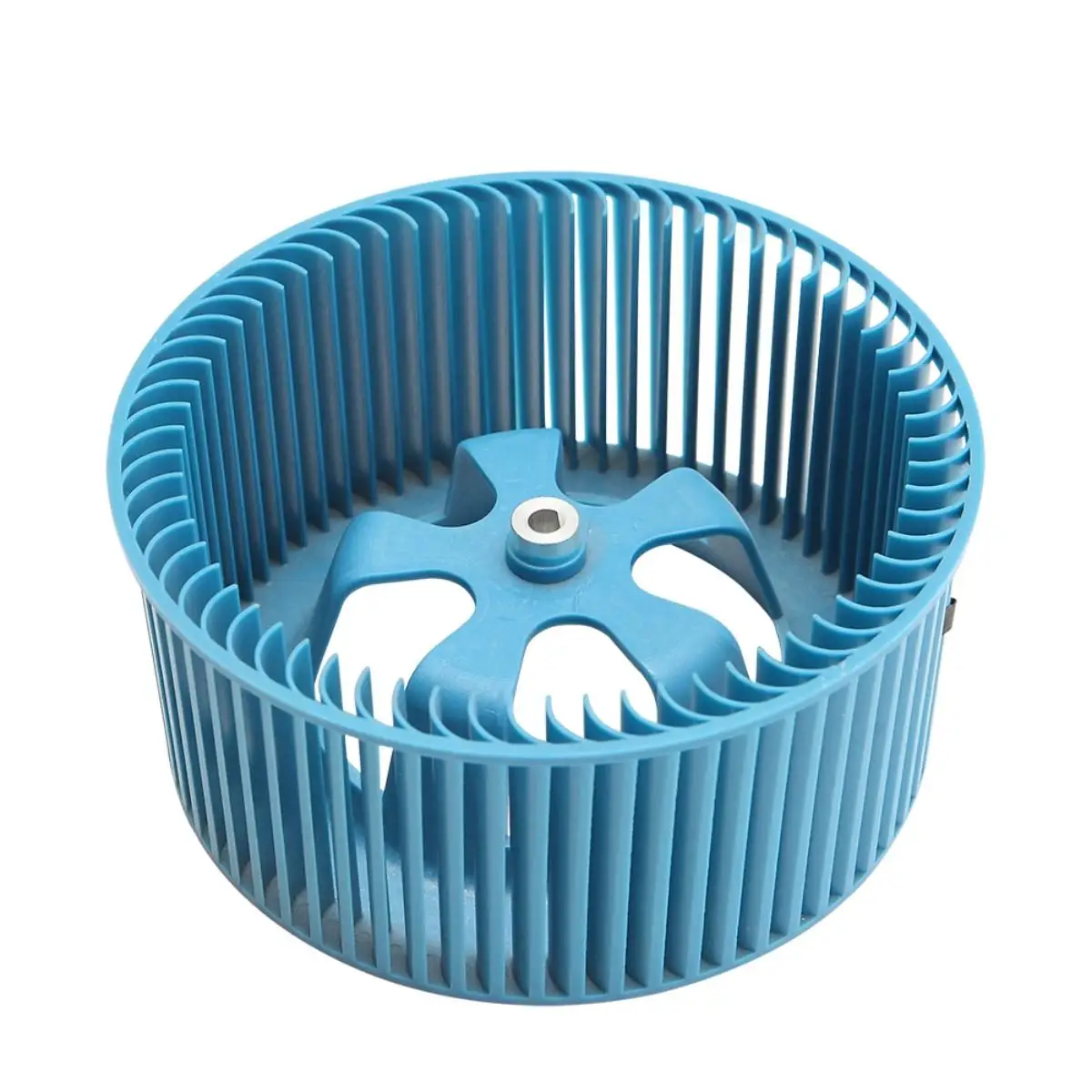
3. Cross-Flow Fan Blades (The Silent Stream)
These are long, cylindrical wheels often used in ductless split systems.
· Best For: Wall-mounted indoor units and air curtains requiring a wide, uniform airflow with very low noise.
Engineering the Perfect Fit: Critical Specs for Customization
As a leading air conditioner fan blade manufacturer, we know that details matter. When you send an inquiry to an OEM factory, these are the specs that will define your product’s success.
1. Determining the Air Conditioner Fan Blade Diameter
The diameter is the most fundamental specification, but the secret lies in the “Tip Clearance”.
· The Rule: If the gap between the blade tip and the housing is too large, air will recirculate (leak back), killing efficiency. If it’s too tight, you risk mechanical interference.
· 2Measurement: Always measure from the tip of one blade to the tip of the opposite blade (straight across). We manufacture blades ranging from small 200mm units to large 1000mm+ blades.
2. Material Selection: Durability vs. Weight
Your operating environment dictates the material.
|
Material |
Pros & Cons |
Best Application |
|---|---|---|
|
Aluminum Alloy |
Lightweight and rust-resistant, reducing motor stress. |
Coastal areas and high-end commercial condensers. |
|
Galvanized Steel |
Strong and cost-effective, but heavier and prone to rust if the coating is damaged. |
Standard industrial HVAC units in dry environments. |
|
Reinforced Plastic (PP/PAG) |
Can be molded into complex aerodynamic shapes (winglets) for low noise; corrosion-proof. |
Modern residential and commercial units. |
|
Stainless Steel |
Ultimate corrosion resistance but comes with high weight and cost. |
Chemical plants and food processing cooling. |
3. Pitch and Wing Count
A blade with a steeper pitch moves more air but requires more horsepower (HP). At Longwell, we use simulation software to calculate the optimal pitch angle that maximizes CFM without overloading your specific motor model. Generally, more blades (e.g., 5 or 7) result in quieter operation compared to 2 or 3 blades as they smooth out pressure pulses.
4. Hub and Shaft Attachment
The interface between the blade and the motor shaft is a common failure point. You must specify the hub type (clamp-on, set-screw, or keyed) and the rotation direction (Clockwise or Counter-Clockwise) looking from the discharge side.
Real-World Applications: Longwell Case Studies
To understand the impact of a high-quality HVAC air conditioner fan blade, let’s look at two recent projects where Longwell provided custom solutions.
Case Study 1: The Desert Cooling Project (Middle East)
· The Challenge: An HVAC manufacturer in Dubai faced rusting steel blades and overheating motors due to 50°C+ ambient temperatures.
· The Longwell Solution: We engineered a custom Aluminum Alloy Axial Fan Blade.
· The Result: The switch to aluminum reduced rotating mass by 30%, alleviating motor stress. The client reported a 15% reduction in energy consumption and extended motor life expectancy by 2 years.
Case Study 2: Retrofitting a Quiet Office Complex (USA)
· The Challenge: A Chicago facility manager needed to eliminate a low-frequency “hum” from AC units that was disturbing law firm tenants.
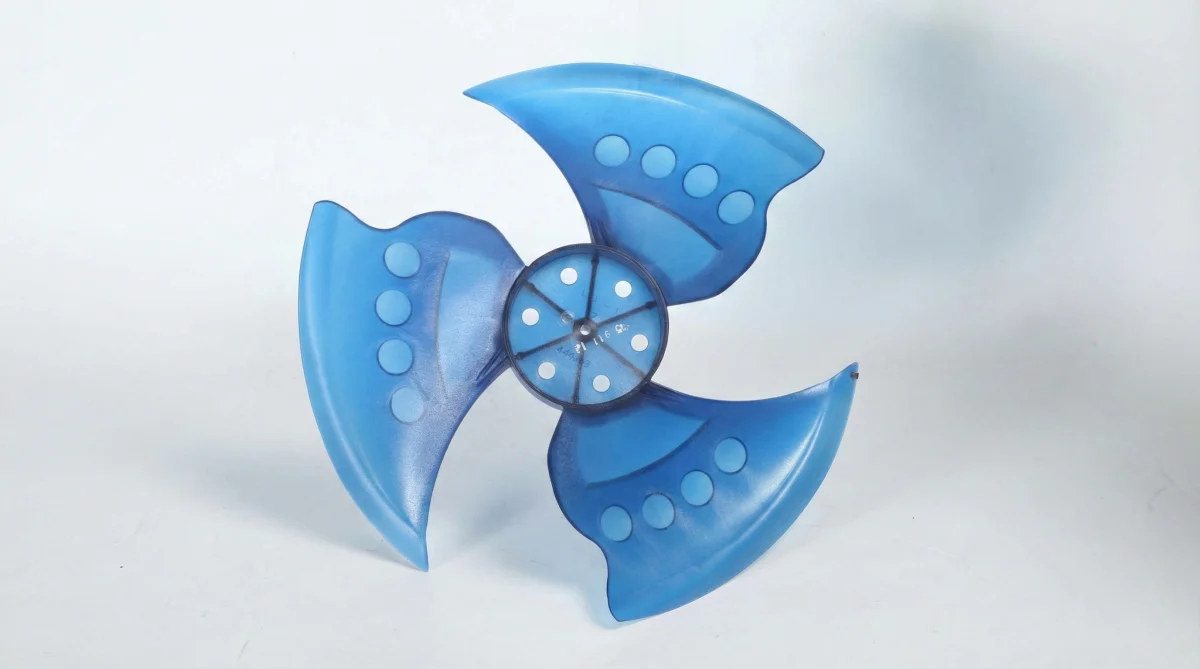
· The Longwell Solution: We supplied a custom-molded, sickle-shaped Plastic (PAG) fan blade with serrated trailing edges designed to reduce air turbulence.
· The Result: Noise levels dropped by 6 dB(A), eliminating the hum and securing a contract renewal for the facility management company.
Why Choose an OEM Air Conditioner Fan Blade Factory?
You might be tempted to buy generic replacements, but for manufacturing or large-scale facility management, working directly with a factory offers distinct advantages.
1. Dynamic Balancing (G6.3 Standard): A wobbly fan blade kills bearings. At Longwell, every blade undergoes dynamic balancing testing to ensure the center of gravity aligns with the axis of rotation.
2. Mold Development: If you need specific airflow data (e.g., 5000 CFM at 0.5″ WG), we can design blade geometry to hit those numbers precisely.
3. Scalability: Whether you need 50 units for a retrofit or 5,000 for a production run, an OEM factory manages the supply chain stability that distributors cannot.
“We switched to Longwell for our 24-inch condenser blades… The consistency in the pitch angle and the quality of the powder coating is far superior to our previous local supplier.”
— Mark D., Senior Procurement Manager, HVAC OEM (Texas, USA)
Installation & Maintenance Tips
Even the best Air Conditioner Fan Blade needs proper handling.
1. Check the Rotation: Before securing the hub, briefly power the motor. A backward-spinning axial fan moves very little air and overloads the motor.
2. Secure the Grub Screw: Always use a torque wrench to tighten the set screw onto the flat part of the motor shaft. A loose blade can fly off and destroy the condenser coil.
3. Clean Regularly: Dust buildup changes the aerodynamics and adds weight, throwing the balance off.
Conclusion: Upgrade Your Airflow Strategy
The fan blade is a small component with a massive impact. Whether you need a corrosion-resistant aluminum propeller for a coastal resort or a silent plastic impeller for a hospital, the “one-size-fits-all” approach is obsolete.
By partnering with a dedicated air conditioner fan blade manufacturer like Longwell, you gain access to precision engineering, custom materials, and the technical expertise required to optimize your HVAC system’s performance.
Ready to optimize your cooling system?
Browse our full range of Air Conditioner Fan Blades or contact our engineering team today to discuss your custom specifications. Let’s design the perfect airflow solution for your project.
FAQ: Common Questions About AC Fan Blades
Q1: How do I measure air conditioner fan blade diameter correctly?
Always measure from the furthest tip of one blade to the furthest tip of the opposite blade. If the fan has an odd number of blades (like 3 or 5), measure from the tip of one blade to the center of the hub, and multiply by two.
Q2: Can I replace a metal fan blade with a plastic one?
Yes, in many cases you can, and it often reduces noise and motor load. However, you must ensure the plastic material (usually reinforced nylon or PAG) is rated for the operating temperature of your unit.
Q3: What is the advantage of a serrated (saw-tooth) fan blade edge?
Serrated edges, often found on our advanced “owl wing” designs, help break up air turbulence at the blade tip. This significantly reduces wind noise and improves aerodynamic efficiency.
Q4: Does Longwell accept OEM orders for custom blade designs?
Yes, absolutely. As a specialized OEM factory, we can create custom molds based on your drawings or samples, adjusting diameter, bore size, material, and pitch angle to meet your exact requirements.