Meeting the Challenge of High Resistance: The Critical Role of High Static Pressure Centrifugal Fans in Modern HVAC and Industrial Cooling
Foreword
In modern architectural and industrial design, demands for air quality and equipment integration are increasing. This means more efficient filters (HEPA), more complex duct networks, and more compact equipment spaces. For system design engineers, this presents a common challenge: a sharp increase in system impedance.
Imagine trying to drink a thick milkshake through a long, thin straw. You have to suck very hard to make the milkshake flow. In a ventilation system, the fan is the source of that “suction,” and the “impedance” is that thin straw.
If your fan cannot generate enough “thrust” to overcome this resistance, airflow will stagnate, leading to equipment overheating, substandard air purification, or even total system paralysis. This “thrust” is the core topic we are discussing today: High Static Pressure.
In these high-impedance environments, ordinary axial fans or low-pressure fans often fail to provide enough pressure to push the airflow, resulting in airflow attenuation, increased energy consumption, and even system overheating. As a fan manufacturing expert with decades of experience, Ningbo Longwell Electric Technology Co., Ltd. (LONGWELL) has developed a series of High Static Pressure Centrifugal Fans to address this pain point, providing reliable and efficient aerodynamic solutions for high-resistance systems.
What is Static Pressure? Why is it Crucial in Selection?
In fan selection, we typically look at two parameters: Airflow (CFM or m³/h) and Pressure (Pa). Pressure is further divided into Static Pressure and Dynamic Pressure.
- Dynamic Pressure: The kinetic energy generated when air flows.
- Static Pressure: The potential pressure exerted by air against duct walls or obstacles. Simply put, static pressure is the fan’s ability to “squeeze” air through filters, elbows, and other components by overcoming system resistance.
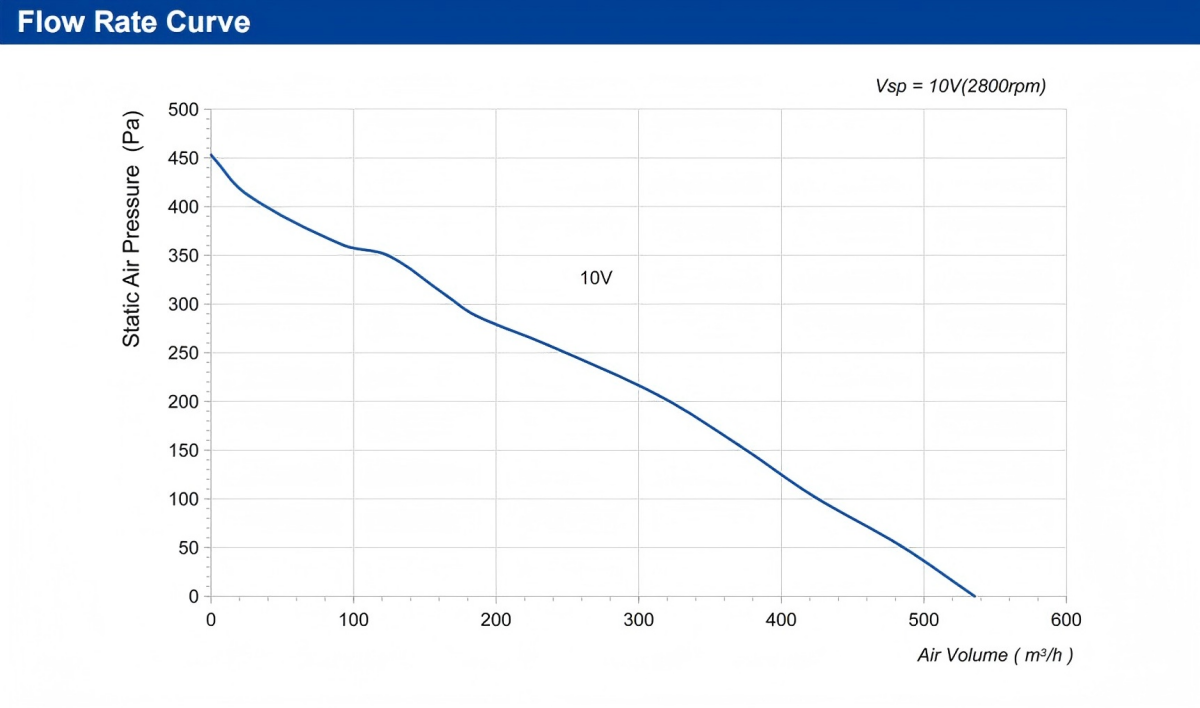
To choose the right fan, one must first understand the significance of “Static Pressure” in practical applications. Currently, the following three trends are driving a sharp rise in market demand for High Static Pressure Centrifugal Fans:
- Higher Air Cleanliness Standards: Whether in hospital operating rooms, pharmaceutical workshops, or high-end commercial buildings, the use of HEPA and even ULPA filters is becoming increasingly common. While these high-density filters intercept fine dust, they also constitute a massive “wind wall.”
- Compact Equipment Design: In scenarios such as data center cabinets and energy storage containers, to accommodate more computing power or battery components within a limited space, heat dissipation channels are compressed to the extreme. Airflow must possess strong penetrating power to carry away heat.
- Energy Efficiency and Heat Recovery: The enthalpy exchange cores widely used in fresh air systems (ERV/HRV) recover energy but also increase the frictional resistance along the path.
In these scenarios, if the fan’s static pressure is insufficient, the actual airflow will be far below the design value. By optimizing the impeller design, LONGWELL ensures that the fan maintains stable airflow output even when facing high resistance.
Core Technology Analysis: Backward Curved Impeller & EC Motor
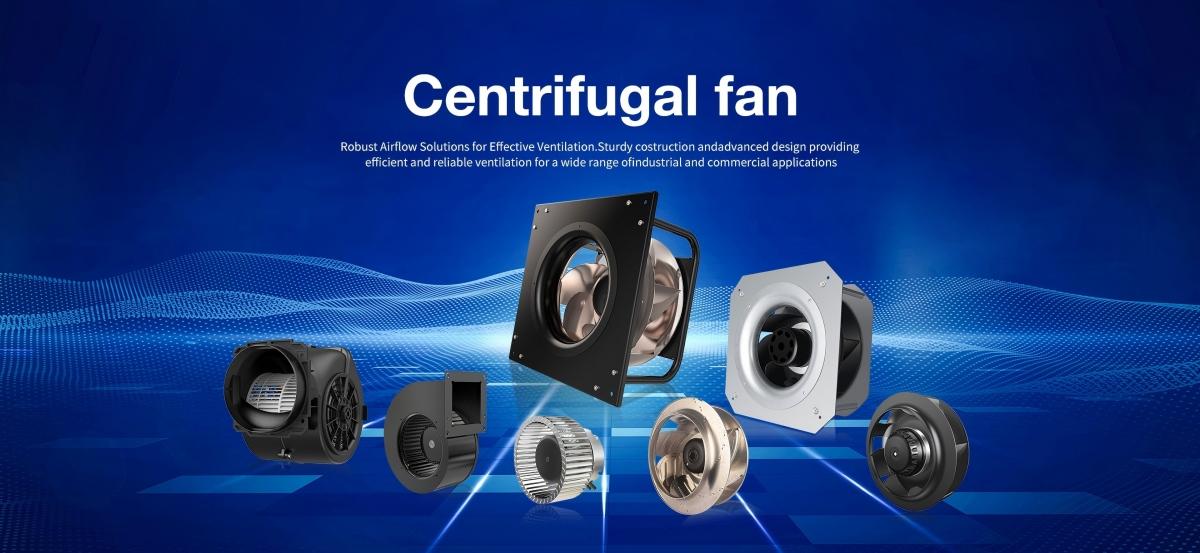
LONGWELL’s product line covers both forward and backward curved centrifugal fans, but for “high static pressure” requirements, we primarily recommend Backward Curved Centrifugal Fans combined with EC Technology.
2.1 Backward Curved Impeller: Born for High Pressure
Unlike forward curved impellers (squirrel cage) which rely on many blades to “grab” air for high volume but low static pressure, LONGWELL’s backward curved centrifugal impeller design offers the following physical advantages:
- Steep Pressure Curve: This means that even if system resistance (pressure drop) fluctuates—for example, as a filter gradually clogs with dust—the change in the fan’s airflow output is relatively small, ensuring system stability.
- High Efficiency & Non-Overloading: Backward curved impellers convert dynamic pressure into static pressure more efficiently, reaching up to 80% or more. At the same time, their power curve has “non-overloading” characteristics; even when running under low-resistance conditions, they will not burn out the motor due to current surges like forward curved fans might.
2.2 EC Motor Technology: Smart Speed Control & Energy Saving
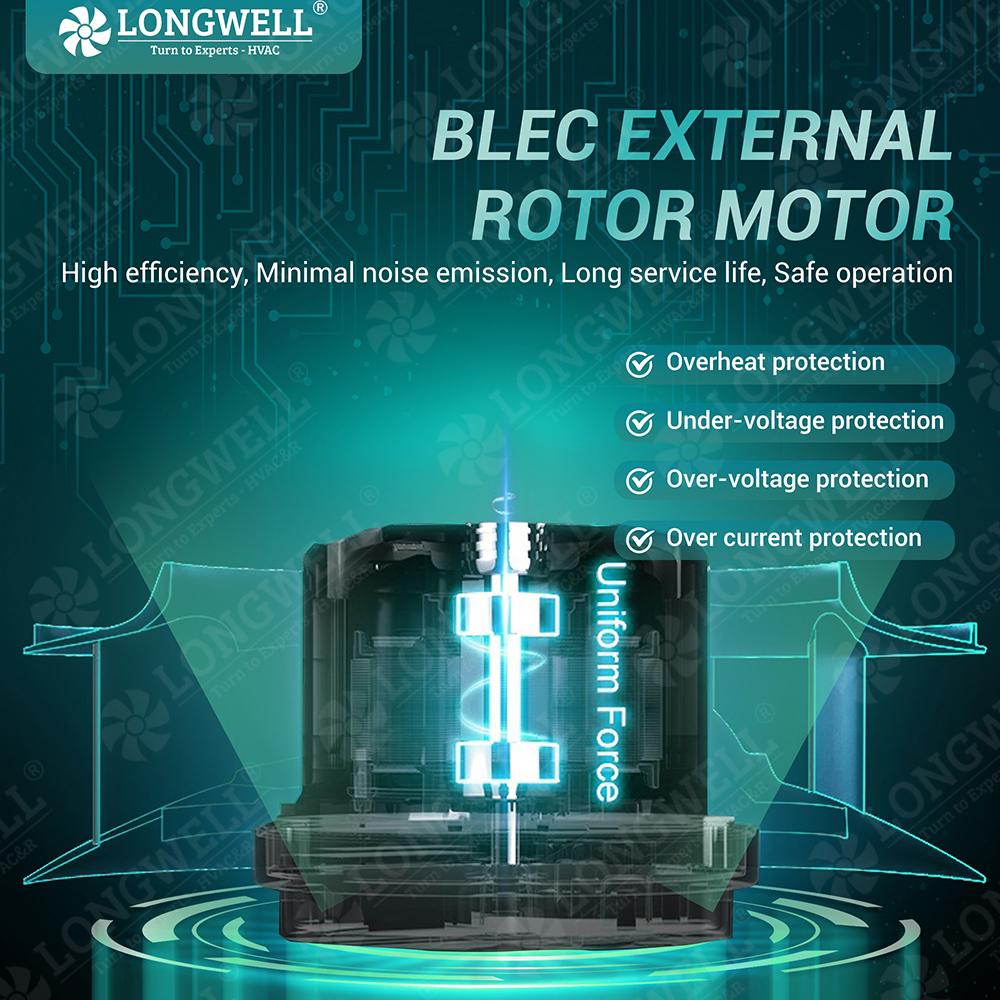
Traditional AC motors struggle with precise speed control, whereas LONGWELL’s entire range of high static pressure fans offers EC (Electronically Commutated) Motors as an option.
- Constant Airflow/Constant Pressure Control: Through 0 – 10V or PWM signals, EC fans can automatically adjust speed based on pressure sensor feedback. For instance, when a filter gets dirty and resistance increases, the fan automatically speeds up to maintain constant airflow.
- Compact Integrated Design: Using an external rotor structure, the motor is integrated directly inside the impeller, greatly shortening the fan’s axial dimension, making it easy to embed in compact precision air conditioners or fan boxes.
LONGWELL Solutions: The LWBD/LWBE Backward Curved Series
According to the technical parameters on our official website (www.longwellfans.com), we provide targeted high static pressure solutions for application scenarios of different scales.
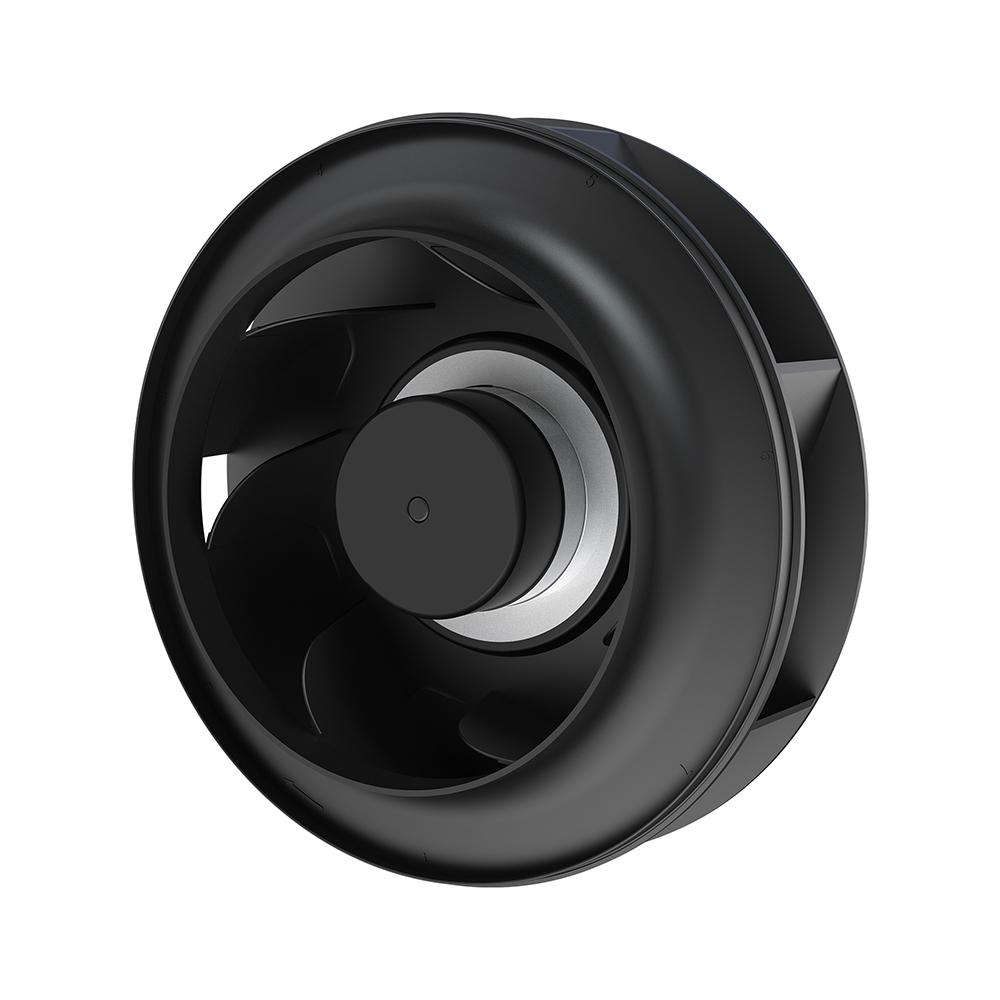
3.1 For Precision Electronic Cooling: LWBD Series (DC/EC Backward Centrifugal Fan)
This is a compact high-pressure fan designed specifically for telecom base stations, energy storage cabinets, and data centers.
- Typical Model: LWBD3G355 – 102NH – 04
- Key Parameters:
- Rated Voltage: 48V DC
- Max Static Pressure: 499 Pa
- Max Airflow: 2421 m³/h
- Noise: 75 dB(A)
- Application Comment: Achieving nearly 500 Pa of static pressure with just a 355mm impeller diameter allows it to easily penetrate high-density server components, preventing local hotspots.
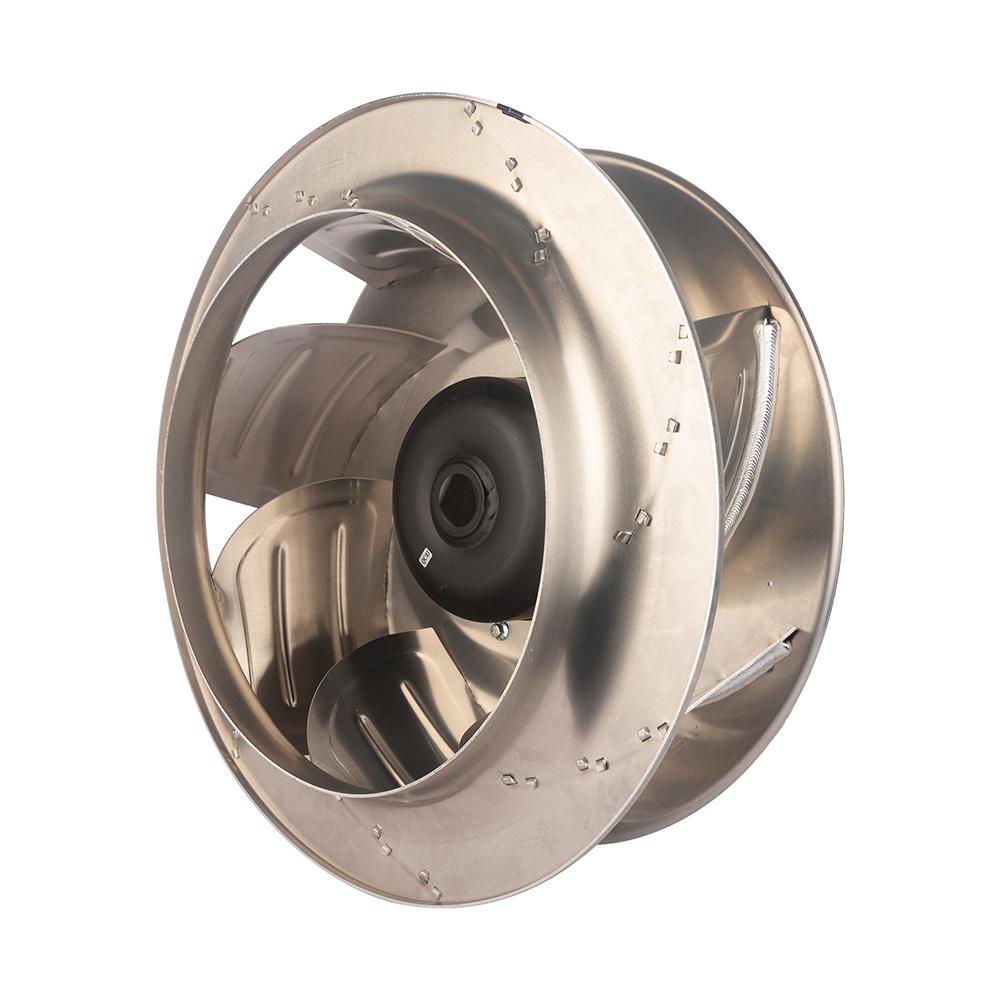
3.2 For Large Air Handling Units: LWBE Series (EC Plenum Fan / Plug Fan)
For large AHUs (Air Handling Units) or cleanroom retrofits, the LWBE series provides industrial-grade pressure reserves.
- Design Features: Plug Fan design (no scroll housing), installed directly inside the plenum chamber for more uniform air discharge and easier cleaning and maintenance.
- Performance Range:
- Impeller Diameter: Covers 250mm to 630mm
- Max Static Pressure Capacity: Up to 2200 Pa
- Max Airflow: Up to 23,000 m³/h (single unit)
- Application Comment: A static pressure capacity of up to 2200 Pa is sufficient to handle the total resistance of long-distance duct transmission and multi-stage filtration systems (Pre – filter + Medium + HEPA). Additionally, this series supports Fan Grid (Fan Wall) assembly, where multiple units are used in parallel to further enhance system redundancy and reliability.
Typical Application Scenarios: Where High Static Pressure Fans Excel
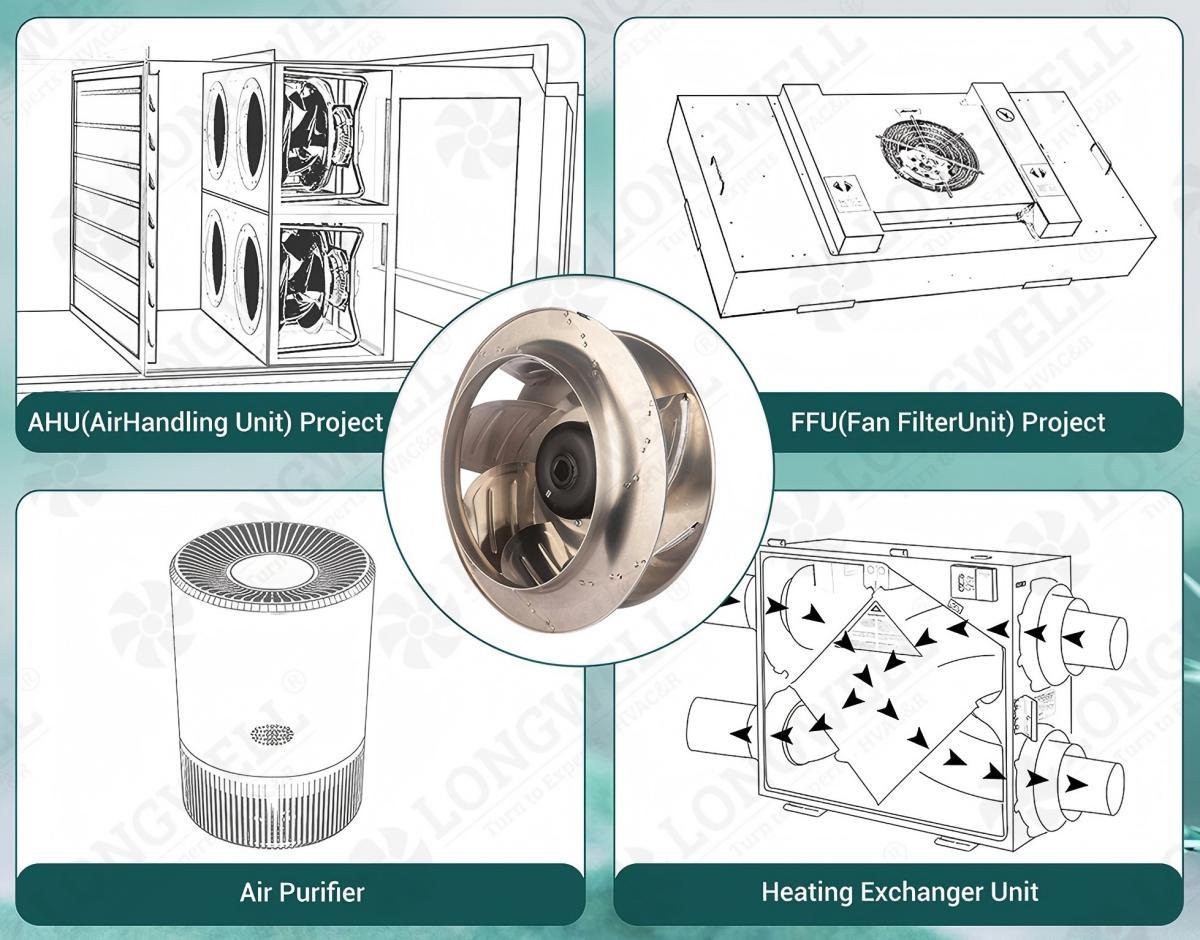
4.1 Cleanrooms & FFU Systems
In the semiconductor and pharmaceutical industries, FFUs (Fan Filter Units) must overcome the high resistance of HEPA/ULPA filters (usually with a final resistance of over 300 – 500 Pa).
LONGWELL Solution: We recommend using the DD series or LWBE series EC fans. Their high static pressure characteristics penetrate filters, and combined with Modbus communication, they allow for real-time monitoring and adjustment of wind speed, ensuring laminar flow speeds in the cleanroom always meet standards.
4.2 Data Centers & In-row Cooling
As AI computing power increases, cabinet heat density has risen sharply.
LONGWELL Solution: The LWBD series high static pressure fans serve as the core power for In-row Cooling, forcibly pushing cold air into the servers. The high efficiency of EC motors also significantly reduces the Data Center’s PUE (Power Usage Effectiveness) value.
4.3 Fresh Air Ventilation Systems (ERV)
Modern passive houses have extremely high requirements for airtightness, and introducing outdoor air requires passing through multiple layers of filtration.
LONGWELL Solution: Small to medium-sized (133mm – 310mm) backward curved centrifugal fans, with their compact size and high pressure head, become the ideal choice for residential and commercial fresh air units, ensuring fresh indoor air even when doors and windows are closed.
How to Select the Right High Static Pressure Fan?
As a professional OEM/ODM manufacturer, LONGWELL suggests customers pay attention to the following three points during selection to avoid “underpowered” situations or wasted energy:
- Accurately Calculate Total System Resistance: Do not look only at the “initial resistance” of the filter; be sure to calculate based on the “final resistance” (resistance at end of life) and reserve a pressure margin of about 20%.
- Focus on the Operating Point: The fan’s Max Static Pressure is a limit value at zero airflow, not the actual operating value. When selecting, ensure the fan’s operating point falls within the high-efficiency area of the performance curve, not on the edge.
- Consider Noise and Installation Space: High static pressure is often accompanied by higher speeds and noise. If the application is noise-sensitive (like an office), it is recommended to prioritize larger fans running at lower speeds, or adopt LONGWELL products with silent structural designs.
Choose the Right Partner to Calmly Face Wind Resistance Challenges
In the battle against air resistance, there is no “universal” fan, only the solution that best matches the system. Relying on over two decades of manufacturing experience, Ningbo Longwell Electric Technology Co., Ltd. (LONGWELL) is dedicated to providing global customers with High Static Pressure Centrifugal Fans featuring Real Data and Reliable Performance.
Whether you are designing the next generation of precision air conditioners or optimizing factory ventilation systems, LONGWELL’s engineering team is ready to provide professional support, from selection calculations to fluid simulations.
About LONGWELL:
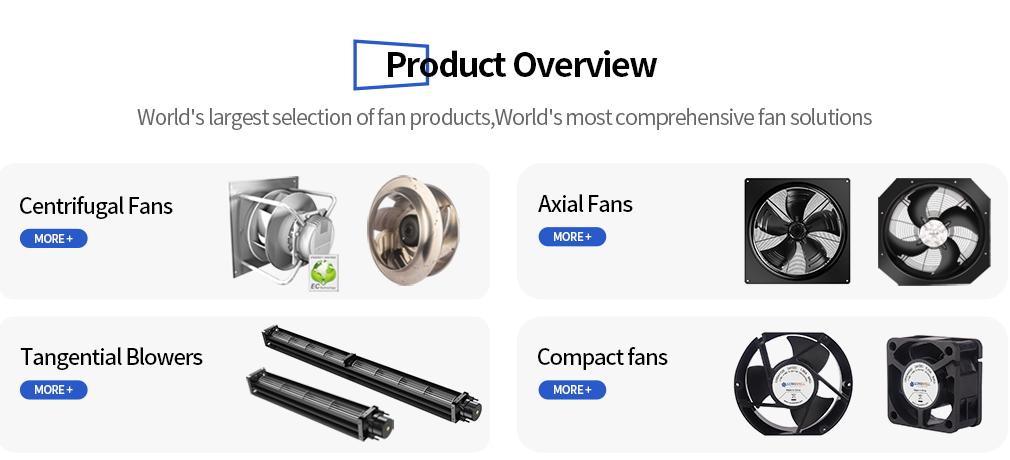
Ningbo Longwell Electric Technology Co., Ltd. (Website: www.longwellfans.com) is a professional manufacturer of HVAC fans and motors. We provide a full range of aerodynamic products including centrifugal fans, axial fans, cross-flow fans, and EC/DC/AC motors. Our products are widely used in HVAC, refrigeration and cold chain, electronic cooling, and industrial purification fields.