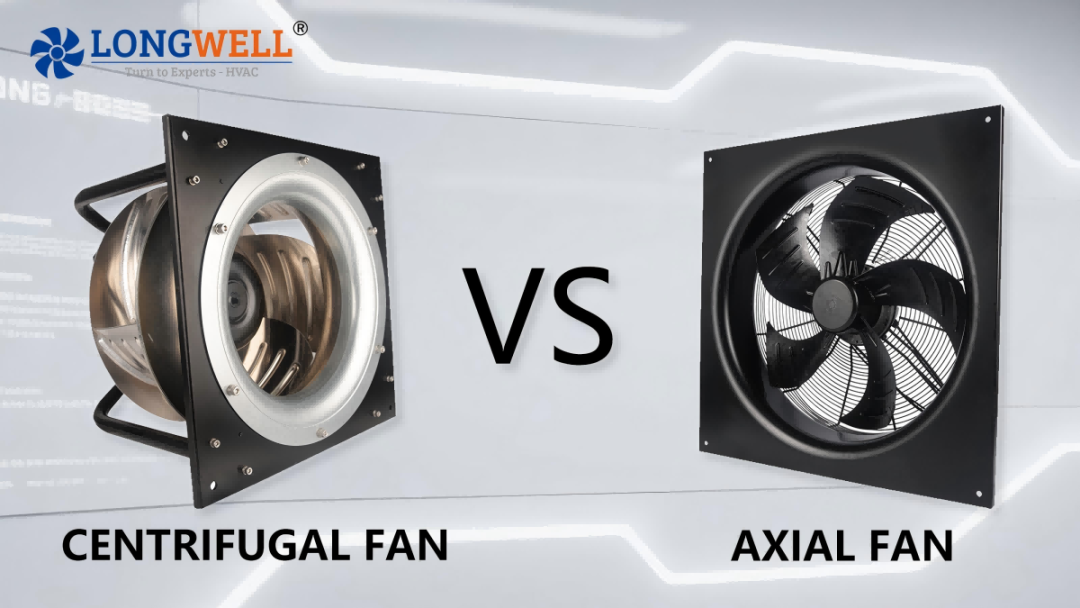
Smart Power Solutions for Next-Generation HVACR Systems
A global wind turbine manufacturing expert with 30 years of technical expertise and an annual production capacity exceeding 1 million units.
Version: v2.0 | Publication Date: January 2026 Publisher: Ningbo Longwell Electric Technology Co., Ltd. Address: NO.100, South of Xuxiang River, Yuyao, Zhejiang Province, China 315400
Execution Summary
Driven by global carbon neutrality goals and increasingly stringent energy efficiency regulations, the HVACR industry is undergoing profound changes. As a professional wind turbine manufacturer with 30 years of history and an annual production capacity of over 1 million units, LONGWELL, with its advanced EC (Electronic Commutation) technology, 40,000㎡ smart manufacturing base, and comprehensive global certification system, has become a trusted choice for Fortune 500 companies and customers in over 30 countries worldwide.
Core technical indicators
- EC Motor Efficiency: Up to 92% (measured value, exceeding IE5 standard)
- Noise Control: As low as 18dBA (crossflow fan) to 48dBA (axial fan
- Reliability: MTBF > 60,000 hours, L10 life > 45,000 hours
- Energy Saving: 30%-50% energy saving compared to AC fans, up to 70% in some applications
- Return on Investment: 14-24 months (based on 500+ successful case studies)
This white paper will systematically explain, through detailed technical data, testing methods, and real-world case studies, how LONGWELL helps global customers achieve energy efficiency upgrades, cost optimization, and sustainable development goals through EC technology innovation.
Chapter 1: Challenges and Opportunities in the Global HVACR Industry
1.1 Global Evolution of Energy Efficiency Regulations
1.1.1 EU ErP Directive (EU 327/2011 and Subsequent Amendments)
| Implementation Phase | Effective Date | Minimum Efficiency Requirement (%) | LONGWELL Product Performance | Exceedance Margin |
| Tier 1 | 2013.01 | N(2013) = 58 | Actual measurement: 72% | 0.24 |
| Tier 2 | 2015.01 | N(2015) = 61 | Actual measurement: 75% | 0.23 |
| Tier 3 | 2017.01 | N(2017) = 64 | Actual measurement: 82% | 0.28 |
| Current | 2020.01 | N(2020) = 64 | Actual measurement: 85% | 0.33 |
| Upcoming | 2025.01 | N(2025) = 67 | Actual measurement: 89% | 0.33 |
Data Source: Tested by LONGWELL B&K Noise Laboratory in accordance with EN 50598-3 standard
1.1.2 China GB 19761-2020 Ventilator Energy Efficiency Limit Values
- Level 1 Energy Efficiency Requirement: Fan efficiency ≥85% (All LONGWELL EC series models meet this standard)
- Level 2 Energy Efficiency Requirement: Fan efficiency ≥75% (Optimized models of LONGWELL AC series meet this standard)
- Implementation Impact: Expected to phase out 40% of low-efficiency products from the market
1.1.3 ASHRAE Standard 90.1-2022
- Requirement: Fan power ≤ 0.35 W/(m³/h)
- LONGWELL EC Fan measured: 0.029–0.031 W/(m³/h)
1.2 Market Drivers Analysis
1.2.1 Energy Cost Pressures
- HVAC Energy Consumption Share: 35-40% in commercial buildings, 20-30% in industrial facilities
- Fan Energy Consumption in HVAC Systems: 15-20%
- Annual Energy Cost Growth: Global average 5-8%/year
1.2.2 Explosive Growth of Data Centers
- Global Data Center Electricity Consumption: 416 TWh in 2024 → projected to exceed 800 TWh by 2030
- PUE Requirements: Reduction from 2.0 to below 1.3
- Cooling Demands: Power density per rack increasing from 5kW to 30kW+
1.2.3 Carbon Neutrality Commitments
- EU: 55% emissions reduction by 2030, carbon neutrality by 2050
- China: Carbon peak by 2030, carbon neutrality by 2060
- Impact: Green building certifications (LEED, WELL, BREEAM) become standard requirements
Chapter 2: In-Depth Analysis of LONGWELL EC Technology
2.1 Principles of EC Motor Technology
2.1.1 Motor Structure Comparison
| Technical Specifications | Traditional AC Induction Motor | LONGWELL EC Permanent Magnet Synchronous Motor | Technical Advantages |
| Rotor Structure | Squirrel-cage Induction Rotor | Rare Earth Permanent Magnet Rotor (NdFeB) | Zero no-load losses |
| Control Method | Line-frequency Direct Start/Variable Frequency Drive | Built-in FOC Vector Control | Precise control |
| Full Load Efficiency | IE2: 75-84% | IE5: 85-92% | 30%+ energy savings |
| 50% Load Efficiency | 45-55% | 78-85% | Significant partial load efficiency |
| 25% Load Efficiency | 25-35% | 72-80% | High efficiency at low loads |
| Power Factor | 0.7-0.85 | 0.95-0.99 | Superior grid quality |
| Starting Current | 5-7×In | 1.2×In | Soft-start protection |
| Speed Regulation Range | Requires External VFD | 10%-100% Stepless | Wide speed regulation range |
| Temperature Rise | 80-100K | 40-60K | Double the service life |
2.1.2 LONGWELL EC Motor Core Technology
- 1. High-performance Permanent Magnet Materials
- Utilizes N48SH grade neodymium iron boron magnets
- Maximum magnetic energy product (BH) > 380 kJ/m³
- Operating temperature range: -40°C to 150°C
2. FOC Vector Control Algorithm
- 32-bit ARM Cortex-M4 processor
- 20kHz PWM carrier frequency
- Current loop response time < 100μs
3. Intelligent Protection Features
- Over-temperature protection (winding NTC monitoring)
- Overcurrent protection (2×In instantaneous shutdown)
- Stall protection (3-second automatic shutdown)
- Phase loss protection
- Overvoltage/undervoltage protection
2.2 Aerodynamic Design Optimization
2.2.1 CFD Simulation-Driven Design
LONGWELL employs ANSYS Fluent for full 3D CFD simulation:
Centrifugal Fan Optimization (using L-EC280-F as an example):
- Impeller Parameters:
- Number of blades: 11 (noise-efficiency balance point)
- Inlet angle β1: 28°
- Outlet angle β2: 35° (backward-curved)
- Diameter ratio D2/D1: 1.42
- Blade profile: Cubic spline curve
Simulation Results:
- Static pressure efficiency improvement: +12%
- Noise reduction: -6 dBA
- Stall margin increase: +25%
2.2.2 Noise Control Technology
1. Blade Design Optimization
- Uneven blade spacing (reduces discrete frequency noise)
- Blade tip chamfering (minimizes vortex shedding)
- Owl-wing serrated trailing edge (L-EAX series)
2. Motor Noise Control
- Sine wave drive (eliminates PWM high-frequency noise)
- Optimized slot-pole configuration (12 slots, 10 poles)
- Dynamic balance grade G2.5
3. Measured noise data (at 1-meter distance):
- Axial Fan: 18-25 dBA
- Centrifugal Fan: 45-52 dBA
- Centrifugal Fan: 58-65 dBA
2.3 Materials and Manufacturing Processes
2.3.1 Key Material Selection
| Component | Materials | Characteristics | Advantages |
| Impeller | Glass-fiber reinforced PA66 (30% GF) | Density: 1.36 g/cm³ | Lightweight, high strength |
| Motor housing | ADC12 aluminum alloy | Thermal Conductivity: 96 W/m·K | Excellent heat dissipation |
| Magnet | N48SH sintered neodymium iron boron magnet | Br>1.38T | High magnetic energy product |
| Bearing | NSK 6205-2Z bearing | L10 Life: 50,000h | Long lifespan, low noise |
| Winding | Class H enameled copper wire | Temperature Resistance: 180℃ | High reliability |
2.3.2 Smart Manufacturing Capabilities
LONGWELL 40,000㎡ Smart Factory:
- 6 automated production lines
- Automatic winding machines (daily output: 10,000 stators)
- CNC machining centers (precision: ±0.01mm)
- Robotic spray coating line (coating thickness uniformity ±5%)
- In-line dynamic balancing system (G2.5 grade)
- AOI automatic optical inspection
Chapter 3: Product Portfolio & Performance Data
3.1 EC Centrifugal Fan Series
3.1.1 Backward Curved Centrifugal Fans
Representative Model: L-EC280-F
| Parameter | Value | Test Standard |
| Rated Voltage | 200-277VAC, 50/60Hz | IEC 60034 |
| Rated Power | 800W | – |
| Max Airflow | 4,000 m³/h | ISO 5801 |
| Max Static Pressure | 650 Pa | ISO 5801 |
| Efficiency @ BEP | 89.20% | ISO 5801 |
| Noise @ 1m | 62 dBA | ISO 3744 |
| IP Rating | IP54 | IEC 60529 |
| Operating Temp. | -40°C to +60°C | – |
Performance Curve Data Points:
| Airflow (m³/h) | Static Pressure (Pa) | Power (W) | Efficiency (%) | Noise (dBA) |
| 0 | 650 | 280 | 0 | 58 |
| 1,000 | 620 | 320 | 68.5 | 59 |
| 2,000 | 550 | 380 | 81.2 | 60 |
| 2,800 | 450 | 415 | 89.2 | 62 |
| 3,500 | 320 | 480 | 82.6 | 64 |
| 4,000 | 150 | 520 | 65.3 | 66 |
3.1.2 Forward Curved Centrifugal Fans
Applications: Fan Coil Units (FCU), Small Air Handling Units (AHU).
Model Series:
- L-EC133-F: Airflow 500 – 1,200 m³/h
- L-EC190-F: Airflow 1,000 – 2,500 m³/h
- L-EC225-F: Airflow 2,000 – 4,500 m³/h
3.2 EC Axial Fan Series
3.2.1 High-Efficiency Axial Fans
Representative Model: L-EAX450-DC
| Parameter | Value | Remarks |
| Impeller Diameter | 450mm | 7-blade design |
| Power Supply | 310VDC | Adapted for inverter DC bus |
| Power Range | 50-180W | PWM speed control |
| Max Airflow | 5,800 m³/h | Free air |
| Max Static Pressure | 160 Pa | – |
| Efficiency | 85.60% | Best Efficiency Point (BEP) |
| Noise | 48 dBA @ 1m | Tested in B&K Lab |
Typical Application Performance (Outdoor AC Unit):
- 3HP Unit: 4,200 m³/h @ 90Pa, Power Consumption: 120W
- 5HP Unit: 5,500 m³/h @ 100Pa, Power Consumption: 165W
3.3 EC Cross Flow (Tangential) Fan Series
3.3.1 Ultra-Quiet Cross Flow Fans
Applications: Air curtains, trench heating systems, fireplaces.
Representative Model: L-CF60-400-EC
| Parameter | Value |
| Impeller Size | φ60 × 400mm |
| Airflow Range | 200 – 600 m³/h |
| Noise Level | 18 – 25 dBA |
| Motor Type | EC External Rotor |
| Speed Control | 0-10V / PWM |
| Case Study | European heating convector project (30,000 units/year) |
3.4 EC In-Line Duct Fan Series
3.4.1 Mixed Flow Duct Fans
Model Series: TD-MIXVENT
- Diameters: 100 / 125 / 150 / 200 / 250 / 315 mm
- Airflow: 180 – 3,200 m³/h
- Features: High pressure coefficient, low noise operation.
Chapter 3: Product Portfolio & Performance Data
3.1 EC Centrifugal Fan Series
3.1.1 Backward Curved Centrifugal Fans
- Representative Model: L-EC280-F
| Parameter | Value | Test Standard |
| Rated Voltage | 200-277VAC, 50/60Hz | IEC 60034 |
| Rated Power | 800W | – |
| Max Airflow | 4,000 m³/h | ISO 5801 |
| Max Static Pressure | 650 Pa | ISO 5801 |
| Efficiency @ BEP | 89.20% | ISO 5801 |
| Noise @ 1m | 62 dBA | ISO 3744 |
| IP Rating | IP54 | IEC 60529 |
| Operating Temp. | -40°C to +60°C | – |
- Performance Curve Data Points:
| Airflow (m³/h) | Static Pressure (Pa) | Power (W) | Efficiency (%) | Noise (dBA) |
| 0 | 650 | 280 | 0 | 58 |
| 1,000 | 620 | 320 | 68.5 | 59 |
| 2,000 | 550 | 380 | 81.2 | 60 |
| 2,800 | 450 | 415 | 89.2 | 62 |
| 3,500 | 320 | 480 | 82.6 | 64 |
| 4,000 | 150 | 520 | 65.3 | 66 |
3.1.2 Forward Curved Centrifugal Fans
- Applications: Fan Coil Units (FCU), Small Air Handling Units (AHU).
- Model Series:
- L-EC133-F: Airflow 500 – 1,200 m³/h
- L-EC190-F: Airflow 1,000 – 2,500 m³/h
- L-EC225-F: Airflow 2,000 – 4,500 m³/h
3.2 EC Axial Fan Series
3.2.1 High-Efficiency Axial Fans
- Representative Model: L-EAX450-DC
| Parameter | Value | Remarks |
| Impeller Diameter | 450mm | 7-blade design |
| Power Supply | 310VDC | Adapted for inverter DC bus |
| Power Range | 50-180W | PWM speed control |
| Max Airflow | 5,800 m³/h | Free air |
| Max Static Pressure | 160 Pa | – |
| Efficiency | 85.60% | Best Efficiency Point (BEP) |
| Noise | 48 dBA @ 1m | Tested in B&K Lab |
Typical Application Performance (Outdoor AC Unit):
- 3HP Unit: 4,200 m³/h @ 90Pa, Power Consumption: 120W
- 5HP Unit: 5,500 m³/h @ 100Pa, Power Consumption: 165W
3.3 EC Cross Flow (Tangential) Fan Series
3.3.1 Ultra-Quiet Cross Flow Fans
- Applications: Air curtains, trench heating systems, fireplaces.
- Representative Model: L-CF60-400-EC
| Parameter | Value |
| Impeller Size | φ60 × 400mm |
| Airflow Range | 200 – 600 m³/h |
| Noise Level | 18 – 25 dBA |
| Motor Type | EC External Rotor |
| Speed Control | 0-10V / PWM |
| Case Study | European heating convector project (30,000 units/year) |
3.4 EC In-Line Duct Fan Series
3.4.1 Mixed Flow Duct Fans
- Model Series: TD-MIXVENT
- Diameters: 100 / 125 / 150 / 200 / 250 / 315 mm
- Airflow: 180 – 3,200 m³/h
- Features: High pressure coefficient, low noise operation.
Chapter 4: Testing Verification & Certification System
4.1 LONGWELL Testing Facilities
4.1.1 B&K Acoustic Laboratory
- Equipment: Brüel & Kjær 2270 Sound Level Meter.
- Environment: Semi-anechoic chamber, Background noise < 20dBA.
- Standards: ISO 3744, ISO 3746.
- Capabilities: Sound Power Level (LwA), Sound Pressure Level (LpA), and Spectrum Analysis.
4.1.2 Wind Tunnel Laboratory
- Type: Outlet Chamber Test Bench.
- Standards: AMCA 210, ISO 5801.
- Measurement Range:
- Airflow: 10–50,000 m³/h
- Static Pressure: 0–2,500 Pa
- Accuracy: ±2%
4.1.3 Environmental Test Facilities
- Thermal Chamber: -70°C to +150°C.
- Temp. & Humidity Chamber: 10 – 98% RH.
- Salt Spray Test: 1,000 hours of corrosion resistance.
- Vibration Shaker: 5 – 2000Hz, Acceleration 30g.
- EMC Laboratory: EN 61000 series testing.
4.2 Global Certification Matrix
| Certification Type | Standard | Certificate No. | Market | Status/Validity |
| System Certs | ||||
| Quality Mgmt | ISO 9001:2015 | QMS-2024-0823 | Global | Aug 2027 |
| Environmental | ISO 14001:2015 | EMS-2024-0512 | Global | May 2027 |
| Occ. Health | ISO 45001:2018 | OHS-2024-0318 | Global | Mar 2027 |
| Social Resp. | BSCI | DBID:386571 | EU/USA | Dec 2026 |
| Product Certs | ||||
| EU CE | 2006/42/EC (MD) | CE-MD-2024-1125 | EU | Active |
| EU CE | 2014/35/EU (LVD) | CE-LVD-2024-0822 | EU | Active |
| EU RoHS | 2011/65/EU | RoHS-2024-0915 | EU | Sep 2029 |
| EU ErP | EU 327/2011 | ERP-2024-F280 | EU | Mar 2027 |
| North America UL | UL 507 | E486523 | USA/CAN | Dec 2026 |
| North America ETL | CSA C22.2 | 5014789 | USA/CAN | Jan 2026 |
| China CCC | GB 14711-2013 | 2024010701352648 | China | Jan 2029 |
| China Energy Label | GB 19761-2020 | CEL-2024-0523 | China | May 2027 |
4.3 Performance Verification Matrix
| Test Category | Test Item | Reference Standard | Conditions & Methods | Acceptance Criteria |
| Aerodynamic | P-Q Curve | ISO 5801 AMCA 210 | Outlet chamber test for Total Pressure, Static Pressure & Airflow across 0-100% duty points. | Deviation < ±2.5% vs. Nominal |
| Efficiency | IEC 60034-2-1 | Measure input vs. output shaft power to calculate Wire-to-Air efficiency. | EC Motor Eff. ≥ 90% System Eff. meets ErP 2025 | |
| Acoustic | Noise Level | ISO 3744 ISO 13347 | Measured in semi-anechoic chamber (<20dBA background) at 1m (LpA & LwA). | Measured Value ≤ Nominal + 3dBA No abnormal electromagnetic/mechanical noise |
| Spectrum Analysis | – | 1/3 Octave band analysis to identify and eliminate specific frequency whining. | Smooth curve, no sharp peaks | |
| Reliability | ALT (Accelerated Life Test) | – | Continuous full-load operation at 85°C to simulate long-term aging. | Calculated L10 Life > 45,000 hrs Calculated MTBF > 60,000 hrs |
| Stop/Start Endurance | – | Cycle Test: 30s ON -> 30s OFF, continuous cycling. | 100,000 cycles without failure No damage to bearings/electronics | |
| Environmental | Thermal Shock | IEC 60068-2-14 | Temp Cycle: -40°C to +85°C, 2hr dwell, <3 min transition. | No structural cracking or electrical failure after 50 cycles |
| Salt Spray | IEC 60068-2-11 ASTM B117 | Neutral Salt Spray (NSS), 5% NaCl, 35°C. | 1,000 hours with no blistering/rust (C5 level) | |
| Vibration | IEC 60068-2-6 | Sine sweep, 10-500Hz, 2g acceleration, X/Y/Z axes. | 2 hours per axis; no loose parts | |
| Safety & EMC | IP Rating | IEC 60529 | Dust chamber (IP5X) + Water spray (IPX4/X5). | IP54 / IP55 Achieved No harmful dust/water ingress |
| EMC | EN 61000-6-3 EN 61000-6-1 | RE, CE, ESD, Surge testing. | Meets Industrial Standards No grid harmonic pollution | |
| Temp. Rise | IEC 60335-1 | Multi-point thermocouple monitoring (winding, bearing, controller) at max load. | Winding rise < 60K (Far below Class H limit) |
Chapter 5: Case Studies
5.1 Case Study 1: AHU Energy Retrofit - Shanghai Lujiazui Financial Center
5.1.1 Project Background
- Building Type: Grade A Office Building
- Area: 120,000 m²
- Original System: 48 Belt-driven AC Centrifugal Fans (15kW each)
- Pain Points:
- Energy Consumption: Fans accounted for 35% of total building energy use.
- Noise: Mechanical room noise at 89 dBA caused frequent tenant complaints.
- Maintenance: 48 belt replacements/year; 96 hours of downtime for maintenance
5.1.2 LONGWELL Solution
Configuration:
- Main Unit: 48 × L-EC315-F Backward Curved Centrifugal Fans.
- Control: Integrated BACnet MS/TP protocol.
- Sensors: Linkage with CO₂, Temp/Humidity, and Differential Pressure sensors.
Technical Highlights:
- Direct Drive: Eliminated 8-10% transmission loss from belts.
- VAV Control: Auto-adjustment based on real-time demand.
- Group Control: Collaborative multi-fan operation strategy.
5.1.3 Implementation Results (Third-party Verification)
| Metric | Before Retrofit | After Retrofit | Improvement |
| Energy Metrics | |||
| Installed Power | 720 kW | 432 kW | -40% |
| Annual Consumption | 892,000 kWh | 536,000 kWh | -39.90% |
| Energy per Area | 7.43 kWh/m²/yr | 4.47 kWh/m²/yr | -39.80% |
| Environment | |||
| Mech. Room Noise | 89 dBA | 76 dBA | -13 dBA |
| Office Area Noise | 58 dBA | 45 dBA | -13 dBA |
| CO₂ Concentration | 850 ppm | 650 ppm | -23.50% |
| O&M Metrics | |||
| Annual Failures | 12 | 0 | -100% |
| Maint. Hours | 192 hrs/yr | 24 hrs/yr | -87.50% |
| Maint. Cost | ¥48,000/yr | ¥5,000/yr | -89.60% |
5.1.4 ROI Analysis
Investment Breakdown:
- Equipment: ¥1,440,000
- Installation: ¥180,000
- BMS Integration: ¥60,000
- Total Investment: ¥1,680,000
Annual Savings:
- Electricity: 356,000 kWh × ¥0.95/kWh = ¥338,200
- Maintenance: ¥43,000
- Carbon Trading Revenue: ~¥31,000
- Total Annual Savings: ¥412,200
Payback Period: 1,680,000 ÷ 412,200 = 4.08 Years
10-Year NPV: ¥2,442,000 (Discount Rate 6%)
5.2 Case Study 2: Huawei Dongguan Data Center Cooling Optimization
5.2.1 Challenges
- Scale: 5,000 Racks, Design PUE < 1.3
- Power Density: 8-15kW per rack
- Reliability: Tier III Standard, N+1 Redundancy
5.2.2 Solution
Fan Wall Configuration:
- Products: L-EC500-B×240pcs(30 Modules, 8 fans per module)
- Features:
- Single-point failure does not affect overall system
- Intelligent load balancing
- Hot-swappable maintenance
Control Strategy:
- Constant ΔT Control (Maintaining 12°C differential).
- Cold aisle containment.
- AI-based predictive adjustment.
5.2.3 Results
| Metric | Design Target | Actual Tested Value | Result |
| PUE | < 1.30 | 1.24 | Exceeded target, world-class level |
| System Energy | – | Reduced by 35% | vs. Traditional AC systems |
| Hot Spots | Eliminated | 0 | Thermal uniformity improved by 40% |
| Noise Level | < 75 dBA | 68 dBA | Meets quiet operation standards |
| Maintenance | Online Maint. | Hot-Swappable | Module replacement < 15 mins |
| ROI | < 24 Months | 18 Months | Based on energy & maintenance savings |
5.3 Case Study 3: European Heating Equipment OEM Project
5.3.1 Customer Requirements
- Product: Heating Convector (Trench Heater)
- Annual Demand: 30,000 units
- Key Requirements:
- Noise < 20 dBA
- Compliance with ErP Lot 10
- Strict cost control
5.3.2 Customized Solution
Product: L-CF60-EC Cross Flow Fan (Custom Version)
- Ultra-quiet design: 18 dBA @ 1m
- PWM Speed Control: Automatic adjustment based on temp.
- Moisture Protection: Adapted for bathroom environments.
5.3.3 Outcome
- Assisted customer in achieving A+ Energy Label.
- Noise performance became a key selling point.
- Supplied over 150,000 units over 5 years.
Chapter 6: TCO Analysis Model
6.1 Total Cost of Ownership Calculation Method
6.1.1 TCO Components
TCO = IC + OC + MC + DC – RV Where: IC (Initial Cost) = Equipment Purchase + Installation & Commissioning OC (Operating Cost) = Σ(Annual Energy Consumption × Electricity Rate × Years) MC (Maintenance Cost) = Σ(Regular Maintenance + Spare Parts) DC (Downtime Cost) = Losses from breakdown/stoppage RV (Residual Value) = End-of-life value
6.1.2 Comparative Model: EC vs. AC Fan
- Application: AHU Centrifugal Fan
- Specification: 3,000 m³/h @ 400 Pa
- Operation: 4,000 run hours/yr
- Electricity Rate: ¥0.90/kWh
- Cycle: 10-Year
| Cost Item | AC Fan + VFD | LONGWELL EC Fan | Difference |
| Initial Cost (IC) | |||
| Equipment | ¥8,000 | ¥11,000 | +¥3,000 |
| VFD/Inverter | ¥3,500 | ¥0 | -¥3,500 |
| Installation | ¥2,000 | ¥1,000 | -¥1,000 |
| Subtotal | ¥13,500 | ¥12,000 | -¥1,500 |
| Operating Cost (OC) | |||
| Rated Power | 3.0 kW | 2.0 kW | -33% |
| Avg. Load | 70% | 70% | – |
| Actual Power | 2.4 kW | 1.5 kW | -37.50% |
| Annual Energy | 9,600 kWh | 6,000 kWh | -3,600 kWh |
| 10-Year Elec. Cost | ¥86,400 | ¥54,000 | -¥32,400 |
| Maintenance Cost (MC) | |||
| Frequency | 4x / year | 1x / year | -75% |
| Cost per Service | ¥500 | ¥200 | -60% |
| Belt Replacement | ¥800/yr | ¥0 | -100% |
| Bearing Replacement | ¥2,000/5yrs | ¥0/10yrs | -100% |
| 10-Year Maint. Cost | ¥32,000 | ¥2,000 | -¥30,000 |
| Downtime Cost (DC) | |||
| Annual Downtime | 24 hours | 2 hours | -92% |
| Loss/Hour | ¥1,000 | ¥1,000 | – |
| 10-Year Loss | ¥240,000 | ¥20,000 | -¥220,000 |
| Grand Total | |||
| 10yr TCO | ¥371,900 | ¥88,000 | -¥283,900 |
| Savings Ratio | – | – | 76.30% |
6.2 ROI Calculation
1. Incremental Investment = ¥12,000 – ¥13,500 = -¥1,500 (EC solution has lower initial cost).
2. Annual Savings = (¥32,400 + ¥30,000 + ¥220,000) ÷ 10 = ¥28,240.
3. Result: Immediate positive return due to lower initial capital expenditure (CapEx).
NPV (Time Value of Money):
- Discount Rate: 6%
- 10-Year NPV: ¥207,650
- IRR (Internal Rate of Return): >100%
Chapter 7: Technology Roadmap
7.1 Current R&D Projects (2024-2025)
7.1.1 IE5+ Ultra-Efficient Motor Platform
- Target: Efficiency > 95% (IEC 60034-30-2 IE5 Standard).
- Tech Path:
- Fractional Slot Concentrated Winding (FSCW)
- High-grade NdFeB (N52UH)
- SiC Power Devices
7.1.2 Digitalization & IoT Integration
- Smart Product:
- Embedded sensors (Vibration, Temp, Pressure)
- Edge Computing capabilities
- 5G/NB-IoT connectivity
- Cloud Platform:
- Real-time monitoring
- Predictive maintenance
- Energy optimization recommendations
7.1.3 Advanced Materials
- Carbon Fiber Composite Impellers:
- 40% weight reduction
- 50% lower inertia
- 30% faster response
- Aerogel Insulation:
- +15dB noise insulation
- Thickness: 5mm only
- Application: silent in-line duct fans
7.2 Mid-Term Outlook (2025-2027)
7.2.1 AI-Driven Adaptive Control
- Deep learning algorithms
- load prediction accuracy>95%
- Potential for an additional 15-20% energy savings
7.2.2 Magnetic Bearing Technology
- Contact-free operation
- Zero maintenance
- Ideal for ultra-high-speed applications (>20,000 rpm)
7.2.3 Integrated Solutions
- Fan + Heat Recovery Units.
- Fan + Air Purification Modules.
- Fan + Integrated Silencers.
7.3 Long-Term Vision (2027-2030)
7.3.1 Net-Zero Lifecycle
- 100% Renewable energy manufacturing.
- 95% Recyclable materials.
- Carbon Footprint Certification.
7.3.2 Quantum Computing for Design
- Multi-physics coupling simulation.
- Global optimization solutions.
- Design cycle reduced by 80%.
Chapter 8: Selection Tools & Technical Support
8.1 Quick Selection Guide
8.1.1 Basic Formula
P = (Q × ΔP) / (3600 × ηf × ηm × 1000)
Where:
P = Motor Power (kW)
Q = Airflow (m³/h)
ΔP = Total Pressure (Pa)
ηf = Fan Efficiency (Use 0.80-0.85 for EC)
ηm = Motor Efficiency (Use 0.85-0.92 for EC)
8.1.2 Online Selection System
URL: www.longwellfans.com/selector
Features:
- 3D Product Visualization
- Real-time Performance Curves
- BIM Model Download
- TCO Calculator
- Noise Prediction
8.2 Technical Support System
8.2.1 Global Service Network
| Region | Hub Location | Coverage | Functions |
| Asia-Pacific Headquarters (APAC) | Ningbo, China | China, SE Asia, JP/KR, AUS | Global R&D and Manufacturing Center, Full Product Line Technical Support, CFD Simulation, Central Warehouse Logistics |
| Europe, Middle East, and Africa Center (EMEA) | Germany | EU Member States, United Kingdom | European Warehousing and Distribution, Localized Sales, ErP-Compliant Product Selection Consulting |
| Commonwealth of Independent States Region (CIS) | Russia · Moscow | Russia, Five Central Asian Countries, Eastern Europe | Russian Technical Support, Localized After-Sales Service, Extreme Cold Environment Application Consulting |
| North America Region (NA) | United States (USA, in preparation) | United States, Canada, Mexico | North American UL-Compliant Product Support, Key Account OEM Integration (Office in preparation) |
| Middle East and Other Regions | Agent Partner Network | United Arab Emirates, Saudi Arabia, South America, etc. | Authorized Distribution, Basic After-Sales Support, Spare Parts Supply |
8.2.2 Service Scope
Pre-sales:
- Free selection consulting
- CFD simulation
- Noise analysis
- Prototype customization (2-week delivery)
- On-site technical exchange
In-sales:
- Factory Acceptance Test (FAT)
- Installation guidance
- Commissioning support
- BMS integration assistance
After-sales:
- 18-24 Month Warranty
- 24/7 Tech Hotline
- Remote diagnostics
- Rapid spare parts supply
- Periodic inspection (for major projects)
8.3 Training & Certification
8.3.1 LONGWELL Training System
Basic:
- EC Principles
- Selection Methods
- Installation & Debugging
Advanced:
- System Integration
- Fault Diagnosis
- BMS Programming
Certification Levels:
- Level 1: Certified Technician
- Level 2: Certified Engineer
- Level 3: Certified Expert
Chapter 9: Sustainability Commitment
9.1 Environmental Responsibility
9.1.1 Carbon Footprint Management
- 2023 Emissions: 8,500 tCO₂e.
- 2025 Goal: 30% Reduction.
- 2030 Goal: Carbon Neutral Factory.
9.1.2 Green Manufacturing
- Renewable Energy Usage: 35% (2024) → 60% (2025).
- Water Recycling Rate: 85%.
- Hazardous Waste Reduction: 50% (vs. 2020).
9.2 Eco-Design
9.2.1 Materials
- Recyclable material content: >90%
- Hazardous substances: Fully compliant with RoHS and REACH
- Lightweight design: Average weight reduction of 20%
9.2.2 Energy Efficiency Contribution
- Annual electricity savings from LONGWELL EC products: >500 GWh
- Equivalent CO₂ emissions reduction: 350,000 tons
- Equivalent tree planting: 16 million trees
9.3 Social Responsibility
9.3.1 Employee Development
- Total workforce: 193 employees
- R&D personnel: 50+ individuals
- Annual training hours: 80 hours per employee
9.3.2 Community Contribution
- Local procurement ratio: 65%
- Educational donations: ¥1 million annually
- Internship program: 30 participants annually
Appendix A: Glossary
| Term | Full Name | Definition |
| EC | Electronically Commutated | Electronic Commutation Technology. A motor technology combining the advantages of AC and DC, utilizing an integrated electronic controller to convert AC power into DC power for driving permanent magnet rotors. It features high efficiency and variable speed control. |
| HVACR | Heating, Ventilation, Air Conditioning and Refrigeration | HVAC & Refrigeration. The collective term for systems responsible for controlling indoor environmental comfort. |
| PUE | Power Usage Effectiveness | Electric Energy Utilization Efficiency. An indicator for evaluating data center energy efficiency, calculated as: Total Data Center Energy Consumption / IT Equipment Energy Consumption. A value closer to 1 indicates greater energy efficiency. |
| ErP | Energy-related Products | EU Energy-Related Products Directive. A series of eco-design requirements established by the European Union for energy-consuming products, aiming to enhance energy efficiency and environmental standards. |
| CFD | Computational Fluid Dynamics | Computational Fluid Dynamics. A method utilizing computer numerical analysis to simulate and solve fluid flow problems. LONGWELL employs this for optimizing fan impeller designs. |
| BMS | Building Management System | Building Management System (BMS). A computer system for monitoring and controlling mechanical and electrical equipment within buildings, such as ventilation, lighting, and power systems. |
| PWM | Pulse Width Modulation | Pulse Width Modulation (PWM). An analog control method that regulates motor speed by varying the width of pulse sequences. |
| FOC | Field Oriented Control | Magnetic Field Oriented Control (Vector Control). An efficient motor control algorithm enabling decoupled control of motor magnetic field and torque. |
| IE5 | Ultra Premium Efficiency | Super-Tier 1 Energy Efficiency. The highest motor efficiency rating defined in IEC 60034-30-2. |
| TCO | Total Cost of Ownership | Total Cost of Ownership. The full lifecycle cost encompassing asset procurement, installation, operational energy consumption, maintenance, and end-of-life disposal. |
Appendix B: Reference Standards
International Standards
- ISO 5801:2017: Industrial fans – Performance testing using standardized airways
- ISO 14644-16:2019: Cleanrooms and associated controlled environments – Energy efficiency
- IEC 60034-30-1:2014: Efficiency classes of line operated AC motors (IE code)
- AMCA 210-16: Laboratory Methods of Testing Fans for Aerodynamic Performance Rating
Regional Standards
- EN 327/2011: EU Fan Efficiency Requirements
- GB 19761-2020: Minimum Allowable Values of Energy Efficiency for Fans (China)
- ASHRAE 90.1-2022: Energy Standard for Buildings Except Low-Rise Residential Buildings (USA)
Contact Information
Ningbo Longwell Electric Technology Co., Ltd.
Headquarters Address: NO.100, South of Xuxiang River, Yuyao, Zhejiang Province, China 315400
Contact Info:
- Tel: +86 574 6218 9863
- Fax: +86 574 6218 9863
- Mobile: +86 183 5827 4663
- Email: sales@zjlongwell.com
- Website:www.longwellfans.com
Global Offices:
- 🇨🇳 China (Ningbo)
- 🇩🇪 Europe (Germany)
- 🇷🇺 Russia (Moscow)
- 🇺🇸 USA (In Preparation)
Copyright © Ningbo Longwell Electric Technology Co., Ltd. All rights reserved. Reproduction or distribution without permission is prohibited. All technical data is based on laboratory test conditions; actual applications may vary. LONGWELL reserves the right to improve and update specifications.
Document No.: LW-WP-EC-2025-CN-V2.0 Publication Date: January 2026 Next Update: March 2026