Beijing Data Center Retrofit: How LONGWELL Radial Fans Achieved ±0.3°C Precision
If you manage a data center, you know that “average temperature” is a meaningless metric. What actually matters are the outliers—the hot spots. In a high-density financial server room, a single hot spot isn’t just a technical glitch; it’s a risk to your SLA and your job security.
Traditional cooling setups often struggle when server density increases. They move air, but they don’t always move it where it’s needed.
In this article, we are not talking about theory. We are reviewing a real-world retrofit project at a Beijing Financial Data Center. We will look at how swapping out the air movers for LONGWELL LWRD Series Radial Fans solved a critical overheating issue and helped the facility secure Tier IV certification.
Case Study: From “Near-Meltdown” to Tier IV Reliability
This project was a technical rescue mission. Here is the reality of what happened on the ground.
The Background: High Stakes, High Heat
This facility handles billions in financial transactions daily. Their Service Level Agreement (SLA) demanded a strict room temperature of 22±0.5°C. But before the retrofit, the situation was critical:
· Uncontrolled Fluctuation: The temperature in the cold/hot aisles swung by as much as ±3°C.
· Downtime Events: Heat accumulation caused two separate server shutdowns, resulting in direct and indirect losses exceeding 20 million RMB ($2.8M USD).
· Wasted Energy: To fight the hot spots, the old AC units were running at 100% capacity, driving the PUE (Power Usage Effectiveness) up to a wasteful 1.8.
The client’s requirement was blunt: Eliminate the hot spots, stop the downtime, and lower the power bill.
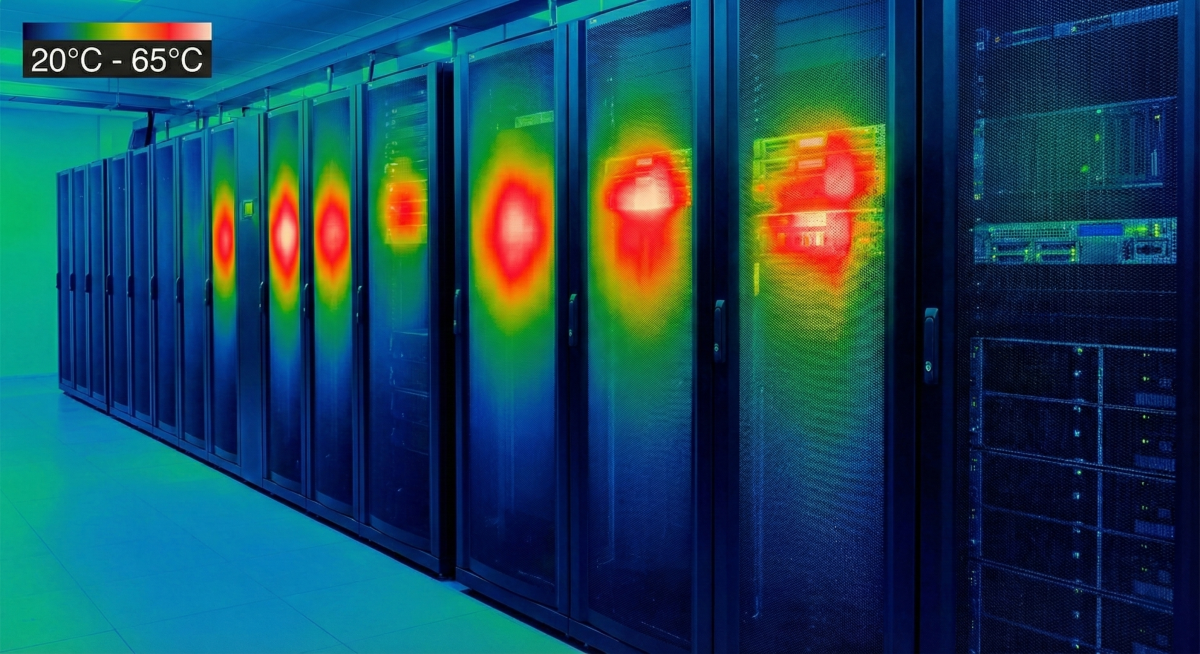
The Diagnosis: Why the Old Fans Failed
When the LONGWELL technical team analyzed the airflow, the root cause was clear: Insufficient Static Pressure.
The facility had upgraded to higher-density racks, which increased the airflow resistance (impedance). The original fans had high CFM (airflow) ratings on paper, but they lacked the static pressure capability to push that air through the dense servers and dirty filters. The air was simply stalling before it could do its job.
The Solution: The LWRD Series Retrofit
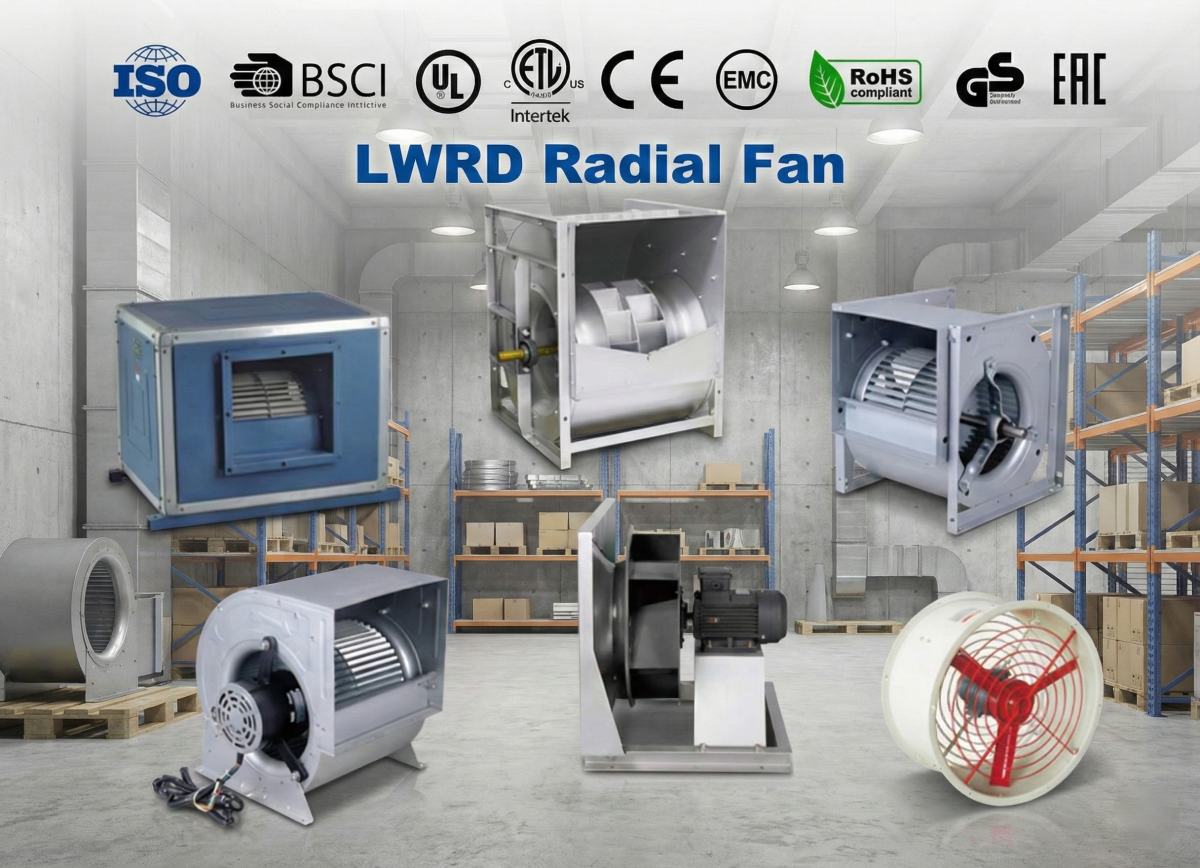
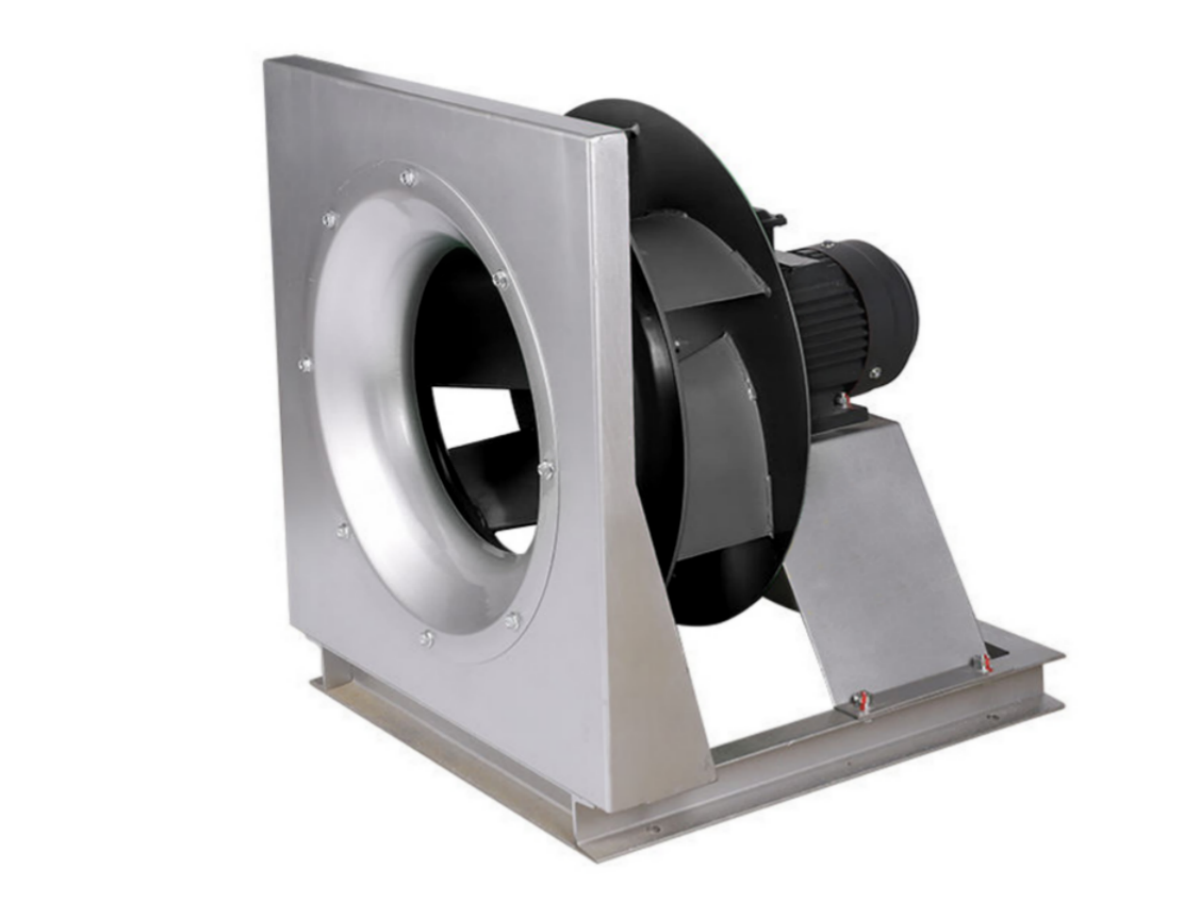
We proposed a targeted replacement using 96 units of LONGWELL LWRD Series Radial Fans.
The Engineering Logic:
1. High Static Pressure: Radial (centrifugal) designs are built to overcome high resistance, ensuring cold air actually penetrates the server chassis.
2. MagLev Technology: Magnetic levitation bearings eliminate physical contact, removing friction and vibration sources.
3. Smart Control: Each fan was integrated with independent sensors to adjust speed dynamically—cooling only where necessary.
The Results: 18-Month Data Review
After running the new system for 18 months, we pulled the data logs. The comparison is stark:
|
Metric |
Before Retrofit (Old System) |
After Retrofit (LONGWELL LWRD) |
Real-World Impact |
|---|---|---|---|
|
Temp Precision |
±3.0°C |
±0.3°C |
Hot spots eliminated. Temperature curves are flat. |
|
Reliability |
2 Outages/Year |
Zero Faults |
100% uptime for over 1.5 years. |
|
PUE |
1.80 |
1.30 |
Significant reduction in cooling energy costs. |
|
Certification |
At Risk |
Tier IV |
Helped achieve the highest international standard. |
Technical Breakdown: Why “Radial” Instead of “Axial”?
A common question from facility managers is: Axial fans are cheaper and move a lot of air. Why do high-end data centers insist on Radial (Centrifugal) fans?
It comes down to physics.
1. Overcoming Resistance (Impedance)
· Axial Fans: Think of a standard desk fan. It moves volume, but it has low pressure. If you put an obstacle (like a dense HEPA filter or a crowded server rack) in front of it, the airflow drops drastically.
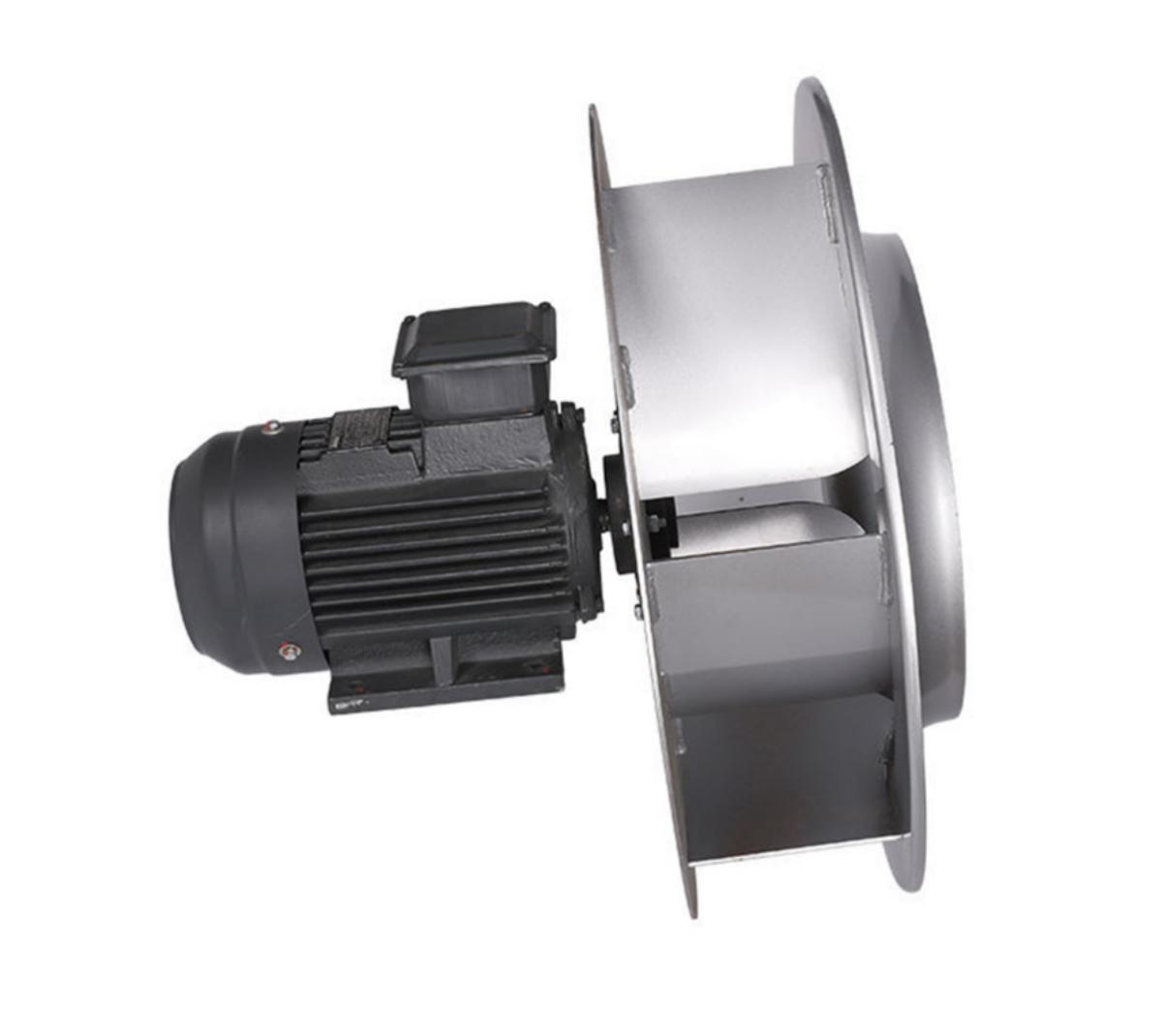
· Radial Fans: Think of a water pump. It uses centrifugal force to “throw” the air outwards. Its main strength is pressure generation. In a data center, where air must be forced through underfloor plenums and tight spaces, radial fans are the only way to guarantee flow.
2. Airflow Distribution
The LWRD series uses a Plug Fan design (no scroll housing). This discharges air 360 degrees radially. In a CRAC unit plenum, this pressurizes the entire space evenly, ensuring every floor tile gets the same amount of cool air, rather than creating “wind tunnels” and “dead zones.”

Product Focus: Inside the LONGWELL LWRD Series
For the Beijing project, the LWRD Series wasn’t chosen by accident. Three specific features made it the right tool for the job.
1. MagLev Bearings: More Than Just “Quiet”
Standard bearings rely on grease and physical contact. They generate heat and eventually wear out.
The LWRD Series uses Magnetic Levitation. The shaft floats.
· Benefit 1: Zero physical wear. Maintenance is virtually non-existent.
· Benefit 2: Zero Vibration. This is critical for Hard Disk Drives (HDDs). Mechanical drives are sensitive to micro-vibrations, which can cause read/write errors. MagLev fans protect your data integrity.
2. EC Motors: The Key to PUE 1.3
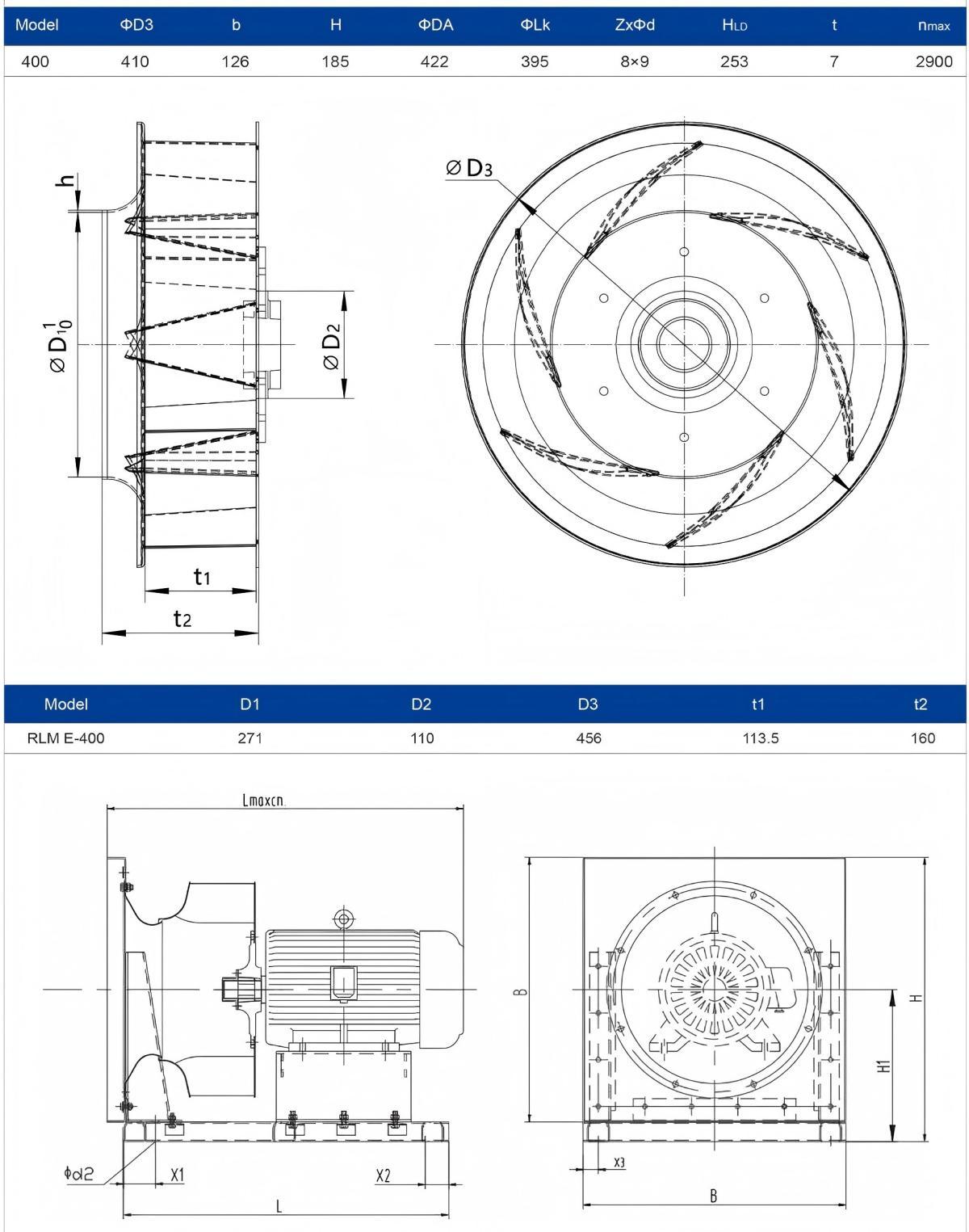
To get PUE down to 1.3, AC motors are obsolete. You need Electronically Commutated (EC) motors.
Data center loads fluctuate. At night, load is low.
Reality: An AC motor running at 80% speed might still use 90% power. A LONGWELL EC motor running at 80% speed uses significantly less power. This ability to “sip” energy at partial loads is how you save money.
3. Backward-Curved Impellers
We use CFD-optimized backward-curved impellers. Unlike forward-curved blades which can overload the motor if resistance drops, backward-curved impellers are non-overloading and highly efficient at high pressures. They also resist dust buildup better, maintaining performance over years of operation.
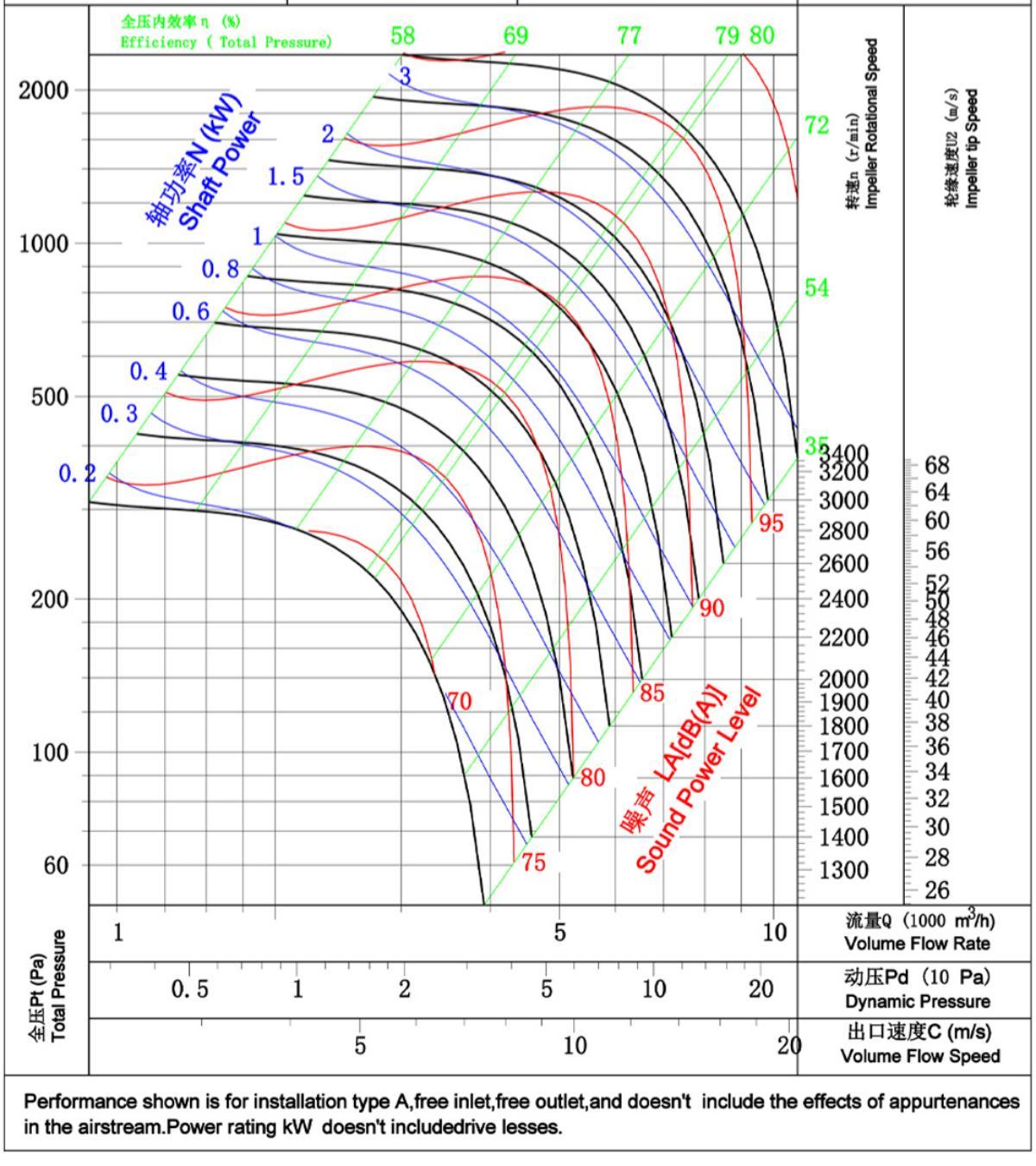
FAQ: Common Engineering Questions
Q: Do Radial fans consume more power than Axial fans?
A: It depends on the application. In “free air” (zero resistance), axial fans are more efficient. But in a high-resistance data center environment, axial fans lose efficiency rapidly (stalling). In these real-world conditions, a radial fan is actually more energy-efficient because it is operating at its peak design point, not struggling against backpressure.
Q: Is retrofitting the LWRD Series difficult?
A: We design the LWRD Series as “Plug & Play” modules. For retrofit projects like the one in Beijing, we provide custom brackets to fit existing CRAC unit footprints, minimizing downtime and structural changes.
Q: Can’t I just increase the RPM of my old fans to fix the hot spots?
A: Usually, no. If the fan design lacks static pressure capabilities, increasing RPM just creates more noise and uses more power, without actually pushing more air through the dense racks. It’s like trying to wash a car with a fire hose that has no nozzle—lots of water, but no pressure to do the job.
About LONGWELL
Ningbo Longwell Electric Technology Co., Ltd. (Website: www.longwellfans.com) is a manufacturer, not just a distributor. We focus on the core technology of air movement.
From Radial Fans and Centrifugal Fans to Axial and Cross-flow units, we build the engines that power HVAC systems, cold chains, and industrial purification globally. The LWRD Series represents our commitment to the high-end market—providing engineers with the reliable hardware they need to solve complex thermal challenges.